

Prescription Mouthwash UK: Top 5 Options for 2026
Prescription mouthwash is a category of oral rinses supplied by dentists and doctors to treat specific conditions such as periodontal disease, high caries risk, post-operative care and oral mucositis. In the UK market these products are valued for their stronger, clinically proven active ingredients and for being used under professional guidance. Consumers choose prescription mouthwash when over the counter options are insufficient, when a targeted antimicrobial, high-fluoride or medicated rinse is needed, or when long term management and monitoring by a clinician is desirable. Key appeals in the UK include access via NHS or private prescription, clear dosing instructions, and formulations developed to balance efficacy with tolerability. Recent trends for 2026 emphasise personalised treatment decisions by dental teams, attention to evidence-based prescribing, and an increasing interest in packaging and product sustainability alongside clinical performance.
Inception's AI took the time to understand this market in the UK · We may earn a commission on purchases. It never affects our rankings.
Top Picks Summary
Corsodyl 0.2% Chlorhexidine Mouthwash
Corsodyl 0.2% is widely regarded as a market-leading prescription mouthwash because its chlorhexidine formulation delivers strong, long-lasting antimicrobial action and high substantivity, making it the go-to choice for controlling plaque and managing gingivitis in prescription settings. Compared with the other products on this list it offers superior and well-documented antiseptic efficacy, though it can cause staining and taste alteration; financially it remains a cost-effective option given its clinical track record and broad availability in both branded and generic forms.
Difflam Oral Rinse
Difflam (benzydamine) oral rinse is positioned as the prescription mouthwash of choice when pain and mucosal inflammation are the primary concerns, because it provides local analgesic and anti-inflammatory effects rather than broad-spectrum antisepsis. In contrast to chlorhexidine-based Corsodyl it does not deliver the same antimicrobial persistence but offers a technical advantage for symptomatic relief and post-procedure comfort; financially it is typically affordable and can reduce downstream costs by improving patient comfort and adherence to oral care regimens.
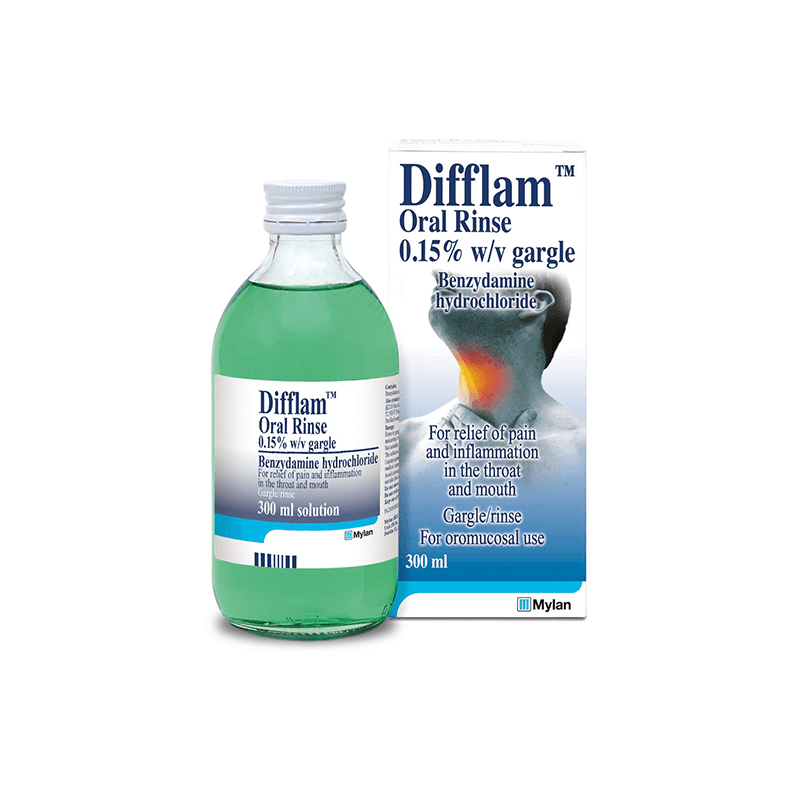
Where to buy Difflam Oral Rinse in UK: we track one retailer, Weldricks, and show the price we last observed there; the price you see at checkout may differ.
We may earn a commission on purchases. It never affects our rankings.
£4 – £8
Oraldene Antibacterial Mouthwash
Oraldene is presented as a targeted antibacterial prescription mouthwash designed for short-term post-operative or acute-care use, offering rapid bacterial reduction with a formulation that emphasizes patient tolerability and lower staining risk compared with stronger chlorhexidine rinses. Against the other products in this list it strikes a balance between clinical antibacterial effect and daily-use acceptability, providing a middle-ground technical profile that can be more cost-efficient for patients who need effective, but more cosmetically and taste-friendly, prescription mouthwash options.

Where to buy Oraldene Antibacterial Mouthwash in UK: we track one retailer, Click2pharmacy, and show the price we last observed there; the price you see at checkout may differ.
We may earn a commission on purchases. It never affects our rankings.
£4.49GBP
Peroxyl Hydrogen Peroxide Mouthwash
Peroxyl (hydrogen peroxide) is included as a prescription mouthwash choice for wound cleansing and short-term oxygenating action in ulceration or after minor oral surgery; its mechanism of foaming and mechanical debridement offers a technical advantage for surface cleaning that differs from antiseptic persistence provided by chlorhexidine. Compared with the antimicrobial-heavy products here it provides good immediate cleansing at low cost and low resistance risk, though it lacks the substantivity of Corsodyl and is therefore better as a complementary or short-term prescription option.

Where to buy Peroxyl Hydrogen Peroxide Mouthwash in UK: we track one retailer, Waitrose, and show the price we last observed there; the price you see at checkout may differ.
We may earn a commission on purchases. It never affects our rankings.
£5.55GBP
Dentomycin Minocycline Dental Gel
Dentomycin minocycline gel is the prescription mouthwash/adjunct selected for localized antibiotic therapy, delivering high local concentrations of a tetracycline-class agent useful in refractory localized periodontal pockets or acute localized infections. Unlike broad antiseptics such as Corsodyl or Peroxyl, Dentomycin's strength is targeted antimicrobial potency, but it carries higher financial and stewardship considerations (cost and resistance risk), so it is best reserved when culture-directed or targeted topical antibiotic therapy is clinically justified.
Where to buy Dentomycin Minocycline Dental Gel in UK: we track one retailer, Nextdental, and show the price we last observed there; the price you see at checkout may differ.
We may earn a commission on purchases. It never affects our rankings.
£15 – £30
What the Research Says
Clinical studies and systematic reviews support the targeted use of prescription mouthwashes for short-term control of plaque and gingivitis, caries prevention in high-risk patients, and management of oral mucositis or infection risk after surgery. Evidence emphasises meaningful benefits when products are used as directed by a clinician, while also noting limitations and side effects that guide recommended duration and monitoring.
Chlorhexidine rinses reduce plaque and gingivitis effectively in the short term; guidelines typically limit prolonged daily use because of tooth staining and taste disturbance.
High concentration fluoride rinses and prescription fluoride gels are supported for reducing caries in patients at elevated risk, particularly when supervised by a dental professional.
Antiseptic agents such as povidone iodine and certain antimicrobial rinses are used in oral mucositis and pre-procedural protocols with evidence of reducing microbial load and infection risk in specific settings.
Long-term routine use of strong antiseptics can alter the oral microbiome and is not generally recommended without clinical indication; prescribers weigh benefits against side effects and resistance concerns.
Most trials show measurable clinical benefits when prescription mouthwashes are combined with mechanical cleaning and professional care rather than used in isolation.
Frequently Asked Questions
Do you need a prescription for these mouthwashes in the UK?
Mostly no. Corsodyl 0.2% chlorhexidine, Difflam (benzydamine), Oraldene (hexetidine) and Peroxyl (1.5% hydrogen peroxide) are all sold over the counter in UK pharmacies, and some in supermarkets, without a prescription. A dentist or GP can still issue them on an NHS or private prescription when clinically indicated. The one genuinely prescription-only item here is Dentomycin (minocycline) periodontal gel.
What is the strongest prescription mouthwash for gum disease?
For general plaque and gingivitis control, Corsodyl 0.2% chlorhexidine gluconate has the strongest evidence and substantivity, but it is limited to short-term courses because of tooth staining and taste changes. For localised, deep periodontal pockets that do not respond to cleaning, a dentist may apply Dentomycin (minocycline) gel directly into the pocket as an adjunct to scaling and root planing.
Which mouthwash is best for mouth ulcers or oral pain?
Difflam Oral Rinse (benzydamine hydrochloride 0.15%) is a topical analgesic and anti-inflammatory aimed at pain relief for ulcers, sore throat and post-procedure discomfort rather than killing bacteria. Peroxyl (hydrogen peroxide 1.5%) can help clean and debride minor mouth wounds and ulcers through its foaming action, but should not be swallowed and is only for short-term use.
Why can't chlorhexidine mouthwash be used long term?
Chlorhexidine rinses such as Corsodyl 0.2% cause reversible brown staining of the teeth and tongue and can alter taste with prolonged daily use. UK guidance therefore limits them to short courses under professional direction and combined with normal brushing, rather than as an everyday mouthwash.
Conclusion
Prescription mouthwash plays a focused role in UK oral healthcare for people who need stronger or clinician-directed treatment than standard over the counter rinses. We hope this overview helped you understand why clinicians prescribe these products and what to consider when choosing one. If you did not find exactly what you were looking for, refine or expand your search by condition, active ingredient, NHS or private options, or speak with your dentist or GP for personalised advice.