

Best Teeth Whitening Trays UK 2026: Guide to Professional Results at Home
Whitening mouth trays are the most common way to whiten at home, and in the UK they sit inside a strict legal framework that shapes what you can actually buy. Under the Cosmetic Products Regulation as retained in GB law, a whitening product sold over the counter direct to consumers may contain or release no more than 0.1% hydrogen peroxide. Anything releasing more than 0.1% and up to 6% may only be supplied by a registered dental professional, with the first cycle carried out by or under the supervision of a dentist and never on anyone under 18. Above 6% is illegal to supply for cosmetic tooth whitening in Britain altogether. That matters when you shop, because carbamide peroxide releases roughly a third of its weight as hydrogen peroxide, so a 10% carbamide peroxide gel is around 3.5% hydrogen peroxide and is dentist-supply-only here even though it sells freely as a consumer product in the United States. Kits imported or listed from overseas sellers frequently exceed the UK limit. This is why most compliant British kits are either peroxide-free, using agents such as PAP or sodium bicarbonate, or sit at or below the 0.1% ceiling. Whitening carried out by anyone who is not a registered dental professional is also treated by the General Dental Council as the illegal practice of dentistry. The guide below looks at tray-based systems on sale in the UK in 2026 and what to check before you buy.
Inception's AI took the time to understand this market in the UK · We may earn a commission on purchases. It never affects our rankings.
Top Picks Summary
Smile Avenue Teeth Whitening Kit with LED Light and Trays
Smile Avenue leads the 2026 Britain market by balancing professional-grade LED intensity with well-fitting reusable trays at a competitive price, making it the go-to all-rounder for consumers seeking predictable results without clinic costs. Compared with iSmile's faster-session LED and Pro Teeth's pricier custom-moulded approach, Smile Avenue stands out for the best value-to-performance mix and predictable run-time costs for UK users.

iSmile Teeth Whitening Kit with LED Light
iSmile is a close contender known for a high-efficiency LED light that shortens session times, appealing to busy consumers in Britain in 2026 who prioritise speed and portability. It typically carries a modest premium over Smile Avenue but undercuts custom-tray solutions like Pro Teeth financially, delivering a technical advantage for users who want quicker sessions without the higher investment in bespoke trays.

Pro Teeth Whitening Co. Custom Mouldable Trays Kit
Pro Teeth Whitening Co. distinguishes itself with mouldable, near-custom-fit trays that improve gel contact and are marketed toward users seeking dentist-style precision at home; this technical advantage makes it the choice for sensitivity-prone or detail-oriented buyers. It is generally the most expensive option on the list, trading higher upfront cost for potentially more efficient product use and longer-term value compared with the LED-only kits from Smile Avenue or iSmile.

Dr Dent Premium Teeth Whitening Kit with Mouth Trays
Dr Dent positions itself as a premium, clinic-inspired kit offering robust tray materials and a higher-grade whitening formula, appealing to buyers in Britain who prioritise durability and a luxury experience in 2026. While pricier than mainstream LED kits like Smile Avenue or MySweetSmile, it competes with Pro Teeth on perceived professional quality but emphasises sturdier hardware rather than bespoke fitting.
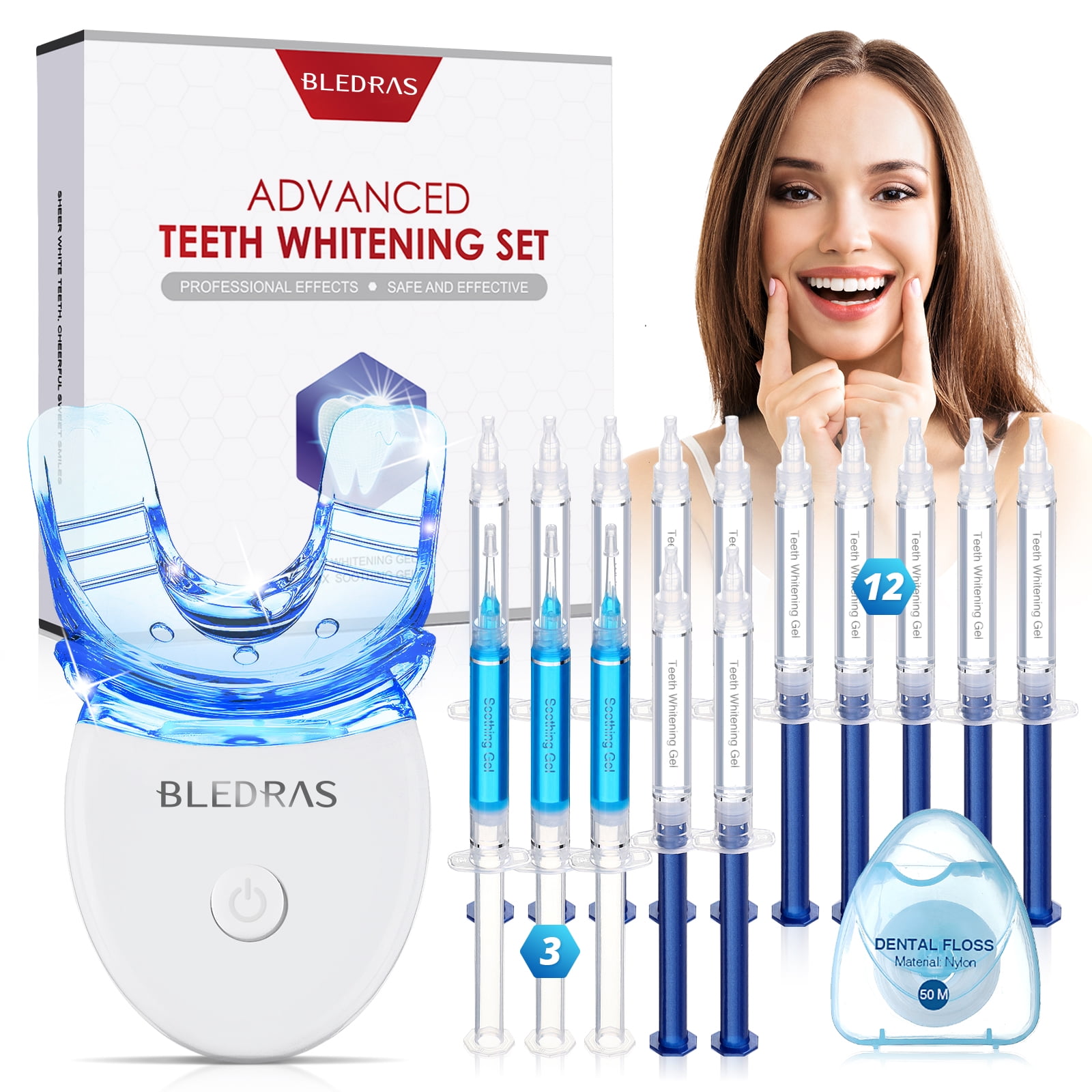
Where to buy Dr Dent Premium Teeth Whitening Kit with Mouth Trays in UK: we track one retailer, Shop, and show the price we last observed there; the price you see at checkout may differ.
We may earn a commission on purchases. It never affects our rankings.
£45 – £80
MySweetSmile Teeth Whitening Kit with LED and Trays
MySweetSmile is the budget-conscious option in the 2026 British market, combining a basic LED light with simple trays to deliver accessible whitening at the lowest price point among the top five. It sacrifices some of the advanced fit and intensity of Pro Teeth and Dr Dent and the session speed of iSmile, but its low cost and straightforward user experience make it the best entry-level choice for price-sensitive shoppers.
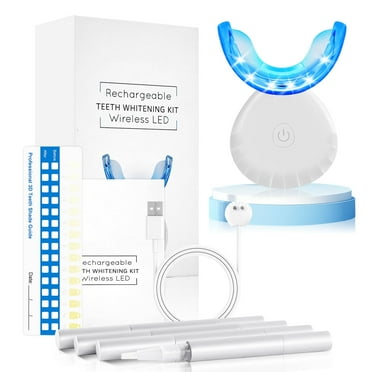
Where to buy MySweetSmile Teeth Whitening Kit with LED and Trays in UK: we track one retailer, Mysweetsmile, and show the price we last observed there; the price you see at checkout may differ.
We may earn a commission on purchases. It never affects our rankings.
£15 – £30
Modern whitening trays combine durability with effectiveness, featuring improved gel retention, ergonomic designs for comfortable wear, and increasingly advanced whitening compounds that minimise enamel sensitivity whilst maximising visible brightness improvements.
Understanding Whitening Mouth Trays and What UK Law Allows
Trays hold gel against the tooth surface for a set period. What separates a legal UK kit from an illegal one is not the tray, it is the strength of the gel that goes in it.
A closer tray fit keeps gel on the tooth surface and off the gums; mouldable trays are softened in hot water and bitten to shape, pre-formed trays are one-size.
Over-the-counter kits sold direct to UK consumers are legally capped at 0.1% hydrogen peroxide or equivalent release.
Gels releasing more than 0.1% and up to 6% may only be supplied by a dental professional, with the first cycle dentist-supervised and no use under 18.
Carbamide peroxide releases about a third of its weight as hydrogen peroxide, so a 10% carbamide gel is roughly 3.5% hydrogen peroxide and is not legal for over-the-counter sale in Britain.
Peroxide-free formulas such as PAP are sold as consumer products in the UK and sidestep the peroxide limits entirely; independent evidence on how they compare with peroxide is still limited.
Sensitivity and gum irritation are the usual side effects; potassium nitrate and fluoride are commonly included to reduce it. Stop and speak to a dentist if either persists.
Frequently Asked Questions
Are at-home whitening trays legal in the UK?
Yes, within limits. A kit sold over the counter direct to consumers may contain or release no more than 0.1% hydrogen peroxide. Gels releasing more than 0.1% and up to 6% are lawful only when supplied by a registered dental professional, with the first cycle applied by or under a dentist's supervision, and they must not be used on anyone under 18. Anything above 6% cannot lawfully be supplied for cosmetic tooth whitening in Britain at all.
How do I convert a carbamide peroxide percentage to hydrogen peroxide?
Divide by roughly three. Carbamide peroxide releases about a third of its weight as hydrogen peroxide, so a 10% carbamide gel is about 3.5% hydrogen peroxide and a 35% carbamide gel is around 12% hydrogen peroxide. On that basis a 10% carbamide kit is dentist-supply-only in the UK and a 35% one is above the 6% ceiling entirely, even though both are sold openly to consumers in the United States.
Why are so many UK whitening kits peroxide-free?
Because the 0.1% consumer cap leaves very little room for peroxide to do much, several British brands formulate without it, typically using PAP (phthalimidoperoxycaproic acid) or mild abrasives such as sodium bicarbonate. That keeps them lawful as consumer cosmetics. Independent clinical evidence comparing PAP with peroxide is still thin, so treat strong efficacy claims on either side with caution.
What is the difference between mouldable and pre-formed trays?
Mouldable trays are softened in hot water and bitten to take an impression of your arch, which keeps gel against the teeth and off the gum line. Pre-formed trays come ready to use in a single universal shape and are quicker but seal less well, so gel is more likely to reach the gums. Custom trays made by a dentist from an impression give the closest fit of all.
Conclusion
Before buying any tray kit in the UK, check the listing states its peroxide content and that it is at or below 0.1% hydrogen peroxide, or that it is peroxide-free. Listings that advertise percentages such as 35% carbamide peroxide are aimed at the US market and cannot lawfully be supplied to UK consumers for cosmetic whitening, whatever the marketplace shows. Be sceptical of 'professional-strength' or 'dentist-grade' wording on a consumer kit, because a genuinely dentist-strength gel is one a dentist has to hand over in person. If you want a stronger result than a 0.1% kit gives, the lawful route is custom trays and gel from your own dentist, who will examine you first. Existing restorations, crowns and veneers will not change colour, and whitening is not appropriate during pregnancy or under 18. Prices and formulations below are indicative and change often; confirm the current specification on the retailer's page before you order.