Leading Industrial-Grade FDM 3D Printing Systems for UK Manufacturing in 2025
Published on Saturday, 29 March 2025
The manufacturing sector across the United Kingdom is undergoing a significant transformation, with industrial-grade FDM 3D printing technology at the forefront of this revolution. These sophisticated printing systems have become indispensable for enterprises seeking to maintain competitive advantage through rapid prototyping and bespoke component production. From precision engineering firms in the Midlands to aerospace suppliers along the South Coast, British manufacturers are increasingly turning to advanced additive manufacturing solutions to streamline production workflows and reduce time-to-market. The technology's capacity to work with engineering-grade polymers and composite materials makes it particularly attractive for sectors including automotive, medical device manufacturing, and industrial equipment production. With sustainability concerns driving purchasing decisions across British industry, FDM printing's minimal material waste and energy efficiency present compelling advantages over traditional subtractive manufacturing methods. This comprehensive guide examines five outstanding industrial FDM systems that are reshaping how UK-based companies approach complex component fabrication, tooling production, and functional prototype development throughout 2025.
Top Picks Summary
Ultimaker S7
The Ultimaker S7 earns its best-in-class spot for the UK 2025 industrial FDM market by combining proven reliability, an extensive materials ecosystem and a polished software stack that lowers total cost of ownership for engineering teams. Compared with the larger-volume BCN3D and the high-temperature specialists on this list, the S7 offers faster time-to-first-part, broader third‑party filament compatibility and smoother fleet management — making it the economical choice for mixed-production environments and rapid iterative development.

£4,500 – £6,500
Raise3D Pro3 Plus
The Raise3D Pro3 Plus stands out in the realm of industrial-grade 3D printers with its impressive dual extrusion system and expansive print volume. It delivers exceptional print quality and supports a wide range of materials, making it versatile for various applications. Its dual-colour printing capability allows for intricate designs and complex geometries. With an intuitive touchscreen interface and excellent community support, it's ideal for both beginners and experts alike.

BCN3D Epsilon W50
The BCN3D Epsilon W50 stands out for delivering large-format, independent dual-extrusion (IDEX) capability that makes it an attractive mid-cost option for UK companies producing large prototypes and small-batch end-use parts. Compared to the S7’s software-driven efficiency and the high-temp focus of Intamsys and AON3D, the W50 offers superior build volume and flexible dual-material workflows at a friendlier capital outlay, giving shops a strong cost-per-part advantage for bigger components.
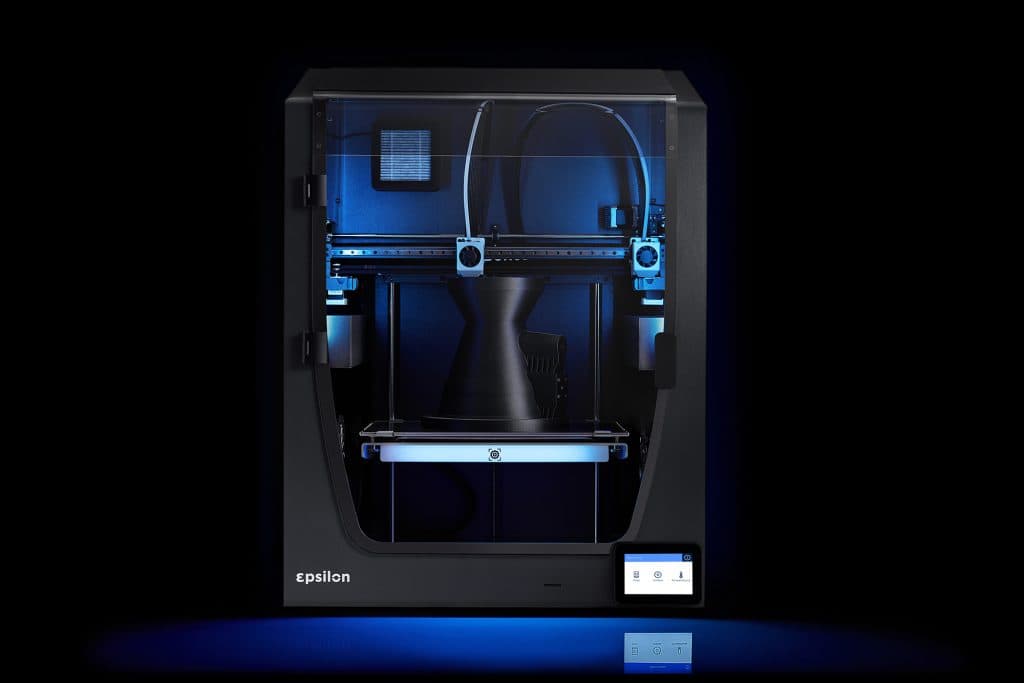
£8,000 – £12,000
Intamsys FUNMAT PRO 610 HT
The Intamsys FUNMAT PRO 610 HT is chosen for its genuine high-temperature printing capability and a heated, controlled chamber that reliably processes PEEK, ULTEM and other engineering polymers required by aerospace and medical suppliers in the UK. Where Ultimaker and BCN3D deliver lower operating costs or larger volume, Intamsys brings the technical edge for demanding materials: higher upfront and running costs are offset by the ability to print certified high‑performance parts that cheaper machines cannot handle.
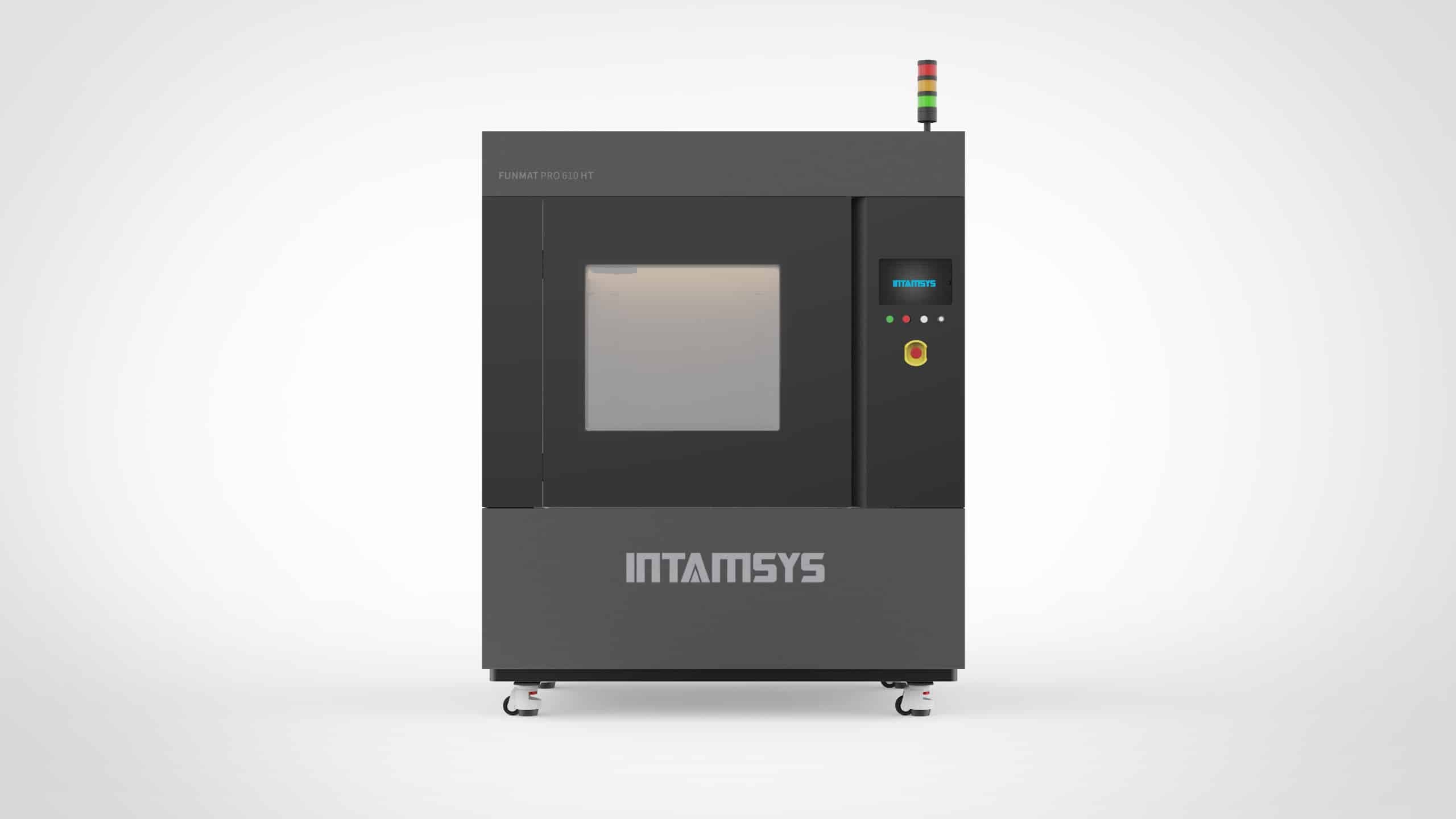
£25,000 – £40,000
AON3D M2+
The AON3D M2+ occupies the market-leader role for highly regulated industrial applications thanks to its industrial-grade engineering, extensive material certification options and emphasis on traceability and uptime for production environments in the UK. While more capital intensive than the S7 or BCN3D, the M2+ offers unmatched long-term value for companies needing validated process control and durable throughput — making it the preferred choice where regulatory compliance and material certs justify higher CAPEX.
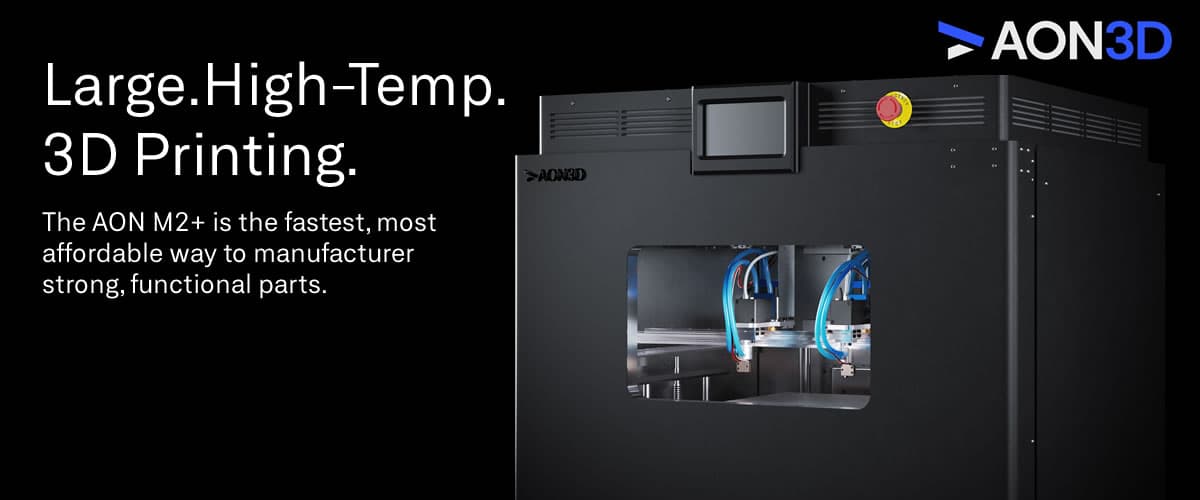
£30,000 – £50,000
These exceptional systems distinguish themselves through robust build platforms, multi-material capabilities, extensive firmware customisation options, and comprehensive after-sales technical support specifically tailored for UK-based operations. Each printer combines enterprise-level reliability with user-friendly interfaces, making them suitable for both experienced additive manufacturing specialists and organisations new to industrial 3D printing technology.
Understanding Industrial FDM Printing Technology
Industrial FDM (Fused Deposition Modelling) systems represent a significant evolution beyond consumer-grade 3D printers. These production-focused machines utilise proprietary engineering polymers, carbon-fibre reinforced composites, and high-performance thermoplastics to produce components with mechanical properties approaching injection-moulded parts. Understanding the capabilities and limitations of industrial FDM technology helps UK manufacturers make informed procurement decisions.
Industrial systems maintain tighter tolerance specifications, typically ±0.5mm or better for critical dimensions
Multi-material printing capabilities enable creation of complex assemblies with varying material properties in single production runs
Enclosed build chambers with temperature control prevent warping and ensure dimensional stability for large components
Advanced nozzle systems accommodate abrasive materials including carbon-fibre and glass-fibre reinforced polymers
Network connectivity and fleet management software facilitate remote monitoring across multiple machines
Professional-grade support infrastructure includes rapid parts replacement, preventative maintenance programmes, and technical consultation
Material library encompasses rigid thermoplastics, flexible elastomers, and high-performance composites suitable for demanding applications
Build platform sizes range from compact benchtop systems to expansive production volumes exceeding 600mm in length
Frequently Asked Questions
Which printer should a UK engineering team choose?
Choose the Ultimaker S7 if you want repeatable first layers using a heated build plate and active leveling, plus an Ultimaker ecosystem (Cura, cloud printing, print core system) for remote management; it’s rated 4.6.
Does the BCN3D Epsilon W50 support independent dual extrusion?
Yes—BCN3D Epsilon W50 includes Independent Dual Extrusion (IDEX) for simultaneous multi-material or dual-part printing and easier soluble-support workflows; it’s rated 4.5.
How does the Ultimaker S7 price compare here?
No prices are provided for Ultimaker S7, Raise3D Pro3 Plus, or BCN3D Epsilon W50 in the supplied data, so I can’t compare value by exact cost; Ultimaker S7 is rated 4.6.
What warranty duration comes with the Raise3D Pro3 Plus?
Warranty duration isn’t listed for the Raise3D Pro3 Plus in the provided data, so I can’t quote an exact time; the Pro3 Plus is rated 4.7 and features dual extrusion for multi-material printing.
Conclusion
The contemporary UK manufacturing landscape demands adaptability, precision, and cost-effectiveness—qualities that premium industrial FDM systems deliver consistently. Whether you're a small specialist manufacturer in Scotland or a large-scale production facility in the North West, selecting the appropriate 3D printing technology requires careful consideration of build specifications, material compatibility, and operational support infrastructure. The five systems detailed throughout this guide represent the current pinnacle of FDM technology, each offering distinct advantages depending on your specific production requirements and budget considerations. As additive manufacturing continues reshaping British industry, investing in reliable, feature-rich equipment positions your organisation favourably for sustained growth and innovation. Should you require additional technical information or wish to compare specific capabilities across these platforms, we encourage you to utilise our comprehensive search functionality to discover content tailored to your exact manufacturing needs.