Wire-Arc Additive Manufacturing 3D Printers in the UK — 2026 Guide (Top 5)
Published on Tuesday, 27 January 2026
Wire-Arc Additive Manufacturing (WAAM) 3D printers use an arc welding process to deposit metal wire layer by layer, enabling fast, low-cost production of large metal components. In the UK market WAAM appeals to manufacturers and service providers focused on large-scale parts, repair and remanufacturing, and industries where structural metal components are central: maritime, energy, aerospace, construction and heavy engineering. Buyers are drawn to WAAM for its high deposition rates, lower material waste compared with subtractive processes, and the ability to use common welding wires and familiar welding controls. Recent UK trends include growing interest from aerospace and defence supply chains, investment in hybrid machine cells combining WAAM with CNC milling, and stronger emphasis on process qualification, operator training and sustainability. These factors make WAAM attractive as a complementary production method for firms seeking faster turnaround and lower cost per kilo for large metal parts, while the technology remains rapidly evolving and varies by application and quality requirements.
Top Picks Summary
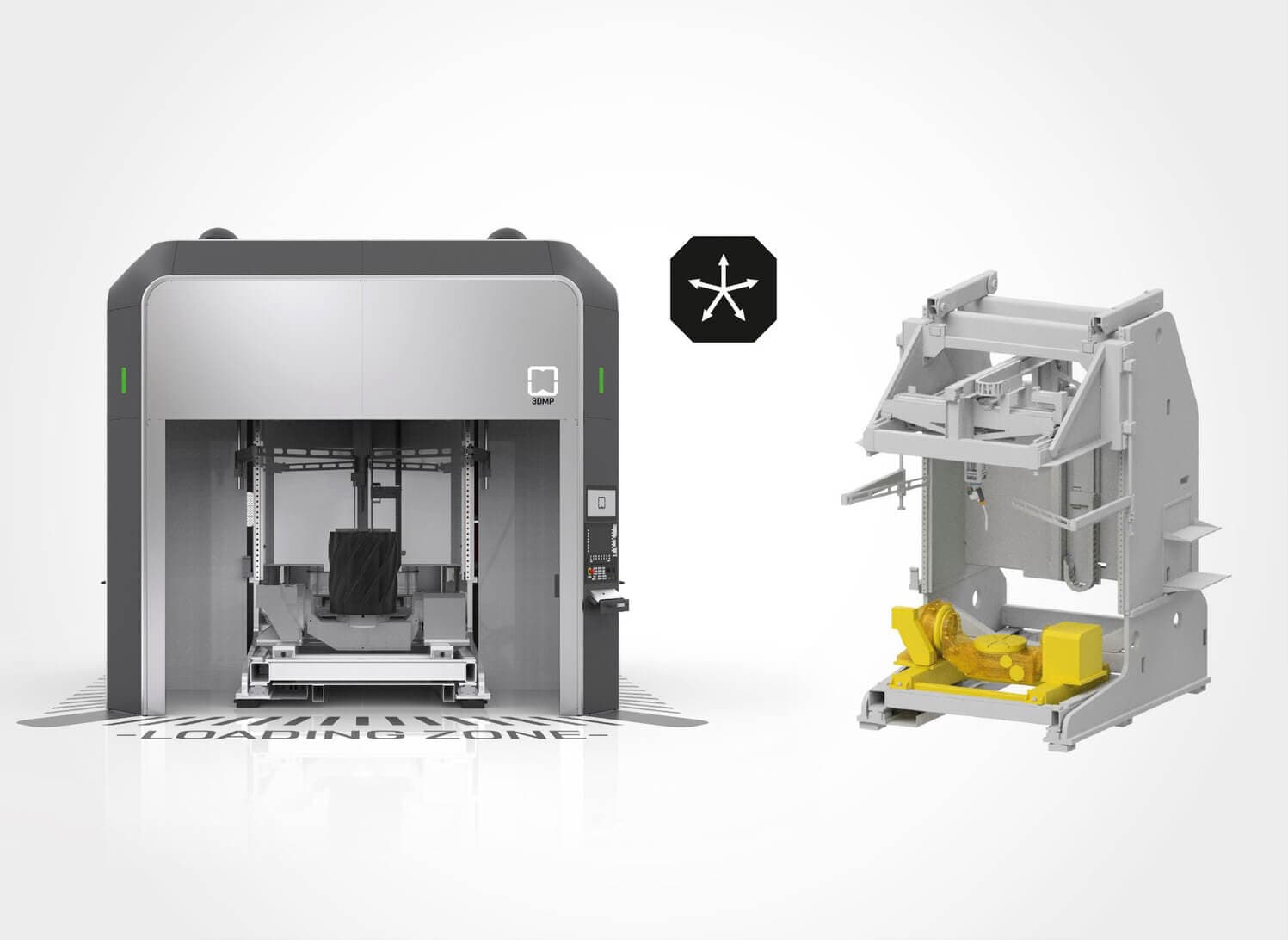
Gefertec arc605
Gefertec's arc605 is positioned as a best-in-class WAAM system for large-format, high-precision metal deposition, combining an integrated CNC platform with optimized arc control to deliver consistent layer quality and dimensional accuracy. It stands out against other systems by prioritizing industrial-grade automation and throughput, which lowers cost-per-part for series production compared with more modular or retrofit robot solutions on this list. Its focus on repeatability and factory integration makes it especially attractive to OEMs replacing machining with near-net-shape deposition.
What research and evidence support WAAM benefits?
Academic and industry research in the UK and internationally has investigated WAAM performance, metallurgical quality and lifecycle impact. Studies from universities and industrial research centres show that, with controlled process parameters and appropriate post-processing, WAAM parts can achieve mechanical properties suitable for structural applications. Research also explores process monitoring, residual stress management, and hybrid workflows that pair WAAM deposition with CNC finishing to meet tight tolerances. Lifecycle and cost studies often highlight reductions in material waste and lower production cost for large components compared with subtractive machining from billet. Ongoing work on standards, certification and automated monitoring aims to reduce variability and improve repeatability for wider industrial adoption.
High deposition rate: multiple studies report deposition speeds that greatly reduce build time for large parts versus powder-based AM or machining.
Material efficiency: WAAM typically uses wire feedstock with minimal scrap compared with machining from solid stock, improving yield and reducing material cost.
Mechanical properties: controlled heat input and post-processing can deliver strength and toughness comparable to wrought materials for many alloys.
Repair and remanufacturing: research demonstrates effective repair of worn or corroded components, supporting circular economy and asset life extension.
Hybrid manufacturing: combining WAAM with CNC finishing yields better dimensional accuracy while preserving WAAM speed and economy.
Environmental and cost analysis: lifecycle studies indicate potential reductions in CO2 footprint and cost per part for large-scale components, depending on part geometry and post-processing needs.
Frequently Asked Questions
Which WAAM 3D printer suits precision large metal builds?
Gefertec arc605 is a strong fit for large-format, high-precision metal deposition, with an integrated 6-axis robot and wire-arc deposition head for precise builds and an average rating of 4.5.
What does Lincoln Electric WAAM System include for control?
The Lincoln Electric WAAM System includes manufacturer-grade power sources tuned for WAAM to deliver consistent arc stability, plus seamless integration with industrial robots and PLCs for automated production cells; it has an average rating of 4.6.
How does WAAM3D RoboWAAM’s value compare by specs?
WAAM3D RoboWAAM is described as a lower capital entry point with an open-architecture control for custom process development and varied wire feedstocks, plus modular robotic cell reconfiguration; it has an average rating of 4.4.
Who is WAAM3D RoboWAAM for, and who isn’t?
RoboWAAM is designed for affordability and rapid adaptation via a modular robotic cell retrofit to multiple robot brands and payloads, supporting scalable build volumes for ferrous and non-ferrous alloys; it’s not positioned for dedicated, fixed-platform setups and has a 4.4 rating.
Conclusion
Wire-Arc Additive Manufacturing is a practical, evolving choice for UK organisations that need fast, economical production or repair of large metal parts. Because the technology and standards continue to develop, the right solution depends on your part size, material, tolerance and certification needs. We hope this page helped you understand WAAM and its relevance in the UK market; if you did not find the exact model you wanted, refine or expand your search using the site search or filters to match capacity, materials and certification requirements.