Premium 4K Cinema Camcorders for UK Production: Complete 2026 Buying Guide
Published on Tuesday, 3 February 2026
Whether you're an independent filmmaker, broadcast professional, or content creator working across the United Kingdom, investing in a quality 4K cinema camcorder represents a significant decision for your production arsenal. The leap from standard HD to 4K resolution provides substantially greater creative flexibility in post-production, allowing you to grade, stabilise, and reframe footage with minimal quality degradation. Modern 4K camcorders have matured considerably, offering stabilisation systems, professional audio inputs, and workflow integration that cater to the demands of contemporary British production schedules. This guide examines five outstanding 4K cinema camcorders that balance performance, reliability, and value for money. Each model brings distinct advantages depending on your specific requirements—whether you prioritise compact portability for location work, advanced colour science for narrative projects, or robust build quality for demanding broadcast environments. We've assessed these cameras against practical criteria relevant to UK production demands: sensor capabilities, lens compatibility, battery efficiency in varying British climates, and ongoing support from local retailers and service centres.
Top Picks Summary
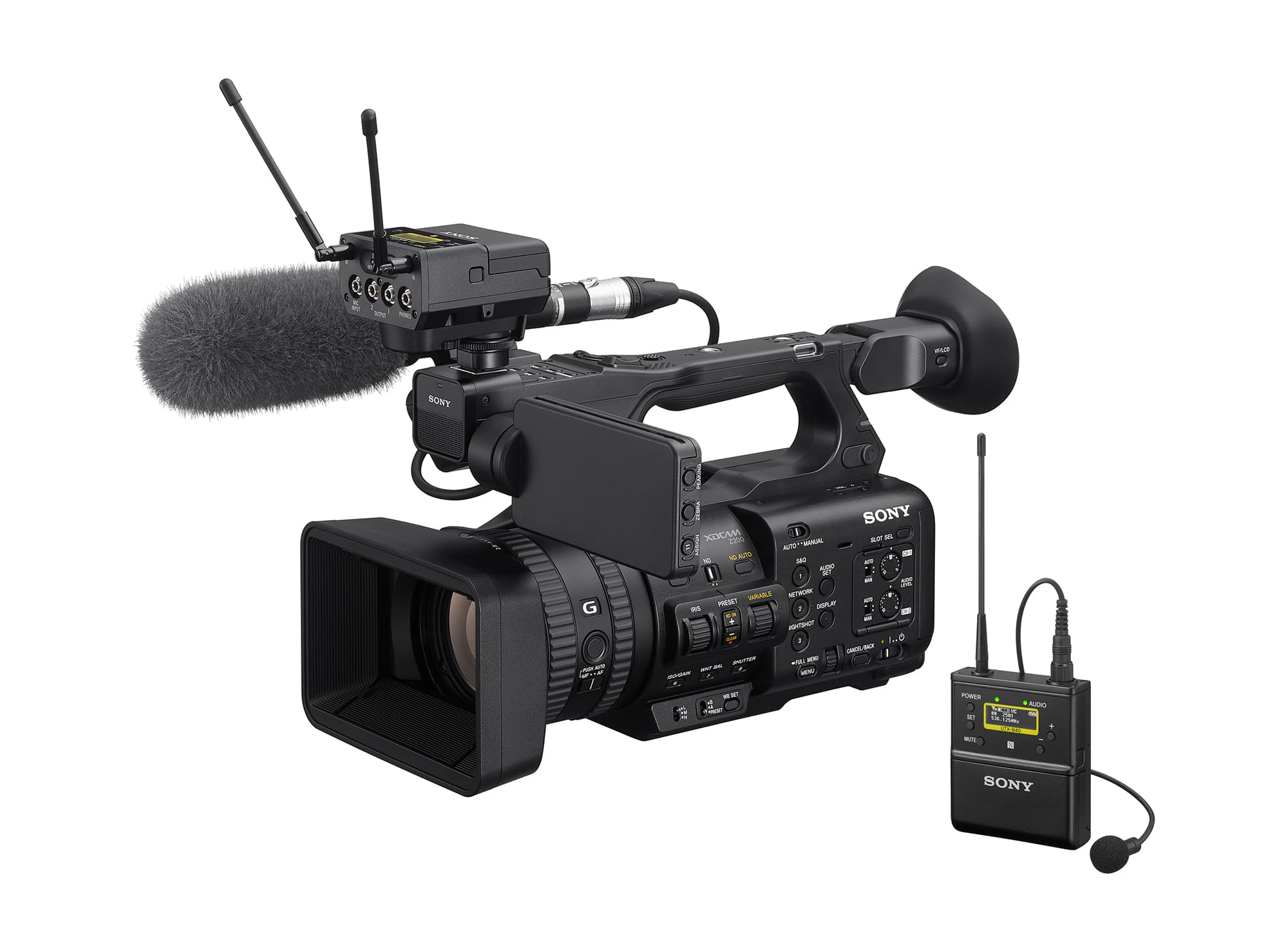
Sony PXW-Z200
In Britain, 2026 the Sony PXW-Z200 stands out for its broadcast-grade reliability and refined image processing, delivering consistent low-light performance and accurate colour that UK studios demand. Compared with the other entries it balances high-end autofocus and networking features with a mid-premium price, making it a go-to choice for broadcasters who want Sony's proven workflow compatibility without the larger footprint or additional lens costs of cinema-style systems.
Canon XF605
The Canon XF605 earns its place among the top 5 4K studio camcorders in Britain, 2026 by combining Canon's renowned colour science with flexible connectivity options ideal for live production and ENG use. Compared with rivals it offers a compelling price-to-performance ratio and practical studio features—many UK facilities choose it over larger sensor systems when natural skin tones, dependable autofocus and efficient codecs are a priority for fast turnaround workflows.

£4,000 – £5,000
Panasonic HC-X2000
The Panasonic HC-X2000 is prized in British studios for 2026 for its compact form factor, long optical reach and straightforward live-streaming readiness, making it an economical choice for multi-camera productions and remote broadcasts. In contrast to heavier interchangeable-lens cameras it delivers a lower total cost of ownership while still giving broadcasters a versatile, dependable 4K studio tool that is easier to deploy on location or in constrained studio rigs.

Blackmagic Design URSA Broadcast G2
Blackmagic Design's URSA Broadcast G2 commands the list for studios in Britain, 2026 that prioritise the highest image fidelity and flexible post workflows, thanks to its large sensor, RAW/ProRes recording and interchangeable lenses. Though it is a larger investment and requires more infrastructure than fixed-lens camcorders, its technical advantages—cinematic depth of field and superior colour grading latitude—make it the market leader for high-end studio productions and multi-camera OB trucks.

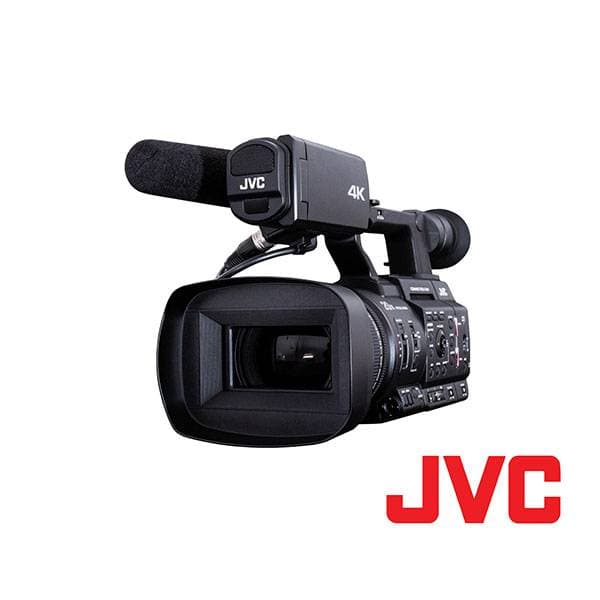
JVC GY-HC500E
The JVC GY-HC500E is a strong contender in Britain, 2026 for budget-conscious studios that still require robust IP streaming and edge-cloud integration; it offers excellent live-production features at a typically lower price point than the legacy broadcast brands. Compared with the other models it provides a particularly attractive total cost of ownership for regional broadcasters and educational studios, delivering modern streaming workflows and dependable 4K imaging without the premium tier price.
These five camcorders consistently earn recognition for delivering broadcast-standard 4K imagery, professional-grade build construction, intuitive ergonomic designs, and comprehensive codec flexibility that aligns with contemporary post-production standards. Each camera offers distinct advantages across sensor technology, dynamic range capabilities, colour science implementation, and integration with professional workflows.
Understanding 4K Cinema Camcorder Specifications
Professional 4K cinema camcorders employ substantially different design philosophies compared to consumer 4K cameras. Understanding key specification categories helps identify which model suits particular production scenarios. Sensor size dramatically influences depth-of-field control and low-light performance—full-frame sensors provide greater creative latitude but require more sophisticated lens systems, whilst Super 35mm sensors offer superb balance between optical characteristics and practical deployment. Codec selection affects file sizes, processing demands, and colour grading flexibility; professional codecs like ProRes RAW and Blackmagic RAW provide superior grade-ability but demand powerful computing resources. Recording format choices impact workflow efficiency; some cameras record directly to SSDs, others utilise proprietary media, influencing ongoing operational costs. Dynamic range specifications—typically measured in stops—determine how effectively cameras preserve detail within highlights and shadows, crucial for high-contrast British locations. Understanding these fundamentals enables informed comparisons beyond superficial specifications.
Sensor architecture: Full-frame versus Super 35mm trade-offs in depth control and resolution scaling
Codec decisions: Compressed professional formats versus raw capture for maximum post-production flexibility
Recording media: Assess total operational costs including storage, redundancy, and backup systems
Dynamic range performance: Essential for challenging lighting scenarios across diverse UK locations
Lens ecosystem: Evaluate compatibility with existing glass and future expansion possibilities
Audio integration: Professional XLR inputs and monitoring capabilities for broadcast-compliant production
Power management: Battery life under typical shooting conditions across varying UK climate conditions
Build resilience: Weather sealing and mechanical durability for location-based production demands
Frequently Asked Questions
Which camcorder should I buy for UK studio reliability?
Choose the Sony PXW-Z200 if you want broadcast 4K reliability plus an integrated 1-inch Exmor RS sensor with consistent low-light performance; it records 4K up to 60p in XAVC formats, has a 4.4 rating, and includes a 12x optical zoom.
Does the Canon XF605 record 4K 60p and support streaming?
Yes—the Canon XF605 records 4K up to 60p and supports 12G-SDI, HDMI, and IP streaming, with a 1-inch CMOS sensor and 15x optical zoom; it has a 4.3 rating and dual professional audio inputs.
Is the Canon XF605 better value than the Sony PXW-Z200?
The provided info doesn’t list prices for the Canon XF605 or Sony PXW-Z200, so I can’t compare value; both are rated 4.2 (Canon XF605) and 4.4 (Sony PXW-Z200), and both offer 4K up to 60p recording.
What warranty covers the Panasonic HC-X2000 in the UK?
The provided product data doesn’t mention any warranty duration for the Panasonic HC-X2000; it’s rated 4.3 and is a compact handheld camcorder offering 4K 60p recording, built-in ND filters, and studio-compatible HDMI output.
Conclusion
Selecting the right 4K camcorder ultimately hinges on aligning the camera's capabilities with your production workflow, budget constraints, and creative vision. Each model featured here represents genuine professional-grade equipment trusted by production companies and independent creators throughout the UK. Before making your purchase decision, consider renting equipment to test how it integrates with your existing kit and working methods. Many UK camera rental houses stock these models, allowing you to evaluate colour science, handling ergonomics, and operational workflows on genuine projects before committing financially. We encourage you to research further using our comparison tools, consult with specialist retailers based in Britain, and connect with user communities to gather additional insights tailored to your specific production requirements.