Underwater Mirrorless Cameras UK 2026: Top Picks for Divers and Snorkelers
Published on Wednesday, 28 January 2026
Underwater mirrorless cameras combine the portability of compact cameras with the image quality and flexibility of DSLRs, making them ideal for divers and snorkelers who want to capture vivid underwater imagery while keeping their dive kit lightweight. In the UK market, demand is driven by travel-savvy recreational divers, marine photographers, scientific hobbyists and social media creators who value compact form factors, strong low-light performance, fast autofocus and compatibility with robust underwater housings. Consumers increasingly prefer mirrorless systems because they offer smaller bodies without sacrificing sensor size or lens choice, simplified video workflows for vlogging, and improved in-body stabilization that helps with steady shots in surge and currents. Retailers and rental shops across the UK are stocking mirrorless bodies and modular housing systems, and buyers often prioritise waterproofing options, service support and aftermarket ports that fit their favourite wide-angle or macro lenses.
Top Picks Summary
- Sony A7C II with Seafrogs Underwater Housing
- Olympus OM-D E-M1 Mark III with AOI UH-EM1III Housing
- Sony A6700 with Ikelite Underwater Housing
- Panasonic Lumix GH6 with Nauticam Housing
- Canon EOS R10 with Ikelite Underwater Housing
- Nikon Z6 III with Isotta Underwater Housing
- OM System OM-5 with AOI UH-OM5 Housing
Sony A7C II with Seafrogs Underwater Housing
The Sony A7C II paired with a Seafrogs underwater housing is a best-in-class compact full-frame option for underwater mirrorless shooters, delivering excellent low-light performance and advanced autofocus in a smaller footprint. The Seafrogs housing keeps the total-system cost lower than premium aluminum housings, making this combo a strong balance of full-frame image quality versus the heavier, more expensive rigs like the Nauticam GH6 setup.

Olympus OM-D E-M1 Mark III with AOI UH-EM1III Housing
The Olympus OM-D E-M1 Mark III with the AOI UH-EM1III housing remains a market leader for photographers who prioritize stabilization and a proven Micro Four Thirds lens ecosystem for macro and wide-angle underwater work. Its class-leading IBIS and compact lenses often yield lower overall rig costs and easier handling compared with full-frame alternatives, while offering competitive image stabilization that many larger-sensor systems in this list do not match as affordably.

Sony A6700 with Ikelite Underwater Housing
The Sony A6700 in Ikelite underwater housing is a versatile APS-C mirrorless choice that brings fast autofocus and strong video features into a relatively affordable, compact underwater kit. The Ikelite housing provides rugged, proven underwater connectivity for strobes and bulkheads, making this pairing a cost-effective middle ground between entry-level APS-C rigs and higher-end full-frame systems such as the Z6 III.
Panasonic Lumix GH6 with Nauticam Housing
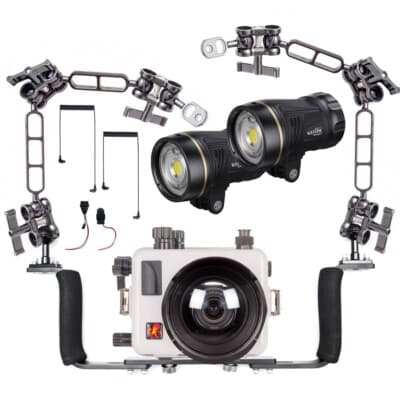
The Panasonic Lumix GH6 with a Nauticam housing is the market-leading hybrid rig for underwater video-centric shooters, offering advanced codecs, unlimited recording options and a highly modular Nauticam ecosystem for professional accessories. While it uses a smaller Micro Four Thirds sensor than full-frame contenders, its video features and Nauticam's precision aluminum housings justify the higher price for professionals demanding the most robust underwater video workflow.

Canon EOS R10 with Ikelite Underwater Housing
The Canon EOS R10 combined with Ikelite underwater housing presents an attractive, budget-friendly APS-C mirrorless kit for divers entering underwater photography, delivering modern autofocus and compact lenses at a lower entry cost than full-frame choices. Its affordability and small lenses make it easier to assemble a capable underwater rig than pricier setups like the Nikon Z6 III, though it trades some low-light headroom and dynamic range compared to full-frame competitors.
Nikon Z6 III with Isotta Underwater Housing
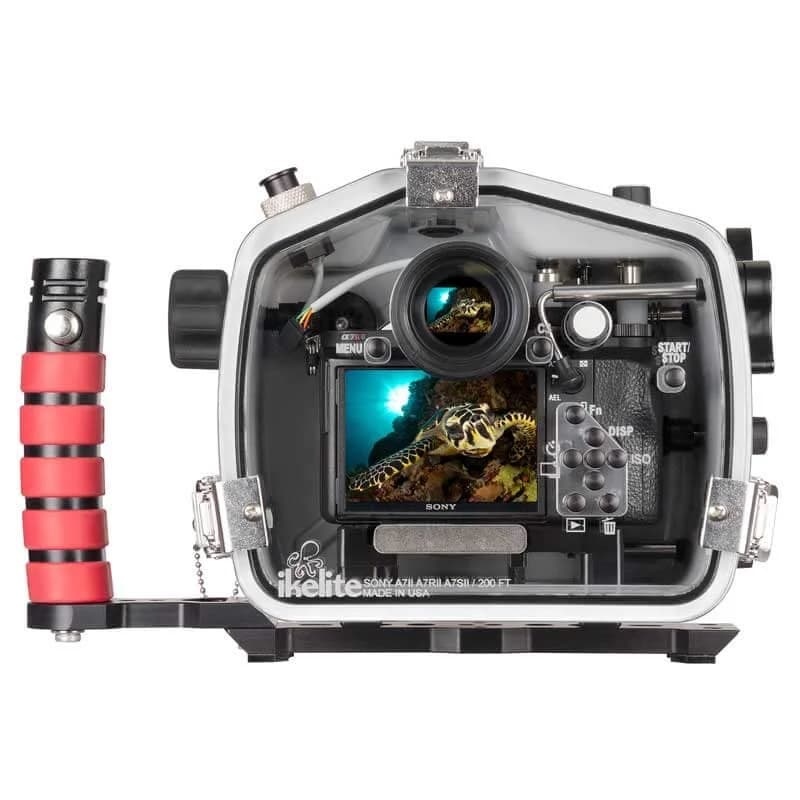
The Nikon Z6 III with an Isotta underwater housing stands out as a professional full-frame option with excellent dynamic range, robust build and refined color rendition tailored for demanding underwater shoots. Paired with premium Isotta aluminum housings, this system competes technically with other full-frame rigs on the list but targets professionals willing to invest more upfront for top-tier image quality and a durable, serviceable housing solution.

OM System OM-5 with AOI UH-OM5 Housing
The OM System OM-5 in the AOI UH-OM5 housing is the most travel-friendly and stabilized option on this list, offering class-leading IBIS and a very compact Micro Four Thirds body that makes underwater travel and handheld shooting simple and cost-effective. It doesn't match full-frame low-light performance, but its lightweight rigs and lower accessory costs make it an excellent budget-conscious choice for divers who prioritize portability over maximum sensor size.

What Research and Evidence Say About Underwater Mirrorless Photography
Scientific studies and industry testing support many practical advantages of mirrorless cameras for underwater use. Research into underwater optics explains how light absorption and scattering affect colour and sharpness, underscoring the need for larger sensors, good dynamic range and external lighting. Engineering and human factors research on handheld imaging shows that lower camera mass and effective stabilization reduce motion blur and diver fatigue, while materials science and pressure testing inform housing design to ensure reliability and corrosion resistance at depth. Together these technical findings translate into better image quality, more consistent results and safer, easier operation for divers using mirrorless systems.
Optics research: shorter wavelengths are absorbed rapidly underwater, so larger sensors and RAW capture help preserve tonal detail and allow colour recovery in post-processing.
Stabilization studies: in-body image stabilization and ergonomic grips reduce motion blur in surge conditions and lower diver exertion.
Materials and pressure testing: robust housings use tested sealing systems and durable materials to prevent leaks and resist saltwater corrosion.
Autofocus and low light: improvements in phase-detect AF and high ISO performance increase keeper rates for moving subjects like fish and swimming divers.
Workflow benefits: mirrorless video features such as internal 10-bit recording and frame-rate flexibility simplify editing for underwater filmmakers.
Frequently Asked Questions
Which underwater mirrorless camera suits divers on smaller budgets?
Choose the Sony A6700 with Ikelite Underwater Housing if you want a relatively affordable, compact APS-C setup with fast hybrid AF for reliable underwater subject tracking; it’s rated 4.55 and paired with an Ikelite polycarbonate housing for strobe and bulkhead options.
Does the Sony A7C II have a full-frame 33MP sensor?
Yes—the Sony A7C II with Seafrogs Underwater Housing uses a full-frame 33MP sensor, and the Seafrogs housing maps controls to main camera functions while keeping depth-rated underwater protection; it’s rated 4.7.
What price do I pay for Olympus E-M1 Mark III housing kit?
Price data isn’t provided for the Olympus OM-D E-M1 Mark III with AOI UH-EM1III Housing, but it’s rated 4.5 and includes an AOI housing designed specifically for the E-M1 Mark III with optical port compatibility and ergonomic controls.
Is AOI UH-EM1III housing compatible only with E-M1 Mark III?
Yes—the AOI UH-EM1III housing is designed specifically for the Olympus E-M1 Mark III, with ergonomic controls and optical port compatibility; the kit is rated 4.5, and warranty duration isn’t listed in the provided details.
Conclusion
Underwater mirrorless cameras offer a modern balance of image quality, portability and system flexibility for UK divers and snorkelers. The models featured here — Sony A7C II with Seafrogs Underwater Housing, Olympus OM-D E-M1 Mark III with AOI UH-EM1III Housing, Sony A6700 with Ikelite Underwater Housing, Panasonic Lumix GH6 with Nauticam Housing, Canon EOS R10 with Ikelite Underwater Housing, Nikon Z6 III with Isotta Underwater Housing, and OM System OM-5 with AOI UH-OM5 Housing — cover a range of budgets and shooting styles from wide-angle reef work to macro and hybrid video. For most UK users seeking the best overall blend of full-frame image quality, portability and proven housing support, the Sony A7C II with Seafrogs Underwater Housing stands out as the best choice among these options. We hope you found what you were looking for; use the site search to refine by price, housing brand, lens compatibility or expand your comparison to rentals and local retailers.