

Whole Home Surge Protectors: Top 5 UK Picks for 2026
Published on Tuesday, 27 January 2026
Whole home surge protectors are hardwired devices fitted at the consumer unit to protect an entire property from transient overvoltages caused by lightning strikes, grid switching and internal electrical faults. In the UK market they appeal to homeowners and businesses who want a single, reliable layer of protection for expensive appliances, home entertainment systems, smart heating and electric vehicle chargers. Key consumer preferences include proven compliance with British and international standards, installation by a qualified electrician, clear warranty and insurance support, and features that suit modern homes such as compatibility with renewable generation and smart systems. With more sensitive electronics in UK homes and growing awareness of outage and replacement costs, a whole home surge protector is increasingly viewed as a cost-effective investment in resilience and peace of mind.
Top Picks Summary
Schneider Electric Easy9 Surge Protector
The Easy9 is a best-in-class choice for whole-home surge protection where installers want a balance of price, DIN-rail convenience and reputable engineering. It stands out against the list by offering a cost-efficient, easy-to-fit option for residential panels, making it a more budget-friendly alternative to heavy‑duty units like Eaton while delivering tighter feature parity with other European modular SPDs such as Hager. For homeowners and electricians focused on broad protection at a reasonable cost, Easy9 is often the practical first pick.

Hager SPN115D Surge Protection Device
The Hager SPN115D earns a market-leader position for installers who prioritize European build quality and modular compatibility with consumer units designed for IEC installations. Compared with Schneider's Easy9 it typically trades a slightly higher price for sturdier components and service backing, and while it doesn't reach the high surge-handling capacity of Eaton, it offers a reliable mid‑range technical profile that suits many whole‑home applications. Its strength is in consistent performance and fitment in professional residential and light-commercial panels.
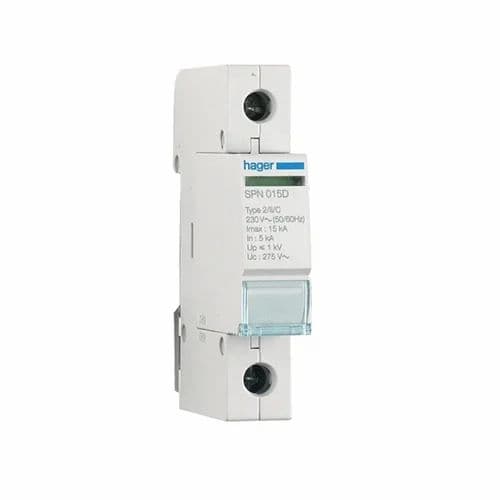
Where to buy Hager SPN115D Surge Protection Device in UK: the trusted retailers we track in this market, with the best price we have observed at each. Prices are checked regularly and can change, and the retailer confirms the final price at checkout.
We may earn a commission on purchases. It never affects our rankings.
£60 – £120
Eaton SPCT2-280 Surge Protector
Eaton's SPCT2-280 is positioned as the heavy-duty market leader for whole-home protection where maximum surge capacity and industrial-grade survivability matter most. It outpaces the other products on this list technically by offering higher nominal surge-handling capability and more robust components, which justifies a premium price for homes with larger service entrances or critical loads; however, that premium makes it less attractive for low-cost residential retrofits where Schneider, Hager or Chint are more economical. Choose Eaton when the priority is top-tier protection and long-term resilience rather than lowest upfront cost.
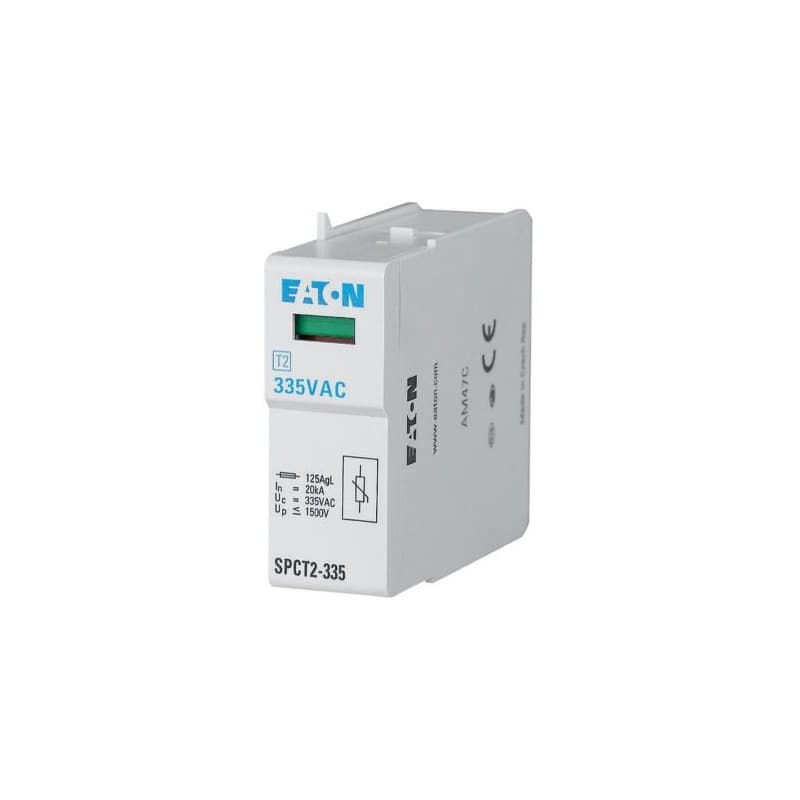
Where to buy Eaton SPCT2-280 Surge Protector in UK: the trusted retailers we track in this market, with the best price we have observed at each. Prices are checked regularly and can change, and the retailer confirms the final price at checkout.
We may earn a commission on purchases. It never affects our rankings.
£80 – £160
Chint NL1-100 Surge Protection Device
The Chint NL1-100 serves as the budget-oriented option for whole-home surge protection, delivering basic DIN-rail SPD performance at a lower purchase price than the European and American brands on this list. It is a cost-effective choice for homeowners and installers with tight budgets or for secondary/outbuilding protection, but it typically lacks the advanced monitoring, brand recognition and higher surge-rating of Eaton or the polished modular integration of Hager and Schneider. For projects where price sensitivity outweighs premium features, Chint offers compelling value.

Wylex WSSPDKIT1 Surge Protection Kit
The Wylex WSSPDKIT1 is tailored to the UK market as a convenient whole‑home surge protection kit that simplifies compliance and retrofit into common consumer units. It competes well on cost and convenience versus standalone SPDs in this list, offering an installer-friendly package ideal for British wiring practices; technically it tends to have a lower surge capacity than Eaton and fewer advanced diagnostics than some Hager/Schneider modules, but its packaged approach and local compatibility make it a smart, cost-conscious option for many UK homes. For installers focused on straightforward UK installs, Wylex reduces complexity and installation time.
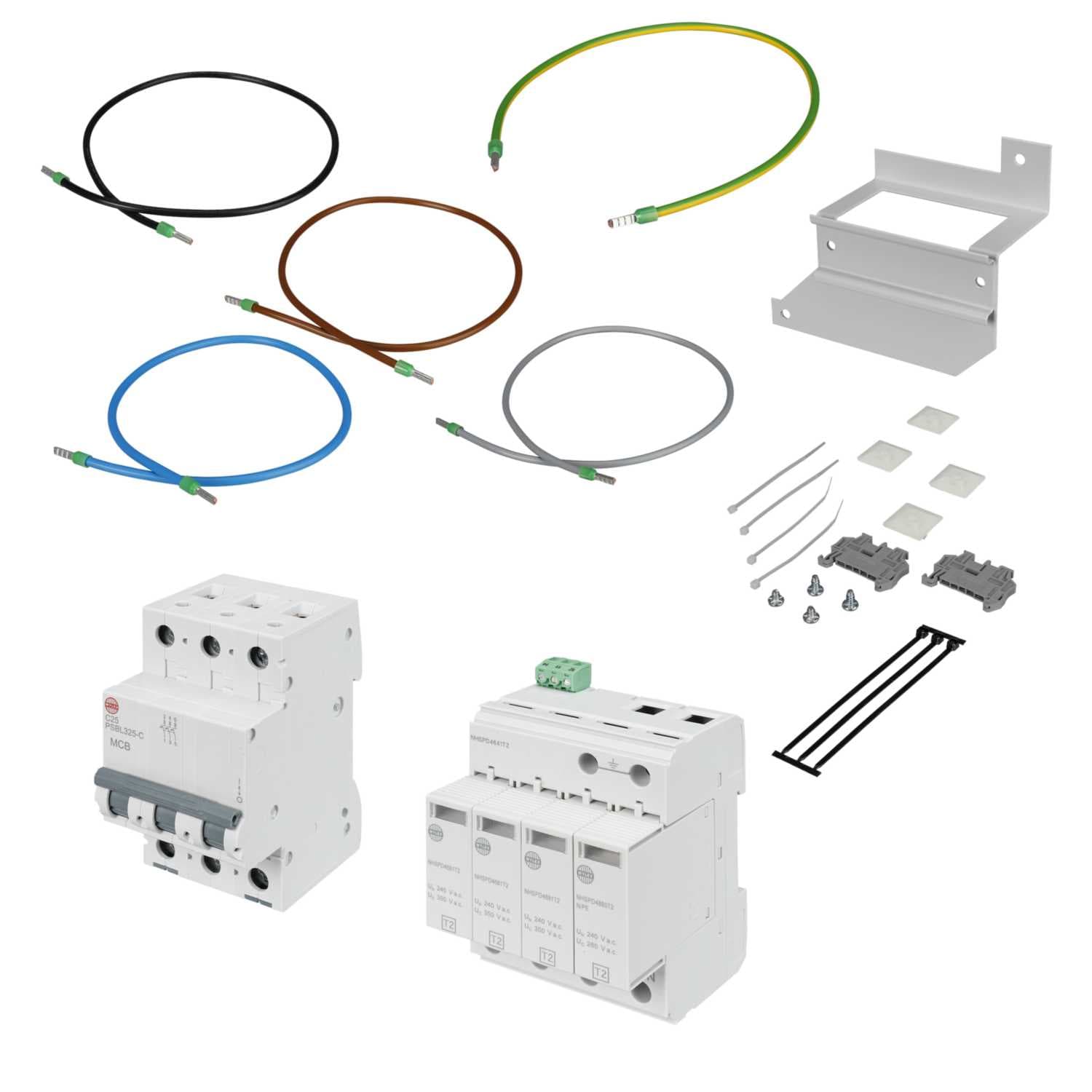
Where to buy Wylex WSSPDKIT1 Surge Protection Kit in UK: the trusted retailers we track in this market, with the best price we have observed at each. Prices are checked regularly and can change, and the retailer confirms the final price at checkout.
We may earn a commission on purchases. It never affects our rankings.
£120 – £240
How surge protection works and what research shows
Surge protective devices, or SPDs, work by diverting excess voltage away from household circuits to earth, clamping the voltage seen by connected equipment to a safer level and absorbing or bypassing short energy spikes. The science is straightforward: fast-acting semiconductor or gas-discharge components detect a transient and provide a low-impedance path to earth so that the transient does not pass through to appliances. Guidance and standards from recognised bodies, such as IEC/BS EN 61643-11 for SPD performance and BS EN 62305 for lightning protection principles, underpin testing and performance thresholds used by manufacturers and independent test laboratories. UK industry guidance from Electrical Safety First and recommendations from accredited electrician bodies emphasise correct device type and installation location to achieve the best protection.
Standards-based testing (IEC/BS EN 61643-11) sets measurable criteria for SPD performance including maximum continuous operating voltage, nominal discharge current and response time.
Independent laboratory and manufacturer tests demonstrate that correctly specified and installed SPDs significantly reduce the likelihood of transient-related equipment failure.
Industry guidance recommends a layered approach: service head SPDs (Type 1) and main distribution SPDs (Type 2) combined with local protection (Type 3) where needed, providing graduated protection for different surge magnitudes.
Proper earthing and installation by a qualified electrician are critical; poor earthing or incorrect placement reduces SPD effectiveness, as noted in technical guidance and installer best practice.
Insurers and trade associations increasingly recognise SPDs as a risk reduction measure for electrical damage, which can influence claims outcomes and replacement costs.
Frequently Asked Questions
Which whole home surge protector is best for residential panels?
The Schneider Electric Easy9 Surge Protector is the ideal choice for residential panels because it offers a cost-efficient, compact DIN-rail design that is quick to install for homeowners.
What is the surge current capacity of the Eaton SPCT2-280?
The Eaton SPCT2-280 features a high nominal surge-handling capability designed for whole-home protection against large electrical transients, making it the most robust option for heavy-duty requirements.
Does the Hager SPN115D offer remote monitoring for my home?
The Hager SPN115D provides an optional remote alarm contact for monitoring, allowing you to track the status of your mains-level protection alongside its standard visual indicator.
Is the Schneider Electric Easy9 compatible with my consumer unit?
The Schneider Electric Easy9 is a compact Type 2 protector specifically designed for compatibility with single-phase consumer units and the wider Easy9 modular range.
Conclusion
Whole home surge protection is a practical, standards-backed way to reduce the risk of costly damage and downtime from electrical transients in UK properties. If you did not find a suitable product here — this page currently lists zero options — try refining your search criteria, widening compatibility filters or checking back later for updated listings. You can also consult a registered electrician for personalised advice and specification.