Leading Edge AI Accelerators for UK Businesses and Developers in 2025
Published on Saturday, 29 March 2025
Embedded artificial intelligence accelerators have become indispensable components in modern computing, enabling devices to execute sophisticated machine learning operations at the point of use rather than relying on distant data centres. These specialised processors represent a fundamental shift in how British organisations approach edge computing, offering significant advantages including reduced latency, enhanced privacy protections, and decreased bandwidth requirements. As we navigate through 2025, UK enterprises across sectors—from manufacturing and healthcare to retail and transportation—are increasingly investing in these technologies to maintain competitive advantage. The appeal of edge-based AI processing lies in its capacity to deliver instantaneous insights, a critical requirement for time-sensitive applications such as real-time anomaly detection in industrial settings, autonomous navigation systems, and intelligent security monitoring. For British tech professionals and business leaders seeking to understand which processors offer the best combination of performance, efficiency, and value for money, this comprehensive guide examines five leading options that are currently reshaping the technological landscape. Each solution brings distinct strengths to different use cases, whether you're developing IoT solutions, deploying smart city infrastructure, or optimising existing systems for artificial intelligence workloads.
Top Picks Summary
Google Coral Dev Board
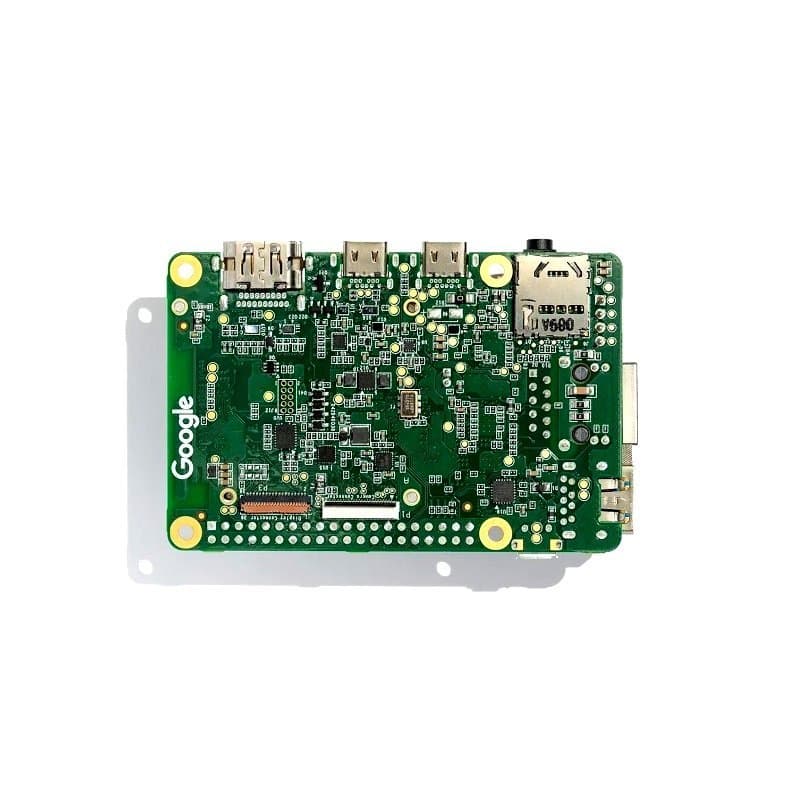
The Google Coral Dev Board holds a best-in-class position for low-power, cost-effective INT8 inference on the UK edge market in 2025 thanks to its Edge TPU accelerator and tight TensorFlow Lite integration. It trades off general-purpose FP32 throughput found in NVIDIA or Hailo devices for superior energy efficiency and lower total cost of ownership compared with Orin, making it ideal for battery-powered or massively distributed sensor deployments.
Raspberry Pi AI Kit
Targeting accessibility and rapid prototyping across the United Kingdom, the Raspberry Pi AI Kit is best-in-class for affordability and community-driven support, offering an unbeatable price-to-developer-productivity ratio compared with the other, higher-performance modules. While it cannot match the raw inference throughput of Orin, Hailo or Coral, its financial advantage, widespread supply channels in the UK, and extensive tutorials make it the top choice for education, proof-of-concept work and low-cost pilot projects.

Intel Neural Compute Stick 2
The Intel Neural Compute Stick 2 is a market-leading, portable solution for accelerating on-device inference and model optimization in UK development environments in 2025, leveraging the Movidius Myriad X VPU and OpenVINO toolchain. Its USB form factor and strong compatibility with existing Intel stacks make it a cost-efficient prototyping and deployment tool compared with bulkier accelerators, though it delivers lower peak TOPS than Hailo or NVIDIA for large-scale production workloads.

Hailo-8 AI Acceleration Module
The Hailo-8 module is recognized in the UK as a specialized, production-grade edge inference leader in 2025 thanks to its exceptional TOPS-per-watt and deterministic latency for vision and sensor workloads. It frequently outperforms Jetson Orin on power-constrained inference tasks and offers a compelling price-performance balance for embedded OEMs, although its software ecosystem remains more niche compared with NVIDIA and Google.

These leading-edge processors distinguish themselves through exceptional performance density, minimal power consumption, robust software ecosystems, and proven reliability in demanding commercial deployments. Each brings unique advantages—from specialised tensor computation capabilities to industry-standard compatibility—making them suitable for diverse applications ranging from autonomous systems to medical diagnostics and industrial automation.
Understanding Edge AI Acceleration Technology
Edge artificial intelligence acceleration represents a paradigm shift in distributed computing architecture. Rather than transmitting raw data to remote servers for analysis, these specialised processors enable intelligent decision-making directly on devices, fundamentally reducing response times and operational costs whilst simultaneously addressing growing privacy and regulatory concerns.
Edge processors reduce latency from hundreds of milliseconds to microseconds, enabling real-time decision-making in critical applications
On-device processing significantly reduces data transmission costs and network bandwidth requirements across IoT deployments
Privacy is enhanced when sensitive data remains on local devices rather than traversing networks to centralised facilities
These processors deliver substantial energy efficiency improvements compared to traditional cloud-dependent architectures
Offline functionality becomes possible, ensuring continued operation even when network connectivity is unavailable
UK organisations benefit from reduced dependence on external cloud services, improving operational resilience and sovereignty
Hardware-accelerated neural network inference provides performance improvements of 10x to 100x compared to CPU-only implementations
Flexible development environments support established frameworks including TensorFlow, PyTorch, and ONNX model formats
Frequently Asked Questions
Which AI accelerator is best for high-throughput edge computing tasks?
The NVIDIA Jetson Orin Nano is the ideal choice for high-throughput edge AI, offering superior FP16 and FP32 inference performance through its integrated GPU and Tensor acceleration. It holds a 4.5 average rating and is specifically designed for demanding robotics and vision applications.
Does the Google Coral Dev Board support TensorFlow Lite workflows?
The Google Coral Dev Board is specifically designed for TensorFlow Lite workflows, allowing for easy deployment of precompiled models using its on-board Edge TPU. This hardware is optimised for low-power, quantized INT8 inference and maintains a 4.3 average rating.
Is the Raspberry Pi AI Kit suitable for educational AI projects?
The Raspberry Pi AI Kit is the most suitable platform for educational AI projects, providing a beginner-friendly environment with extensive community support and tutorials. It currently holds a 4.2 average rating and is built to offer an excellent price-to-developer-productivity ratio for rapid prototyping.
Which edge AI board is most efficient for low-power inference?
The Google Coral Dev Board is the most efficient option for low-power inference, utilising an Edge TPU to achieve fast performance while consuming minimal energy. It is specifically engineered for projects requiring energy-sipping operation and compact, single-board integration.
Conclusion
The landscape of edge-based artificial intelligence processing continues to evolve rapidly, with manufacturers consistently pushing the boundaries of what's achievable in terms of computational density and energy efficiency. The five processors detailed throughout this guide represent the vanguard of current technology, each addressing specific requirements across diverse applications and operating environments. Whether you're a technology decision-maker evaluating options for your organisation, a developer exploring new possibilities, or simply keen to understand the direction of computing innovation in the UK, these solutions warrant serious consideration. The transition toward intelligent processing at the network edge isn't merely a trend—it represents a fundamental restructuring of how we design and deploy computing systems. We encourage you to utilise our detailed comparisons and specifications to make an informed decision that aligns with your particular requirements. For additional resources and more targeted information tailored to your specific sector or use case, please explore our comprehensive search functionality, which enables you to narrow down options based on performance metrics, power consumption, and application suitability.