Mid-Range Gaming Graphics Cards UK — 2026 Guide (Top 5 Picks)
Published on Tuesday, 27 January 2026
Mid-range gaming graphics cards are the go-to choice for UK players who want strong 1080p and capable 1440p performance without the premium cost of flagship GPUs. In 2026 the category remains popular because it balances frame-rate performance, power efficiency, and value for money — key priorities for mainstream PC gamers, streamers, and esports enthusiasts across the UK. Consumers typically prioritise price-to-performance, reliable thermals and noise levels, sufficient VRAM for modern textures and mods, and compatibility with popular upscaling technologies to enable ray tracing without a large FPS penalty. Availability and local pricing continue to shape buying decisions in the UK market, where retailers, promotions, and the used GPU market influence the best deals. Mid-range cards also appeal to upgrade-minded users who want a meaningful boost over integrated graphics or older generations while avoiding the higher power and cost demands of premium silicon.
Top Picks Summary
AMD Radeon RX 7600 XT
The RX 7600 XT positions itself as a value-focused mid-range performer, delivering very competitive raster (pure FPS) performance per dollar—often undercutting NVIDIA equivalents for similar raw frame rates in non-RT titles while using slightly less silicon power. It trails NVIDIA on ray tracing and lacks DLSS’s frame-generation edge but leverages AMD’s FSR upscaling and typically lower street prices, making it a compelling economical alternative to the 4060 Ti and a better pure-raster choice than many budget options.
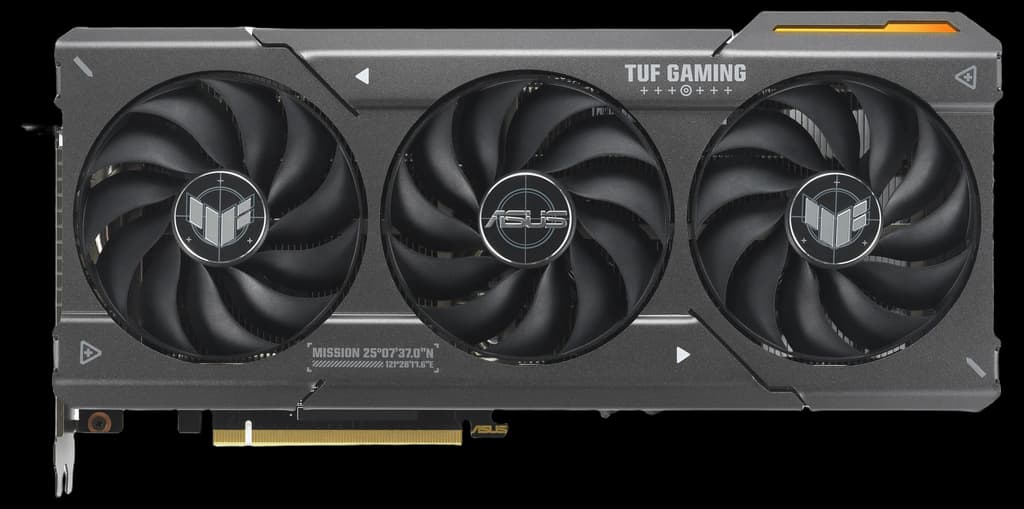
£280-360 GBP
NVIDIA GeForce RTX 4060
The RTX 4060 is the budget-friendly mid-range option that emphasizes power efficiency and advanced software features like DLSS 3 at a lower entry price than the 4060 Ti, making it an attractive choice for gamers on tighter budgets or small-form-factor builds. It offers good ray-tracing for its class but sacrifices raw raster performance versus the 4060 Ti and some AMD cards, so it’s best for 1080p high-refresh gaming where cost and low power draw are primary concerns.
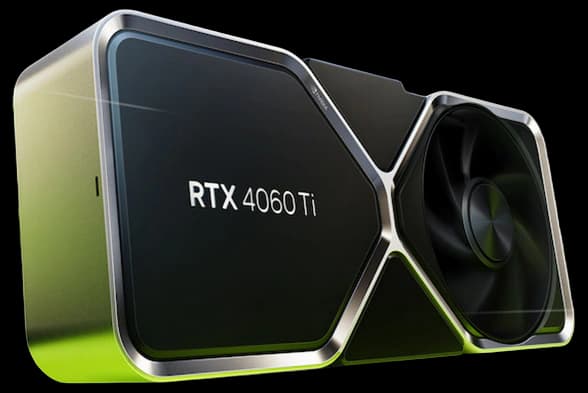
£250-320 GBP
AMD Radeon RX 7600
The RX 7600 is AMD’s mainstream mid-range card optimized for 1080p gaming, delivering strong value in raster workloads and usually undercutting higher-tier models on price; it’s a practical choice when keeping system power and budget down. Compared to the RX 7600 XT and NVIDIA offerings it sacrifices some peak performance and ray-tracing capability but benefits from AMD’s efficient architecture and competitive pricing, making it well suited for gamers who prioritize cost-per-frame over advanced RT features.
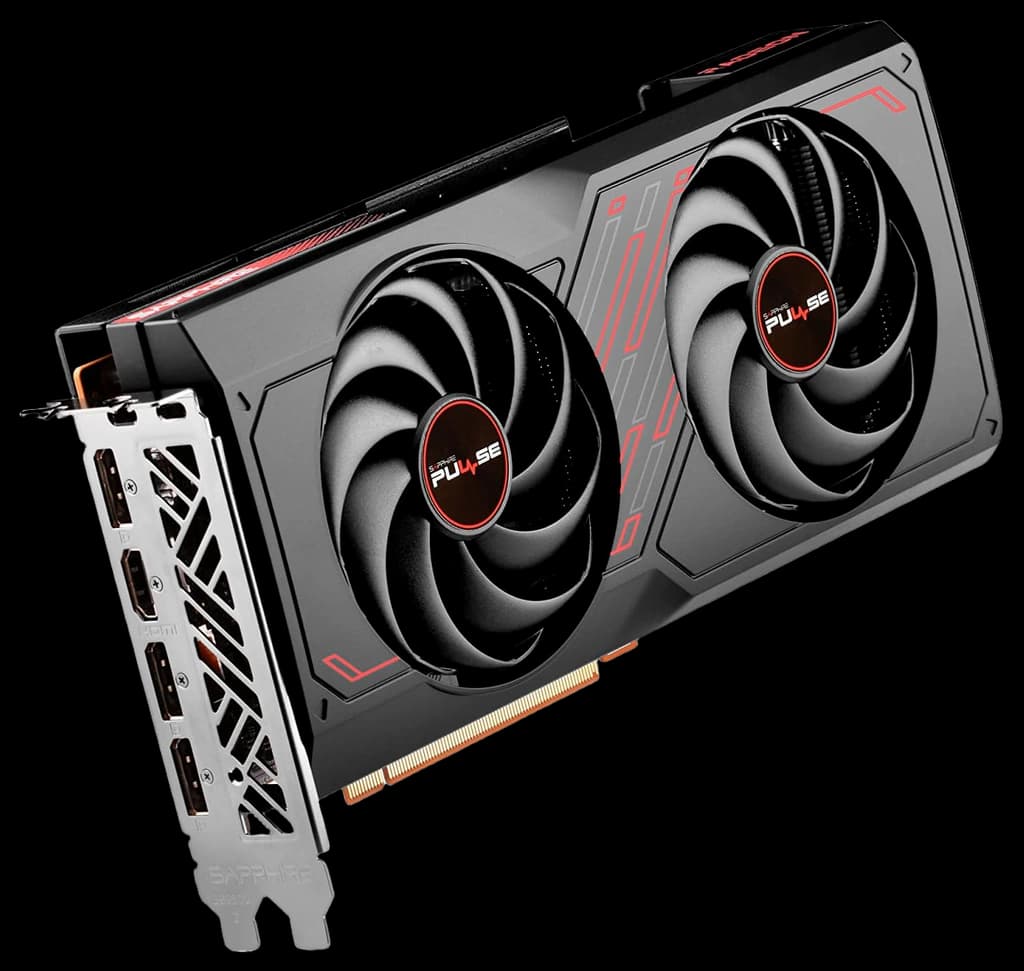
£200-270 GBP
Intel Arc A770
The Intel Arc A770 is the challenger that brings compelling hardware features—good raw raster performance for its price band, dedicated AV1 hardware encode, and competitive ray-tracing silicon—often appearing as an aggressive price-to-performance option against both AMD and NVIDIA mid-range cards. Its main trade-offs are driver maturity and game compatibility, but for buyers who value AV1 support, strong raster bang-for-buck, and feature parity in certain titles, the A770 can undercut rivals while offering unique media and encoding advantages.
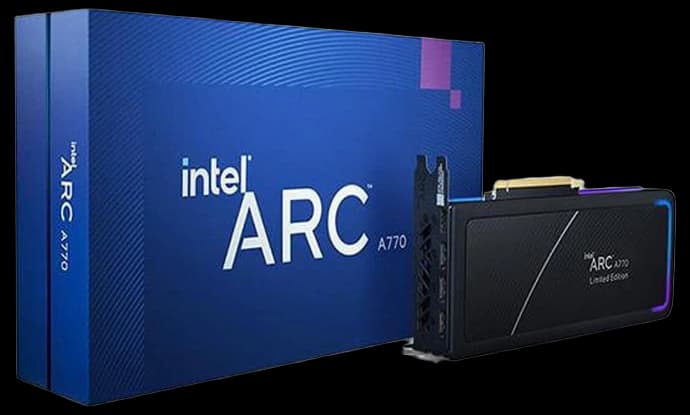
£220-300 GBP
What Research Says About Mid-Range GPUs and Their Benefits
A range of academic and industry studies helps explain why mid-range GPUs are a strong practical choice. Research into graphics performance, power efficiency and user experience shows that a careful balance of GPU architecture, memory bandwidth and driver optimisation produces the best real-world value. Studies also demonstrate that perceived smoothness and consistent frame times can matter as much as peak frames per second, making mid-range designs with stable frame pacing especially appealing for competitive and casual gamers alike.
Power efficiency: Engineering and industry reports show newer mid-range GPUs deliver better performance per watt, lowering running costs and reducing heat output in typical UK home setups.
Frame timing and experience: Human factors and system-performance research indicate consistent frame times improve perceived smoothness more than occasional high frame peaks, which supports choosing well-optimised mid-range cards.
Memory and bandwidth impact: Benchmarks and architecture analyses establish that adequate VRAM and memory bandwidth are critical for higher texture settings at 1440p, so mid-range cards with modern memory subsystems offer the best cost-to-capability trade-off.
Upscaling and ray tracing: Studies and vendor benchmarks demonstrate that hardware-accelerated ray tracing is viable at mid-range levels when combined with upscaling technologies (for example, AI or spatial upscalers), enabling better visual fidelity without an excessive FPS hit.
Sustainability and lifecycle: Research into electronics lifecycle and the secondhand market shows that mid-range cards often provide the best balance of longevity, resale value and environmental impact for budget-conscious buyers.
Frequently Asked Questions
What is the best mid-range gaming graphics cards uk — 2026 guide (top 5 picks) in UK in 2026?
As of July 2026, NVIDIA GeForce RTX 4060 Ti is the top choice for mid-range gaming graphics cards uk — 2026 guide (top 5 picks) in UK. The RTX 4060 Ti is the best-in-class mid-range pick for gamers who prioritize ray tracing and frame-generation features—its Ada architecture delivers strong raster and notably better ray-tracing performance than most competitors in this segment, plus DLSS 3 gives a measurable uplift in playable frame rates. Compared with the RTX 4060 it offers a clear performance step for a moderate price premium, and versus AMD and Intel contenders it generally provides more mature drivers and superior ray-tracing/AI feature support, making it a top choice for 1080p/1440p high-refresh gaming with long-term software advantages.
What are the key features of NVIDIA GeForce RTX 4060 Ti?
NVIDIA GeForce RTX 4060 Ti features: Strong 1080p–1440p performance with superior ray tracing compared to previous mid-range cards, DLSS 3 support and AV1 hardware decode/encode for improved upscaling and streaming, Relatively low power draw for the performance class and widely available in custom cooled variants.
What are the benefits of NVIDIA GeForce RTX 4060 Ti?
The main benefits include: High-frame magic, Power-sipping champ, DLSS superhero.
How does NVIDIA GeForce RTX 4060 Ti compare to AMD Radeon RX 7600 XT?
Based on July 2026 data, NVIDIA GeForce RTX 4060 Ti is rated 4.5/5 while AMD Radeon RX 7600 XT is rated 4.2/5. Both are excellent choices, but NVIDIA GeForce RTX 4060 Ti stands out for Strong 1080p–1440p performance with superior ray tracing compared to previous mid-range cards.
Conclusion
At present there are no top selected mid-range graphics cards listed under this guide (Top 0). If you did not find what you were looking for, try broadening your filters, checking back later as stock and models change frequently, or use the site search to expand to nearby price tiers or slightly older generations. We hope this overview helped you understand what to look for in the UK market for 2026.