

Leading NFC Access Control Systems for UK Businesses in 2025
Published on Thursday, 3 April 2025
Modern security infrastructure demands intelligent solutions that balance robust protection with user convenience. NFC access control systems represent a significant leap forward in how organisations manage entry to restricted areas, whether across office buildings, healthcare facilities, educational institutions, or government premises. Unlike traditional badge systems that wear out or get lost, NFC technology leverages near-field communication to authenticate users through smartphones, wearables, or dedicated credentials—eliminating friction whilst maintaining stringent security protocols. Throughout the United Kingdom, enterprises are increasingly recognising the operational advantages: reduced administrative overhead from lost access cards, real-time audit trails for compliance purposes, and seamless integration with existing security infrastructure. As workplace environments evolve and organisations prioritise both safety and employee experience, NFC access controllers have become essential infrastructure investments. This guide examines five market-leading solutions that are reshaping access management strategies across UK businesses, helping security professionals and facilities managers make informed decisions about their next-generation access infrastructure.
Top Picks Summary
Paxton Net2 Plus Access Control System
Paxton Net2 Plus is a UK-developed, installer-friendly NFC access control platform that excels for small-to-medium commercial sites in the UK in 2025 thanks to its strong local support network and straightforward commissioning. It is cost-effective and easier to deploy than the larger enterprise controllers on this list, offering excellent mobile/NFC credential support, though it trades off the high-density scaling and advanced enterprise features found in Suprema or Hikvision solutions.

Where to buy Paxton Net2 Plus Access Control System in UK: the trusted retailers we track in this market, with the best price we have observed at each. Prices are checked regularly and can change, and the retailer confirms the final price at checkout.
We may earn a commission on purchases. It never affects our rankings.
£500 – £900
ZKTeco inBio160 Access Control Panel
ZKTeco's inBio160 is a value-oriented, mid-range NFC-capable controller that delivers broad feature coverage and good per-door economics for UK integrators in 2025, making it attractive for medium-sized offices and multi-door installs. Compared to Paxton it offers higher door capacity and more reader flexibility at a lower hardware cost than enterprise options, though it may require more careful integration work and third-party management tools for large-scale centralisation.

Where to buy ZKTeco inBio160 Access Control Panel in UK: the trusted retailers we track in this market, with the best price we have observed at each. Prices are checked regularly and can change, and the retailer confirms the final price at checkout.
We may earn a commission on purchases. It never affects our rankings.
£250 – £450
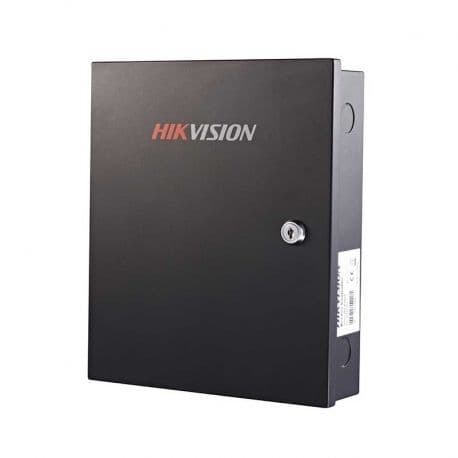
Hikvision DS-K2801 Access Controller
The Hikvision DS-K2801 is a robust, well-distributed NFC access controller that pairs tightly with video and security ecosystems, providing strong hardware reliability and competitive cost-per-door for UK projects in 2025. It sits between mid-market and enterprise offerings on this list by delivering solid integration and PoE convenience, while organisations comparing it to Suprema should weigh its excellent ecosystem integration against Suprema's stronger enterprise cyber features and scalability.
Anviz C2 Pro Access Control Board
Anviz C2 Pro is a compact, board-level NFC access controller designed for OEMs and integrators needing a low-footprint, cost-efficient solution for smaller or retrofit projects in the UK market in 2025. Its technical advantage is flexibility and price for bespoke installations compared with packaged systems like Paxton or Hikvision, but it requires more system design and third-party software to match the turnkey management features offered by the higher-tier controllers here.

Where to buy Anviz C2 Pro Access Control Board in UK: the trusted retailers we track in this market, with the best price we have observed at each. Prices are checked regularly and can change, and the retailer confirms the final price at checkout.
We may earn a commission on purchases. It never affects our rankings.
£200 – £380
Suprema CoreStation Intelligent Controller
Suprema CoreStation is the enterprise-grade NFC controller on this list, offering highest-capacity user management, centralised cloud/on-prem options and advanced cybersecurity features that make it the preferred choice for large UK campuses and critical infrastructure in 2025. Although it carries a premium, its scalability and reduced long-term operational overhead distinguish it from mid-market alternatives like ZKTeco or Anviz and deliver the strongest end-to-end security assurances compared to the more locally focused Paxton solution.

Where to buy Suprema CoreStation Intelligent Controller in UK: the trusted retailers we track in this market, with the best price we have observed at each. Prices are checked regularly and can change, and the retailer confirms the final price at checkout.
We may earn a commission on purchases. It never affects our rankings.
£1,200 – £3,500
These leading controllers distinguish themselves through enterprise-grade encryption, multi-protocol compatibility with existing systems, comprehensive audit logging for regulatory compliance, and intuitive administration dashboards. Most support both smartphone-based and traditional credential authentication, ensuring flexibility during organisational transitions. Advanced biometric integration capabilities, API-driven customisation options, and proven reliability across demanding UK environments further set these platforms apart from conventional access systems.
Understanding NFC Access Control Technology
Near-field communication technology operates within a 10-centimetre radius, creating secure point-to-point connections between credentials and readers. This fundamental principle enables rapid, reliable authentication without the delays associated with traditional swipe-card systems or manual verification processes. NFC controllers process authentication requests locally, reducing dependency on cloud connectivity whilst maintaining centralised policy enforcement through periodic synchronisation. This architecture particularly benefits UK organisations with geographically distributed facilities or challenging network conditions.
Contactless authentication reduces disease transmission vectors and maintenance requirements
Real-time access logs support Health and Safety Executive compliance demonstrations
Multi-factor integration options accommodate regulatory requirements across healthcare and financial sectors
Wireless credential provisioning eliminates physical card manufacturing and distribution logistics
Standardised encryption protocols ensure compatibility across multiple manufacturers and system generations
Mobile-first credential management aligns with UK workforce mobility expectations
Energy-efficient readers operate reliably on battery backup systems during power disruptions
Frequently Asked Questions
Which NFC access control system is best for small UK businesses?
The Paxton Net2 Plus is the ideal choice for small-to-medium commercial sites in the UK due to its straightforward commissioning and strong local support network.
Does the ZKTeco inBio160 support biometric modules for extra security?
Yes, the ZKTeco inBio160 is a biometric-ready access control panel that supports integration with multiple reader types and biometric modules for enhanced site security.
Is the Hikvision DS-K2801 a good choice for video surveillance integration?
The Hikvision DS-K2801 is an excellent surveillance partner that integrates tightly into Hikvision ecosystems and VMS, providing secure AES encryption for all event logging.
What is the average user rating for the Paxton Net2 Plus?
The Paxton Net2 Plus holds an average rating of 4.5, reflecting its popularity as a scalable, user-friendly solution for UK-based commercial access control installations.
Conclusion
The landscape of workplace security in the United Kingdom has fundamentally shifted towards systems that combine sophisticated authentication with user-centric design. The five controllers highlighted in this guide represent the current pinnacle of NFC access technology, each addressing distinct operational requirements and organisational scales. Whether your priority centres on biometric integration, enterprise scalability, or straightforward implementation, these platforms deliver measurable improvements in security posture and operational efficiency. The transition to NFC-based access management isn't merely a technological upgrade—it's a strategic investment in future-proofing your security infrastructure against evolving threats whilst enhancing the daily experience of your workforce. We encourage you to evaluate each solution against your specific requirements, regulatory obligations, and long-term strategic objectives. Should you require more detailed specifications or comparative analysis of particular features, our comprehensive resource library provides additional technical documentation. The future of access control is here; selecting the right partner ensures your organisation remains at the forefront of security innovation.