

Best Programmable Digital Hearing Aids UK 2026 | Expert Reviews & Comparisons
Published on Thursday, 23 July 2026
Programmable digital hearing aids are prescription medical devices: they are selected, fitted and programmed for you by a registered audiologist, then verified against a prescription target (commonly NAL-NL2 or DSL) using real-ear measurement so the amplification actually matches your hearing loss inside your own ear canal. That fitting step is what separates them from self-fitting "sound amplifiers" or PSAPs, which are not hearing aids, are not prescribed, and should not be relied on to treat hearing loss. In the UK, hearing aids are UKCA/CE-marked medical devices, and audiologists who fit them privately are registered with the HCPC. Before paying privately, it is worth knowing that NHS hearing aids are free on loan following an audiology assessment arranged through your GP, with fitting, follow-ups, batteries and repairs included for the life of the aids; in parts of England, Any Qualified Provider routes let you have that NHS assessment at a high street provider. People typically go private for a wider choice of styles and platforms, rechargeability, faster appointments or a specific manufacturer's technology, and private prices commonly run from roughly £1,500 to £5,000 for a pair including assessment, fitting and aftercare. This guide compares seven programmable prescription hearing aid families sold in the UK, drawing on manufacturer specifications, published UK provider pricing and publicly reported owner feedback. We do not test hearing aids ourselves, and nothing here is a hearing assessment or medical advice — only an audiologist can determine which device and prescription suit your audiogram.
Top Picks Summary
Phonak Audéo Lumity
Phonak Audéo Lumity earns a top spot for 2025 UK users because it combines class-leading speech-in-noise performance with reliable rechargeable operation and broad wireless connectivity, making it a strong choice for active everyday wearers. Compared with the list peers it typically delivers more robust remote-programming support and market-proven fitting tools, often offering a compelling total-cost-of-ownership versus feature-rich rivals like Starkey Genesis AI.

Signia Pure Charge&Go IX
Signia Pure Charge&Go IX stands out for its compact, discreet form factor and advanced motion-sensor processing that adapts to conversations on the move, a useful advantage for urban UK lifestyles in 2025. Technically it competes well on battery life and on-device sensing against Phonak and Oticon, and it frequently delivers strong value in clinic fitting packages compared with higher-priced AI-focused models.
Where to buy Signia Pure Charge&Go IX in UK: the trusted retailers we track in this market, with the best price we have observed at each. Prices are checked regularly and can change, and the retailer confirms the final price at checkout.
We may earn a commission on purchases. It never affects our rankings.
£1,000 – £1,700
Oticon Real
Oticon Real is positioned for listeners who prioritise natural, spatial hearing and multi-speaker clarity thanks to Oticon's BrainHearing approach and powerful scene-analysis processing. In comparison to other entries it tends to excel in complex acoustic environments and offers a premium sound strategy that can justify a higher price for users seeking best-in-class conversational awareness.

Widex SmartRIC
Widex SmartRIC is recognised for its signature natural sound quality and low-latency processing, making music and live-voice listening particularly satisfying for UK users in 2025. It also gives clinicians fine-grain programmability that rivals Oticon and Resound, while often sitting in a competitive mid-tier price band for patients seeking audiological customisation without the top-tier premium.
Resound Nexia
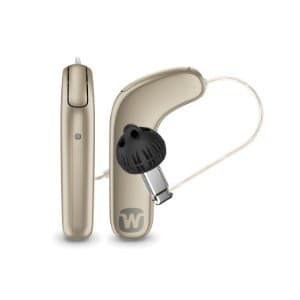
Resound Nexia makes the list for its seamless streaming, polished smartphone app and strong remote-adjustment ecosystem that suits tech-savvy UK patients who want control from their phone. Financially and technically it offers notable value in connectivity and telecare compared with bulkier alternatives, and is often preferred by users who prioritise hands-on remote management over on-device AI features.
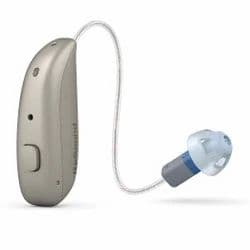
Where to buy Resound Nexia in UK: the trusted retailers we track in this market, with the best price we have observed at each. Prices are checked regularly and can change, and the retailer confirms the final price at checkout.
We may earn a commission on purchases. It never affects our rankings.
£900 – £1,700
Starkey Genesis AI
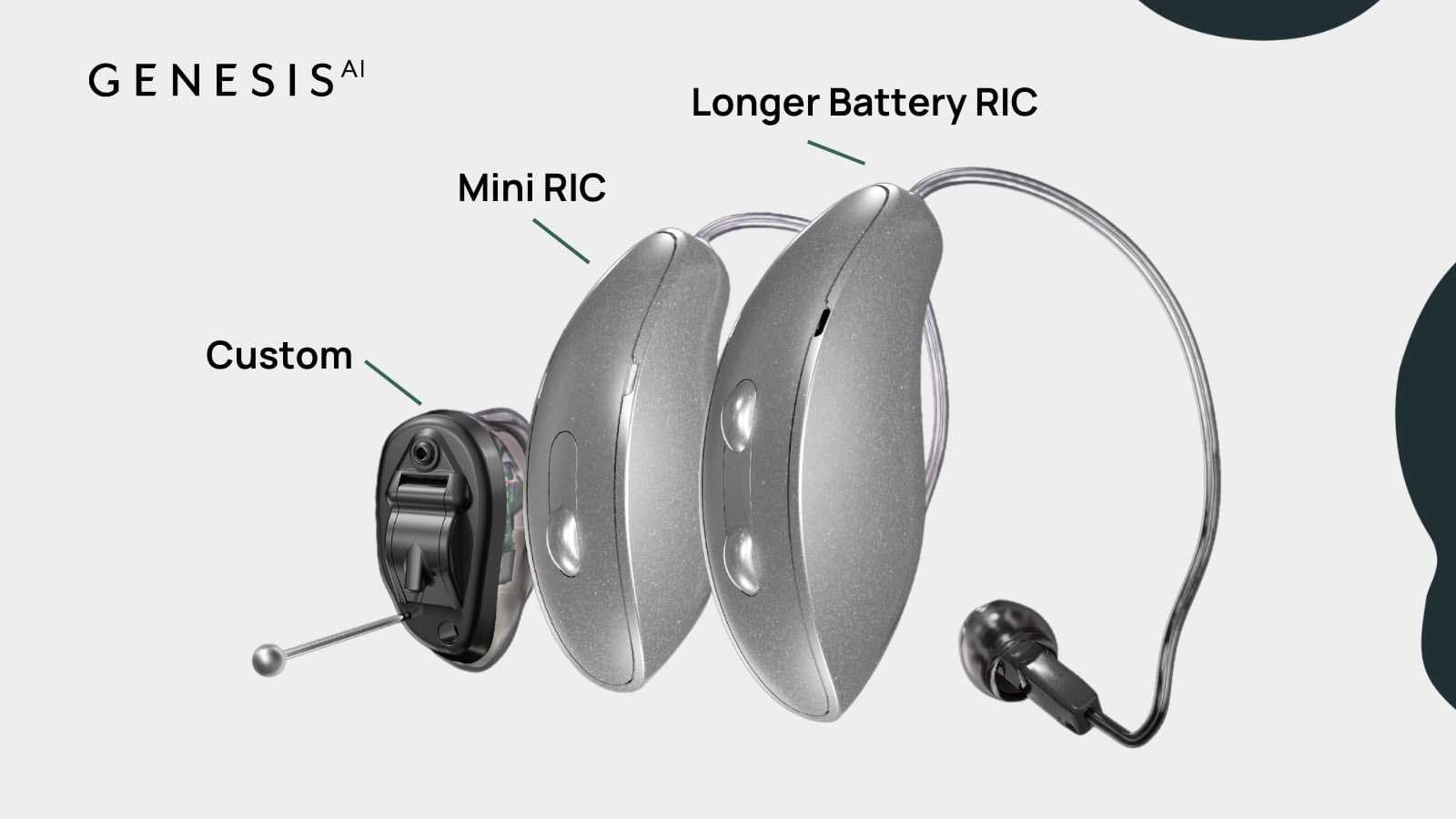
Starkey Genesis AI is the market leader for integrated artificial intelligence and health-oriented sensors, offering personalised sound profiles and ancillary well-being metrics that go beyond traditional amplification — a distinct proposition for 2025 UK buyers seeking high-tech capability. While it generally carries a premium price compared with more traditional models like Unitron or Resound, its unique AI-driven feature set provides differentiated clinical and consumer value.
Unitron Vivante
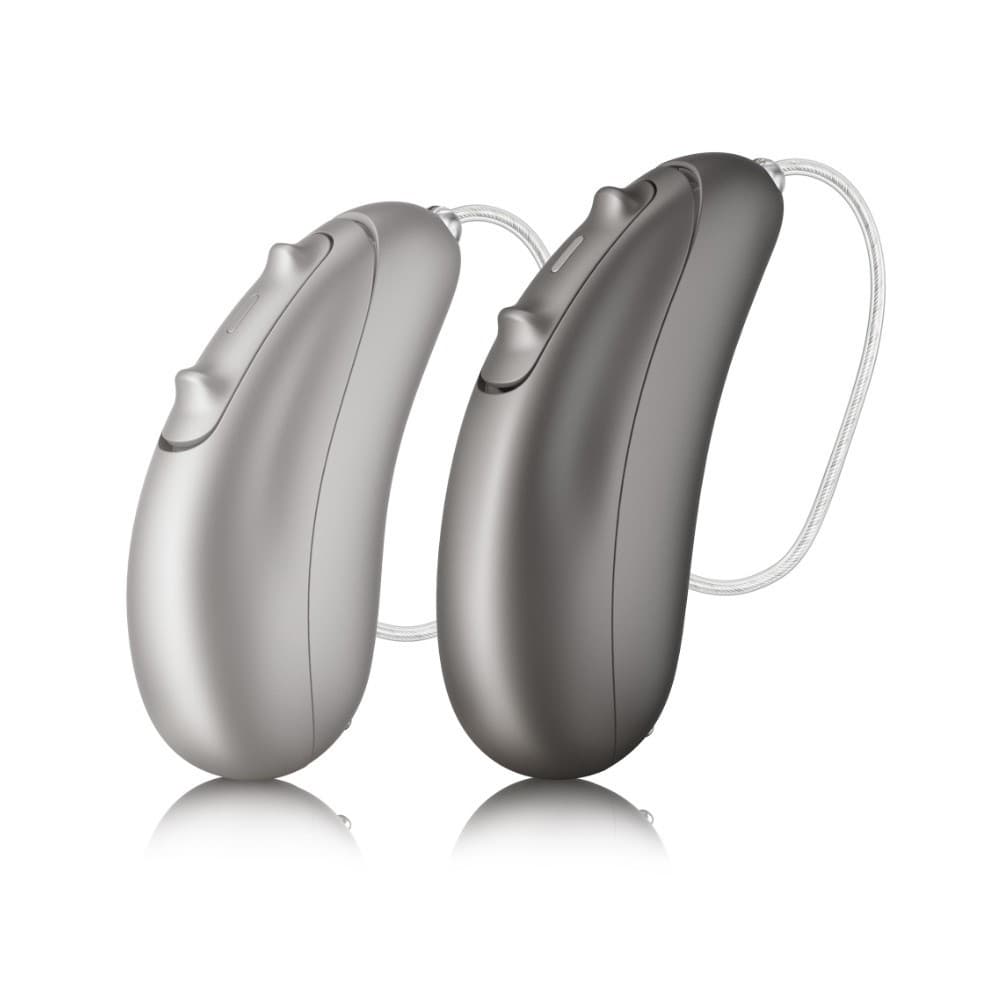
Unitron Vivante is valued for practical clinic-focused features, flexible upgrade paths and an emphasis on real-world trials that make it a cost-effective option for many UK patients in 2025. Compared with the cutting-edge audio or AI leaders in this list, Unitron often represents the best balance of straightforward programmability, predictable pricing and easy trial logistics for practices and first-time users.
Leading programmable hearing aids now integrate artificial intelligence for automatic environment detection, offer extended battery life exceeding seven days, feature premium noise suppression, enable direct smartphone streaming via Bluetooth, and provide remote programming capabilities through dedicated mobile applications, allowing adjustments without clinic visits.
Understanding Programmable Digital Hearing Aids
Programmable hearing aids are prescription devices, not consumer gadgets. Here is what actually matters before you buy:
"Programmable" means an audiologist connects the aid to fitting software and sets gain, compression and frequency response to your audiogram — it is not a setting you configure yourself from an app.
Ask that the fitting be verified with real-ear measurement against a prescription target such as NAL-NL2 or DSL v5. Manufacturer first-fit alone routinely under-amplifies, and REM is the objective check that the device is delivering what your loss requires.
Devices sold on general marketplaces as "digital programmable hearing aids" for roughly £50–£200 are almost always PSAPs or sound amplifiers. They are unregulated, are not programmed to a prescription, and are not a substitute for a hearing aid.
NHS hearing aids are free on loan after an audiology assessment referred by your GP, and that package includes fitting, aftercare, batteries and repairs; a private purchase is a choice about style, platform and access, not about whether treatment is available.
Sudden, one-sided or rapidly worsening hearing loss, tinnitus in one ear, pain, discharge or dizziness needs medical assessment first — do not go straight to buying an aid.
In-app or smartphone "adjustment" on these devices changes volume and preset programmes within limits your audiologist sets; meaningful re-prescription still requires a clinical appointment.
Genuine hearing aids sold in the UK carry a UKCA or CE mark as medical devices, and the person fitting them privately should be registered with the HCPC — check both before paying.
Frequently Asked Questions
Which programmable hearing aid should I consider for noisy streets?
Phonak Audéo Lumity is a common recommendation for busy, noisy environments because its AutoSense OS automatic programme and SmartSpeech features are aimed at speech in noise, and owner ratings average around 4.6. That said, no model is "best" in the abstract — performance in noise depends on your audiogram, your receiver power and how carefully the aid is programmed and verified by your audiologist.
What feature helps Phonak Audéo Lumity with speech in noise?
Phonak lists AutoSense OS with its SmartSpeech Technology, which classifies the listening environment and switches processing automatically, plus directional microphone handling aimed at speech in noise. Owner ratings average about 4.6 out of 5. The benefit you actually get still depends on the prescription your audiologist programmes and verifies.
How do the prices on this page compare, and what will I really pay?
The figures shown are indicative UK private prices per device: Signia Pure Charge&Go IX sits around £1,000–£1,700, below AI-focused flagships such as Starkey Genesis AI (£1,400–£2,400) and above Unitron Vivante (£700–£1,300). Budget for a pair plus care rather than a single unit — private hearing aids in the UK typically cost roughly £1,500–£5,000 per pair including assessment, fitting and aftercare, and prices vary by provider and by how much follow-up is bundled. NHS hearing aids remain free on loan.
Is Signia Pure Charge&Go IX a good choice if you are often on the move?
It is designed with that in mind: Signia's Integrated Xperience platform uses acoustic-motion sensing to adapt processing when you are walking or moving between talkers, and it is rechargeable. Owner ratings average about 4.4. Whether it outperforms a rival for you is a question for a trial fitting with an audiologist.
Conclusion
The landscape of programmable digital hearing aids in 2026 demonstrates remarkable innovation and user-centric design, providing British consumers with genuine alternatives to traditional hearing solutions. Whether you prioritise sophisticated connectivity features, exceptional battery performance, or discreet aesthetics, this year's selection accommodates diverse preferences and budgetary considerations. As hearing health continues gaining prominence within UK healthcare discussions, accessing quality programmable devices has become more straightforward, with numerous high street audiology practices and online providers now offering comprehensive fitting and aftercare services. We encourage you to consult with a qualified audiologist who can assess your specific hearing profile and recommend solutions aligned with your lifestyle and expectations. Should you require more detailed information about particular features, pricing across different regions, or comparative assessments of specific brands, our search functionality enables you to explore additional resources tailored to your requirements. Your journey towards improved hearing begins with understanding the options available—we're here to support that exploration.