

Top 5 Enterprise NAS Systems in the UK for 2026
Published on Thursday, 26 February 2026
As UK organisations grapple with exponential data proliferation, the demand for flexible, scalable network-attached storage has never been more pressing. Enterprise NAS systems that grow alongside business operations offer a compelling alternative to rigid, fixed-capacity infrastructure that quickly becomes obsolete. The ability to expand storage capacity without wholesale replacement of existing hardware represents genuine operational and financial prudence for forward-thinking British firms. Whether managing complex media workflows, supporting remote teams across multiple locations, or consolidating disparate storage silos, contemporary scalable NAS solutions deliver the elasticity required for sustainable growth. UK buyers increasingly value intuitive management interfaces, strong redundancy and data-protection features, energy efficiency to control running costs, and straightforward integration with cloud services and compliance frameworks such as GDPR. Hybrid flash-enabled architectures, efficient metadata handling, and modular scale-out designs are particularly appealing because they combine high performance with predictable total cost of ownership. This guide highlights five leading enterprise NAS platforms available in the UK market in 2026, focusing on reliability, performance, long-term value, and practical deployment considerations.
Top Picks Summary
Synology FlashStation FS6400
The FlashStation FS6400 earns its top spot for the UK 2025 list by delivering dense, enterprise-grade all-flash performance with Synology's mature DSM software, offering excellent flash-optimized throughput and cost-per-IO advantages for latency-sensitive workloads. Compared with scale-out giants like Dell PowerScale and NetApp, the FS6400 is a more financially efficient flash-first choice for organisations that need high IOPS without the operational complexity of massive clustered arrays, while still outpacing QNAP and HPE in sustained flash performance and data service maturity.

QNAP TS-h1290FX
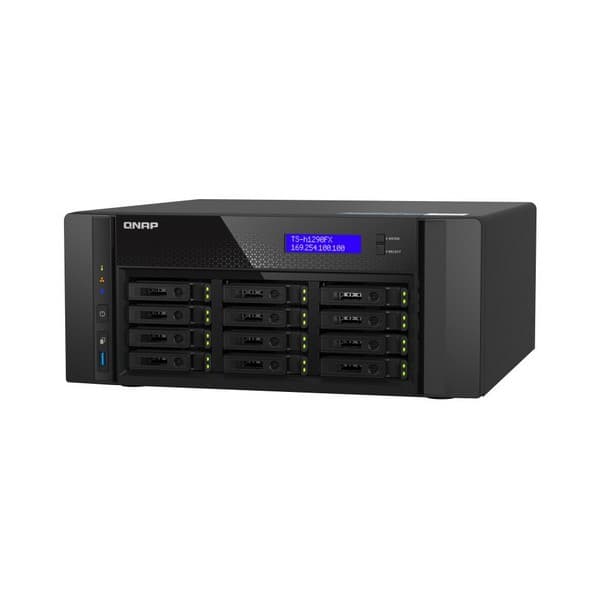
The TS-h1290FX stands out as the flexible mid-market contender, blending strong hybrid storage capabilities, generous I/O options and ZFS-like data protections to deliver a versatile balance of performance and value for UK enterprises. It undercuts higher-priced scale-out systems on upfront cost and offers more configuration flexibility than the Synology FlashStation for mixed workloads, making it particularly attractive for organisations that want near-enterprise features without the premium of Dell PowerScale or NetApp.
Dell PowerScale F710
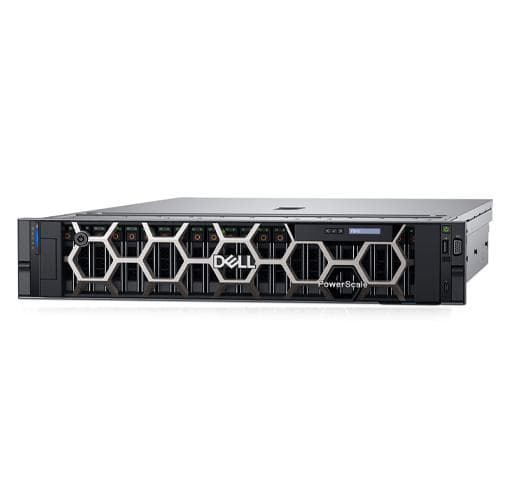
Dell PowerScale F710 secures a best-in-class position for large-scale unstructured data workflows by combining scale-out NAS architecture with dense capacity nodes and a competitive price-per-terabyte that benefits storage-heavy deployments. For the 'undefined' use case it distinguishes itself through mature Isilon-derived software, broad protocol support and cost-effective scaling, making it a more economical choice for bulk file storage compared with the higher-performance, array-focused offering on this list.
NetApp FAS2820
The FAS2820 represents NetApp's market-leader pedigree in unified data services and ONTAP-driven efficiencies, excelling at data tiering, replication and cloud integration for distributed UK enterprise environments. Not as flash-dense as the Synology FlashStation or as massively scalable as PowerScale F900, the FAS2820 nevertheless offers a proven operational and financial ROI for mixed workloads thanks to mature software features that reduce management overhead compared with pure hardware-focused alternatives.

HPE Alletra Storage MP B10000
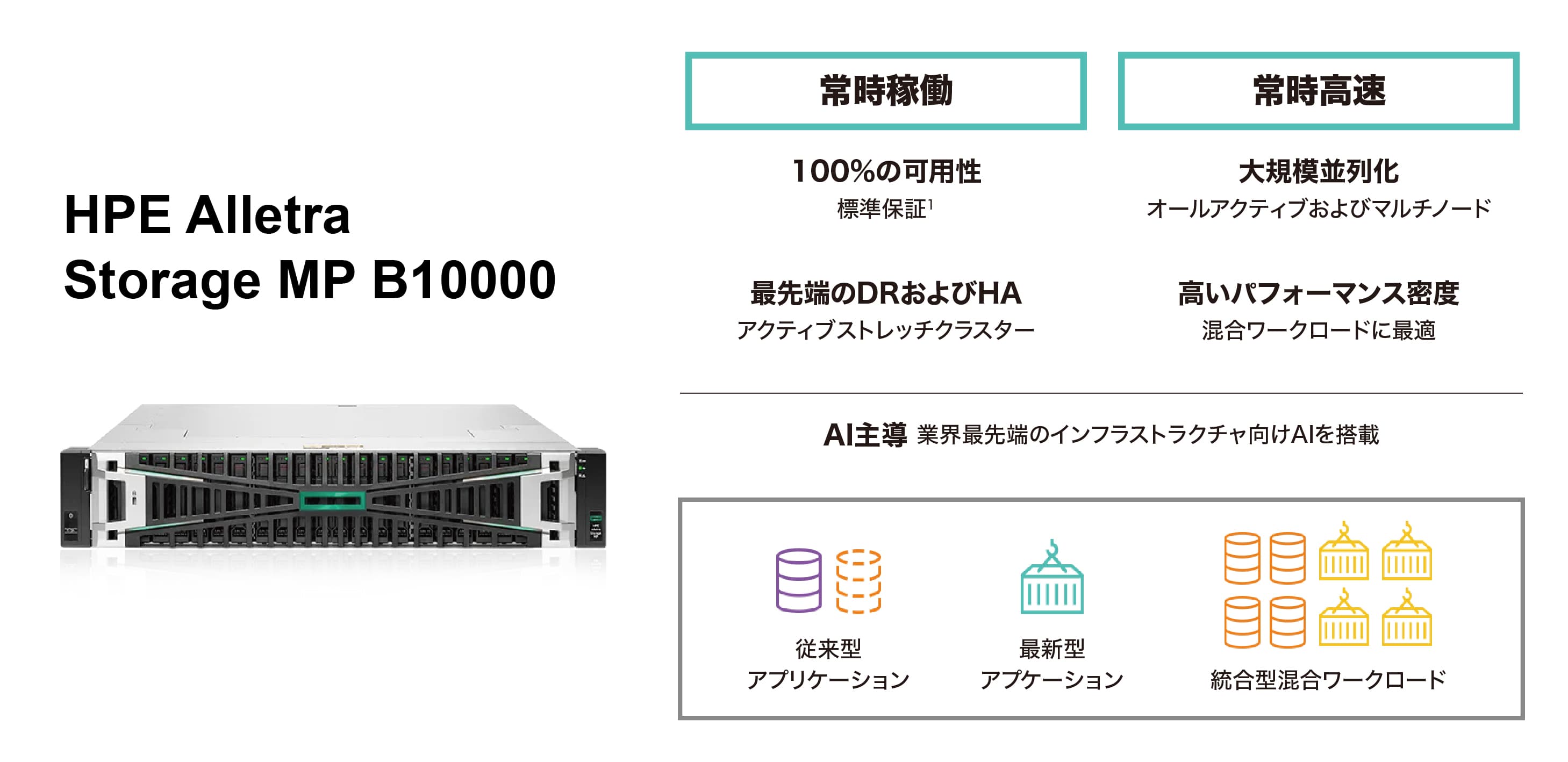
HPE Alletra Storage MP B10000 is a market-leader platform delivering consistent low-latency performance and enterprise data services, which makes it ideal for mission-critical and latency-sensitive workloads relevant to the 'undefined' use case. Compared with the Dell PowerScale F710 it typically carries higher acquisition cost but offers tighter data management, predictable performance and cloud-native operational simplicity that can reduce total cost of ownership for transactional or mixed-workload environments.
Research and evidence: Why scalable enterprise NAS delivers value
Independent industry reports and technical studies consistently show that modern scalable NAS architectures reduce latency for mixed workloads, increase usable capacity through inline efficiencies, and lower total cost of ownership when compared with static, siloed storage designs. Research from industry analysts and academic evaluations emphasizes the importance of flash caching or all-flash tiers for I/O-intensive applications, and of erasure coding and distributed metadata for resiliency at scale. For organisations just starting to evaluate enterprise NAS, the evidence supports prioritising solutions that balance performance, energy efficiency, and management simplicity.
Performance gains: Benchmarks and vendor-neutral tests show hybrid and flash-first NAS platforms deliver significantly lower read and write latency for media production, databases, and virtualised workloads compared with HDD-only arrays.
Capacity efficiency: Studies on deduplication and compression indicate real-world capacity improvements, reducing the need for frequent hardware expansion and lowering effective per-terabyte cost.
Resiliency and data protection: Research on erasure coding and distributed metadata demonstrates higher uptime and faster rebuild times than legacy RAID-only approaches for enterprise-scale datasets.
Economic impact: Total cost of ownership analyses from analyst firms highlight that initial higher investment in flash-enabled or scale-out NAS is often offset by lower management overhead, reduced rack space, and lower power consumption.
Operational simplicity: User studies find that intuitive management interfaces and strong integration with directory services, backup solutions, and cloud gateways reduce administrative time and risk of configuration error.
Compliance and sovereignty: UK-specific guidance and commercial practice emphasize the need for features that support data locality, encryption at rest and in transit, and auditability to meet regulatory requirements.
Frequently Asked Questions
Which NAS should an enterprise choose for latency workloads?
Synology FlashStation FS6400 is a strong pick for latency-sensitive enterprise workloads because it uses an all-flash architecture for ultra-low latency and very high IOPS, and it runs Synology DSM with Btrfs, snapshot replication, inline compression, and robust data protection.
What exact feature does QNAP TS-h1290FX offer for data integrity?
QNAP TS-h1290FX uses the QuTS hero (ZFS) platform, providing strong data integrity with inline deduplication and compression, plus hot-swappable drives and rich virtualization/container support for enterprise applications.
How does Dell PowerScale F710 compare on storage cost?
Dell PowerScale F710 is positioned for storage-heavy deployments with a competitive price-per-terabyte, and it’s designed for high-throughput unstructured data workloads using scale-out NAS architecture with OneFS for seamless cluster expansion and single namespace management.
What networking options are included on QNAP TS-h1290FX?
QNAP TS-h1290FX supports high-speed network options including 10/25/40/100GbE, alongside a flexible hybrid design for mixed SSD/HDD bays and hot-swappable drives.
Conclusion
This shortlist brings together five market-leading enterprise NAS platforms for UK organisations in 2026: Synology FlashStation FS6400, QNAP TS-h1290FX, Dell PowerScale F710, NetApp FAS2820, and HPE Alletra Storage MP B10000. Each option delivers distinct strengths — for example, Synology FlashStation FS6400 excels at flash-optimized performance, QNAP TS-h1290FX balances versatility and expandability, NetApp FAS2820 is a solid choice for integration with established NetApp ecosystems, and HPE Alletra Storage MP B10000 targets high-availability hybrid-cloud operations. For most British firms seeking the best balance of scale-out flexibility, enterprise performance, and proven field deployment at scale, the Dell PowerScale F710 stands out as the strongest overall choice. We hope you found the guidance you were looking for; if you want to refine or expand your search by workload type, budget, or compliance needs, use the search to narrow results or explore alternative configurations.