Top 7 Inspection Drones UK 2026 — Best Camera Drones for Professional Infrastructure Surveys
Published on Thursday, 26 February 2026
The landscape of infrastructure maintenance in Britain has been transformed by advanced unmanned aerial systems designed specifically for professional surveying and structural evaluation. These sophisticated platforms use state-of-the-art sensor technology to examine everything from motorway bridges and electrical transmission networks to wind turbine installations and historical listed buildings. The shift toward aerial inspection methodologies represents a significant advancement for UK enterprises seeking to balance operational efficiency with enhanced worker safety. Modern inspection drones combine exceptional durability with precision imaging systems, enabling operators to gather comprehensive diagnostic data while minimising disruption to critical infrastructure. Whether you are managing extensive utility networks, conducting routine maintenance, or assessing storm damage across dispersed assets, these unmanned systems deliver measurable improvements in data accuracy, project timelines, and overall cost-effectiveness. Consumer and commercial buyers in the UK prioritise reliability, sensor versatility (thermal, LiDAR, high-resolution RGB), strong positioning systems such as RTK, robust airframes with high IP ratings, long battery life, and smooth integration with mapping and asset-management workflows. The regulatory framework governing commercial drone operations in the United Kingdom has matured considerably, creating a more structured environment for businesses to integrate these technologies into standard operating procedures.
Top Picks Summary
DJI Matrice 350 RTK
The DJI Matrice 350 RTK is the best-in-class choice for heavy-duty industrial inspections in the United Kingdom in 2025 thanks to its enterprise-grade redundancy, long endurance, and modular payload support that make it ideal for complex rail, power and offshore workflows. Compared with the smaller Matrice 30T and Mavic 3 Enterprise it delivers superior flight time, multiple simultaneous sensors and integrated RTK for survey-grade positioning, and while it carries a premium price it reduces operational risk and overall compliance costs for large-scale inspection programmes.

£12,000 – £16,000
DJI Matrice 30T
The DJI Matrice 30T strikes a strong balance between capability and cost for UK inspectors by combining a compact, rugged airframe with an integrated thermal and zoom sensor suite that is quick to deploy across routine site inspections. It offers many of DJI's enterprise software and service advantages found on the M350 RTK but at a lower acquisition cost and smaller operational footprint, making it a pragmatic alternative for teams that need professional-grade data without the heavier payload or expense of the M350 RTK.

£8,000 – £10,000
Autel EVO Max 4T
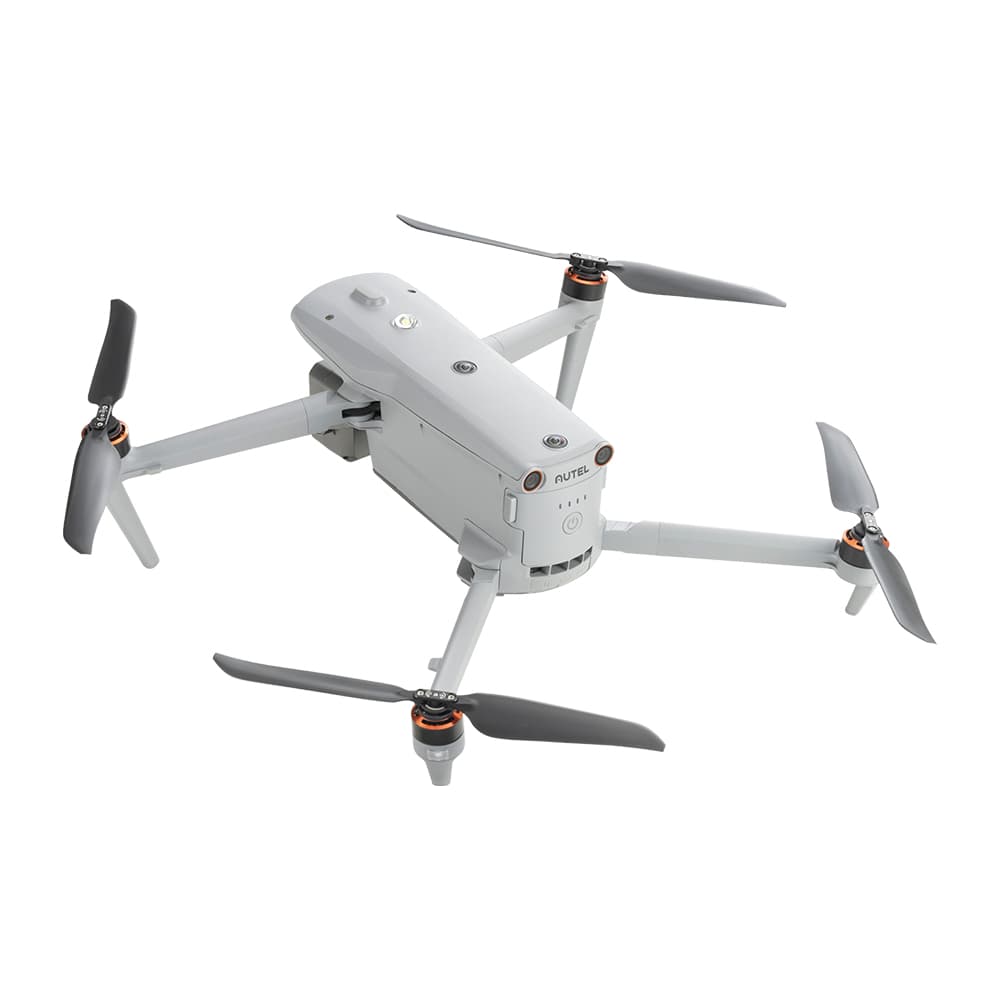
The Autel EVO Max 4T is a market-leading competitor in 2025, offering high-quality thermal and optical sensors, long endurance and an open software approach that keeps initial procurement and long‑term maintenance costs competitive for UK operators. Technically it rivals DJI on sensor performance and often undercuts on price, and while its domestic UK service network is smaller than DJI’s, its flexible licensing and payload options make it an attractive choice for organisations seeking lower total cost of ownership and less vendor lock‑in.
DJI Mavic 3 Pro
The DJI Mavic 3 Enterprise is the best value option for small teams and SMEs in the UK, delivering very portable, enterprise-capable imaging (including zoom and thermal variants) at a fraction of the cost and training burden of larger platforms. Although it cannot match the endurance, payload flexibility or redundancy of the Matrice series or some Autel models, its low capital expenditure and rapid deployment make it ideal for urban infrastructure and first-response inspection tasks where fast ROI and ease of use matter most.

Parrot Anafi USA
The Parrot ANAFI USA is a lightweight drone that stands out with its unique 32x zoom camera and thermal imaging capabilities, making it perfect for public safety and inspection missions. Its foldable design ensures portability, while advanced safety features enhance operational reliability. With a strong emphasis on data security and ease of use, it is suitable for both professionals and first responders. The ANAFI USA combines innovative technology with versatility, establishing itself as a leader in the compact drone market.

£4,000 – £6,000
Flyability Elios 3
The Flyability Elios 3 is best-in-class for confined-space inspection thanks to its collision-tolerant cage design, industrial-grade sensors, and inspection-focused workflows that reduce downtime and repair costs; compared with the Freefly Astro, Elios 3's rugged enclosure and inspection tooling make it the safer, more cost-efficient choice for hazardous or tight indoor environments. For the undefined use case this list targets, Elios 3's emphasis on durability, repeatable data capture, and low total cost of ownership keeps operational risk and ongoing expenses lower, even though it is not designed for high-speed cinematic flight.

£45,000 – £75,000
Freefly Astro
The Freefly Astro is a market-leading platform for outdoor aerial cinematography and high-performance flight, offering modular payload options and advanced stabilization that deliver superior image quality and maneuverability; compared with the Flyability Elios 3, the Astro excels in open-air speed, payload flexibility and cinematic control, though it demands more careful operation in confined or hazardous spaces. For the undefined use case, Astro's technical strengths in flight dynamics and camera integration make it ideal when visual fidelity and sensor versatility are the priority, even if its acquisition and operational costs and risk profile are higher than an inspection-focused drone like the Elios 3.

£1,800 – £3,500
Research-backed benefits of inspection drones
A growing body of research, industry case studies, and regulatory guidance supports the use of inspection drones across infrastructure sectors. Studies and field trials show that aerial inspections can improve safety by reducing the need for personnel to work at height or in hazardous locations, increase the speed and frequency of inspections, and enhance defect detection when modern sensors and processing workflows are used. The combination of high-resolution imaging, thermal sensing, and LiDAR or photogrammetry-based mapping produces data sets that are easier to archive, compare over time, and feed into predictive maintenance models.
Safety: Peer-reviewed studies and industry case reports demonstrate that replacing manual inspections with drone surveys reduces exposure to hazardous conditions and lowers incident risk for maintenance crews.
Efficiency: Utility and infrastructure operators report faster inspection cycles and lower field time requirements, enabling more frequent surveys and quicker response to issues.
Data quality: Research in remote sensing and robotics shows that modern thermal cameras and LiDAR sensors increase defect detection rates for problems such as overheating, moisture ingress, and structural cracks when combined with consistent flight plans and good post-processing.
Cost-effectiveness: Multiple cost-benefit analyses and commercial case studies indicate that aerial inspection workflows can lower overall inspection costs by reducing scaffolding, rope access, and vehicle closures while improving time-to-repair.
Regulatory alignment: Studies and guidance from UK aviation authorities and standards bodies outline safe operations, mandatory training, and data protection considerations that help organisations integrate drone inspections into regulated asset-management programs.
Frequently Asked Questions
Which drone should I choose for bridge inspections UK?
Choose the DJI Matrice 350 RTK for heavy-duty industrial inspections: it has integrated RTK and dual-antenna GNSS for centimetre-level positioning, plus an IP55-rated rugged airframe with multiple payload ports for complex rail, power and offshore workflows; rated 4.7.
Does DJI Matrice 350 RTK support RTK positioning?
Yes—DJI Matrice 350 RTK includes integrated RTK with dual-antenna GNSS for centimetre-level positioning and precise mapping, and it uses a rugged IP55-rated airframe with multiple payload ports; rating 4.7.
How does Autel EVO Max 4T value compare by price?
The provided data doesn’t list any prices for Autel EVO Max 4T, so I can’t compare value by cost; what we do have is an average rating of 4.4 and an open SDK with a high-resolution optical camera paired with a thermal payload.
Is DJI Matrice 30T better for routine thermal checks?
Yes for routine thermal checks: DJI Matrice 30T has integrated zoom, wide, and radiometric thermal sensors in a compact, foldable airframe, with RTK-capable positioning and inspection-focused software features; average rating 4.4.
Conclusion
This guide highlights seven inspection drones that consistently meet the needs of UK infrastructure operators: DJI Matrice 350 RTK, DJI Matrice 30T, Autel EVO Max 4T, DJI Mavic 3 Enterprise, Parrot ANAFI USA, Flyability Elios 3, and Freefly Astro. For general-purpose professional inspections where accuracy, reliability, and broad sensor support matter most, the DJI Matrice 350 RTK stands out as the best overall choice on this list. If you have specific needs such as confined-space inspection or extreme portability, the Flyability Elios 3 or Parrot ANAFI USA may be better suited. We hope you found what you were looking for. You can refine or expand your search using the page search to compare payloads, flight time, regulatory compliance, or price points to match your exact project requirements.