Medical Delivery Drones: Top 5 Platforms in the UK for 2026
Published on Tuesday, 21 July 2026
Medical delivery drones are an emerging category in the UK logistics and health-technology landscape, focused on fast, point-to-point transport of critical medical items such as blood, vaccines, diagnostic samples and defibrillators. In the UK market for 2026 the category appeals to health services, emergency responders and remote communities because drones can bypass road congestion, reach isolated locations quickly and enable time-critical interventions. Institutional buyers prioritise proven reliability, regulatory compliance, clear safety safeguards and strong NHS or local-authority partnerships. This page ranks five leading platforms — from the heavy-lift DJI FlyCart 30 to the FAA type-certified Matternet M2 and the network-scale Zipline P2 — to help planners and procurement teams compare capability, payload, range and operational fit across UK use cases.
Top Picks Summary
DJI FlyCart 30
The DJI FlyCart 30 is positioned as a best-in-class, cost-effective heavy-lift multicopter optimized for short-range medical deliveries and rapid point-to-point transports. It stands out for its wide commercial availability, extensive service network and lower unit price, making it financially attractive for hospitals and clinics that need a reliable workhorse for frequent, short hops compared with longer-range or more specialized platforms. While it sacrifices the long endurance of fixed‑wing hybrids like the Wingcopter 198 and the large-scale network maturity of Zipline, its payload-to-cost ratio and ease of deployment make it ideal for dense service areas and emergency resupply.

£8,000 – £25,000
Wingcopter 198
The Wingcopter 198 is a tilt-rotor hybrid designed for long-range, high-payload point-to-point medical deliveries, combining VTOL flexibility with fixed-wing cruise efficiency to lower operating cost per kilometer. Its technical edge in endurance and payload capacity makes it a market leader for regional and cross-terrain routes where fewer hubs are preferred, offering a different cost profile than short-range multicopters like the DJI FlyCart 30 and urban-focused drones such as the Matternet M2. Compared to Zipline's large-scale distribution networks, the Wingcopter provides greater route flexibility and payload versatility for operators prioritizing distance and single-flight payload over network density.
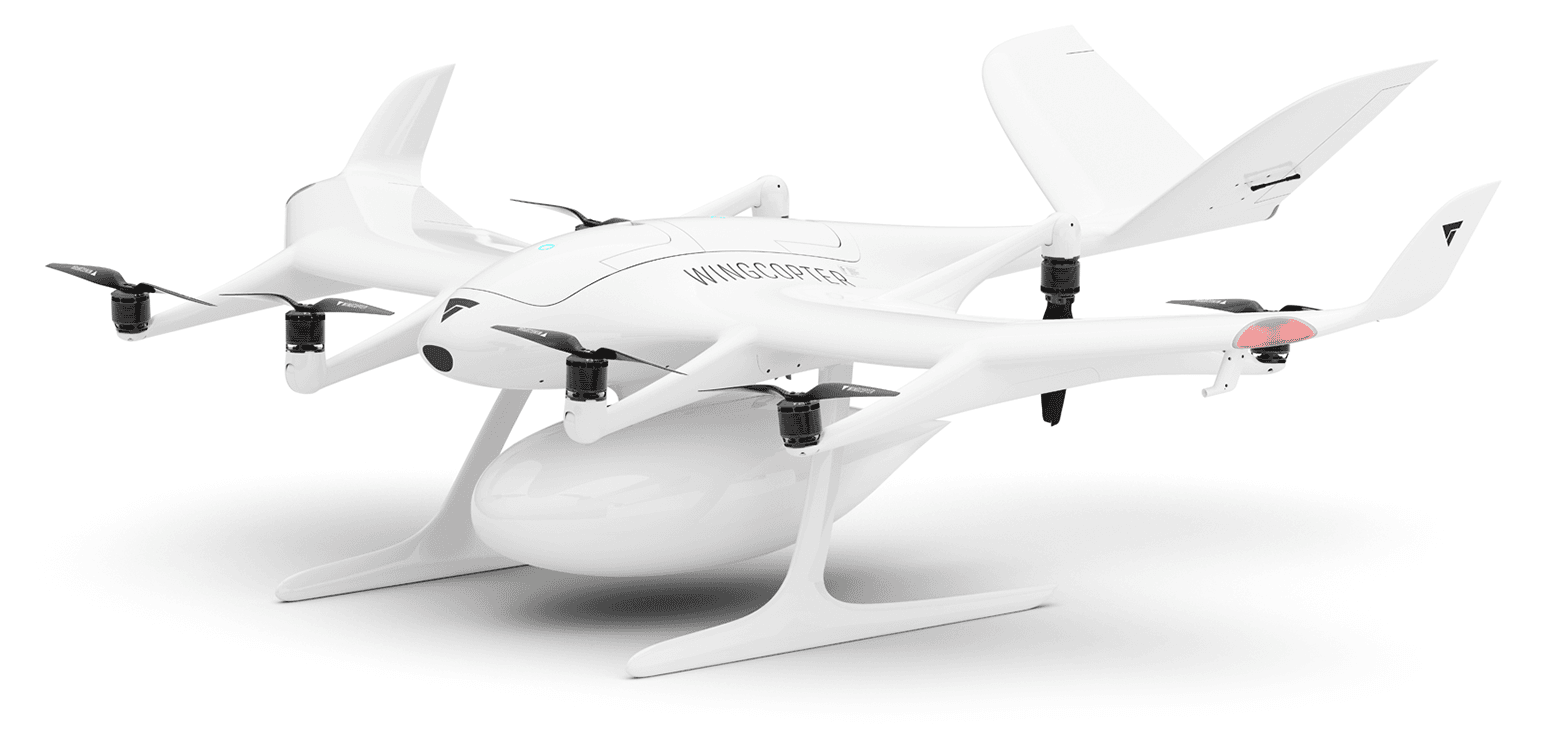
£180,000 – £360,000
Zipline P2
Zipline P2 represents the market leader in networked medical delivery systems, emphasizing proven BVLOS operations, fleet-level reliability and an integrated logistics software stack that drives down per-delivery costs at scale. Its commercial maturity and operational playbook deliver insurance, regulatory and partnership advantages that few individual drone manufacturers match, making it the preferred choice for national or regional health programs that need predictable, high-throughput service. While Zipline's model requires investment in infrastructure and centralized hubs unlike smaller players such as Matternet or Swoop Aero, its economies of scale and operational resiliency are decisive in large deployments.

£120,000 – £300,000
Matternet M2
The Matternet M2 is a compact, precision-oriented eVTOL drone tailored to urban medical last-mile deliveries, with strong integration into hospital logistics and low-noise operation suited to rooftop and courtyard drop-offs. It excels where tight routing, regulatory compliance in dense airspace and secure payload handling are priorities, offering hospital systems a turnkey urban delivery solution that complements longer-range providers like Wingcopter and Zipline. Financially, Matternet's smaller platform reduces per-unit investment for urban pilots compared with large-scale networks, though its range and payload are deliberately constrained compared with regional systems.
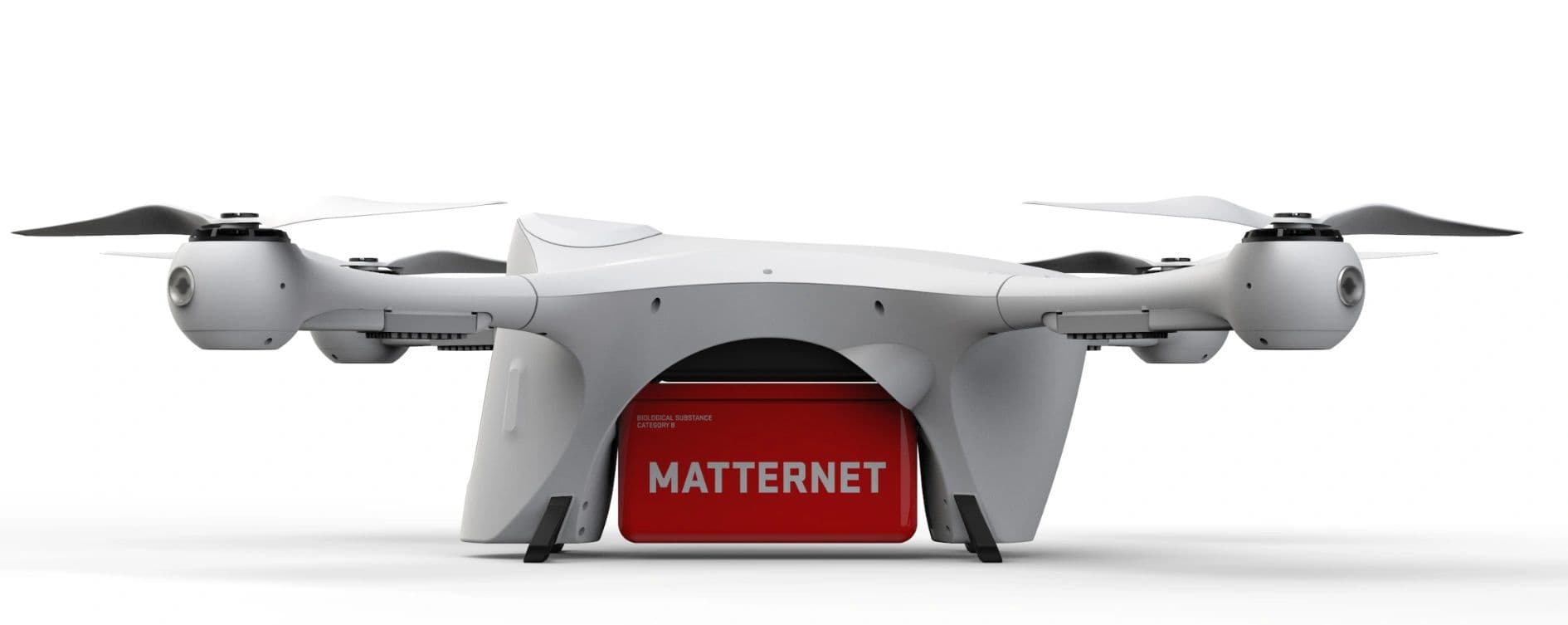
£22,000 – £55,000
What research and trials say about medical drone delivery
Scientific studies, operational trials and regulatory reports to mid 2024 show consistent benefits for medical drone use in specific scenarios: faster delivery for time critical supplies, improved access for remote locations, and lower journey times compared with some road or water routes. Research also highlights the need for strong safety management, noise and privacy mitigation, and robust integration with existing emergency and clinical logistics systems. The evidence base supports targeted deployment rather than universal replacement of ground transport, and many UK trials have focused on use cases such as blood and sample transport, automated external defibrillator delivery, and urgent medicines.
Faster response times: Trials and case studies report significant reductions in delivery times for urgent supplies compared with conventional road transport, especially in rural and island communities.
Clinical impact: Pilot programs demonstrate potential to improve outcomes where minutes matter, for example by delivering blood, vaccines or AEDs directly to patients or nearby responders.
Environmental benefits: Life cycle and operational analyses indicate lower per-delivery emissions in many short-range drone operations compared with combustion-engine vans, when scaled appropriately.
Safety and regulation: Research stresses the importance of beyond-visual-line-of-sight approvals, redundant systems, and formal airspace integration to maintain safety and reliability in populated areas.
Adoption drivers: Studies identify partnerships with NHS trusts, local authorities and trusted logistics providers as key to user acceptance and successful operational rollouts.
Frequently Asked Questions
Which medical delivery drone has the longest range?
Among the platforms listed here, the Wingcopter 198 has the longest range at up to roughly 94 km on a single flight, thanks to its tilt-rotor fixed-wing cruise. It is best suited to regional and cross-terrain medical routes, though its payload is modest at around 4.7 kg. The Swoop Aero platform and Zipline P2 also serve longer routes via networked hubs rather than single long flights.
Which drone carries the heaviest medical payload?
The DJI FlyCart 30 carries by far the largest payload of the platforms here, rated at up to 30 kg, making it suited to bulk or multi-item resupply over shorter hops (about 16 km with a full load). The fixed-wing and eVTOL medical specialists — Zipline P2 (around 3.6 kg), Wingcopter 198 (around 4.7 kg) and Matternet M2 (around 2 kg) — carry far less but are optimised for precise single-item clinical deliveries.
Are any of these drones certified by aviation regulators?
The Matternet M2 was the first commercial delivery drone to receive an FAA Type Certificate, a significant regulatory milestone. UK operations for any of these platforms require Civil Aviation Authority approval, particularly for beyond-visual-line-of-sight (BVLOS) flight, which is the key enabler for routine medical drone delivery.
What medical items can these drones deliver?
Typical payloads include blood and blood products, diagnostic and pathology samples, vaccines, urgent medicines and automated external defibrillators (AEDs). Platforms offering temperature-controlled compartments are preferred for vaccines and blood, and most use secure, tamper-evident cargo bays to protect clinical contents in transit.
Conclusion
This UK-focused overview of medical delivery drones for 2026 compares five leading platforms across payload, range, regulatory status and operating model, so health services and procurement teams can match a drone to the right clinical use case. Short urban hops, long rural routes and national-scale networks each favour a different platform, so weigh payload and range against your delivery geography. Use the site search or filters to refine your research, check the latest pilot-programme updates, or explore related categories such as emergency-response drones and cold-chain logistics.