Best Drone Technology for Crop Surveillance: UK Agricultural Solutions 2026
Published on Tuesday, 3 February 2026
Modern farming demands sophisticated tools to maintain competitiveness, and agricultural surveillance drones have emerged as game-changers across the United Kingdom's diverse farming regions. These intelligent unmanned aircraft systems capture high-resolution multispectral imagery, enabling farmers to monitor field conditions with unprecedented precision. From detecting nutrient deficiencies and water stress to identifying pest infestations before they become widespread problems, drone technology transforms how British agricultural professionals approach crop management. Whether you're managing smallholdings in the Cotswolds, large-scale operations in East Anglia, or specialist farming ventures in Scotland, precision agriculture drones deliver actionable intelligence that directly impacts yield performance and resource efficiency. The transition towards data-driven farming practices reflects broader shifts in UK agriculture, where environmental stewardship and economic viability must work hand in hand. By capturing detailed aerial surveys across multiple growing seasons, farmers gain comparative insights that inform fertiliser application, irrigation scheduling, and pest management strategies—ultimately reducing input costs whilst maintaining sustainable productivity standards.
Top Picks Summary
DJI Agras T40
The DJI Agras T40 ranks as a market leader for UK arable and mixed farms in 2026 because it combines heavy-duty spraying capacity with integrated mapping sensors and RTK positioning, letting operators both treat and survey crops with one platform. Compared with the lighter survey-focused drones on this list, the T40 delivers scale and operational savings on large holdings — its higher upfront cost is offset by reduced contractor bills and the ability to pair mapping data directly with variable-rate application workflows.
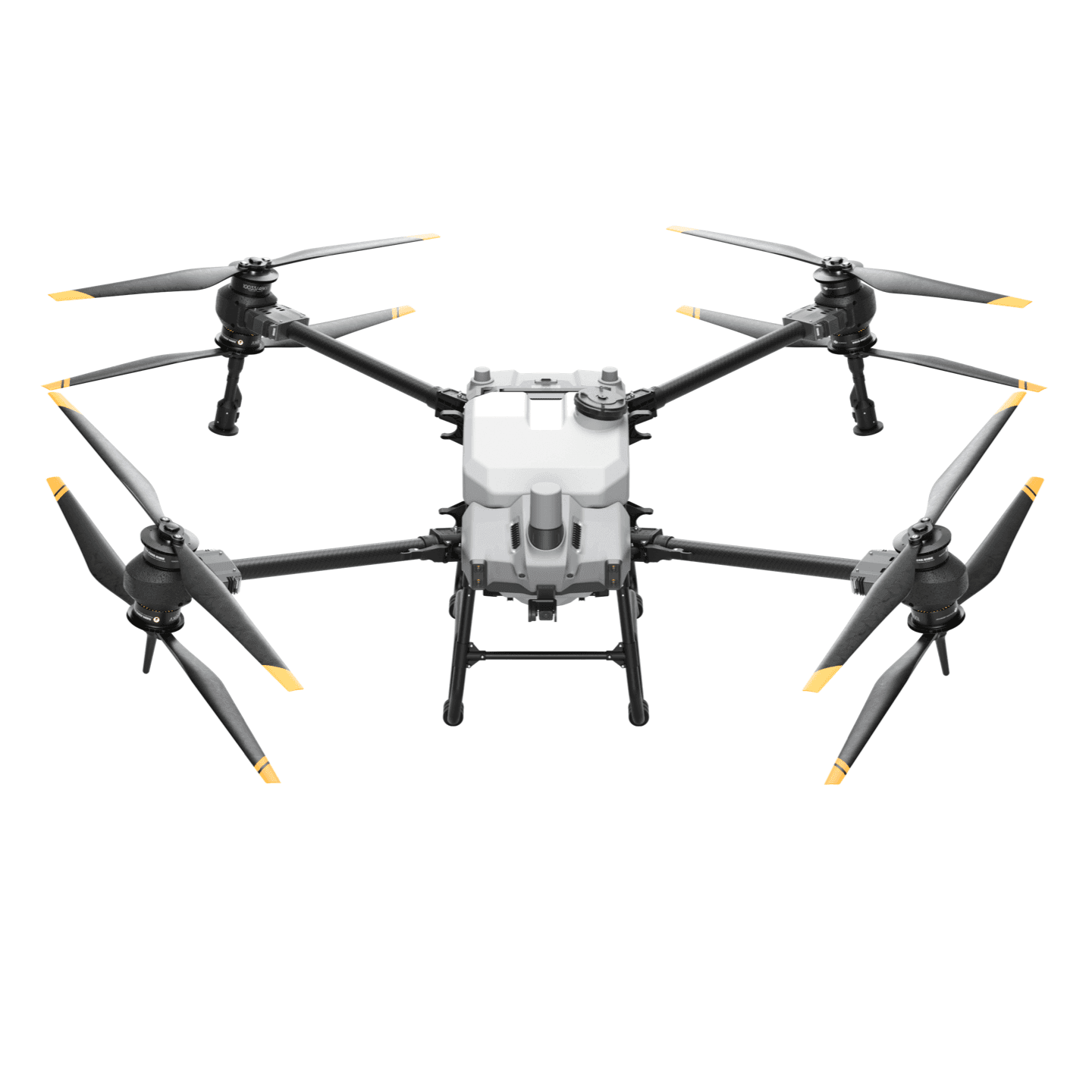
These leading agricultural drone systems distinguish themselves through advanced multispectral sensors that detect crop stress invisible to human observation, rugged designs suited to variable British weather conditions, extended battery capabilities enabling large field coverage, and sophisticated data analytics platforms that transform raw imagery into practical management insights.
Understanding Agricultural Drone Technology
Agricultural drones represent the intersection of aerospace engineering, environmental science, and farm management expertise. These systems employ multispectral cameras capturing data across specific light wavelengths, revealing plant health indicators that guide targeted interventions.
Multispectral sensors detect normalised difference vegetation index (NDVI) patterns revealing crop stress before visual symptoms appear
Real-time ortho-mosaic generation creates accurate field maps compatible with precision application equipment
Weather resistance and flight stability enable reliable operation across typical UK growing seasons
CAA compliance and insurance-approved operation ensure regulatory alignment and risk management
Integration with farm management software streamlines data analysis and decision implementation workflows
Frequently Asked Questions
Which drone should UK arable farms choose for spraying and mapping?
Choose the DJI Agras T40 for UK arable and mixed farms in 2026 because it combines heavy-duty spraying with integrated mapping sensors and RTK positioning, so you can treat and survey with one platform; it’s rated 4.4.
What multispectral capability does DJI Mavic 3 Multispectral offer?
The DJI Mavic 3 Multispectral captures RGB and multispectral data simultaneously using dual cameras with a multispectral sensor; it’s rated 4.8 and supports long flight time of up to 45 minutes.
How does DJI Mavic 3 Multispectral price compare here?
This category listing doesn’t include any price for the DJI Mavic 3 Multispectral, so there’s no value comparison available; it is rated 4.8 and offers multispectral imaging with up to 45 minutes flight time.
Who is Parrot Anafi USA for, and who should skip it?
Parrot Anafi USA suits small-to-medium farms and agronomists needing compact inspection mapping, with integrated RGB plus thermal and 25–30 minutes flight time; it’s rated 4.1, and it’s not positioned for large-field spraying and mapping like the DJI Agras T40.
Conclusion
The deployment of advanced drone systems represents a significant investment in British agricultural innovation, yet the returns consistently justify the expenditure through improved decision-making and optimised farm management. Each platform featured in this guide brings distinct capabilities to the table, whether through superior sensor technology, extended flight endurance, or intuitive data processing workflows. The right choice depends on your specific farming enterprise, the scale of your operations, and your existing technical infrastructure. As regulations governing agricultural drone use continue to evolve within the UK's Civil Aviation Authority framework, operators benefit from selecting established platforms with proven compliance records and manufacturer support. We encourage farmers and agronomists to evaluate these solutions against your operational requirements, consulting with local agricultural advisors and technology providers who understand regional growing conditions. Your progression towards precision agriculture begins with understanding how these tools can integrate into your existing farm management systems.