

Top 7 Pharmacy Dispensing Robots in the UK, 2025 | Clinical Automation Solutions
Pharmacy dispensing robots have fundamentally transformed medication management across the UK's healthcare infrastructure, delivering unprecedented accuracy and operational efficiency to busy hospital pharmacies and community settings. These sophisticated automated systems represent a significant advancement in clinical technology, addressing the pressing challenges faced by pharmacy teams managing increasingly complex medication requests. The deployment of robotic dispensing solutions has become instrumental in reducing medication errors, which remain a critical concern for NHS trusts and independent healthcare providers alike. As the British healthcare system continues to face staffing pressures and rising patient volumes, these intelligent systems enable pharmacists to redirect their expertise towards clinical decision-making and patient consultation rather than repetitive dispensing tasks. The technology integrates seamlessly with existing pharmacy management systems, utilising advanced robotics and artificial intelligence to ensure precise medication selection, counting, and labelling. In 2025, UK healthcare providers are recognising that investing in pharmacy automation is not merely a convenience—it's a strategic necessity. These systems have proven particularly valuable in reducing turnaround times for urgent medication requests, improving stock management, and maintaining rigorous compliance with regulatory standards set by the General Pharmaceutical Council and NHS England. The integration of these technologies reflects the healthcare sector's commitment to delivering safer, more efficient patient care whilst optimising resource utilisation across the often-stretched pharmacy workforce.
Inception's AI took the time to understand this market in the UK · We may earn a commission on purchases. It never affects our rankings.
Top Picks Summary
Omnicell XT Series Automated Dispensing Cabinet
The Omnicell XT Series holds a best-in-class position for UK hospital wards in 2025 thanks to its mature software ecosystem and tight integration with electronic prescribing—delivering consistent reductions in medication errors and nursing time compared with newer, less interoperable systems. Financially it often delivers faster ROI in large trusts because its modular architecture scales without full replacement, a distinct advantage over single-purpose robots on this list.

BD Rowa Vmax
BD Rowa Vmax stands out as the market leader for high-throughput retail and hospital pharmacies in the UK, offering one of the fastest dispense rates and a compact footprint that reduces floor-space costs versus bulkier competitors. Technically robust and backed by BD's global service network, it tends to lower ongoing maintenance spend and supports high-volume operations better than cabinet-style systems listed here.

Where to buy BD Rowa Vmax in UK: we track one retailer, Thingsocket, and show the price we last observed there; the price you see at checkout may differ.
We may earn a commission on purchases. It never affects our rankings.
£200,000 – £500,000
ARxIUM PowerPick
ARxIUM PowerPick is recognized for its flexible pick-and-pack robotics that balance speed with precision, making it a strong choice for integrated hospital pharmacies and third‑party dispensaries in the UK market. Compared with the Swisslog and Omnicell offerings, PowerPick emphasizes configurable throughput and lower customization costs, which can translate into faster deployment and predictable operating budgets for mid-sized sites.

Where to buy ARxIUM PowerPick in UK: we track one retailer, Linkedin, and show the price we last observed there; the price you see at checkout may differ.
We may earn a commission on purchases. It never affects our rankings.
£120,000 – £350,000
Swisslog PillPick
Swisslog PillPick earns a top spot for UK pharmacies needing a pill-centric automated solution that minimizes manual counting and inventory shrinkage; its Swiss-engineered mechanics deliver excellent long-term reliability. While its upfront capital cost can be higher than simpler virtual bin approaches, its low error rates and strong analytics often produce favorable lifetime cost-per-dispense compared with legacy cabinet systems.

Omnicell VBM (Virtual Bin Matrix)
Omnicell VBM (Virtual Bin Matrix) is prized in 2025 for enabling compact, decentralized dispensing workflows across community and hospital outpatient settings, offering a low-capex alternative to full robotic cells by virtualizing inventory with rapid retrieval. In UK deployments it competes well on total cost of ownership with faster payback than some high-capacity robots, especially where footprint and incremental investment matter most.
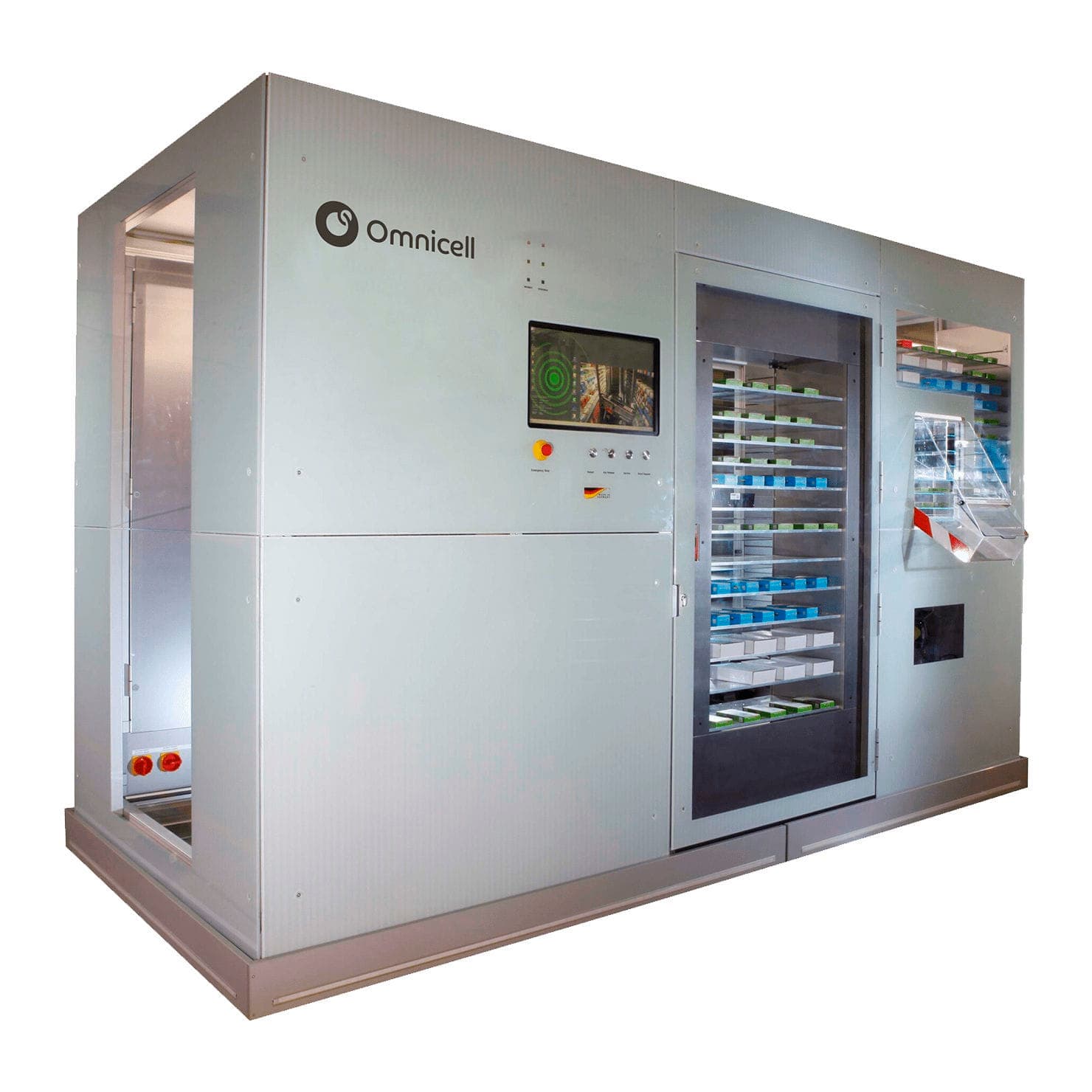
Lloyds Pharmacy Automated Dispensing System
The Lloyds Pharmacy Automated Dispensing System is tailored to the UK retail market and benefits from integration with Lloyds' national retail network and retail pharmacy workflows, delivering operational efficiencies and proven patient-service models that independent vendors may struggle to match. Its local support infrastructure and negotiated purchasing terms across the chain often yield lower per-site implementation costs than third-party automation solutions.

MTS MedSelect
MTS MedSelect positions itself as a cost-conscious, configurable dispensing solution for smaller hospitals and community pharmacies in the UK, emphasizing ease of use and minimal installation disruption compared with larger robotic cells. Technically simple but reliable, it can deliver attractive short-term ROI for sites that prioritize rapid deployment and predictable maintenance budgets over maximum throughput.

Leading pharmacy robots offer integration with Electronic Prescribing and Medicines Administration (EPMA) systems, real-time inventory tracking, regulatory compliance automation, 24/7 operational capability, reduced dispensing errors exceeding 99.9% accuracy, and seamless NHS data connectivity to enhance patient safety protocols.
Understanding Pharmacy Dispensing Robots
Pharmacy dispensing robots are transforming medication management by improving accuracy and reducing operational burdens in pharmacies. Here's what you need to know:
Increased Accuracy: Studies have shown that pharmacy robots can reduce medication dispensing errors by up to 80%, leading to safer patient outcomes.
Time Efficiency: These systems can dispense medications at a speed unmatched by manual processes, increasing service efficiency and reducing wait times for patients.
Cost-effectiveness: Opting for automated systems can lower labor costs and free up pharmacists for essential patient interactions, optimizing the pharmacy workflow.
Enhanced Safety Protocols: Robots can monitor medication quantities and expiration dates more accurately, ensuring that pharmacists always have up-to-date information.
Data-Driven Insights: The integration of dispensing robots allows for better inventory management and data collection, improving pharmacy operations and decision-making.
Patient Satisfaction: Faster service and increased accuracy lead to better patient satisfaction scores, enabling pharmacies to build stronger relationships with their clientele.
Frequently Asked Questions
Which dispensing robot suits UK hospital wards best?
For UK hospital wards, the Omnicell XT Series Automated Dispensing Cabinet is positioned for 2025 ward use thanks to its mature software ecosystem and tight integration with electronic prescribing, with an average rating of 4.4.
What feature does BD Rowa Vmax use for speed?
BD Rowa Vmax uses a modular multi-tower design with rapid pick-and-place cycles, supporting very high storage density and automated picking for large-volume hospital or 24/7 pharmacy use, and it has an average rating of 4.3.
How does ARxIUM PowerPick price versus value compare?
No price is provided for ARxIUM PowerPick, but it’s positioned for high-throughput robotic picking in a small footprint and includes open integration APIs and analytics support, with an average rating of 4.1.
Is Omnicell XT Series compatible with major pharmacy systems?
Yes—Omnicell XT Series Automated Dispensing Cabinet integrates with major hospital pharmacy systems for ward-to-pharmacy workflows, and it supports barcode verification, controlled access, and real-time inventory tracking; average rating is 4.4.
Conclusion
Pharmacy dispensing robots represent a transformative shift in how British healthcare facilities manage medication distribution, delivering measurable improvements in accuracy, speed, and pharmacist productivity. The five systems featured in this guide exemplify the cutting-edge solutions now available to NHS trusts, hospital networks, and independent pharmacy providers across the United Kingdom. Each offers distinct advantages tailored to different operational requirements, from high-volume acute care settings to community pharmacy environments. As healthcare budgets become increasingly constrained and patient safety remains paramount, the case for robotic dispensing automation becomes ever more compelling. Whether your healthcare facility is exploring automation for the first time or considering an upgrade to existing systems, understanding these leading solutions will help inform your investment decision. We encourage you to utilise our detailed comparison resources and contact the relevant manufacturers for tailored demonstrations suited to your specific operational needs. For further exploration of pharmacy automation technologies and their implementation strategies, please consult our comprehensive search resources.