Leading Robotic Surgical Systems in the UK: 2025 Guide to Five Premier Platforms
Published on Saturday, 29 March 2025
Robotic surgical systems have fundamentally transformed the landscape of operative medicine across the United Kingdom, offering surgeons unprecedented precision and control during complex procedures. These sophisticated technological platforms represent a quantum leap in surgical capability, enabling minimally invasive interventions that were previously considered extraordinarily challenging. The proliferation of robotic-assisted surgery throughout NHS trusts and private healthcare facilities reflects a broader commitment to enhancing patient care and operational efficiency. British surgeons increasingly recognise that robotic arms augment human expertise rather than replace it, creating a synergy that delivers measurable clinical advantages. The adoption of these systems correlates directly with reduced postoperative morbidity, shortened hospital stays, and improved functional recovery—outcomes that resonate profoundly with both healthcare commissioners and patients. As surgical robotics technology matures, the competitive landscape has expanded considerably, with manufacturers introducing increasingly sophisticated platforms tailored to diverse surgical specialties. Understanding the distinctive capabilities, clinical applications, and technological innovations of leading systems enables healthcare institutions to make informed procurement decisions aligned with their surgical programmes and patient demographics.
Top Picks Summary
Intuitive Surgical da Vinci X Surgical System
The da Vinci X packages Intuitive's core robotics and visualization technology into a simplified, lower-capital system that is financially attractive for hospitals seeking da Vinci performance with reduced upfront expenditure. Versus the Xi it sacrifices some multi-quadrant reach and instrument breadth, while compared to Versius it often benefits from Intuitive's larger consumable ecosystem and training network despite potentially higher running costs than some modular competitors.
Medtronic Hugo RAS System
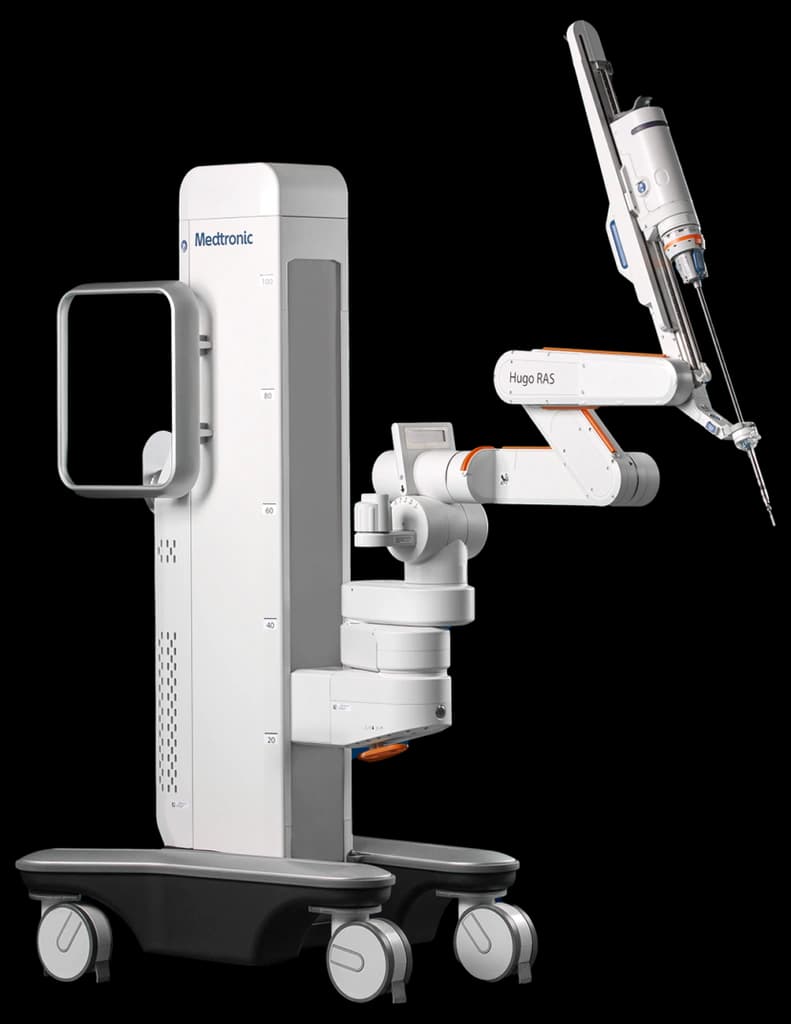
The Hugo Robotic-Assisted Surgery (RAS) System from Medtronic stands out due to its modular design and the integration of advanced surgical technology. It allows for a flexible setup, enabling hospitals to expand robotic capabilities without heavy upfront costs. With features that promote team collaboration and communication, the Hugo system enhances the overall surgical experience and patient outcomes. Medtronic's focus on user-friendly interfaces and superior robotic instrumentation helps surgeons perform minimally invasive surgeries with greater ease and efficiency.
Stryker Mako SmartRobotics
Stryker's Mako SmartRobotics is the market-leading orthopaedic robotic arm in the UK for joint replacement, delivering sub-millimetre bone preparation accuracy and mature CT-planning integration that general surgical systems do not provide. As a specialist platform it occupies a different niche from the Intuitive and CMR general-surgery systems — hospitals investing in Mako gain clear procedural ROI in orthopaedics through established implant workflows and outcomes, though it is not positioned as a multi-specialty surgical robot.
Contemporary robotic surgical systems demonstrate remarkable convergence around core capabilities: enhanced three-dimensional visualisation, tremor filtration, intuitive surgeon interfaces, scalable platform architecture, and comprehensive data analytics for outcome tracking.
Understanding Robotic Surgical Arms
Robotic surgical arms offer immense potential in transforming surgical practices by enabling more precise techniques. Their capability to facilitate minimally invasive procedures greatly benefits patients and surgeons alike.
Robotic surgical arms use advanced algorithms and 3D imaging, resulting in high precision during operations which reduces risks.
Studies show that minimally invasive surgeries lead to shorter hospital stays and quicker recovery times for patients.
Research indicates that robotic assistance during surgery can lead to decreased blood loss compared to traditional surgical methods.
These systems are equipped with enhanced visualization tools, allowing surgeons to operate with greater clarity and control.
Clinical trials have demonstrated improved patient outcomes, including lower complication rates for procedures using robotic aids.
Adoption of robotic surgical arms in the United Kingdom is growing, influenced by increasing evidence of their effectiveness and improved patient satisfaction.
Frequently Asked Questions
Which robotic system is best for complex multi-site surgical procedures?
The Intuitive Surgical da Vinci Xi Surgical System is the preferred choice for complex, multi-site procedures due to its advanced 3D vision, extended reach, and the broadest instrument library available.
What is the average rating for the da Vinci Xi system?
The Intuitive Surgical da Vinci Xi Surgical System holds an average rating of 4.6, reflecting its high performance in clinical settings.
Is the da Vinci X cheaper than the da Vinci Xi?
The da Vinci X is a lower-capital system designed for hospitals seeking core da Vinci performance with reduced upfront expenditure compared to the more extensive Xi model.
Does the Versius system allow surgeons to communicate with their team?
The CMR Surgical Versius Surgical Robotic System features an open-console design, which allows the surgeon to maintain situational awareness and direct communication with the surgical team during procedures.
Conclusion
The trajectory of robotic-assisted surgery within the UK healthcare system demonstrates the profession's commitment to embracing transformative technologies that meaningfully enhance patient outcomes. Each platform examined in this guide represents a distinct evolutionary milestone in surgical robotics, with innovations spanning enhanced ergonomics, improved imaging fidelity, and sophisticated haptic feedback mechanisms. Healthcare trusts considering integration of robotic surgical capabilities should evaluate systems against their specific surgical requirements, staff training capacity, and long-term technological investment strategies. We trust this comprehensive overview has illuminated the capabilities and distinctions between the UK's most prominent robotic surgical platforms. Should you require additional information regarding specific applications, procurement pathways, or technical specifications, we encourage you to utilise our search functionality to explore further resources tailored to your particular interests.