

Top 5 Delivery Robots in the UK for 2026: Hospitality and Warehouse Solutions
Published on Thursday, 26 February 2026
Delivery robots under the Service Robots > Hospitality Robots > Delivery Robots category are reshaping UK operations across hospitality, retail and warehouses. From hotels and restaurants using contactless trolleys for room and table service to large distribution centres using autonomous mobile robots for internal goods movement, these systems deliver faster, safer and more consistent material handling. British businesses favor solutions that reduce dependence on scarce labour, improve throughput and lower incident rates while integrating cleanly with existing warehouse management systems. The UK market values reliability, easy deployment, strong aftercare support and demonstrable return on investment; operators prefer compact units for urban fulfilment centres, robust tow and cart-handling robots for multi-storey logistics, and adaptable collaborative robots for mixed human-robot workflows. With advanced fleet management, dynamic routing and real-time data sharing now common, delivery robots are attractive to buyers seeking measurable productivity gains, improved workplace safety and predictable 18 to 36 month payback windows.
Top Picks Summary
Locus Origin
Locus Origin stands out in the UK market as a best-in-class AMR for medium-to-large warehouses thanks to its modular fleet architecture, quick ROI and strong integration with common WMS platforms. Compared with heavy-investment systems like Amazon Proteus and AutoStore, Origin offers lower upfront costs and faster deployment while delivering comparable per-robot throughput for piece-picking and replenishment tasks, making it attractive for retailers and 3PLs focused on rapid scale-up in 2025.

Geek+ P800
Geek+ P800 excels as a heavy-payload AMR optimized for pallet and large-cart movement, offering robust lifting capability and competitive pricing that suits UK warehouses handling bulky SKU lines. Technically it competes with GreyOrange's shelf movers on payload and durability, but often undercuts them on total cost of ownership and spare-parts availability, making P800 a pragmatic choice for operators needing mix-and-match fleets across picking and transport use cases.

MiR250 Hook
MiR250 Hook is a compact, versatile AMR optimized for hook-and-tow tasks and mixed workflows, offering low total cost of ownership and simple safety certification for UK sites with frequent route changes. It complements higher-capacity systems such as Geek+ P800 and GreyOrange Ranger by filling short-run internal transport needs with fast deployment and minimal integration effort, making it a practical market leader for SMEs and pilot projects in 2025.

AutoStore R5 Pro
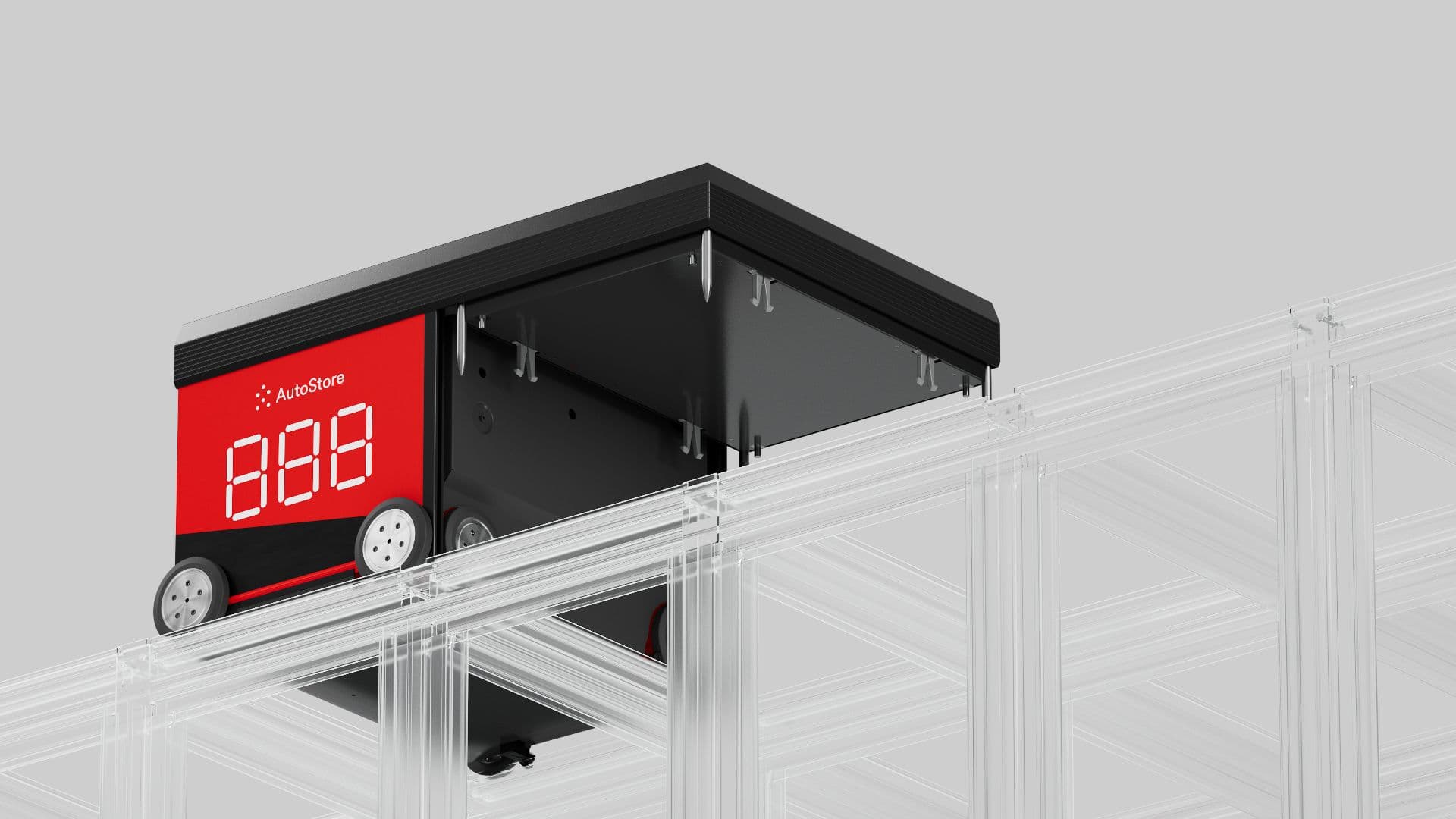
AutoStore R5 Pro remains the benchmark for ultra-dense goods-to-person storage, delivering exceptional space efficiency and predictable pick rates that translate into lower long-term operating costs in high-SKU, high-density UK warehouses. Although its upfront capex and fixed-grid footprint differ from flexible AMRs like Locus Origin or MiR250 Hook, AutoStore's throughput-per-square-meter and energy efficiency make it the preferred choice where floor-space is at a premium and predictable ROI is required.
6 River Systems Chuck
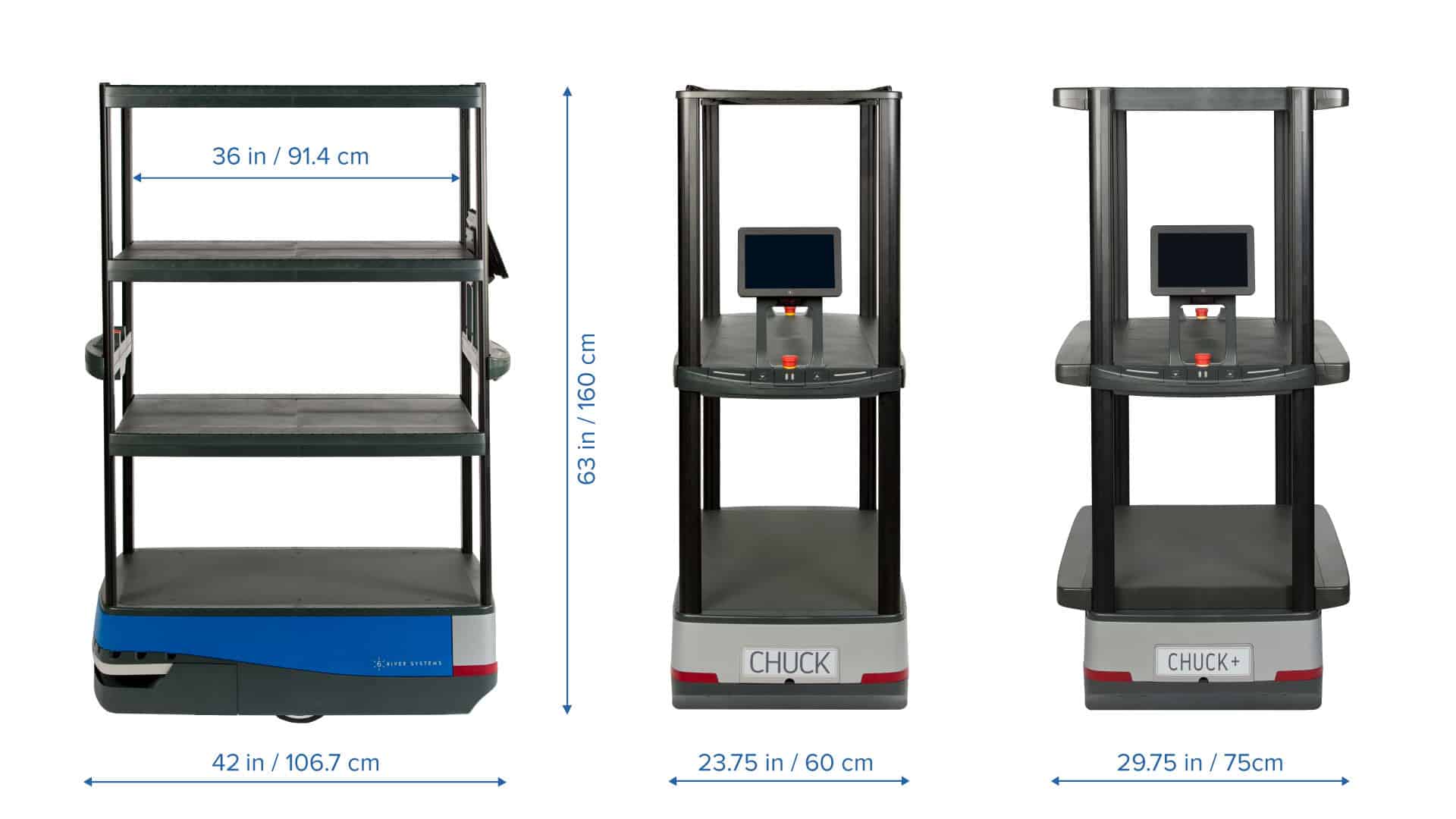
6 River Systems Chuck is a collaborative autonomous mobile robot (AMR) that guides human pickers and transports totes to streamline warehouse fulfillment; its cloud-native orchestration and intuitive human-robot workflow design make it a market-leading choice for flexible, mixed-SKU operations. For the use case "undefined", Chuck stands out in this list because its Shopify-backed software, rapid deployment and lower upfront integration costs typically deliver faster ROI and greater operational adaptability compared with more rigid automation alternatives.
£30,000 – £70,000
What the Research Says About Delivery Robots
A growing body of academic papers and industry reports confirms that autonomous delivery robots and AMRs (autonomous mobile robots) can improve operational performance and worker safety across hospitality and logistics settings. Research and independent studies highlight consistent benefits when robots are deployed with proper systems integration, staff training and process redesign. The findings are accessible to beginners and decision makers evaluating automation for UK sites.
Throughput and efficiency: Studies and operator case reports repeatedly show meaningful improvements in throughput when robots handle repetitive transport tasks and goods movement, especially in pick-to-pack and intra-site transfers.
Safety and ergonomics: Evidence indicates reductions in manual handling injuries and near-miss incidents as robots take on heavy or repetitive loads, improving workforce wellbeing.
Return on investment: Industry analyses commonly report payback periods in the 12 to 36 month range depending on scale, labour costs and process fit, with predictable returns once systems are stabilised.
Human-robot collaboration: Research emphasises the importance of workflows that let humans and robots complement each other; success correlates strongly with clear role definitions and training.
Integration matters: Studies show that robots deliver their full value only when integrated with warehouse management systems, real-time location systems and operational analytics.
Frequently Asked Questions
Which delivery robot should I buy for medium warehouses?
For medium-to-large warehouses, Locus Origin is a modular AMR with fast, repeatable navigation, real-time cloud fleet management, WMS integration, and an average rating of 4.4.
What exact feature does Geek+ P800 add for heavy loads?
Geek+ P800 is optimised for heavy pallet and large-cart movement, with intelligent fleet scheduling, robust navigation and obstacle avoidance, plus an average rating of 4.5.
Is Geek+ P800 better value than Locus Origin for warehouses?
The data given doesn’t list prices for Geek+ P800 or Locus Origin, so I can’t compare value or cost; it only notes Geek+ P800 has competitive pricing.
Is MiR250 Hook suitable for narrow aisles and towing?
MiR250 Hook is a compact hook AMR designed to tow multiple carts in narrow aisles, with rapid mapping and an onboard safety suite, and an average rating of 4.4.
Conclusion
In the UK context, delivery robots now serve both hospitality and warehouse needs by improving speed, safety and operational predictability. The five leading choices covered on this page — Locus Origin, Geek+ P800, MiR250 Hook, AutoStore R5 Pro and 6 River Systems Chuck — each address different site needs: Locus Origin for high-throughput picking, Geek+ P800 for flexible goods-to-person logistics, MiR250 Hook for towing and cart transport, AutoStore R5 Pro for dense grid storage automation, and 6 River Systems Chuck for collaborative picking support. For most UK operators seeking a balanced mix of throughput, integration and UK support, Locus Origin is the best overall choice on this list. We hope you found what you were looking for; refine or expand your search using the search box to compare features, deployment cases and local vendors.