Top 7 Warehouse Transport Robots in the UK (Autonomous Mobile Robots) — 2026
Published on Wednesday, 25 February 2026
The British logistics sector is undergoing a profound transformation as warehouse operators increasingly turn to autonomous transport robots to streamline operations. These intelligent systems excel at navigating complex warehouse layouts, transferring goods between departments, and operating seamlessly alongside human staff. From bustling distribution centres in the Midlands to e-commerce fulfillment hubs across Greater London, UK businesses are discovering that robotic transport solutions significantly enhance productivity whilst simultaneously reducing workplace injuries and operational expenditure. The UK's supply chain challenges, particularly following shifts in international trade patterns, have accelerated adoption of warehouse automation technologies. Forward-thinking logistics managers recognise that investing in these systems delivers competitive advantages through faster order processing, reduced labour costs, and improved inventory management. Whether you manage a small regional warehouse or a large multinational distribution network, modern transport robots offer scalable solutions tailored to British operational standards and compliance requirements. Improvements in AI navigation, mapping algorithms, battery performance, and system integration have made these robots more reliable and cost effective than earlier generations. UK customers increasingly prefer systems that are easy to integrate with existing WMS platforms, offer flexible deployment for peak seasons, and provide clear return on investment. As 2026 approaches, more operators are prioritising modular, interoperable robots that can grow with seasonal demand and adapt to evolving fulfilment models.
Top Picks Summary
Locus Origin
Locus Origin earns a top spot for UK fulfilment because its fleet-focused AMR is designed for high-density, multi-robot picking that scales rapidly across shift patterns and SKUs. Compared with fixed-grid systems like AutoStore, Origin trades a bit of vertical density for much faster plug-and-play deployment, lower initial civil works and a quicker labour-cost payback through improved pick rates and integration-friendly APIs.

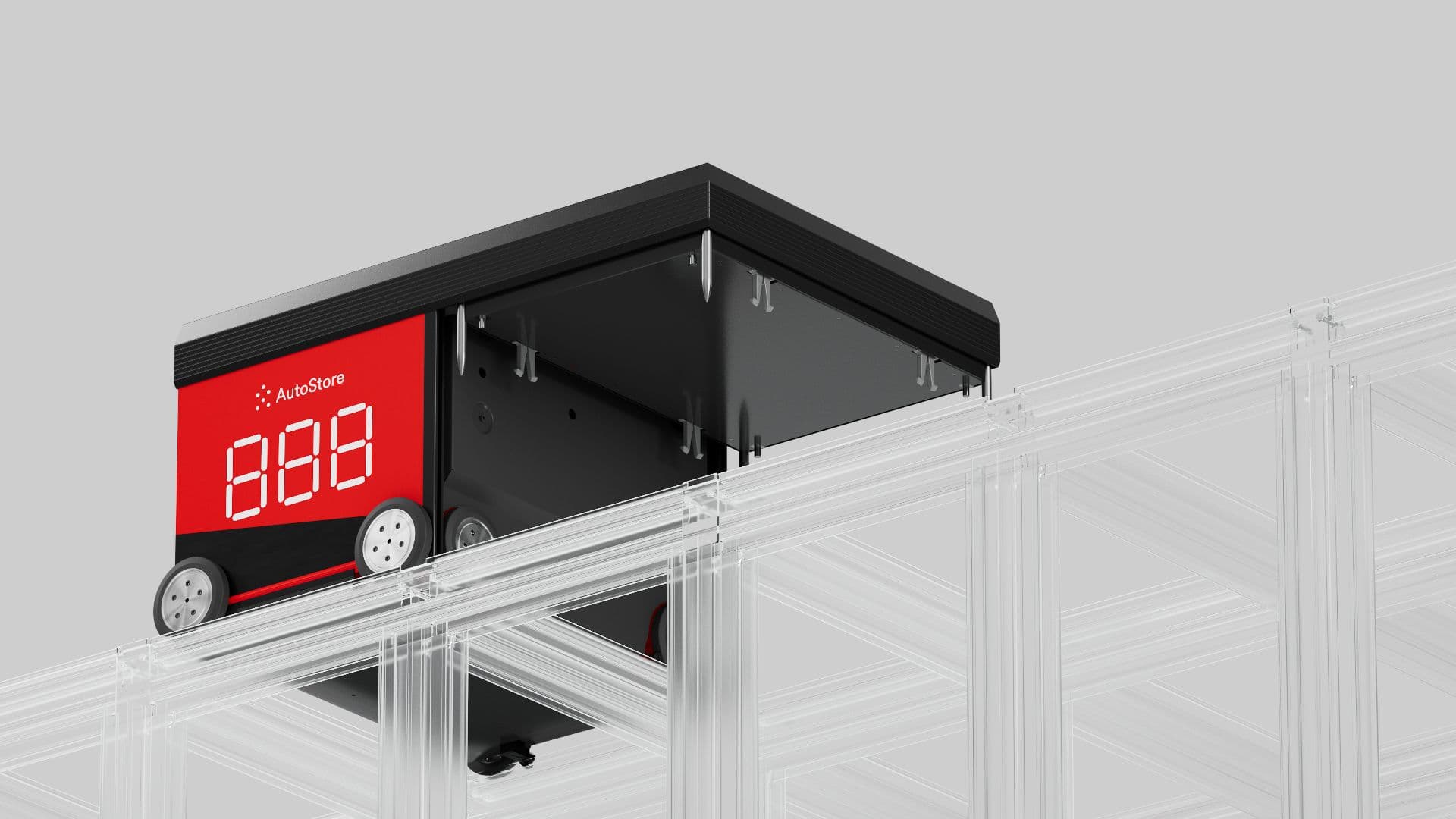
AutoStore R5 Pro
AutoStore R5 Pro remains the market leader for minimizing real-estate costs in compact UK facilities by delivering industry-leading storage density and predictable throughput from its grid and cube architecture. Although it carries higher upfront CAPEX versus mobile AMRs, the R5 Pro lowers long-term operating cost per cube and is financially compelling where floor space is at a premium compared with more flexible, lower-capex AMRs.
Geek+ P800
The Geek+ P800 is a cutting-edge solution in the realm of warehouse automation, specifically designed for high-density storage environments. It stands out with its highly efficient AI-driven algorithms that optimize operational workflows, significantly increasing throughput. The robust design allows for the handling of heavy loads while ensuring safety and reliability, making it an ideal choice for logistics centers. Additionally, its adaptability and integration capabilities enhance productivity across diverse industries.

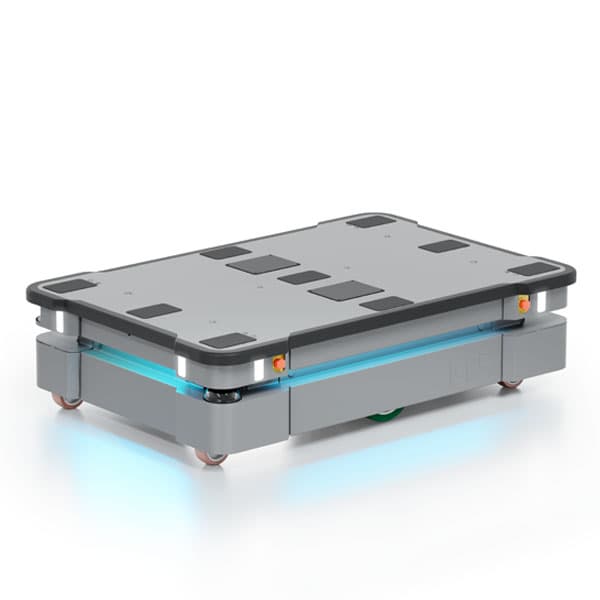
MiR600
The MiR600 is positioned as a best-in-class autonomous mobile robot thanks to its flexible modular design, strong navigation in dynamic environments, and mid-range payload that makes fleet scaling cost-effective. For the undefined use case it often wins on lower upfront capital per transport task and faster multi-robot orchestration compared with single-purpose platforms like the Jungheinrich arculus A-1500, while offering higher payload and more industrial autonomy than human-collaborative solutions such as the 6 River Systems Chuck.
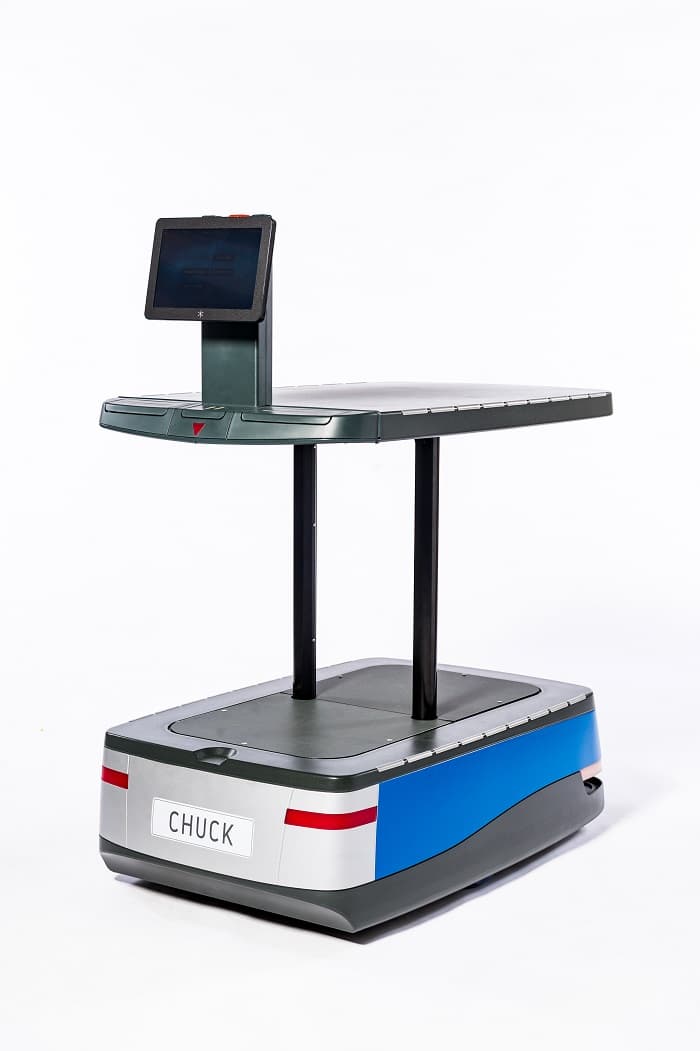
6 River Systems Chuck
The 6 River Systems Chuck stands out as the market leader for collaborative goods-to-person workflows, delivering rapid deployment, intuitive human-robot interaction, and cloud-native orchestration that reduces labor costs and speeds ROI for order fulfillment. In the undefined context Chuck is often financially advantageous for piece-picking and mixed-SKU operations compared with higher-capacity systems like the Jungheinrich arculus A-1500, and it complements rather than competes with MiR600 by focusing on operator collaboration rather than autonomous bulk transport.
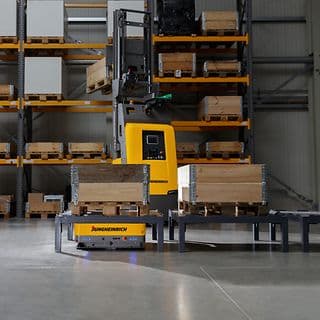
Jungheinrich arculus A-1500
The Jungheinrich arculus A-1500 is a market-leading heavy-duty intralogistics solution, engineered for high-throughput pallet and tote movement with superior payload capacity and integrated material-handling hardware that drives lower unit-cost for heavy flows. For the undefined use case it delivers long-term operational savings when moving large or dense loads that would require many MiR600 units or exceed the collaborative scope of 6 River's Chuck, making it the financially prudent choice for warehouse operations prioritizing throughput and durability.
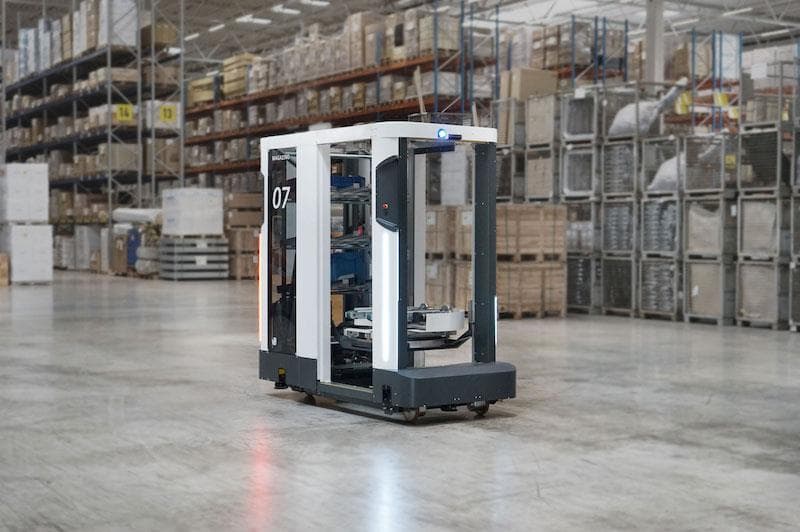
Magazino SOTO
Magazino SOTO is specialised for piece-level handling and unstructured environments, using advanced 3D perception to autonomously pick and transport varied boxes and totes — a strong fit for returns, e-commerce sortation and delicate item flows in UK warehouses. Unlike bulk-transport or grid systems, SOTO targets manual reduction at the SKU level with focused automation that can lower labour costs in high-complexity picking zones without the heavy civil works of fixed systems.
What research says about warehouse autonomous transport robots
Academic studies, industry trials, and independent evaluations increasingly support the operational and safety benefits of autonomous transport robots in warehouse settings. Research focuses on throughput improvement, injury reduction, accuracy of inventory handling, and total cost of ownership. Results are generally consistent: when deployed thoughtfully and integrated with warehouse management systems, autonomous robots raise efficiency and reduce repetitive manual tasks, freeing human workers for higher value work.
Throughput and efficiency: Multiple case studies and pilot reports show double digit percentage gains in order processing speed and task throughput after integrating autonomous mobile robots with existing workflows.
Workplace safety: Research and incident analyses indicate a reduction in manual handling injuries and strain-related incidents when robots take on repetitive lift and transport tasks.
Inventory accuracy and traceability: Studies demonstrate improved pick accuracy and fewer stock discrepancies when robots operate within tightly integrated inventory control systems.
Return on investment: Independent evaluations suggest that medium and large warehouses can typically reach payback within 12 to 36 months depending on scale, labour costs, and utilisation rates.
Human-robot collaboration: Human factors research emphasises the importance of ergonomic design, clear operator training, and collaborative layouts to achieve sustained productivity gains.
Frequently Asked Questions
Which robot should I choose for multi-SKU picking?
Choose Locus Origin if you need fleet-focused AMR support for high-density, multi-robot picking that scales across shift patterns and SKUs, with advanced local navigation and multi-robot coordination alongside human pickers (rating 4.5).
What navigation and coordination does Locus Origin offer?
Locus Origin includes advanced local navigation plus multi-robot coordination to optimise picker routes for high-throughput order picking alongside human pickers (rating 4.5). It also offers seamless WMS and ERP integration for rapid deployment.
How does AutoStore R5 Pro value compare upfront?
AutoStore R5 Pro targets minimizing real-estate costs via ultra-dense storage and predictable throughput from its grid and cube architecture, but it carries higher upfront CAPEX versus mobile AMRs (rating 4.6).
Is Geek+ P800 suitable for compact high-density storage?
Geek+ P800 is designed for high-density storage environments, using AI-driven algorithms to optimise workflows and increase throughput, and it supports multiple robot communications with flexible navigation options (rating 4.5).
Conclusion
This roundup highlights seven leading warehouse transport robots available to UK operators in 2026: Locus Origin, AutoStore R5 Pro, Geek+ P800, MiR600, 6 River Systems Chuck, Jungheinrich arculus A-1500, and Magazino SOTO. Each option serves different needs—from high-density goods-to-person systems to flexible mobile conveyors and collaborative tugger robots. For operators prioritising maximum storage density and proven throughput in mixed e-commerce environments, the AutoStore R5 Pro is often the best overall choice on this list thanks to its mature ecosystem and strong UK support network. If you need more flexible AMR navigation or goods-on-demand capabilities, Locus Origin, Geek+ P800, MiR600, 6 River Systems Chuck, Jungheinrich arculus A-1500, and Magazino SOTO each have distinct advantages depending on layout and process requirements. We hope you found what you were looking for. Use the search to refine or expand your comparison by use case, throughput, footprint, or budget.