Top 7 Underwater Photography Drones for UK Waters in 2025
Published on Saturday, 12 April 2025
Underwater photography drones let hobbyists and professionals document the biodiversity beneath British waters, from Scottish lochs to the kelp forests off the Cornish coast. Modern submersible ROVs pair stabilised camera systems with high-definition imaging to capture marine life, geological formations, and wreck sites that are otherwise hard to photograph. The UK's freshwater lakes, coastal reefs, and historic wrecks create strong opportunities for underwater content. This guide examines seven leading underwater photography drones suited to the UK market in 2025, comparing their depth ratings, camera resolution, and real-world performance in cold British waters.
Top Picks Summary
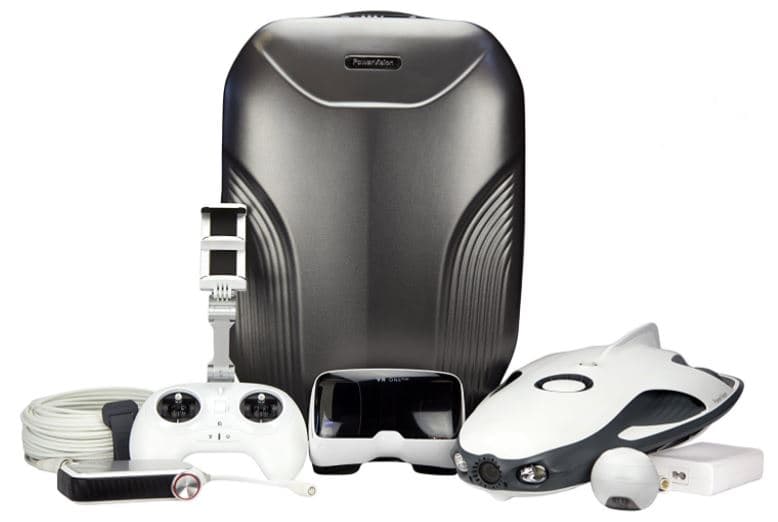
PowerVision PowerRay Wizard
The PowerVision PowerRay Wizard is an innovative underwater drone that combines fishing capabilities with advanced imaging technology. It features a 4K UHD camera and a revolutionary fish-finder system, allowing users to locate and capture fish with ease. The PowerRay's sonar technology and integrated autonomous underwater navigation set it apart as a leading tool for fishing enthusiasts. This unique combination of features not only enhances your fishing experience but also offers a new way to explore underwater worlds.
Chasing Dory
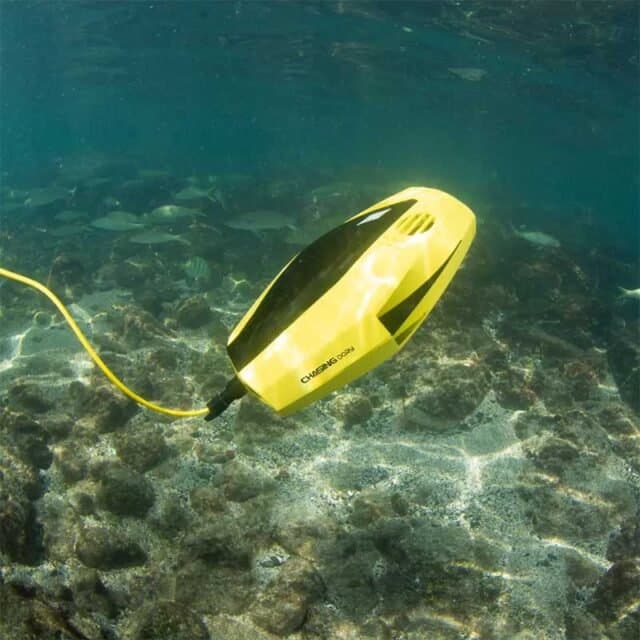
The Chasing Dory stands out as the pocket-friendly, ultra-portable option for UK enthusiasts in 2025, offering easy setup and solid image quality for snorkelers and amateur divers. It earns its spot by undercutting pricier prosumer ROVs on cost while delivering better portability than larger craft like the M2 Pro and FIFISH V6, though it trades off depth and advanced maneuverability. For buyers prioritising travel, quick deployment and value, Dory is often the smart financial choice in this list.
Geneinno T1 Pro
The Geneinno T1 Pro is a high-performance underwater drone for enthusiasts and professionals. It shoots 4K video with a 12MP camera and uses six thrusters with stabilisation for steady footage. Its 175-metre depth rating suits deeper exploration, and up to 3,000 lumens of onboard lighting helps in dark water. A foldable, portable build keeps transport and setup simple.

Chasing M2 Pro
The Chasing M2 Pro is the professional-grade pick for underwater photographers in the UK, offering robust build quality, improved lighting and a camera system tailored for deeper, more demanding shoots compared with lighter consumer models. It commands a premium over compact options such as Dory and Gladius Mini S but justifies the price with greater depth capability, modular accessories and longer on-site runtimes—making it a better investment for commercial or frequent use. Compared with the agile FIFISH V6 it prioritises stable platform performance and payload flexibility for larger camera setups.

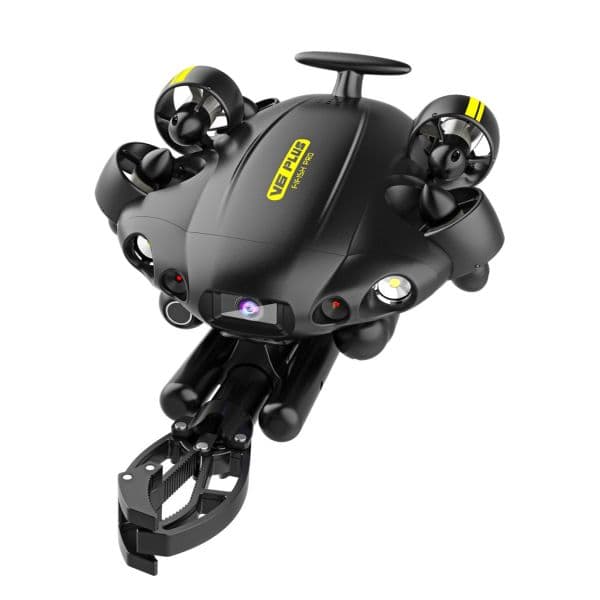
QYSEA FIFISH V6
The QYSEA FIFISH V6 earns its market-leader status by combining true 6‑degree-of-freedom maneuverability with high-end imaging and responsive controls, giving UK cinematographers precision that most competitors can't match. It is typically costlier than consumer models like Dory and Gladius Mini S, but its superior thruster layout and stabilization make it the technical favorite for complex shoots where framing and movement matter most. For teams focused on dynamic, cinematic footage the V6 represents a higher upfront spend that pays off in capture versatility.
Gladius Mini S
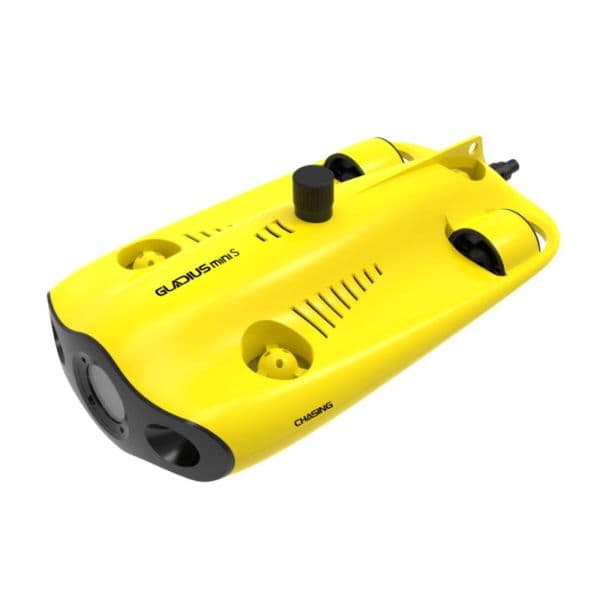
The Gladius Mini S occupies the sweet spot between portability and performance for UK users who want better imaging and depth than entry-level craft without the size or price of full professional ROVs. It competes directly with the Chasing Dory on convenience while offering improved camera controls and stability that bring it closer to prosumer capability, making it a budget-conscious upgrade for travel shooters. Compared with the high-end FIFISH V6 and M2 Pro, the Mini S is a more affordable compromise that still supports high-quality underwater photography.
Sublue WhiteShark Mix Pro
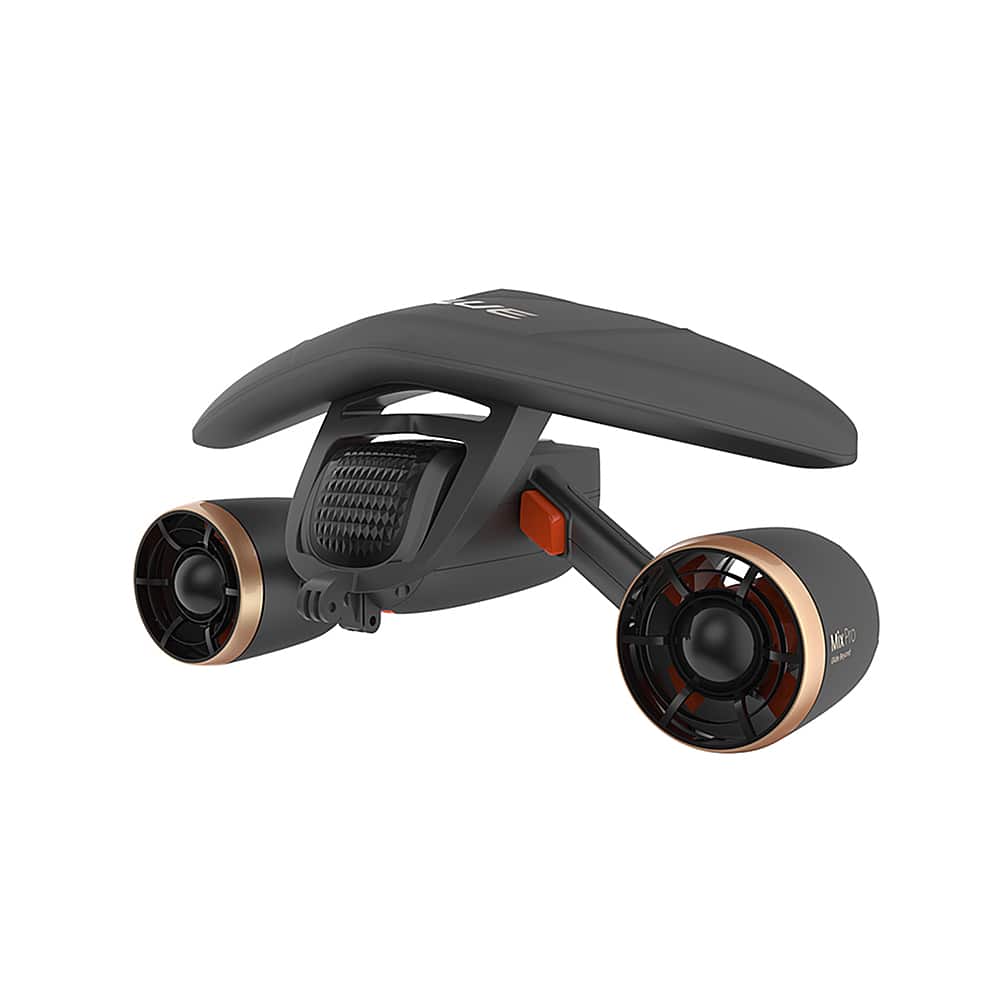
The Sublue WhiteShark Mix Pro is the consumer-focused action solution for underwater video and selfie-style photography, excelling in portability and speed for snorkellers and freedivers across the UK. Unlike tethered ROVs on this list, it is swimmer-held and designed for dynamic point-of-view footage—offering a lower-cost entry to underwater imaging but without the depth range or professional controls of ROV systems like the M2 Pro or FIFISH V6. Its financial and logistical appeal is clear for recreational users who prioritise mobility and ease of use over cinematic precision.
Advanced stabilisation systems deliver blur-free footage in challenging conditions. High-resolution 4K and 8K imaging preserves fine detail of marine subjects. Extended battery life enables comprehensive survey missions. Robust construction withstands the pressures of deep UK waters. Real-time telemetry and control systems provide responsive operation from the surface.
Learn More About Underwater Photography Drones
Discover the fascinating world of underwater photography drones and how they are transforming the way we capture underwater beauty.
Advanced imaging sensors allow for high-resolution captures, enabling detailed underwater photography that can rival traditional methods.
Many drones are equipped with 4K video capabilities, providing stunning motion footage that immerses viewers in aquatic environments.
Stabilization technology minimizes the effects of currents and movement, ensuring clear and sharp images, even at depths.
Remote operation via smartphone apps enhances the user experience, allowing photographers to control settings and view real-time footage.
Research shows that underwater photography can promote environmental awareness by showcasing fragile ecosystems and marine conservation efforts.
Easy-to-use drone models make underwater exploration accessible for beginners, making it easier for everyone to engage with marine environments.
Frequently Asked Questions
Which underwater drone should I buy for beginners?
Choose the Chasing Dory: it is ultra-compact and lightweight for easy transport, lives-streams to your smartphone over its tether, and is the most affordable option here. It shoots 1080p Full HD (not 4K) and dives to 15 metres, which suits snorkelling and shallow dives. Its average rating is 3.9.
Does the PowerVision PowerRay Wizard have a 4K camera?
Yes. The PowerRay Wizard has a 4K UHD camera with 12MP stills, plus a sonar fish finder that detects fish up to 40 metres below the drone. The drone itself dives to 30 metres. Its average rating is 4.6.
Is the Geneinno T1 Pro a good value option?
Yes. The Geneinno T1 Pro shoots 4K video with a 12MP camera, dives to 175 metres, and uses six thrusters with up to 3,000 lumens of lighting, yet undercuts comparable professional ROVs on price. Its average rating is 4.
What makes the Chasing Dory better for shallow water?
The Chasing Dory is built for snorkelling and short casual dives: it weighs about 1.1 kg, sets up in minutes, and live-streams 1080p video over its tether. Its 15-metre depth and roughly one-hour battery suit reefs and clear shallows rather than deep work. Its average rating is 3.9.
Conclusion
These seven drones cover the practical range of underwater imaging in 2025, from the pocket-sized Chasing Dory for snorkellers to professional ROVs like the Chasing M2 Pro and QYSEA FIFISH V6 for commercial and cinematic work. Each addresses a different budget, depth requirement, and experience level. When choosing, weigh your primary application, the water environments you'll explore, and your technical proficiency. Review the specifications and user feedback for each model below, and use the search function for deeper technical comparisons.