

DTS:X Surround Sound Systems - Top 5 Options in the UK for 2026
Published on Tuesday, 27 January 2026
DTS:X is an object-based surround sound technology designed to create natural, room-adaptive immersive audio for home cinemas, gaming and music listening. Unlike channel-based systems, DTS:X places sounds as objects in a three-dimensional space so audio can adapt to different speaker layouts and room acoustics. In the UK market, DTS:X appeals to home cinema enthusiasts and audiophiles who value flexible speaker placement, precise localisation and lifelike ambience. British buyers in 2026 are prioritising ease of setup, compatibility with modern AV receivers, wireless integration and strong voice/dialogue clarity for streamed and physical media, which makes DTS:X a compelling choice where supported by hardware and source content.
Top Picks Summary
Denon AVR-X2800H
The Denon AVR-X2800H is a best-in-class mid-range AV receiver for DTS:X systems, offering native DTS:X decoding, Audyssey room correction, and flexible 7.2-channel support that delivers a true discrete multichannel experience. It outperforms single-unit soundbars on speaker configuration and upgradeability while remaining more affordable than high-end audiophile receivers like Marantz, making it the practical choice for buyers who want full DTS:X immersion without excessive cost.
Where to buy Denon AVR-X2800H in UK: the trusted retailers we track in this market, with the best price we have observed at each. Prices are checked regularly and can change, and the retailer confirms the final price at checkout.
We may earn a commission on purchases. It never affects our rankings.
£600 – £700
Sony HT-A7000
The Sony HT-A7000 is a market-leading DTS:X-capable soundbar that excels at immersive height virtualization with built-in up-firing drivers and advanced DSP, providing a simple, space-saving path to object-based audio. Compared with AVR-and-speaker systems such as Denon or Yamaha it trades some discrete-channel flexibility for ease of setup and optional wireless rear modules, which can be financially and practically attractive for living-room installations.

Where to buy Sony HT-A7000 in UK: the trusted retailers we track in this market, with the best price we have observed at each. Prices are checked regularly and can change, and the retailer confirms the final price at checkout.
We may earn a commission on purchases. It never affects our rankings.
£900 – £1,100
LG S95QR
The LG S95QR is a flagship DTS:X-capable soundbar package that pairs a powerful main unit with dedicated wireless rear speakers and subwoofer to approach AVR-level immersion without separate components. It often represents a cost-effective, lower-complexity route to convincing DTS:X height effects compared with assembling an AVR and speakers, though it sacrifices some of the calibration and future upgrade paths that receivers like Denon or Yamaha offer.
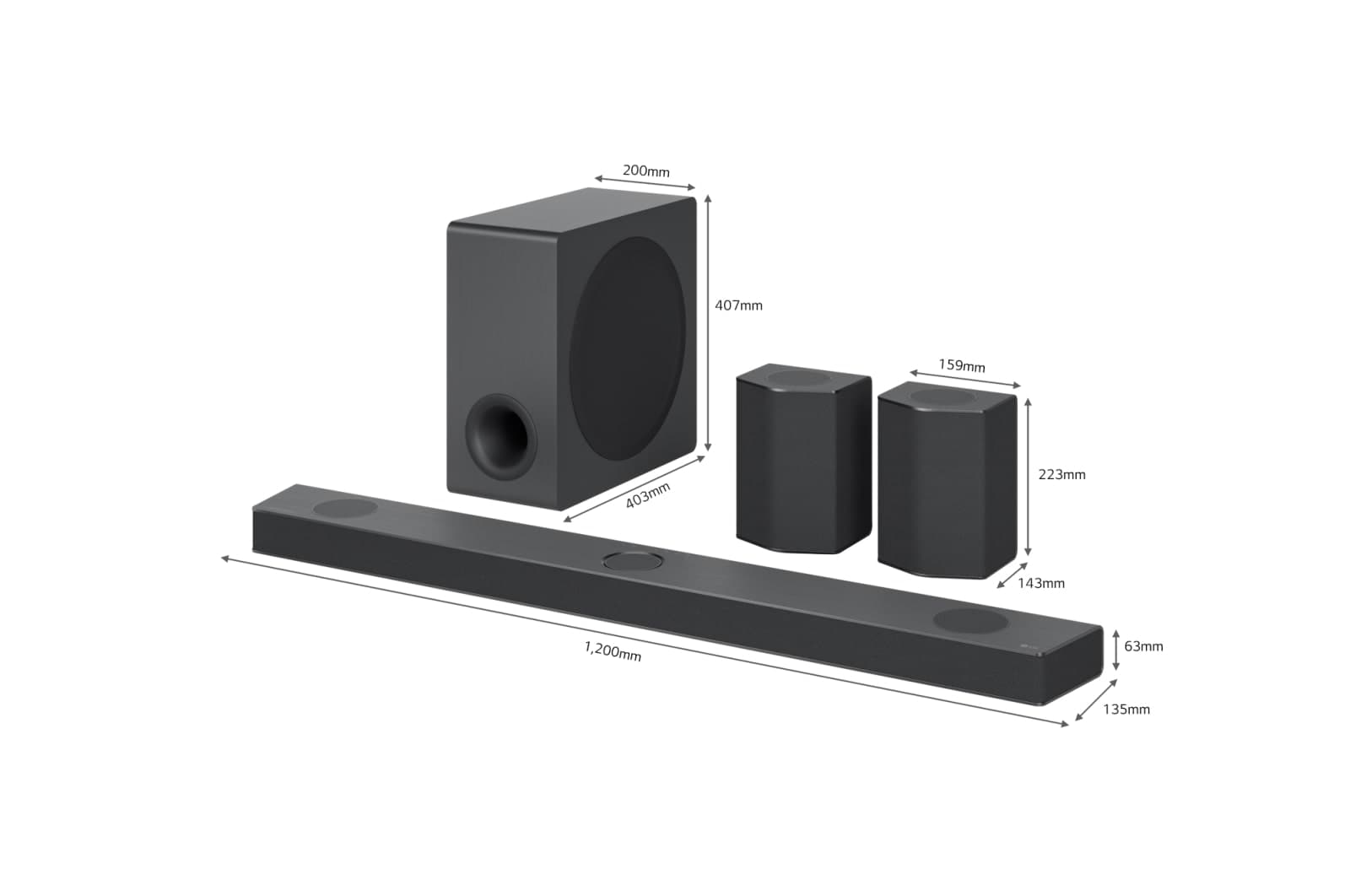
Where to buy LG S95QR in UK: the trusted retailers we track in this market, with the best price we have observed at each. Prices are checked regularly and can change, and the retailer confirms the final price at checkout.
We may earn a commission on purchases. It never affects our rankings.
£1,200 – £1,500
Marantz Cinema 70s
The Marantz Cinema 70s is positioned as an audiophile-focused AV receiver with meticulous tuning, robust amplification, and full DTS:X support, delivering superior musicality and refined multichannel imaging compared with more consumer-oriented soundbars like Sony or LG. It carries a premium price but rewards buyers who prioritize sonic refinement and component-level performance over the simpler, often cheaper all-in-one soundbar approach.
Where to buy Marantz Cinema 70s in UK: the trusted retailers we track in this market, with the best price we have observed at each. Prices are checked regularly and can change, and the retailer confirms the final price at checkout.
We may earn a commission on purchases. It never affects our rankings.
£1,000 – £1,300
What research and tests say about spatial and object-based audio
Academic and industry research into spatial audio and object-based formats like DTS:X shows measurable benefits for immersion, source localisation and listener engagement. Studies in acoustics and psychoacoustics demonstrate that encoding audio as discrete objects—rather than fixed channels—allows sound to be rendered more accurately around the listener and to adapt to real room geometries and speaker layouts. Independent listening tests and technical measurements also highlight improvements in perceived envelopment and in some cases speech intelligibility when object-based rendering and room compensation are applied correctly.
Improved localisation: Controlled studies report better perceived direction and distance accuracy with object-based rendering compared with equivalent channel-based mixes.
Greater immersion and presence: Listener tests consistently show increased sense of envelopment and realism in spatial audio formats versus traditional stereo or 5.1.
Scalability and adaptability: Object-based systems adapt to non-standard speaker layouts, helping maintain spatial cues in real-world home setups.
Speech clarity benefits: When combined with good room correction and mid/high frequency handling, object-based rendering can improve dialogue intelligibility for some content.
Hearing and accessibility: Research suggests spatial rendering can support hearing-impaired listeners when mixes and playback systems are optimised for clarity and level control.
Frequently Asked Questions
Which DTS:X system is best for a dedicated home cinema?
The Denon AVR-X2800H is the ideal choice for home cinema enthusiasts because it provides a 7.2-channel discrete multichannel experience that outperforms single-unit soundbars.
Does the Sony HT-A7000 soundbar support DTS:X height effects?
The Sony HT-A7000 features a 7.1.2-channel configuration with built-in up-firing drivers specifically designed to deliver immersive height virtualization for DTS:X content.
Is the Yamaha RX-V6A a good value for DTS:X setups?
The Yamaha RX-V6A offers strong DTS:X performance and YPAO room calibration at a price point that undercuts many rivals, making it a flexible option for custom speaker setups.
What is the average user rating for the Sony HT-A7000?
The Sony HT-A7000 holds an average rating of 4.5, reflecting its popularity as a space-saving solution for those seeking object-based audio without a full receiver and speaker system.
Conclusion
This page highlights the DTS:X category for the UK in 2026 but currently features zero top options under the selected criteria. If you did not find what you were looking for, try widening or adjusting your filters, check AV receivers and speaker packages that support DTS:X or explore related formats such as Dolby Atmos. Use the search to refine your results and discover compatible home cinema systems, receivers and installation options.