Top 4 Data Centre Switches in the UK — 2026 Guide
Published on Wednesday, 25 February 2026
Choosing the right data centre switch is a pivotal decision for UK organisations building resilient, high-performance networks. In 2026 British businesses—from financial services in the City of London to growing tech clusters in Manchester, Edinburgh and beyond—need switching platforms that balance throughput, automation, and energy efficiency while meeting regulatory and compliance demands such as UK GDPR. The last few years have accelerated moves to hybrid cloud, distributed applications and edge locations; as a result, modern data centre switches must support high-density 100/400G connectivity, advanced telemetry for real-time troubleshooting, and flexible overlays like EVPN‑VXLAN for multi-tenant fabrics. This short guide compares four market-leading platforms that consistently appear in UK deployments: Cisco Nexus 9500 Series, Juniper Networks QFX5120, HPE FlexFabric 5710, and Arista Networks 7800R3 Series. Each has strengths depending on scale and use case—modular chassis designs for core aggregation, fixed-leaf options for spine/leaf fabrics, and carrier-grade routers for large-scale routing and peering. We highlight practical considerations for British IT teams: interoperability with major cloud providers and carrier-neutral colocation facilities, power and cooling footprints (important for PUE and sustainability goals), vendor support within the UK and Europe, and built-in automation capabilities to accelerate provisioning and reduce human error. Whether you’re refreshing an ageing campus spine or architecting a new hyperscale-ready fabric, this UK-centric roundup will help you narrow choices based on workload, latency sensitivity and total cost of ownership. Below we outline what each platform does best and which scenarios suit them in a UK enterprise or service-provider environment.
Top Picks Summary
Arista's 7050X3 series is rated a market leader for ToR use in UK data centers due to industry-leading latency, high port density and the extensible EOS software that accelerates automation and east–west traffic performance at scale. Compared with Cisco's broader service ecosystem and Juniper's streamlined operational model, Arista delivers superior performance-per-watt and per-port economics for compute-heavy racks, making it a cost-effective choice where raw switching speed and programmability matter most.
Show More Top-of-Rack Data Center Switches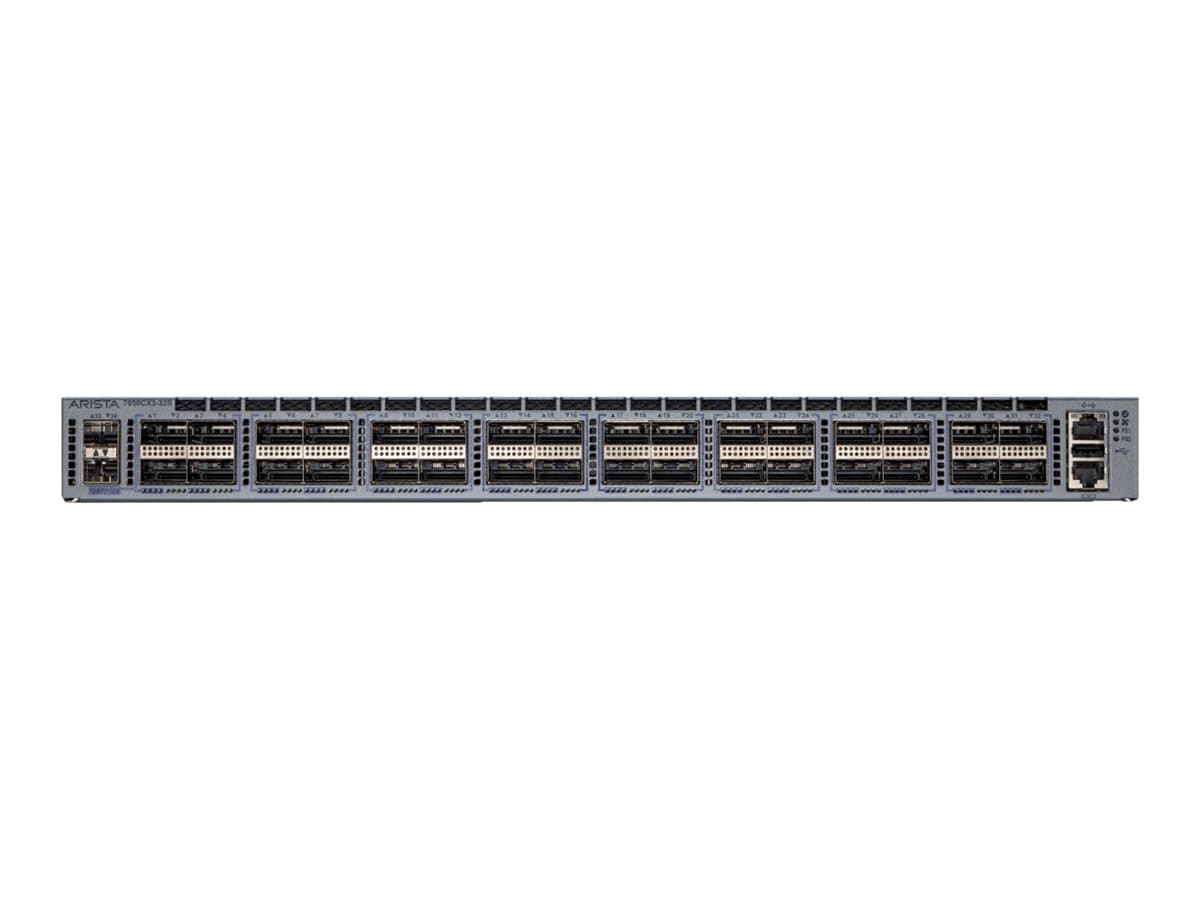
Arista's 7280R3 earns a top ranking for high-performance, low-latency fabrics and its extensible EOS software, delivering excellent scale and programmability for leading British data centres and cloud providers. It frequently matches or outperforms rivals on throughput and software-driven features while offering a competitive total cost of ownership for large-scale deployments, though some enterprises trade the broader service ecosystem of Cisco for Arista's performance and developer-friendly tooling.
Show More End-of-Row Data Center SwitchesThe Cisco Nexus 9300-EX Series tops this UK 2025 leaf list for organizations that prioritise a full-featured, highly supported data centre platform — its mature NX-OS ecosystem, broad partner and services reach in the UK, and deep programmability provide investment protection for large-scale deployments. Compared with the Arista and Juniper entries it typically commands a premium but offsets that with richer integrated services, certified interoperability and a larger channel footprint that reduces deployment risk and operational cost for enterprises requiring vendor-backed SLAs.
Show More Leaf Data Center SwitchesAs a market-leading data center spine switch, the Cisco Nexus 9364D-GX2A is positioned for operators who prioritize ecosystem integration and enterprise-grade feature sets; its NX-OS maturity, telemetry and broad vendor support justify its leadership for the undefined use case. Compared with the other platforms on this list, it often delivers smoother integration into existing Cisco estates and predictable lifecycle costs, while trading off somewhat higher acquisition pricing versus some open‑network or value-focused alternatives. The technical depth and vendor support make it a conservative choice for organizations valuing operational continuity over lowest upfront CAPEX.
Show More Spine Data Center Switches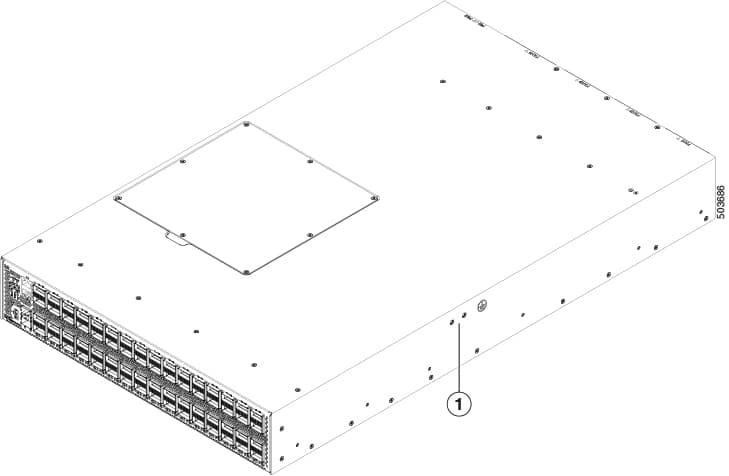
Each of the four platforms shines in different areas: Cisco Nexus for modular density and broad feature set, Juniper QFX for low-latency leaf-spine fabrics, HPE FlexFabric for converged enterprise deployments and familiar lifecycle management, and Arista 7800R3 for ultra-high-scale routing, programmability and telemetry suited to cloud-scale operators.
Understanding Data Center Switches
Data centre switches play a vital role in managing data traffic within IT environments. Their significance continues to grow with the expansion of digital transformation initiatives across the UK.
High throughput: Data centre switches ensure high data transmission speeds, allowing businesses to handle multiple simultaneous data streams effortlessly.
Reduced latency: These switches help minimize lag, offering real-time data access essential for applications and services reliant on instant connectivity.
Scalability: With the growth of businesses, data centre switches can easily expand capacity, supporting larger networks without a drop in performance.
Enhanced reliability: Designed for continuous operation, modern switches provide backup mechanisms that ensure network resilience and minimal downtime.
Advanced features: Many switches come equipped with intelligent software capabilities, promoting automated processes and efficient network management.
Optimized for cloud: Data centre switches are tailored to support cloud infrastructure, facilitating seamless integration and data flow for cloud-based applications.
Frequently Asked Questions
Which switch should I choose for low-latency ToR workloads?
Choose the Arista 7050X3 Series for low-latency ToR use in UK data centres, since it’s optimised for east–west traffic with ultra-low-latency switching and includes Arista EOS programmability; it has an average rating of 4.6.
What exact feature does Arista 7280R3 use for automation?
The Arista 7280R3 uses Arista EOS for strong programmability, with CloudVision integration and telemetry; it’s optimised for low-latency fabrics including VXLAN/EVPN and large-scale routing tables, and has an average rating of 4.5.
How does Cisco Nexus 9300-EX value compare in this list?
This page doesn’t list prices, so there’s no UK cost to compare; the Cisco Nexus 9300-EX Series is included with an average rating of 4.4 and features NX-OS full EVPN-VXLAN support plus rich telemetry and programmability (NX-API, gNMI, streaming telemetry).
Is Cisco Nexus 9300-EX compatible with EVPN-VXLAN fabrics?
Yes—the Cisco Nexus 9300-EX Series has NX-OS with full EVPN-VXLAN support for large leaf/spine fabrics, alongside high port density options up to 100/400Gb and low forwarding latency; it has an average rating of 4.4.
Conclusion
Selecting the right switch comes down to matching platform strengths with your priorities: modular scaling and deep ecosystem support (Cisco Nexus 9500), deterministic performance for leaf-spine fabrics (Juniper QFX5120), integrated convergence for traditional enterprise estates (HPE FlexFabric 5710) or hyperscale routing and programmability (Arista 7800R3). In the UK market, factor in vendor presence, local support contracts, power costs, and compatibility with your cloud and colocation partners. Before committing, run a proof of concept in your lab or with a local reseller to validate interoperability, telemetry integration and real-world latency under load.
If you need more detail on pricing, deployment options or hands-on testing in the UK, reach out to certified partners or use the search tools on our site to compare specifications and local availability. For tailored recommendations, supply your anticipated port counts, bandwidth growth and redundancy needs — we can point you to the best-fit option and next steps for procurement and trial.