Premier Leaf Switch Solutions for UK Data Centres in 2025
Published on Saturday, 29 March 2025
Modern data centre infrastructure across the United Kingdom relies heavily on sophisticated networking architectures, with leaf switches serving as the backbone of contemporary deployments. These devices function as the primary access layer within leaf-spine topology frameworks, enabling seamless connectivity between servers and the broader network fabric. In an era where British enterprises are increasingly digitising operations and migrating workloads to cloud environments, the performance characteristics of leaf switching technology have become mission-critical. The ability to deliver sub-millisecond latency whilst maintaining exceptional bandwidth capacity allows organisations to support demanding applications ranging from artificial intelligence workloads to real-time analytics platforms. Today's competitive business landscape demands infrastructure that not only meets current requirements but scales intelligently as data volumes expand. This comprehensive guide examines five leading leaf switch platforms that deliver the reliability, performance, and operational efficiency that discerning UK data centre teams require when building next-generation network foundations.
Top Picks Summary
Cisco Nexus 9300-EX Series
The Cisco Nexus 9300-EX Series tops this UK 2025 leaf list for organizations that prioritise a full-featured, highly supported data centre platform — its mature NX-OS ecosystem, broad partner and services reach in the UK, and deep programmability provide investment protection for large-scale deployments. Compared with the Arista and Juniper entries it typically commands a premium but offsets that with richer integrated services, certified interoperability and a larger channel footprint that reduces deployment risk and operational cost for enterprises requiring vendor-backed SLAs.
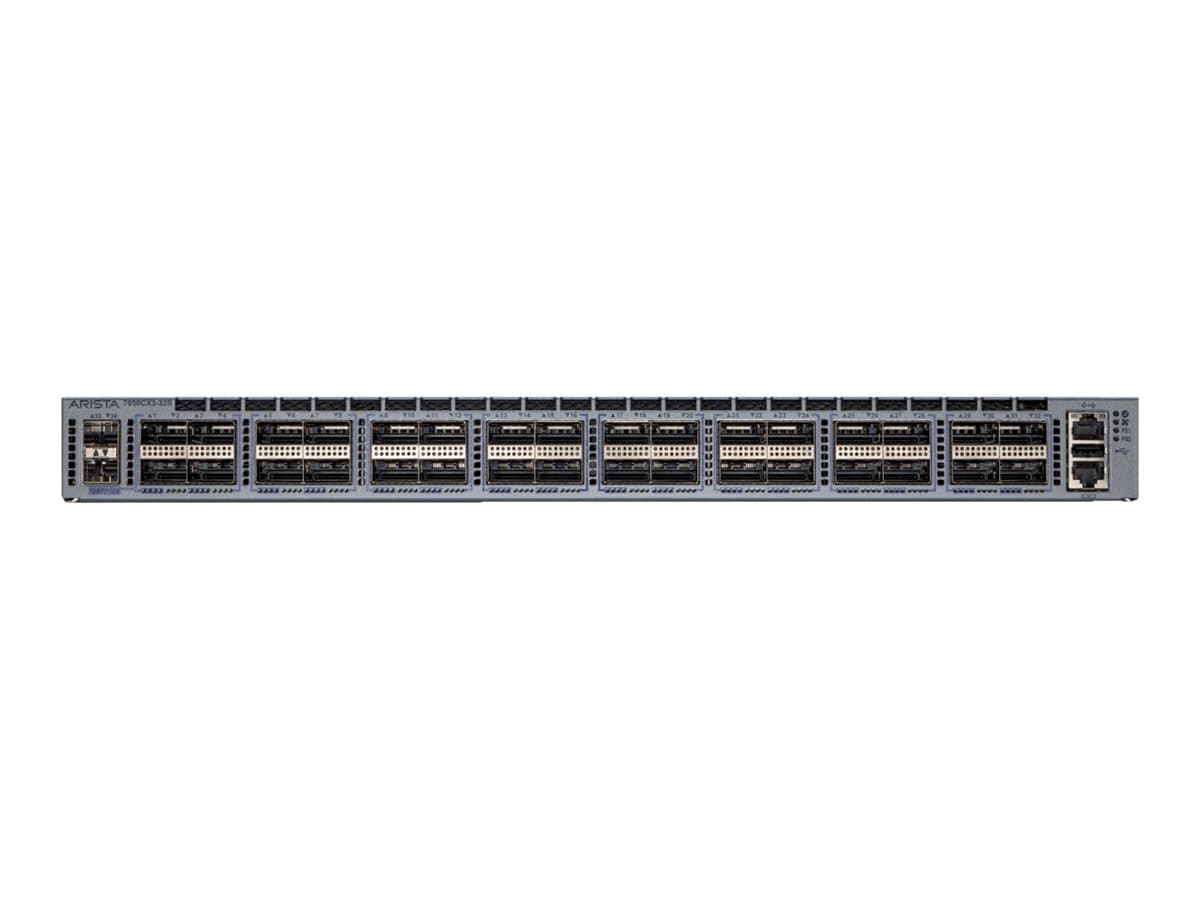
Arista 7050X3 Series
Arista's 7050X3 Series earns its place for low-latency, high-density leaf roles where telemetry, EOS programmability and microsecond-class performance matter — making it especially attractive for high-performance compute and finance customers in the UK. Relative to Cisco it often delivers a leaner software-driven operating model and lower OPEX through advanced telemetry and automation, while offering competitive price-per-port compared with traditional incumbents.
Juniper QFX5120-48Y
The Juniper QFX5120-48Y is chosen for cost-efficient 25/100Gb leaf deployments that combine Junos stability with flexible optics and simplified licensing, appealing to UK cloud builders and service providers focused on predictable economics. In contrast to Dell's value-focused PowerSwitch and Aruba's automation-first approach, the QFX5120 balances compact dense port layouts with strong L2/L3 features and routing resiliency, delivering attractive price-to-performance for scale-out fabrics.

Dell PowerSwitch S5232F-ON
Dell's PowerSwitch S5232F-ON is positioned for buyers prioritising aggressive total cost of ownership and open networking flexibility in the UK market, supporting multiple NOS choices and a competitive acquisition price. Compared with Cisco and Arista it undercuts list pricing while providing solid hardware density and channel availability, making it a practical choice for operators who want to optimise capex without sacrificing interoperability in leaf-spine designs.
HPE Aruba CX 8360-32Y
The HPE Aruba CX 8360-32Y stands out for UK customers who value built-in automation, AI-driven operations and security integration at the leaf layer; Aruba's CX OS and management stack simplify day-two operations and reduce staff overhead. Against Juniper and Arista it may trade some raw port-density for superior manageability and lifecycle services, delivering a strong operational cost advantage for enterprises seeking rapid deployment and tight integration with wired/wireless campus estates.
These leading solutions share several distinguishing characteristics: exceptional packet forwarding performance with minimal latency variation, support for contemporary virtualisation and container orchestration frameworks, sophisticated quality-of-service capabilities, and proven reliability within demanding production environments. Each platform offers distinct advantages depending on specific organisational requirements and technical preferences.
Understanding Leaf-Spine Architecture and Modern Data Centre Design
Leaf-spine topology represents the current industry standard for data centre networking, replacing older three-tier architectures. The leaf layer connects directly to servers and storage systems, whilst spine switches provide inter-leaf connectivity. This design philosophy delivers several compelling advantages: consistent, predictable latency regardless of traffic patterns, simplified network operations through uniform architecture, and straightforward scaling by adding additional leaf-spine pairs. Understanding these foundational principles helps organisations make informed infrastructure decisions.
Leaf switches provide the primary connection point for servers, reducing hops and improving performance
Spine interconnections ensure any leaf-to-leaf communication traverses only two hops, maintaining consistent latency
Modern leaf platforms support 100GbE and higher-speed interfaces, accommodating high-bandwidth applications
Built-in redundancy and failover mechanisms protect against single points of failure
Advanced telemetry and monitoring capabilities provide visibility into network performance and potential bottlenecks
Support for emerging standards including intent-based networking and automated operations reduces manual configuration
Frequently Asked Questions
Which leaf switch is best for UK data centre platforms?
The Cisco Nexus 9300-EX Series is the recommended choice for organisations prioritising a full-featured platform, as it offers a mature NX-OS ecosystem and extensive support services across the UK with an average rating of 4.4.
Does the Arista 7050X3 Series support high-density port configurations?
The Arista 7050X3 Series features high-density 25, 40, and 100Gb port options specifically suited for spine-leaf top-of-rack fabrics, earning it an average rating of 4.6 for its performance.
Is the Juniper QFX5120-48Y a cost-efficient choice for UK cloud builders?
The Juniper QFX5120-48Y is chosen for cost-efficient 25/100Gb leaf deployments because it combines Junos stability with simplified licensing, providing predictable economics for service providers at a 4.5 average rating.
Which leaf switch offers the best EVPN-VXLAN support for fabrics?
The Cisco Nexus 9300-EX Series provides full EVPN-VXLAN support for large leaf/spine fabrics, ensuring robust connectivity for complex data centre architectures.
Conclusion
Choosing appropriate leaf switching infrastructure represents a fundamental investment in your organisation's digital capabilities and competitive positioning. The platforms featured in this assessment have been selected based on their proven track record within UK deployments, their alignment with industry standards, and their capacity to deliver measurable business value. When evaluating options for your data centre environment, consider your specific throughput requirements, power consumption constraints, and long-term scalability objectives alongside initial capital expenditure. We encourage you to undertake detailed conversations with your technology partners and conduct thorough proof-of-concept evaluations before committing to any major infrastructure decisions. Should you require additional information about specific technical specifications or use case considerations, the search functionality on this site can connect you with more granular analysis. Your success in building resilient, high-performing network infrastructure depends on informed decision-making at each stage of the procurement process.