

Gigabit Switches: Top 5 Options in the UK for 2026
Published on Monday, 26 January 2026
Gigabit switches provide reliable 1 Gbps wired connectivity for homes, small businesses and edge networks across the UK. They sit at the heart of local networks to aggregate multiple devices, reduce congestion, and deliver the consistent throughput modern applications demand—video streaming, cloud backup, online gaming and remote collaboration. UK buyers tend to choose gigabit switches based on a mix of factors: whether they need plug-and-play simplicity for a home office (unmanaged switches), advanced control and security for business networks (managed switches), Power over Ethernet (PoE) for access points and IP devices, energy efficiency to cut running costs, and strong warranty and support from trusted brands. With continued gigabit broadband rollouts, rising smart home adoption, and more hybrid working, gigabit switches remain a practical, cost-effective upgrade to make the most of fast internet and local network performance.
Top Picks Summary
TP-Link LS1008G 8-Port Gigabit Switch
The LS1008G targets budget-conscious buyers who need eight gigabit ports without extra frills, offering solid basic switching performance at a lower entry price than some metal‑cased models. Compared to the TL‑SG108 and Netgear GS308, the LS1008G typically sacrifices a heavier chassis and extended warranty options in exchange for a more wallet-friendly purchase, making it sensible for temporary setups, labs, or cost-sensitive home networks. It’s a practical option when raw port count and low upfront cost matter more than premium durability.
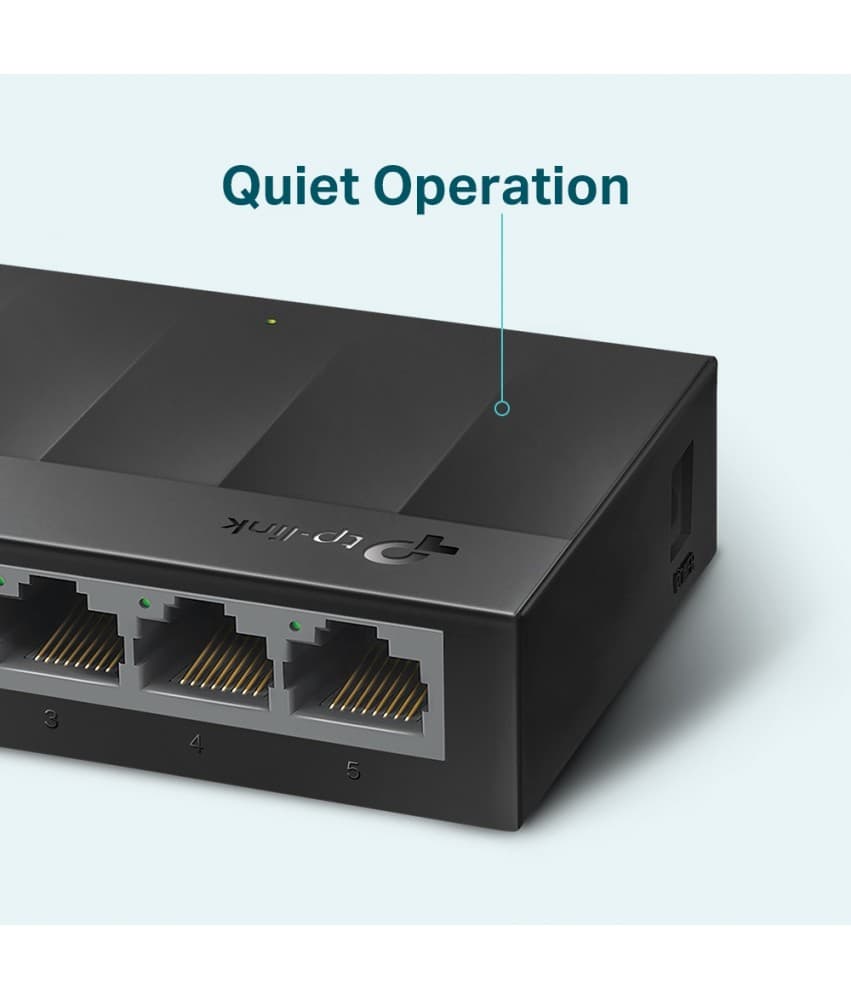
Where to buy TP-Link LS1008G 8-Port Gigabit Switch in UK: the trusted retailers we track in this market, with the best price we have observed at each. Prices are checked regularly and can change, and the retailer confirms the final price at checkout.
We may earn a commission on purchases. It never affects our rankings.
£12 – £18
What Research and Standards Say
The benefits of gigabit switching are grounded in established networking standards and industry testing. The IEEE 802.3ab standard defines Gigabit Ethernet over copper, while Energy Efficient Ethernet (IEEE 802.3az) and PoE standards (IEEE 802.3af/at/bt) enable lower power use and device power delivery over the same cabling. Independent lab evaluations and network engineering research consistently show that adequate LAN capacity and proper switch selection reduce packet loss and latency for real-time services. UK connectivity reports and industry analyses document rising average broadband speeds and greater demand for reliable local networks, reinforcing the practical value of upgrading to gigabit-capable switches.
Standards: IEEE 802.3ab defines 1 Gbps Ethernet; IEEE 802.3az enables Energy Efficient Ethernet to lower power usage during idle periods.
PoE benefits: IEEE PoE standards let access points, cameras and phones receive power over Ethernet, simplifying installs and reducing extra cabling.
Performance: Controlled lab tests show that switching capacity and proper QoS reduce jitter and packet loss for video conferencing and VoIP.
UK context: Communications regulator reports and market analyses show rising household and business demand for faster broadband and more robust local networks.
Cost and sustainability: Energy-efficient models can lower operating costs over time, useful for both households and small enterprises.
Frequently Asked Questions
Which gigabit switch is best for a small home office?
The TP-Link TL-SG108 is the ideal choice for home offices because it features a durable metal chassis and a fanless design for silent operation, earning it a high 4.7 rating from users.
How many gigabit ports does the TP-Link LS1008G provide?
The TP-Link LS1008G provides 8 gigabit ports housed in a compact, budget-friendly plastic enclosure designed for simple, unmanaged plug-and-play operation.
Is the Netgear GS308 worth the extra cost over budget models?
The Netgear GS308 is worth the investment for small businesses that prioritise long-term hardware reliability and consistent support, which justifies its position as a more robust alternative to entry-level plastic switches.
Does the TP-Link TL-SG108 require complex software configuration?
The TP-Link TL-SG108 does not require any configuration as it is a plug-and-play unmanaged switch that automatically handles connectivity via its 8 Gigabit RJ45 ports.
Conclusion
Gigabit switches are a straightforward way to upgrade local network capacity in UK homes and businesses. We hope you found the guidance you needed; if you did not find a specific model here, try refining or expanding your search using the search bar or filters to match features like PoE, managed functionality or energy efficiency.