Gaming Wireless Routers — Top 5 in the UK for 2026
Published on Monday, 26 January 2026
Gaming wireless routers are specialized home networking devices designed to deliver low latency, consistent throughput, and advanced traffic management for competitive and casual gamers alike. In the UK market these routers appeal to players who want smoother multiplayer sessions, faster response times, and stronger coverage across typical UK homes such as flats, terraced houses and suburban properties. Key features that attract UK consumers include prioritization tools (QoS) for gaming traffic, support for the latest Wi‑Fi standards (Wi‑Fi 6, 6E and the emerging Wi‑Fi 7), multi-gig Ethernet ports for wired consoles and PCs, mesh-compatible designs for larger or patchy homes, and clear setup and parental-control options that work alongside popular UK ISPs. Buyers also value reliable firmware updates, energy efficiency, and cost-to-performance balance when choosing a gaming router.
Top Picks Summary
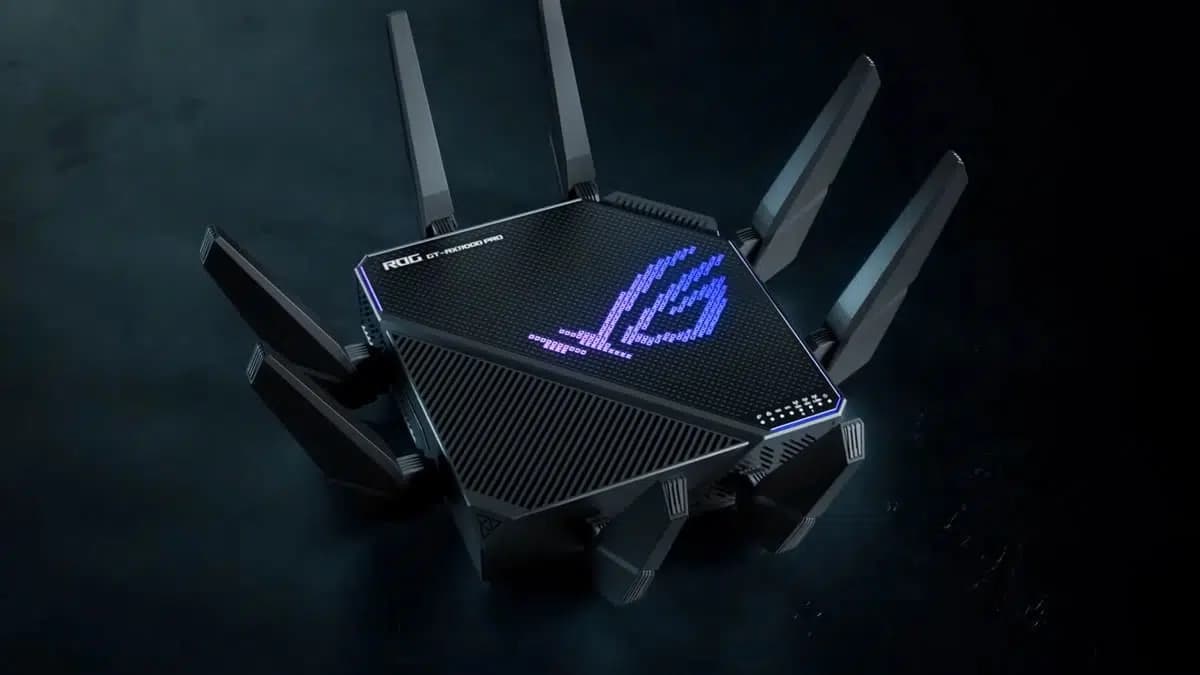
ASUS ROG Rapture GT-AX11000 Pro
ASUS ROG’s flagship GT-AX11000 Pro is positioned as the best-in-class gaming wireless router thanks to its tri-band Wi‑Fi 6 design, advanced QoS and security features, and high port flexibility for pro streamers and large households. It outperforms others on raw throughput and concurrent device handling, making it a premium choice compared with the more budget-friendly NETGEAR XR1000, TP‑Link Archer GX90, and the mid-range RT‑AX86U Pro, though it comes at a higher price point than those alternatives.
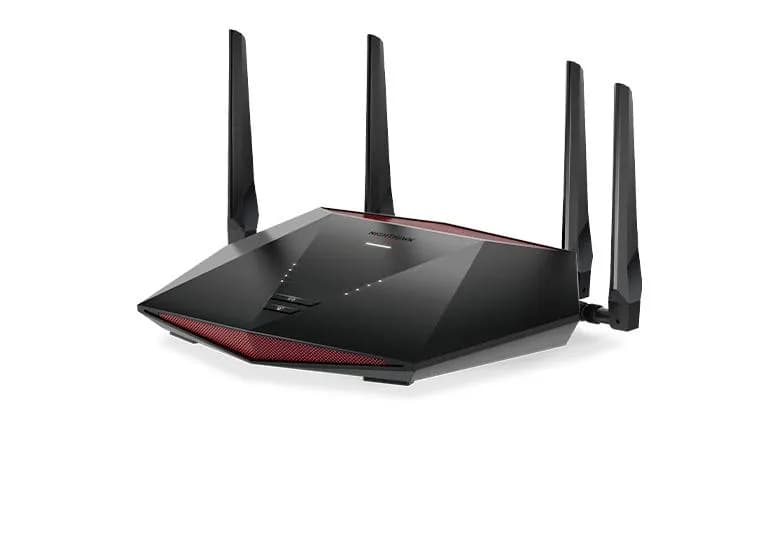
NETGEAR Nighthawk Pro Gaming XR1000
The NETGEAR Nighthawk Pro Gaming XR1000 focuses on low-latency play and straightforward traffic control with gamer-centric firmware, delivering a strong balance of performance and value for competitive players. It typically costs less than the ASUS ROG flagship while providing superior software-based latency controls versus the TP‑Link and Razer options, but it sacrifices some of the top-end throughput and port density found in the GT-AX11000 Pro.
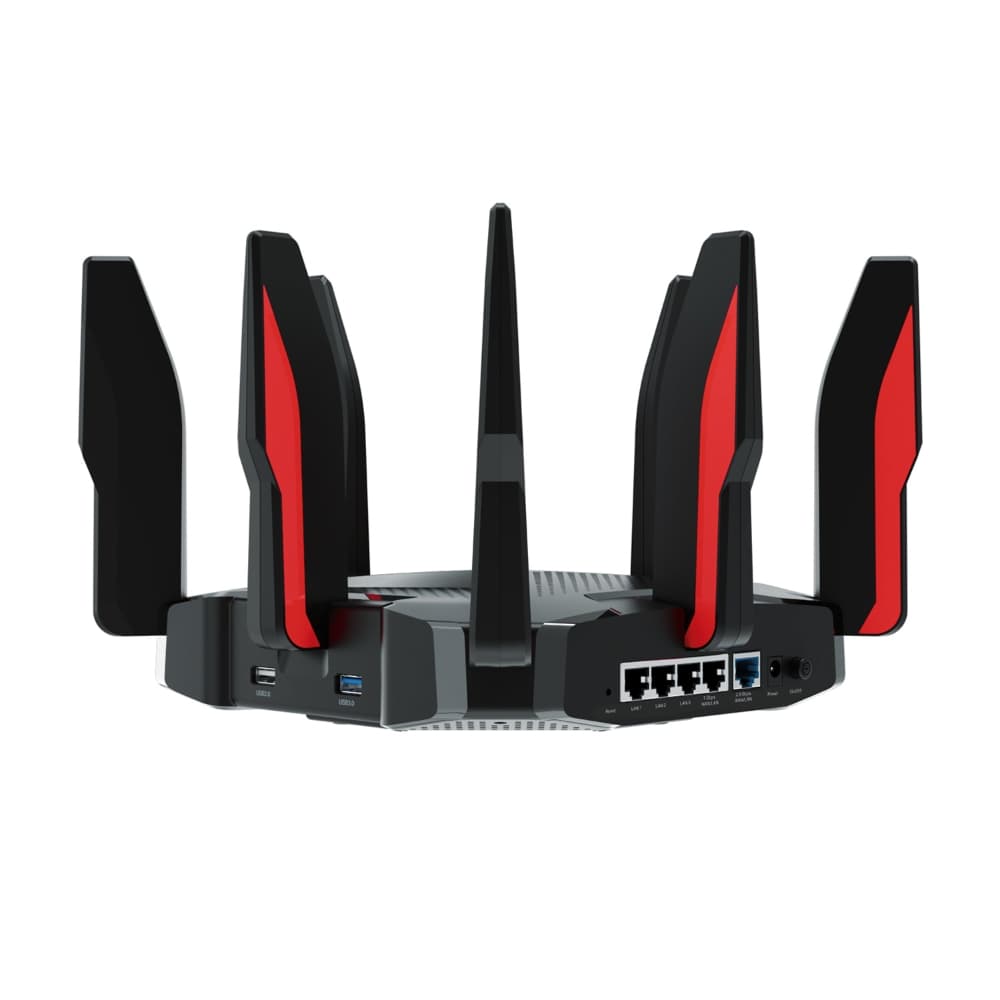
TP-Link Archer GX90
TP‑Link’s Archer GX90 is a value-oriented gaming router that offers a dedicated gaming band and tri-band Wi‑Fi 6 capability at a more aggressive price, making it attractive for price-sensitive gamers who need solid multi-device performance. While it doesn’t match the GT‑AX11000 Pro’s absolute specs or the XR1000’s refined latency tuning, it outcompetes the older Wi‑Fi 5 Razer Sila on throughput for a lower cost than the premium ASUS models.
ASUS RT-AX86U Pro
The ASUS RT-AX86U Pro is a high-value, performance-focused gaming router that brings many of ROG’s software optimizations and low-latency features in a compact, more affordable package. It offers much of the gaming functionality of the GT‑AX11000 Pro at a lower price and simpler deployment, making it a sensible middle ground between the flagship and the cheaper Archer GX90 or Razer Sila.

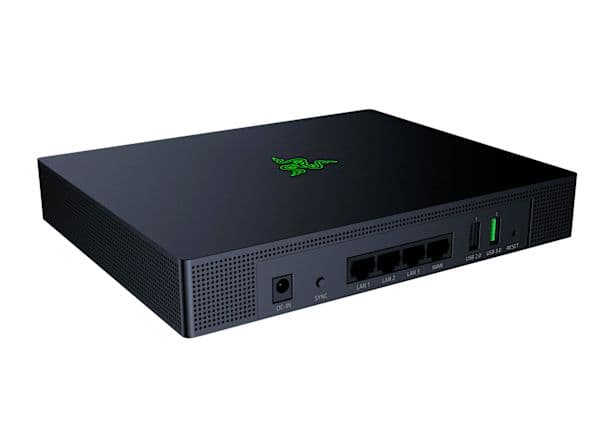
Razer Sila
Razer Sila emphasizes sleek design, mesh compatibility, and intuitive Razer-centric features to appeal to lifestyle gamers and households looking for easy setup and consistent latency. It is the most budget- and design-focused option on the list, but being Wi‑Fi 5 based it is less future-proof than the Wi‑Fi 6 routers from ASUS, NETGEAR, and TP‑Link, so it’s best for casual gamers or users prioritizing mesh and aesthetics over maximum throughput.
Why gaming routers help — research and evidence
A range of laboratory tests and academic and industry research has examined how network performance affects interactive applications like online games. Findings consistently show that lower latency, reduced jitter, and minimized packet loss improve game responsiveness and perceived fairness in multiplayer matches. Modern wireless technologies and traffic management techniques have measurable effects on these metrics, and they can be especially important in congested home networks where multiple devices are active.
Latency and reaction time: Controlled experiments show that reducing round-trip time and jitter leads to faster in-game reactions and fewer synchronization issues in fast-paced games.
Traffic prioritization: Studies and vendor tests demonstrate that Quality of Service (QoS) and game-prioritization features reduce lag spikes when other devices are streaming or downloading.
Wi‑Fi standards and throughput: Research into Wi‑Fi 6/6E and Wi‑Fi 7 indicates higher aggregate throughput and better handling of many simultaneous devices, which reduces contention in busy home networks.
Multi-user technologies: MU-MIMO and OFDMA increase efficiency in multi-device environments by allowing a router to service multiple clients more effectively, lowering delays for gaming devices.
Mesh and coverage: Testing of mesh systems shows improved real-world coverage and fewer dropouts in complex UK home layouts compared with a single access point.
Frequently Asked Questions
Which router should I buy for competitive eSports nights?
Choose the ASUS ROG Rapture GT-AX11000 Pro if you want tri-band Wi‑Fi 6 plus advanced gaming traffic prioritisation, Game Boost and VPN Fusion, with an average rating of 4.6.
Does TP-Link Archer GX90 have a dedicated gaming band?
Yes—the TP-Link Archer GX90 includes a dedicated 5GHz gaming band within its tri-band Wi‑Fi 6 setup, and it has an average rating of 4.4.
How does NETGEAR XR1000 value compare to ASUS ROG GT-AX11000 Pro?
The NETGEAR Nighthawk Pro Gaming XR1000 is positioned as typically costing less than the ASUS ROG Rapture GT-AX11000 Pro, while still offering dual-band Wi‑Fi 6 with DumaOS tools for reducing ping and jitter.
What Wi‑Fi bands does ASUS ROG Rapture GT-AX11000 Pro use?
The ASUS ROG Rapture GT-AX11000 Pro uses tri-band Wi‑Fi 6 and is described as multi-gig capable with deep firmware controls, with an average rating of 4.6.
Conclusion
This category covers what to expect from gaming wireless routers in the UK in 2026. Currently this page lists 0 top picks because the selection is undefined; if you did not find a model here, try refining or widening your search, adjusting filters for features like Wi‑Fi standard, mesh support, or price, or check back later for updates. We hope you found the guidance useful and that it helps you narrow down the right router for your gaming setup.