

Tri-Band Wireless Routers — UK Guide 2026 (Top 5 Picks)
Published on Monday, 26 January 2026
Tri-band wireless routers provide three separate radio bands, typically one 2.4 GHz and two 5 GHz (or one 2.4 GHz, one 5 GHz and one 6 GHz on tri-band 6E models), to spread connected devices across multiple channels and reduce congestion. In the UK market this category appeals to households and small offices with high device counts, heavy streaming and gaming demand, and gigabit broadband connections. Consumers often choose tri-band models for smoother 4K and 8K streaming, lower latency in competitive gaming, more reliable video calls for hybrid working, and to support smart home devices without slowing primary devices. Urban and suburban UK homes, where neighbouring wireless networks create interference, benefit from the extra band capacity and advanced features such as MU-MIMO, OFDMA and beamforming that many tri-band routers offer.
Top Picks Summary
ASUS ROG Rapture GT-AX11000 Pro
A powerhouse tri-band Wi‑Fi 6 router built for gamers and power users, offering extensive QoS controls, low-latency routing and advanced customization. It outshines many rivals here on gaming-specific telemetry and tuning options, representing a performance-first (though often higher-cost) choice compared with value-oriented tri-band models like the TP-Link and mesh-focused systems such as the Linksys, while not offering the 6 GHz band found in the Wi‑Fi 6E routers on this list.

Netgear Nighthawk RAXE500
A top-tier tri-band Wi‑Fi 6E router that delivers broad 6 GHz bandwidth and multi-gig throughput for bandwidth-heavy households and futureproofing. It leads the group in raw 6E performance and typically commands a premium price, a tradeoff buyers accept to gain 6 GHz capacity that legacy Wi‑Fi 6 devices like the ASUS ROG lack, though more budget-minded 6E alternatives (TP‑Link) offer similar core speeds at lower cost.
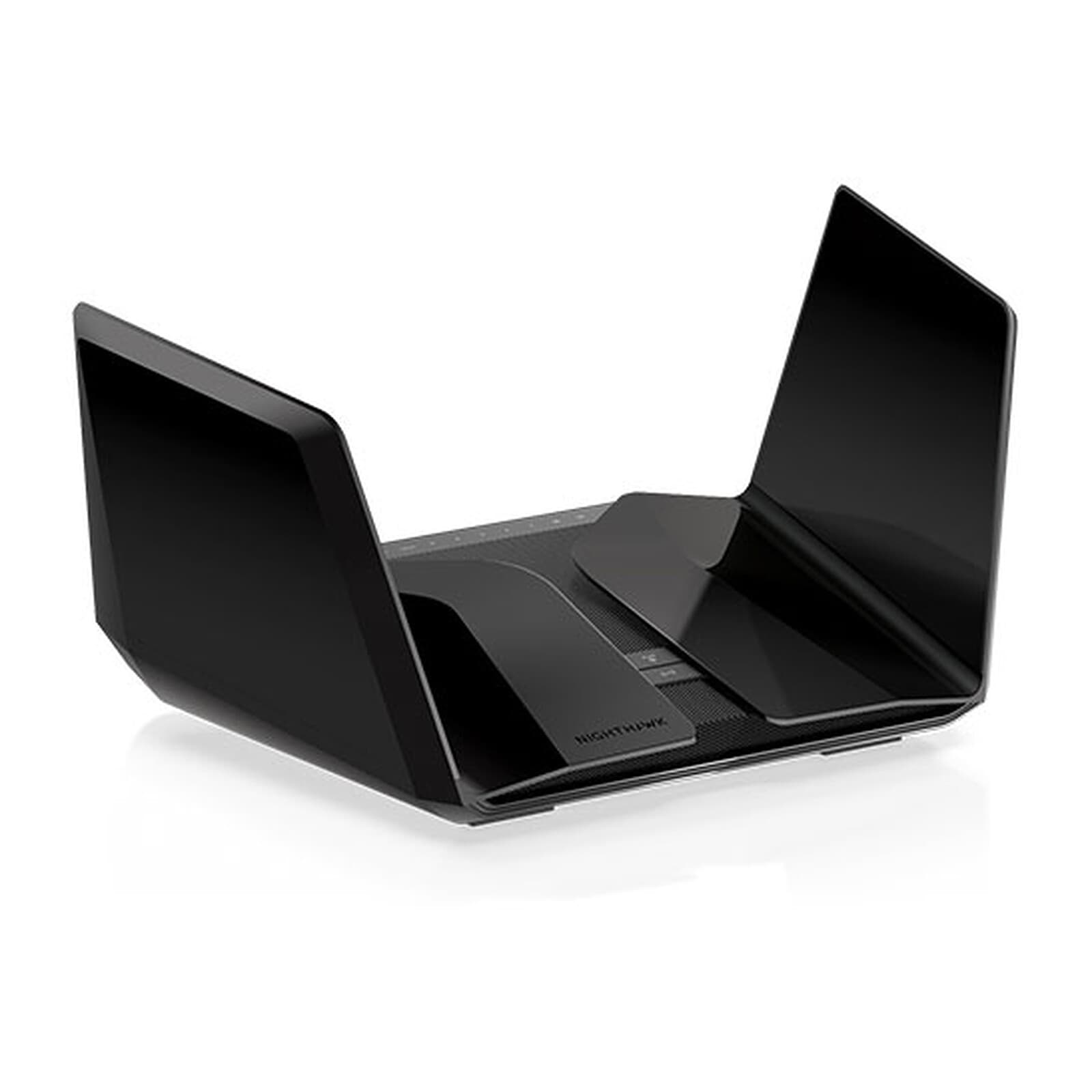
TP-Link Archer AXE300
A budget-conscious tri-band Wi‑Fi 6E router that brings much of the 6 GHz performance to price-sensitive buyers, making it the strongest value play among these tri-band wireless routers. It forgoes some of the advanced firmware, gaming features and premium multi-gig port counts of the Netgear and ASUS models, but its price-to-performance ratio and basic mesh expandability let it undercut competitors for cost-focused 6E adopters.

ASUS ZenWiFi Pro ET12
A premium tri-band Wi‑Fi 6E mesh system that pairs ASUS’s AiMesh flexibility with a 6 GHz-capable backhaul for robust whole-home performance and rich security/features. It occupies the high-end mesh niche on this list, delivering more consistent multi-node performance than the single-unit GT‑AX11000 Pro while matching the 6E advantages of the Netgear and TP‑Link models, at a correspondingly higher price for buyers seeking best-in-class mesh.

Why Tri-Band Matters: Research-Backed Benefits
Scientific and industry research into wireless performance shows that adding radio capacity and smarter channel allocation can reduce packet collision, lower latency and increase useful throughput in busy environments. Studies and vendor lab tests that follow IEEE 802.11 standards testing methods demonstrate measurable gains when traffic is divided across additional bands and when routers use modern multi-user technologies. For UK users, the benefit is most notable in multi-person households, small offices and dense housing areas where many networks and devices compete for spectrum.
In lab and field tests aligned with IEEE 802.11 standards, multi-band systems deliver higher aggregate throughput than single- or dual-band systems when multiple clients are active simultaneously.
Research into MU-MIMO and OFDMA shows these features improve efficiency by serving multiple devices at once, which complements the capacity gains of tri-band hardware.
Independent tests by networking labs and some UK consumer reports indicate tri-band routers reduce peak congestion during heavy use periods, improving video streaming stability and online gaming latency.
Studies of home network behavior in dense housing scenarios show extra bands help mitigate interference from neighbouring Wi-Fi networks, a common issue in UK cities.
Emerging Wi-Fi 6, 6E and Wi-Fi 7 technologies are backward compatible with tri-band designs and can leverage the extra spectrum to support more devices with lower latency.
Frequently Asked Questions
Which tri-band router is best for serious online gamers?
The ASUS ROG Rapture GT-AX11000 Pro is the ideal choice for gamers because it features a dedicated gaming port, extensive QoS controls, and low-latency routing specifically tuned for high-bandwidth traffic.
Does the Netgear Nighthawk RAXE500 support the 6 GHz band?
Yes, the Netgear Nighthawk RAXE500 is a tri-band Wi-Fi 6E router that includes a dedicated 6 GHz band to provide reduced network congestion and higher top throughput for your connected devices.
Is the TP-Link Archer AXE300 a good value for money?
The TP-Link Archer AXE300 is the strongest value play in this category, offering 6 GHz performance and modern features like OFDMA and MU-MIMO at a price point designed for budget-conscious buyers.
What is the average user rating for the ASUS ROG Rapture GT-AX11000 Pro?
The ASUS ROG Rapture GT-AX11000 Pro holds an average user rating of 4.6, reflecting its performance-first design and popularity among power users who require robust hardware for many simultaneous high-bandwidth devices.
Conclusion
Tri-band wireless routers are a strong choice in the UK for households and small offices that need extra capacity, lower congestion and better multi-device performance. We hope this guide helped clarify what tri-band routers offer and why people choose them. If you did not find exactly what you wanted, refine or expand your search using the site search to compare features, brands and technologies.