

Premium Wide-Format Aqueous Inkjet Printers: Your Complete 2026 Buying Guide for UK Professionals
Aqueous wide-format inkjet printing means one specific thing: the ink carrier is water, not latex, eco-solvent or UV-curable resin. That single distinction drives everything else about these machines — low odour and negligible volatile organic compound emissions, so they can sit in an occupied studio or office without extraction; superb colour depth on coated fine art papers, canvas and photo media; and, critically, no inherent water resistance, which is why aqueous output destined for outdoors must be laminated or encapsulated. Within the UK market, demand continues among photographers, architectural practices, print rooms and reprographic bureaux. The machines below span two quite different jobs. The Canon imagePROGRAF PRO-300 and Epson SureColor SC-P700 are A3+ desktop units capped at roughly 330mm (13in) of media width — the entry rung of the aqueous ladder rather than true wide format. The Canon PRO-1000 and Epson SC-P900 step up to 432mm (17in) A2 sheets for gallery work. Only the HP DesignJet T650 is a conventional roll-fed large-format plotter, at 610mm (24in) or 914mm (36in) depending on the variant you buy.
Inception's AI took the time to understand this market in the UK · We may earn a commission on purchases. It never affects our rankings.
Top Picks Summary
Canon imagePROGRAF PRO-300
The imagePROGRAF PRO-300 is the entry point to Canon's professional pigment line: an A3+ desktop unit capped at roughly 330mm (13in) media width, so it sits below true wide format but shares the LUCIA PRO ink chemistry of the larger machines. It competes directly with the Epson SC-P700 for A3+ photo work with straightforward media handling and a compact footprint, and it undercuts the 432mm (17in) PRO-1000 on both purchase cost and desk space for small photo studios and freelance photographers who rarely print beyond A3+.

Epson SureColor SC-P700
The SureColor SC-P700 is Epson's A3+ pigment desktop printer, taking media up to roughly 330mm (13in) wide with optional roll support for panoramic work. Its MicroPiezo printhead and 10-colour UltraChrome pigment set make it a common choice for proofing and limited-run fine art across UK studios. Against Canon's A3+ machine it is generally rated for shadow detail and gradation, and like the PRO-300 it is an entry-tier aqueous unit rather than a large-format plotter.
Canon imagePROGRAF PRO-1000
The imagePROGRAF PRO-1000 is Canon's 432mm (17in) A2 sheet-fed gallery printer, using a 12-colour LUCIA PRO pigment system with a Chroma Optimizer to even out gloss differential. It is aimed at photographers, galleries and small print labs producing exhibition and giclee work. For UK buyers it is a larger upfront investment than the A3+ models above, but the wider sheet and larger ink tanks reduce cost per print once volume rises beyond proof-sized work.
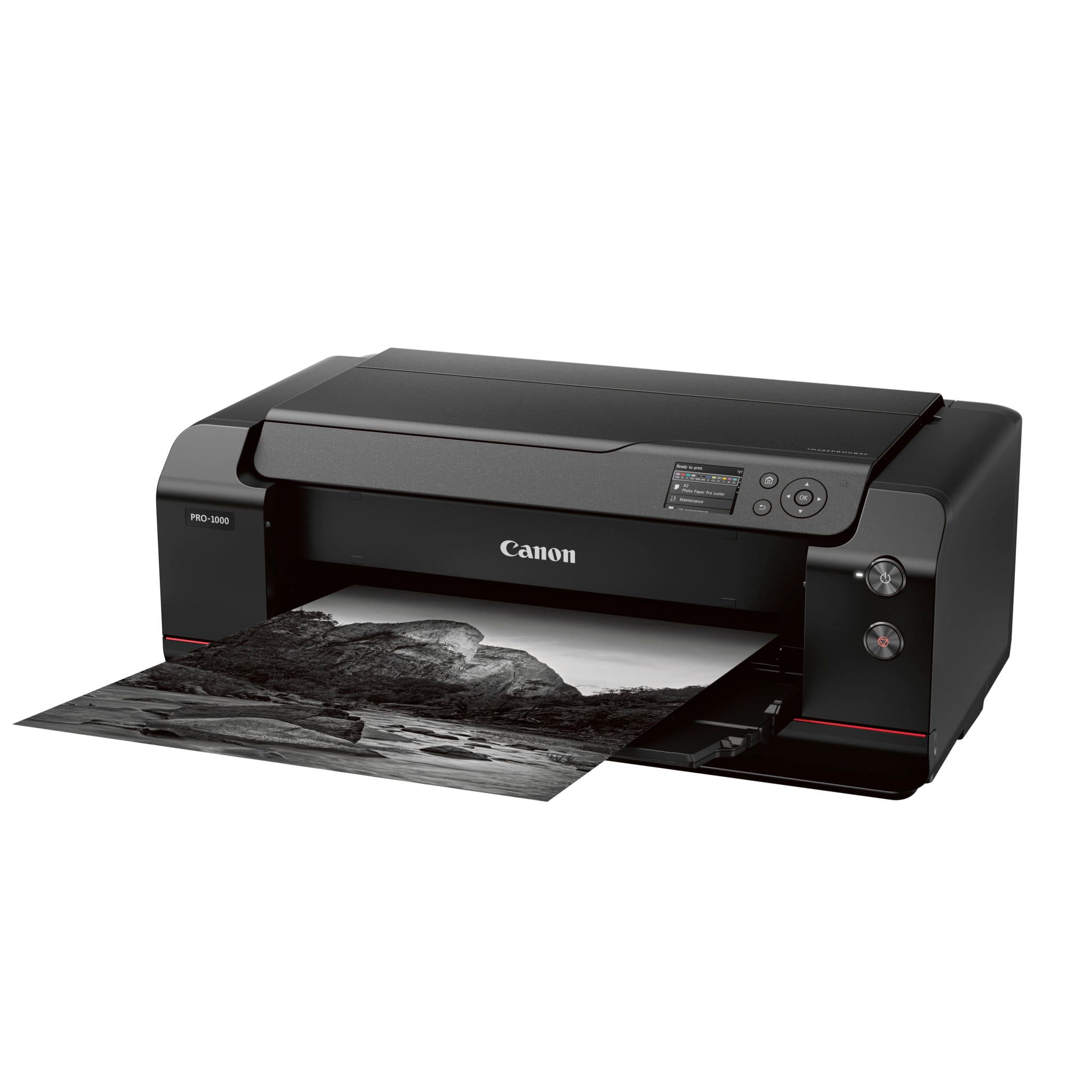
Where to buy Canon imagePROGRAF PRO-1000 in UK: we track one retailer, Designsupply, and show the price we last observed there; the price you see at checkout may differ.
We may earn a commission on purchases. It never affects our rankings.
£1,200 – £1,600
Epson SureColor SC-P900
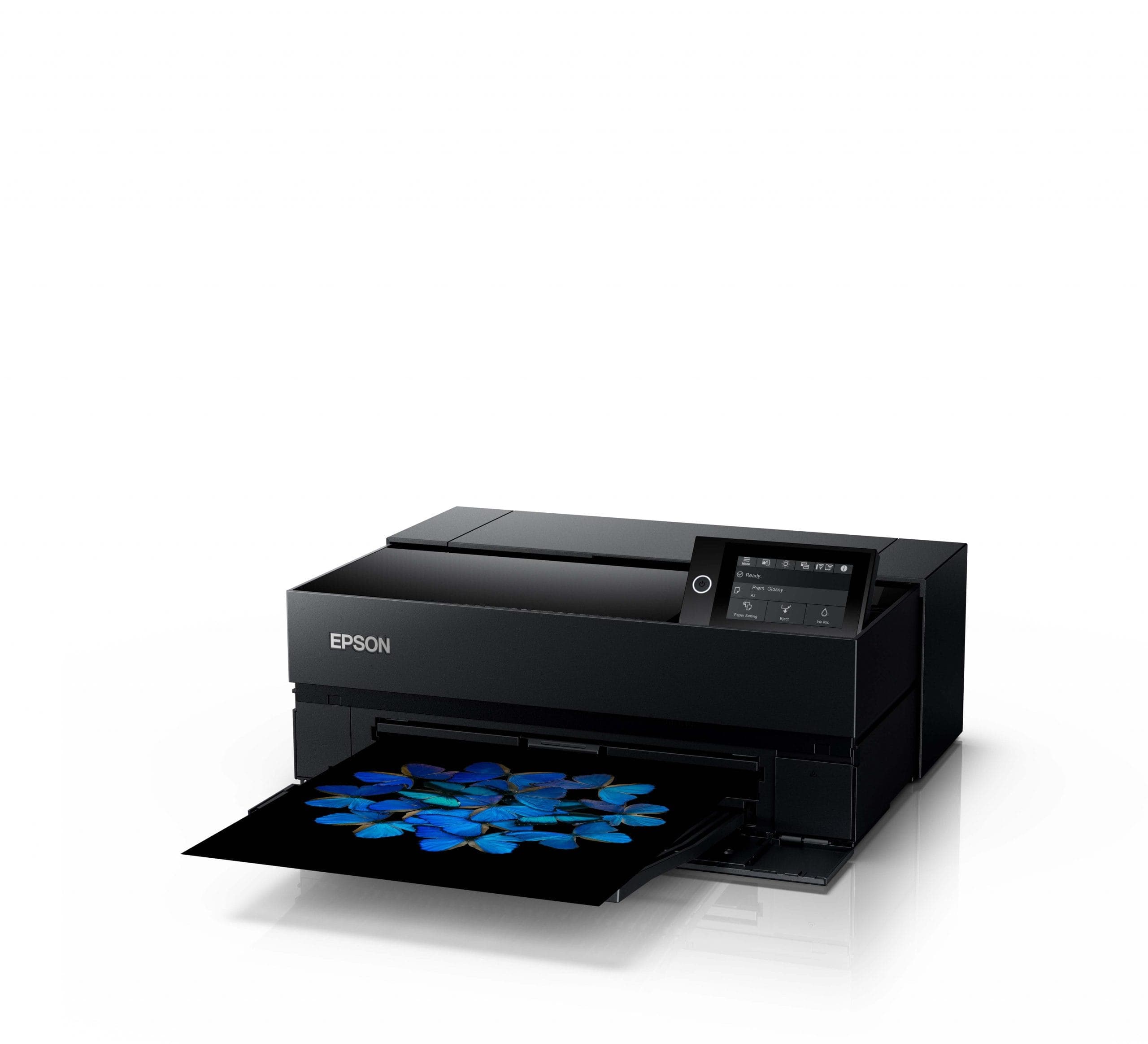
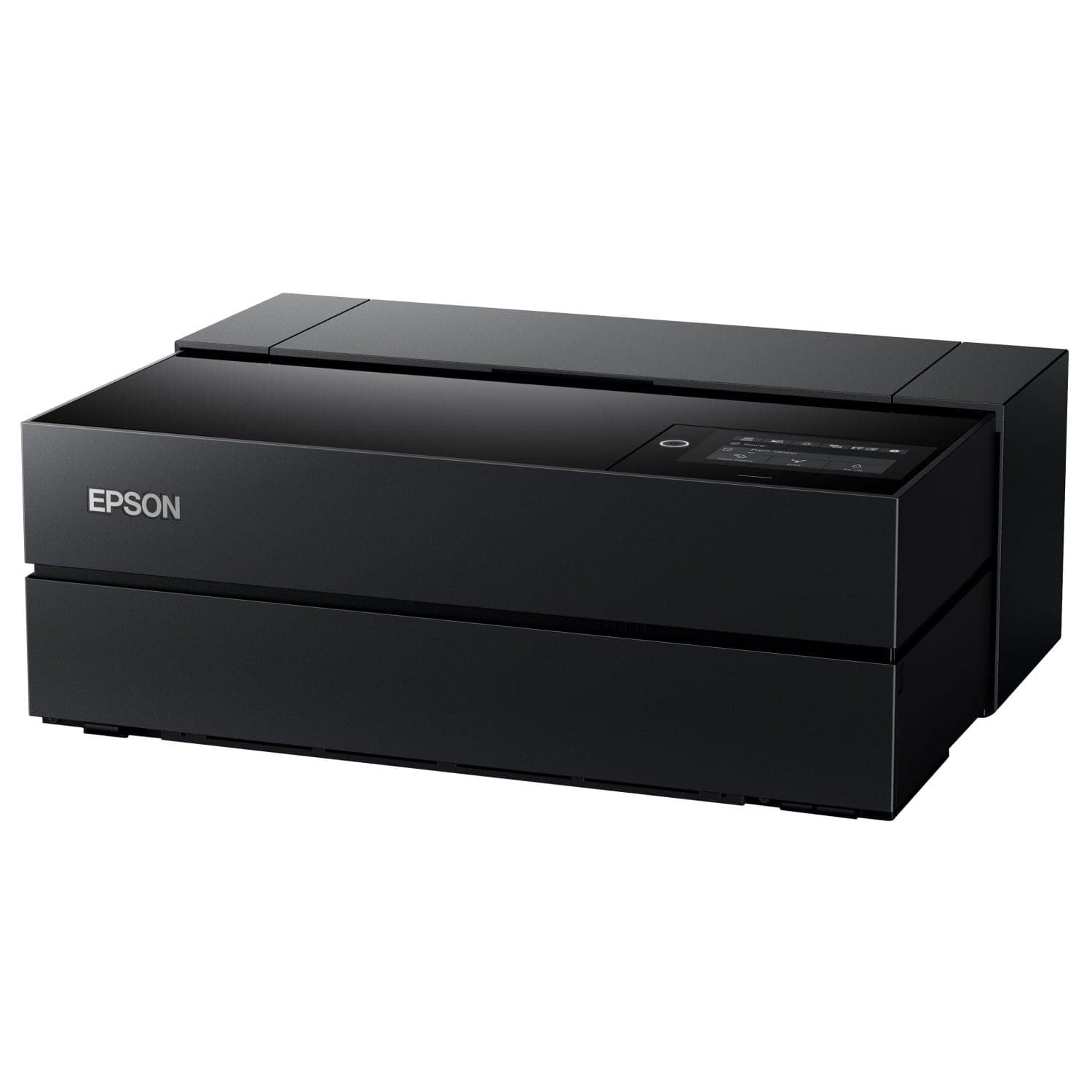
The SureColor SC-P900 is Epson's 432mm (17in) A2 counterpart to the Canon PRO-1000, pairing a 10-colour UltraChrome pigment set with a high-density MicroPiezo printhead and automatic switching between photo and matte black. It targets the same gallery, proofing and commercial photo market. Against the PRO-1000 it is the more compact of the two 17in machines and offers optional roll support, giving UK studios a slightly more flexible A2 platform.
HP DesignJet T650
The HP DesignJet T650 is the only conventional roll-fed large-format machine in this list, sold in 610mm (24in) and 914mm (36in) variants — confirm which one you are ordering, because both are marketed under the same T650 name. It is built for CAD, GIS and poster output in offices, architectural practices and small repro houses, on roll-feed convenience, low cost per plot and straightforward network setup. Unlike the dedicated photo printers above it does not chase gallery colour gamut: it uses dye inks for cyan, magenta and yellow with a pigment black, which favours crisp line work and low running cost over archival permanence.

Across this group the meaningful differentiators are media width (330mm to 914mm), ink chemistry (all-pigment archival sets versus dye colour with pigment black), and feed type (cut-sheet versus roll). Colour management support, network and cloud printing, and cartridge capacity then separate models within each tier.
Understanding Aqueous Wide-Format Printing Technology
Aqueous inkjet uses water as the vehicle that carries colourant onto the substrate, and it splits into two families that behave very differently. Pigment inks suspend solid colourant particles that sit on the media surface — they resist fading and light exposure for decades on rag papers, which is why every gallery and giclee printer in this list uses them. Dye inks dissolve the colourant in the carrier, giving punchier saturation and lower cost per page but far shorter display life and poor humidity tolerance. Both are water-based, and neither is weatherproof unmodified: an aqueous print used outdoors, or anywhere it may be handled or splashed, needs lamination or encapsulation. That is the real dividing line against the solvent, latex and UV categories, which cure or bite into uncoated vinyl and print outdoor-durable signage straight off the roll.
Water-based carrier means low odour and very low VOC output, so no dedicated extraction is normally required
Pigment inks (Canon LUCIA PRO, Epson UltraChrome) are the archival choice; dye inks trade permanence for saturation and cost
Media width is the specification that actually defines the tier: 330mm A3+, 432mm A2, 610mm/914mm roll-fed
Compatible with coated fine art papers, canvas, photo gloss and technical bond, but not with uncoated outdoor vinyl
Prints are not water resistant as they leave the machine — laminate or encapsulate anything for outdoor or high-handling use
Colour accuracy depends on ICC profiling for each paper stock rather than on the printer alone
Roll-fed plotters such as the DesignJet suit repeat technical output; sheet-fed A2 units suit low-volume gallery work
Running cost is dominated by ink, not hardware — compare cartridge capacity, not just purchase price
Frequently Asked Questions
What does "aqueous" mean, and how is it different from latex, solvent or UV printing?
Aqueous simply means the ink is water-based. It comes in two forms: pigment, where solid colourant sits on the media surface for long display permanence, and dye, which dissolves for stronger saturation but fades faster. Aqueous printing is low-odour and suits indoor fine art, photo and technical work on coated media. Latex, solvent/eco-solvent and UV-curable inks instead cure or bite into uncoated substrates such as vinyl, which is why those categories handle outdoor signage.
Are these printers really wide-format? What media widths do they take?
Only partly, and the difference matters. The Canon imagePROGRAF PRO-300 and Epson SureColor SC-P700 are A3+ desktop printers capped at about 330mm (13in). The Canon imagePROGRAF PRO-1000 and Epson SureColor SC-P900 take 432mm (17in) A2 media. The HP DesignJet T650 is the only conventional large-format roll-fed plotter here, sold in 610mm (24in) and 914mm (36in) variants — check which model you are buying, as the two share a name.
Which model should I pick for archival fine art prints?
Pick a full pigment set. The Canon imagePROGRAF PRO-1000 uses a 12-colour LUCIA PRO pigment system across 432mm (17in) A2 media and the Epson SureColor SC-P900 uses a 10-colour UltraChrome pigment set at the same width, both designed for giclee and gallery output. If A3+ is wide enough, the PRO-300 and SC-P700 use the same ink families in a 330mm desktop chassis for considerably less money.
Can I use aqueous prints outdoors?
Not unprotected. Water-based ink stays vulnerable to moisture and handling once dry, so any aqueous print going outdoors, into a high-traffic area, or onto a floor or window needs laminating or encapsulating first. Pigment inks help with light fastness but do not make a print waterproof. If most of your work is outdoor signage, a solvent, eco-solvent, latex or UV-curable machine is the correct category rather than an aqueous one.
Conclusion
Choosing between these comes down to two questions, asked in order. First, how wide do you actually need to print? If your longest edge fits A3+ or A2, a desktop sheet-fed pigment printer will give you better colour for less money than any plotter. If you need 610mm or 914mm rolls, you need a roll-fed machine and the DesignJet T650 is the one here that qualifies. Second, does the output need to last, or does it need to be cheap? Pigment sets buy you decades of display permanence on rag paper; the dye-plus-pigment-black configuration in office plotters buys you a low cost per plot. If any of the output will live outdoors or be handled repeatedly, budget for lamination from the start, because no aqueous ink is weatherproof on its own — that is what the solvent, latex and UV categories exist for. The specifications listed against each model below are manufacturer-published figures; verify current UK pricing and cartridge yields with your reseller before ordering, as both move frequently.