

Best Dual Technology Motion Sensors for UK Homes and Businesses in 2026
Start with the honest definition, because it changes what you should buy. A true dual technology detector pairs a passive infrared (PIR) element with a second sensing method - almost always microwave Doppler radar - and only raises an alarm when both agree. That AND-logic is why dual-tech dominates commercial intruder alarms from the likes of Texecom, Optex and Pyronix: PIR alone is fooled by sunlight, radiators and draughts, microwave alone is fooled by movement through plasterboard, and requiring both cuts nuisance activations sharply. What matters for UK shoppers is that the consumer smart-home market has largely not followed. The battery-powered sensors that work with Hive, Hue, SmartThings, Home Assistant and Yale Sync - including every device listed on this page - detect motion with PIR alone. Several add temperature, lux, vibration or tamper sensing, which is genuinely useful but is not dual-technology motion detection, and none of them should be confused with dual-band Wi-Fi or with a PIR-plus-camera doorbell. Newer mmWave presence sensors are a different thing again: they replace PIR rather than teaming up with it. So this page keeps the shortlist that UK buyers actually reach for, and is explicit about what each unit senses, which hub or protocol it needs, and how to get dual-tech style false-alarm rejection out of PIR hardware.
Inception's AI took the time to understand this market in the UK · · How we pickWe may earn a commission on purchases. It never affects our rankings.
Top Picks Summary
Fibaro Motion Sensor FGMS-001
Fibaro Motion Sensor FGMS-001 is positioned as a premium Z‑Wave multisensor that combines reliable motion detection with temperature and light sensing, making it ideal for Z‑Wave smart home hubs in the United Kingdom in 2026. Its compact design and advanced sensitivity justify a market‑leading placement versus cheaper Zigbee/Wi‑Fi options, though it typically commands a higher price than budget alternatives such as Sonoff or Shelly.

We may earn a commission on purchases. It never affects our rankings.
£48.00GBP
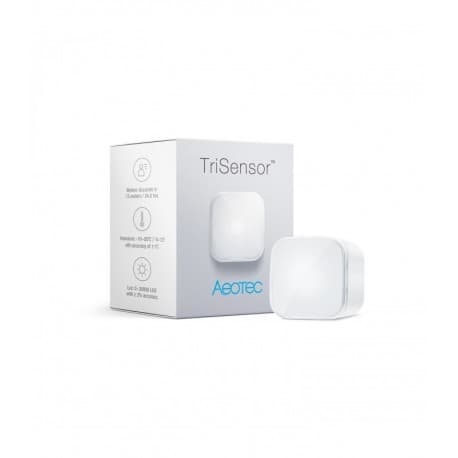
Aeotec TriSensor
Aeotec TriSensor earns its spot for flexible multi‑sensor performance and long battery life, delivering dependable motion, temperature and light reporting that excels in mesh networks and professional Z‑Wave installs. Technically it balances Fibaro's premium features and Sonoff's affordability by offering strong mesh stability and battery efficiency at a competitive mid‑range price point.
Sonoff SNZB-03P
Sonoff SNZB-03P is the value leader of the group, providing Zigbee-based PIR motion sensing at a very low price that makes large-scale deployment across UK properties affordable. It is a single-technology passive infrared detector, not a dual-tech unit, and it lacks the advanced configurability and battery optimisations of Fibaro or Aeotec - but its price-to-performance ratio makes it the top pick for budget installations and broad coverage, provided you already run a Zigbee gateway.

We may earn a commission on purchases. It never affects our rankings.
£15.04GBP
Shelly Motion 2
Shelly Motion 2 stands out for its local‑first Wi‑Fi support and flexible automation without mandatory cloud dependency, offering strong technical value for users who prioritise responsive in‑home control and low ongoing costs. Compared with ecosystem‑heavy offerings like Philips Hue and Hive it delivers more direct control and lower total cost of ownership, though it can require more manual configuration for complex multi‑sensor scenes.

We may earn a commission on purchases. It never affects our rankings.
Estimated£20 – £35
Yale Sync Smart Home Alarm PIR Motion Sensor
Yale Sync Smart Home Alarm PIR Motion Sensor is included for its tight integration with the Sync alarm ecosystem widely adopted in UK homes, providing immediate alarm linkage and simplified security setup for homeowners. Financially it can represent better bundled value for those buying a complete alarm package than standalone smart sensors such as Fibaro or Aeotec, but it is less flexible for enthusiasts who prefer third‑party hub customisation.

We may earn a commission on purchases. It never affects our rankings.
Estimated£30 – £45
Hive Motion Sensor
Hive Motion Sensor remains a strong choice for UK consumers already invested in the Hive platform, offering straightforward pairing with Hive heating and lighting services and broad retail availability. It sacrifices some deep technical customisation in favor of convenience and subscription‑enabled features, which many mainstream users find worth the modest premium over ultra‑cheap units like Sonoff.

Estimated£18 – £30
Philips Hue Motion Sensor
Philips Hue Motion Sensor leads for lighting automation and ecosystem polish, delivering instant scene transitions and superior ambient light awareness when used with a Hue Bridge — ideal for homeowners focused on refined lighting behaviour. Although it sits at a higher price point than most DIY sensors, its seamless integration, firmware longevity and interoperability with voice assistants make it the technical favourite for sophisticated lighting setups.

We may earn a commission on purchases. It never affects our rankings.
£39.00GBP
Judge these sensors on what they actually offer: PIR range and field of view, the hub or protocol they require, battery type and realistic life, whether sensitivity and re-trigger timing are adjustable, extra lux or temperature reporting for automations, tamper detection, and how well the device exposes local control for hub-side rules that can approximate dual-technology verification.
Understanding Smart Dual Technology Motion Sensors
Dual technology is a specific engineering claim, not a marketing adjective. Knowing where the line falls tells you which of these sensors will suit your property and where you will need to make up the difference in software or placement.
Dual technology means PIR and a second detection method - usually microwave Doppler - wired in AND-logic, so a single sensing element cannot trigger the alarm on its own.
It is chiefly professional intruder-alarm hardware. Mainstream smart-home sensors, including all seven on this page, are PIR-only; extra temperature, lux or vibration sensors do not make a device dual-technology.
The technical fact most guides skip: you can rebuild dual-verification in software. Have your hub require two independent triggers within a short window - PIR plus a door contact, or two sensors covering the same room - before it arms a siren or sends an alert.
Protocol dictates what you need on the shelf. Fibaro FGMS-001 and Aeotec TriSensor are Z-Wave and need a Z-Wave hub; Sonoff SNZB-03P and the Hive sensor are Zigbee and need a gateway or Hive Hub; Philips Hue runs Zigbee through a Hue Bridge; Shelly Motion 2 is 2.4 GHz Wi-Fi with no hub; the Yale unit talks only to a Yale Sync panel.
Pet immunity is a lens-and-firmware feature on specific models, not a category-wide one. Yale, for instance, sells a distinct pet-friendly detector (AC-PETPIR) that ignores movement below roughly 27 kg - the standard Sync PIR is not that part.
Placement does most of the false-alarm work on PIR: keep detectors off walls facing radiators, boilers, air vents, tumble dryers and direct sunlight, and mount across the likely line of travel rather than head-on.
Frequently Asked Questions
Are any of these smart motion sensors genuinely dual-technology?
No. All seven use passive infrared only. Fibaro FGMS-001 and Aeotec TriSensor add temperature and light sensing, Shelly Motion 2 adds lux and vibration, and Philips Hue adds a daylight sensor, but none pairs PIR with microwave radar. True PIR-plus-microwave dual-tech detectors are sold as professional intruder-alarm hardware rather than battery smart-home sensors.
Which of these sensors suits UK smart home hubs best?
It depends on the hub you already run. Fibaro Motion Sensor FGMS-001 is a Z-Wave multisensor combining motion with temperature and light sensing and needs a Z-Wave hub; it is rated 4.1 here. Sonoff SNZB-03P and Hive need a Zigbee gateway or Hive Hub, Philips Hue needs a Hue Bridge, Shelly Motion 2 runs on 2.4 GHz Wi-Fi with no hub at all, and the Yale sensor pairs only with a Yale Sync panel.
What exact capability does Aeotec TriSensor measure and report?
Aeotec TriSensor measures motion, temperature and ambient light in one compact Z-Wave device, with adjustable reporting intervals and sensitivity settings. The motion element is PIR - the three sensors are motion, temperature and lux, not three motion technologies. It is rated 4.1.
How do I cut false alarms if these are PIR-only?
Two ways. First, placement: keep the detector's field of view off radiators, vents, boilers, tumble dryers, draughty doors and direct sunlight, and mount it so intruders cross the beam pattern rather than walk straight at it. Second, hub logic: rather than acting on one trigger, have your hub require two independent signals within a short window - a PIR plus a door contact, or two sensors covering the same space - which reproduces the AND-logic that makes commercial dual-tech detectors trustworthy. Fibaro FGMS-001 also includes a built-in accelerometer and tamper alarm, useful for spotting interference with the device itself.
Conclusion
If you need genuine dual-technology detection - a warehouse, a shop floor, a garage with a wood burner, anywhere PIR alone keeps crying wolf - the right purchase is a professional PIR/microwave detector wired into a monitored alarm panel, not a battery smart sensor. If your goal is a responsive, well-behaved smart home, the PIR devices listed here are the correct tools, and the false-alarm problem is solved through placement, sensitivity tuning and hub logic that waits for two signals to agree. Match the protocol to the hub you already own before anything else: a Z-Wave sensor is inert without a Z-Wave hub, and a Zigbee sensor bought for a Hue setup will need the right bridge. Use our search to compare specific models, or to look at mmWave presence sensors if what you really want is detecting someone sitting still rather than someone walking past.