

Outdoor Smartwatches: Top 5 in the UK (2026)
Outdoor smartwatches combine robust navigation, health sensors and long battery life for outdoor activities such as hiking, trail running, cycling and wild camping. In the UK market in 2026, consumers prioritise water and shock resistance, battery life that can last several days between charges, precise multi-constellation GNSS positioning (GPS, Galileo, GLONASS) and safety features (SOS, location sharing, satellite beacons) suited to areas without mobile coverage. Compatibility with mobile apps, quality offline maps, regular software updates and transparency about repairability and environmental impact increasingly influence purchases in the UK. Finally, British buyers look for good value for money, a reliable after-sales network and clear warranties, especially for use in the wet and cold conditions typical of the local climate.
Inception's AI took the time to understand this market in the UK · · How we pickWe may earn a commission on purchases. It never affects our rankings.
Top Picks Summary
Garmin Fenix 8
The Garmin Fenix 8 is the best-in-class outdoor smartwatch, delivering exceptional battery life, built-in topographic maps and advanced multisport metrics. It outperforms the Apple Watch Ultra 2 and the Suunto Vertical in battery endurance and navigation features designed for long expeditions. Although it carries a premium price, its durability and pro-grade features make it a cost-effective investment for demanding outdoor enthusiasts.

Tank-like durability
Solar-boosted battery
What buyers say
AI summary of 69 reviews from 4 sources
Regarded as a versatile, highly rugged outdoor watch with exceptional battery life and comprehensive multisport features. The main criticisms are the high price and an occasionally complex interface.
Topo mapping smarts
Rugged multisport GPS watch built from premium materials with superior durability.
Enhanced Physical Well-Being
Recreational Enjoyment
Tech-Savvy Living
The Garmin Fenix 8 is the best-in-class outdoor smartwatch, delivering exceptional battery life, built-in topographic maps and advanced multisport metrics. It outperforms the Apple Watch Ultra 2 and the Suunto Vertical in battery endurance and navigation features designed for long expeditions. Although it carries a premium price, its durability and pro-grade features make it a cost-effective investment for demanding outdoor enthusiasts.
Tank-like durability
Solar-boosted battery
Topo mapping smarts
Rugged multisport GPS watch built from premium materials with superior durability.
Comprehensive navigation and mapping, multi-band GNSS, and extended battery modes.
Advanced performance metrics for athletes plus outdoor features like topo maps and ski/cycling modes.
Quotes
“However, that performance excellence comes with an eye-watering price tag, which is almost too much in comparison to its contemporaries. Almost, but not quite: I considered knocking off half a star, but this may well be the best-performing Garmin watch I’ve ever tried”
TechRadar2024 “In a nutshell, the Fenix 8 AMOLED is now Garmin’s most capable, feature-packed premium run tracker. But all that capability comes at a cost. It’s also a big chunk pricier than the Fenix 7, leap-frogging the Enduro 3 as Garmin’s top dollar option.”
Runner2024 “The Garmin Fenix 8 folds the Fenix 7 and Epix 2 watches into one range and offers a choice between an AMOLED display and solar-charging, as well as other upgrades like a built-in mic and speaker and a dive-capable design.”
Tom2024 “Whereas the majority of the changes on the Fenix 8 are focused on its significant user interface overhaul, essentially merging aspects of the Forerunner 965 interface with that of the Epix Pro, while concurrently revamping core widgets, settings, and workout/navigation areas...”
DC Rainmaker· dcrainmakerblog2024 “Navigation has gotten more stable since launch. The early release had real problems. Recent firmware updates have addressed most of them. AllTrails also added Garmin integration, you can push a hike from AllTrails to your Fenix 8 through Garmin Connect, which is a handy workflow.”
HikingGuy· Cris Hazzard2025Recent “The Fenix 8 is Garmin’s top-end, fully featured multi-sports watch and as adventure-ready as it gets. Whether you’re preparing for a marathon, triathlon or an off-grid hike, the Fenix 8 has Garmin’s most complete suite of training, racing, recovery, health and activity tracking.”
The Telegraph2025Recent “Turning to looks, the latest Fenix superficially resembles previous models; however, there are notable improvements, such as the sensor guard, larger display areas on specific models, and clever new methods for locking and unlocking the touchscreen using swipe gestures.”
the5krunner2024 “The 43mm version's 33mm diameter display is the smallest in the Fenix 8 range, but it's still plenty large enough to display all necessary information clearly. The compact size sits comfortably on most wrists without feeling bulky or heavy, making it suitable for extended wear.”
Live for the Outdoors2025Recent “In terms of durability and performance, it stands tall in any comparison with an Apple Watch or even the Epix Pro, showing why it’s a premium choice for those willing to pay top-dollar option prices.”
The Watches Geek2025Recent “Multi-week solar battery, lightweight; but bulky form factor.”
Reddit2026Recent “Long battery; but wrist HR tracking is inconsistent.”
redditrecs.com2026Recent “You prioritize premium mapping and navigation features with full topo maps”
Mountaineerjourney.com2026Recent
Loved
18- +
You can activate the new mic using the menus on the watch or set it up as a shortcut so the watch starts listening when you hold a button. You can then use commands like set a timer and the Fenix 8 will process them.
— Tom - +
The new speaker means you can take calls on the watch and it will also give voice updates during activities, such as your lap stats during a run — rest assured you can turn this off if you’d rather not have your watch talking to you during group activities.
— Tom - +
All of the new Fenix 8 models have a built-in flashlight, which is very useful during and outside of activities at night. You also get this flashlight with the Epix Pro and Fenix 7 Pro ranges, but not the Garmin Epix 2 or smaller Fenix 7 models.
— Tom - +
The bright AMOLED display is the same as on the Epix Pro watch and I do find it a big upgrade on the classic memory-in-pixel Garmin screens, especially when indoors or under cloud or tree cover outdoors.
— Tom - +
There are several new watch faces to use on the Fenix 8 and you can customize the colors and data shown extensively, with Garmin adding more color choice in particular with the new watch. You can also add more watch faces using the Connect IQ app store.
— Tom - +
The new leakproof buttons on the Fenix 8 feel a bit different to past models, but still click reliably and satisfyingly, and there’s a small haptic buzz to reassure you that you have hit the button.
— Tom - +
The new AMOLED display is simply stunning — brilliantly responsive and easy to read in all conditions. The raise-to-wake also springs the screen to life rapidly when you lift your arm.
— Runner - +
The headline updates from the Garmin Fenix 7 range include a stunning smartwatch-style AMOLED display, bigger screens on the smallest watches, improved waterproofing that now lets you dive to 40m depth, plus increased battery life (in most settings).
— Runner - +
There’s also a new built-in speaker and microphone so you can take calls from your wrist (you’ll still need your phone), listen to your offline Spotify or Deezer playlist or get lap split updates as you run.
— Runner - +
That punchy screen brings all your daily run, recovery, training and health stats to life, as well as elevating the Fenix 8’s mapping and navigation tools to another level.
— Runner - +
Alongside the touchscreen, the Garmin Fenix 8 features its usual five button controls. These are now leakproof and give you the option to use touch or buttons or a combination of both to do pretty much everything.
— Runner - +
You want the most advanced GPS watch for hiking and outdoor adventures
— Mountaineerjourney.com - +
You need multi-day battery life for long backpacking trips
— Mountaineerjourney.com - +
You value the crisp AMOLED display and touchscreen functionality
— Mountaineerjourney.com - +
You want voice commands and new dive features in one package
— Mountaineerjourney.com - +
Exceptional durability and robust construction
— Reddit - +
Convenient built-in LED flashlight
— Reddit - +
Comprehensive fitness, health, and training metrics ecosystem
— Reddit
Criticised
9- −
If we look at where it sits with other premium outdoor smartwatches, the Apple Watch Ultra 2 costs $799/£799 and the Samsung Galaxy Watch Ultra sits at $649/£599, so both are significantly cheaper buys. That’s why Garmin has launched the Fenix E, which sits at $799/£689.
— Wareable - −
More expensive than Fenix 7 Pro range
— Tom - −
The price has risen compared with the Garmin Fenix 7 Pro and Garmin Epix Pro, and the older Garmin watches might offer better value to those who don’t need the new mic and speaker or the dive capabilities of the Fenix 8.
— Tom - −
Not a huge upgrade on Epix Pro and Fenix 7 Pro
— Tom - −
The price has jumped up from the Fenix 7 and the Epix Pro models, though, so if you’re happy to forego the AMOLED screen and the new speaker/mic combo, it might be worth foraging for deals on those older models.
— Runner - −
You’re satisfied with your current Fenix 7 Pro or Epix Pro
— Mountaineerjourney.com - −
You prefer smaller, lighter GPS watches for casual use
— Mountaineerjourney.com - −
Budget is a primary concern (this watch starts at $800 and can easily go over $1200 depending on advanced features)
— Mountaineerjourney.com - −
You only need basic GPS tracking without advanced features
— Mountaineerjourney.com
Buyer voices
6“0 kri822aa over 1 year ago Everything is crap, don't buy it. Cancel Up -4 Down Cancel”
0 kri822aa over 1 year ago— forums.garmin.com“Touchscreen: Off (I prefer to use buttons)”
Monarch7 over 1 year ago— forums.garmin.com“derek87 6 months ago in reply to 6703919 +4 it's my humble opinion that the auto-dimming varies for people because everyone's eyes are different. I don't doubt that someone find it dims too much and other people find it's ok. I'm...”
derek87 6 months ago in reply to 6703919 +4— forums.garmin.com“Save.Pini over 1 year ago +2 Good morning everyone, I want to write this comment to tell you that I'm very, very happy with my new Fenix 8. I own the 47mm solar version. I'm a long-time customer. I started with the first Fenix...”
Save.Pini over 1 year ago +2— forums.garmin.com“0 haruki_zaemon over 1 year ago Nice. I'm loving mine FWIW. I also have the Glance. Any chance you could share your setup eg. theme string? Cancel Up +1 Down Cancel”
0 haruki_zaemon over 1 year ago— forums.garmin.com“0 derek87 over 1 year ago nice review. many of your points mirror my experience as I joined the Fenix 8 crowd only 2 months ago after years of Forerunner use.”
0 derek87 over 1 year ago— forums.garmin.com
We may earn a commission on purchases. It never affects our rankings.
Estimated£699 – £1,099
Apple Watch Ultra 2
The Apple Watch Ultra 2 is a market leader for outdoor users who want a smooth interface, a rich app ecosystem and high-performance sensors. It often outperforms competitors in ergonomics, iPhone integration and continuous health tracking, but its battery life is shorter than the Fenix 8 or the Coros Vertix 2S. Overall it delivers excellent value for connected hikers who prioritise simplicity and cellular services.

Ecosystem cornerstone
Emergency siren ready
What buyers say
AI summary of 94 reviews from 3 sources
Praised for its bright display, strong performance and seamless ecosystem, making it ideal for everyday use and outdoor activities. However, battery life lags behind specialist models and the price is high.
Rugged, precise GPS
Rugged titanium case with advanced dual-frequency GNSS for highly precise positioning.
Tech-Savvy Living
Boosted Social Connectivity
Increased Safety & Security
The Apple Watch Ultra 2 is a market leader for outdoor users who want a smooth interface, a rich app ecosystem and high-performance sensors. It often outperforms competitors in ergonomics, iPhone integration and continuous health tracking, but its battery life is shorter than the Fenix 8 or the Coros Vertix 2S. Overall it delivers excellent value for connected hikers who prioritise simplicity and cellular services.
Ecosystem cornerstone
Emergency siren ready
Rugged, precise GPS
Rugged titanium case with advanced dual-frequency GNSS for highly precise positioning.
Cutting-edge heart sensors with ECG support, detailed health metrics and enhanced safety features.
Seamless iPhone integration and a vast app ecosystem, plus extended battery options for long adventures.
Quotes
“The Apple Watch Ultra 2 is a modest update over the original, but a brighter display, support for the double-tap gestures and future-proof processor are welcome improvements.”
Tom2023 “The Apple Watch Ultra 2 is the biggest, toughest, most endurance-friendly watch in Apple’s line-up. Built for bigger adventures than the daintier Apple Watch Series 10, it offers increasingly comprehensive running credentials, along with all the life-taming tools that...”
Runner2025 “The Apple Watch Ultra 2 strikes a great balance between powerful outdoor features and being an excellent smartwatch companion.”
Trusted Reviews· James Stables2024 “Two-day battery life will remain a sticking point for adventurers heading off-grid, but for those sticking closer to home the Apple Watch Ultra 2 offers a slick, polished experience with no shortage of tools to help you train smarter and get more from your time outdoors.”
Advnture2024 “A few hours with the Apple Watch Ultra 2 is enough to confirm that it's an improvement on the stellar original - albeit only an incremental one, specs-wise. That's probably enough to make it the best Apple Watch ever, though, and its screen is amazing.”
TechRadar2023 “If you already have the first Apple Watch Ultra on your wrist, then there's probably not enough compelling reasons to spend a big on upgrading to an Ultra 2.”
Men2024 “Yes. The Apple Watch Ultra 2 combines durability, excellent features, great performance, and strong battery life with the advantage of being available at a far lower price than the Ultra 3. If you’re looking for the best value Apple Watch in 2025, the Ultra 2 is the one to buy.”
Mark's Tech Blogs· Mark's Tech Blogs2025Recent “Before testing the Ultra 2, I worried that its brighter screen would come at the expense of battery life, but that's not the case.”
PCMag UK2025Recent “Modular Ultra is probably my favorite for the Apple Watch Ultra. It takes advantage of all the space and has a ring around the edge that updates in real time to different metrics.”
AppleInsider· appleinsider2024 “One of our favorite aspects of this device group is the Apple Health app, which we find to be the most elegant and useful. Apple seems to put the most emphasis on daily health tracking, and they exceed the competition's apps and stats by doing so.”
GearLab “I placed the Watch Ultra 2 next to my first-gen Watch Ultra, and they were virtually indistinguishable from each other. After cranking up the brightness on both, I could barely tell the difference in standard lighting conditions because Apple uses the same ambient light sensor.”
ZDNET· ZDNET “Long battery; but wrist HR tracking is inconsistent.”
Reddit2026Recent “Buying the first gen makes a lot less sense”
Medium2023
Loved
24- +
Great new Modular Ultra watch face
— Tom - +
Easier to find iPhone with watch
— Tom - +
Brighter display than before
— Tom - +
The Ultra 2 also one-ups the Series 10's IP6X dust resistance rating with the addition of an MIL-STD 810H certification, the standard used for military equipment, meaning it has been tested to survive high altitude, extreme temperatures, freezing/thawing, blowing sand, and...
— PCMag UK - +
The biggest change for the second-generation Ultra is a 50% increase in screen brightness to 3,000 nits, Apple's brightest display ever. The Series 10 retains its predecessor's 2,000-nit maximum brightness, matching the Galaxy Watch 7 ($299.99) and the original Apple Watch Ultra.
— PCMag UK - +
An increase in brightness makes the display easier to read outdoors in bright sunlight. Between its size and brightness, the Ultra 2's display is phenomenal.
— PCMag UK - +
Impressively, Apple has made these upgrades without increasing the size or weight of the watch, and while maintaining the same battery life.
— Advnture - +
The two main differences are an upgraded display, which is 50% brighter, and a new processor that makes the whole experience of using the watch that little bit smoother, and enables a new gesture control for one-handed operation.
— Advnture - +
Double-tap gesture works well
— Advnture - +
Even brighter AMOLED display
— Advnture - +
Battery life: The Apple Watch Ultra 2 staying power is perhaps the biggest lure. It offers 36 hours of everyday use while the Apple Watch Series 10 stretches to 18 hours. When you fire up the GPS, both watches cover a marathon.
— Runner - +
In a nutshell, the Apple Watch Ultra 2 offers longer battery life, a bigger, more rugged, durable build, a brighter screen and multi-band/dual frequency GPS compared with the Series 10.
— Runner - +
Despite Garmin, Coros and Suutno all getting in on the AMOLED game, when it comes to brightness, crispness and clarity and visibility in all lights, the Apple Watch Ultra 2 still packs the best screen we’ve seen on a smartwatch – and a better screen than you’ll find on any...
— Runner - +
The Apple Watch Ultra 2 screams premium quality, with a slick, sophisticated case made from 95% recycled titanium. It’s a design that’s well finessed and looks great on the wrist – in a confidently hench, adventure-ready way.
— Runner - +
The 50% brighter display – up to 3,000 nits from 2,000 on the first-gen – is excellent. When you put them side by side, the screen brightness is notably improved over the first-gen Apple Watch Ultra.
— Runner - +
Safety features: The emergency SOS, fall and crash detection safety features are largely the same across both watches. However, the Apple Watch Series 10 doesn’t offer the safety siren you get on the Apple Watch Ultra 2.
— Runner - +
Controls: It may seem like a small thing, but you don’t get the Apple Watch Ultra 2’s customisable action button on the Series 10. This shortcut button makes it a doddle to launch straight into runs and workouts. And when you don’t have it, you miss it.
— Runner - +
Size, comfort & durability: Both the 42mm and 46mm Apple Watch Series 10 case sizes are dainty by comparison to the Ultra 2. The Ultra 2’s 49mm case size has a big, hench build, with a larger brighter display (3,000 nits vs 2,000 nits).
— Runner - +
Apple’s brightest display ever
— TechRadar - +
It has a brighter screen (Apple’s brightest screen ever, in fact) but Apple’s new S9 SiP chip and the watchOS 10 operating system are what’s bringing most of the changes.
— TechRadar - +
The key differences to look out for concern the screen and the bands. First off, the screen is even more beautiful than on the first version, capable of putting out an impressive 3,000 nits of brightness at full blast.
— TechRadar - +
The biggest changes from the Ultra lie mainly behind the toughened screen, where Apple has introduced its S9 chip, delivering the best it has to offer in performance. It’s a slick operator and simply never leaves you with that laggy feeling.
— Men - +
Best-in-class heart rate accuracy
— Reddit - +
Leave your phone behind with cellular
— Reddit
Criticised
9- −
Battery life could be better
— Tom - −
Galaxy Watch models allow for more granular control over screen brightness with a slider and optional adaptive brightness.
— PCMag UK - −
Relatively short battery life
— Advnture - −
Digital Crown may rub your wrist
— Advnture - −
You’ll charge the Series 10 more frequently. However, you can offset the battery life gap somewhat with the Apple Watch Series 10’s speedier fast charging which hits 80% in just 30 mins compared with an hour on the Ultra 2.
— Runner - −
Very few new features
— TechRadar - −
No battery life extension
— TechRadar - −
However, that’s pretty much everything we can say from a software design perspective, as most of the innovations present here are part of watchOS 10, which is also available on other Apple Watches.
— TechRadar - −
Some will understandably still be frustrated with the battery life. It’s also not yet quite the complete strength training partner, and there’s the drop in performance tracking heart rate during high intensity workouts to also contend with.
— Men
Buyer voices
7“naturalguy said: I just got the Ultra 2, came from a series 4 m, big difference Click to expand...”
“Rainman1915 said: You might to grab your brothers series 7 for sleeping, I have an Ultra and eventually found sleeping with it uncomfortable and bought a series 6 just for that. Enjoy your new watch! Click to expand...”
“Apple_Robert said: Even if a person isn't working out every day, receiving and responding to texts and calls, creating reminders, calendar tasks and the like etc. is a lot faster on the watch but, can quickly go through a lot of battery especially if the signal is weak.”
“JaraCz said: I have oura ring, sleeeping with any watch is stupid. Click to expand...”
“GuruZac said: I’m exactly 12 months in to owning my Ultra. Still at 100% battery health. Without workouts and cellular turned off, it easily gets me through 2 and a half days. Even with a 45 mins workout it will still have 68%+ with 14 hours on wrist.”
“pcd213 said: Question for those who bought a AWU2 coming from the AWU1. Have you noticed that the brightness of watch faces in always on mode (or whatever you call the mode that dims after you’re actively viewing it) to be noticeably dimmer than the 1st gen?”
“Apple_Robert said: I have found that the Ultra Modular face is quick to go to a red screen when low light is perceived but, it can be a few seconds slow returning to normal screen mode. Click to expand...”
Estimated£799 – £899
Suunto Vertical
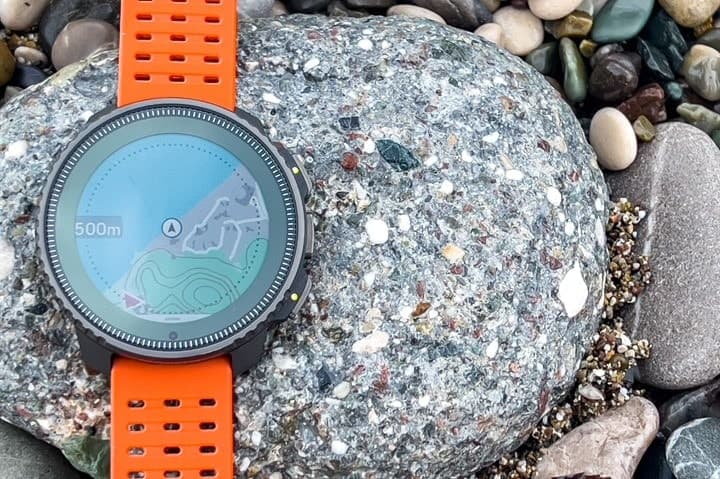
The Suunto Vertical prioritises GPS accuracy, altimetry and a lightweight design, making it ideal for climbers and trail runners who value reliable data in extreme conditions. Compared with the Fenix 8 and the Vertix 2S, it is often more affordable while delivering comparable location performance on technical routes. Its price advantage strikes a strong balance between professional features and a more accessible cost for adventurous users.
Altitude whisperer
Baro-smart brain
What buyers say
AI summary of 57 reviews from 2 sources
Praised for its GPS accuracy and its navigation and training features, with solid battery life. Some users criticise the less intuitive software interface and the bulky design.
Trail-hardened design
Designed for mountain athletes with long battery runtimes and detailed ascent/descent metrics.
Increased Safety & Security
Recreational Enjoyment
The Suunto Vertical prioritises GPS accuracy, altimetry and a lightweight design, making it ideal for climbers and trail runners who value reliable data in extreme conditions. Compared with the Fenix 8 and the Vertix 2S, it is often more affordable while delivering comparable location performance on technical routes. Its price advantage strikes a strong balance between professional features and a more accessible cost for adventurous users.
Altitude whisperer
Baro-smart brain
Trail-hardened design
Designed for mountain athletes with long battery runtimes and detailed ascent/descent metrics.
High-precision navigation with offline maps and clear route guidance for technical terrain.
Available lightweight/titanium options and strong GNSS performance on steep routes.
Quotes
“If you’re a serious expeditioner across the Arctic Circle or you’re hiking from Canada to Mexico, this is a great watch that you should look into.”
Tom2024 “The Suunto Vertical isn’t for casual fitness trackers or daily step counters. This is a smartwatch built for mountaineers, ultra-distance runners, and explorers who need reliability when civilization disappears.”
Mt. Watches2026Recent “The Suunto Vertical is essentially the next version of the Suunto 9 Peak Pro, except now with a new name. That’s a good thing in my opinion, as the naming variations on the numerical Suunto 9 scheme were just becoming overly complex (Suunto 9, Suunto 9 Baro, Suunto 9 Peak,...”
DC Rainmaker· dcrainmakerblog2023 “The other key point about the Suunto Vertical is its offline maps. Suunto are screamingly proud of the free offline mapping on this watch. First impressions dictate it's a good idea. Offline maps in the wilderness? Naturally. But we'll see how that works in practice.”
Live for the Outdoors2025Recent “Suunto is already a big player in the adventure watch space. And with the release of the Vertical, the brand aims to take back the “do anything” smartwatch space after a few years of focus on more refined, smaller watches aimed at distance running and sports.”
GearJunkie· Sean McCoy2023 “I first started using the Suunto Vertical last year during my TGO Challenge. I’d never used a “sports watch” before, but the idea of having a map on my wrist, saving me from constantly pulling out my phone or paper map, was what sold me on it.”
Ultralight Outdoor Gear “In the end, this is something that Suunto supports, simplicity over huge volume of data – they prefer the trusted Training Peaks TSS for measuring intensity and managing load/recovery then, they don’t invent derived indicators like Garmin, so more simple and to the point I’d say.”
Liviu Nastasa2025Recent “Long battery; but wrist HR tracking is inconsistent.”
Reddit2026Recent “Battery life is insanely good, with solar harvesting on or off. It far exceeded my expectations, and this must be the best in class, despite my endless scrolling to test every function and running the system pretty hard, navigating, paired to headphones and heart rate monitors.”
Cycling Weekly2026Recent
Loved
23- +
There are no fiddly ports or areas that trap grit or water, and I have never had to baby it. I usually take it off at night, just out of habit, but it is comfortable enough to wear all day.
— Ultralight Outdoor Gear - +
Battery life was one of the first things that sold me on the Suunto Vertical, and after a year, it continues to impress. With tracking and maps on, I regularly get 4–5 days before I need to think about charging.
— Ultralight Outdoor Gear - +
Solar charging is a gentle top-up, not a full refill. But on bright days, I squeeze out an extra half-day, which can be a real bonus. On sunnier multi-day trips, I’ve noticed I can squeeze out an extra half-day or so. Is it game-changing? Not quite. But useful? Definitely.
— Ultralight Outdoor Gear - +
Impressively, the magnetic charging cable hasn’t let me down either. The watch still latches onto it like it did on day one, even after the cable has spent countless days getting tossed around in my electronics bag.
— Ultralight Outdoor Gear - +
This has been especially useful in remote areas, such as Glen Feshie or the more isolated parts of the Howgills, where mobile signal is unreliable or completely absent.
— Ultralight Outdoor Gear - +
Since I no longer rely on my phone for navigation, I save a lot of battery life on multi-day hikes. That also means my phone and power bank last longer.
— Ultralight Outdoor Gear - +
One lesson I learned the hard way is to always update your offline maps before a trip. I once started a section of the Pennine Way without refreshing my maps and was left with just a breadcrumb trail.
— Ultralight Outdoor Gear - +
The storm alerts weren't something I was particularly aware of until my wrist started buzzing while climbing out of Ennerdale. This gave me just enough warning to drop off the ridge and get my tent pitched before the rain and thunder rolled in.
— Ultralight Outdoor Gear - +
The interface is also highly customisable. You can choose different themes, adjust what is shown on the watch face during various activities, and even customise what the physical buttons do.
— Ultralight Outdoor Gear - +
In the year and a bit I have owned this watch, I have worn it in sideways rain, up scrambly ridgelines, through bogs, and while lugging a rucksack for miles. It still looks almost new.
— Ultralight Outdoor Gear - +
One of the aspects of this watch that resonates with me is Suunto’s commitment to the environment. The Finnish brand has really invested in ensuring its products protect the environment as much as possible.
— Tom - +
The Suunto Vertical’s wide variety of fitness features — particularly those relating to outdoors activities and extreme sports — are without a doubt the most attractive aspect of this watch.
— Tom - +
Training capabilities include sport-specific modes for 95 different activities. The FusedAlti technology combines GPS, barometer, and gyroscope data to eliminate the altitude jitter that makes elevation profiles useless on other watches.
— Mt. Watches - +
The Suunto Vertical weighs just 69 grams and measures 48mm in diameter—substantial without feeling bloated on smaller wrists. The case is 316L stainless steel with a titanium option, and Suunto wisely avoided the aluminum trap that creates dent magnets.
— Mt. Watches - +
The display is a 1.4-inch AMOLED screen with 454 x 454 pixel density. Unlike competitors’ always-on displays that crush battery life, Suunto implemented an adaptive mode that activates based on wrist movement—a pragmatic engineering choice I haven’t seen other brands execute...
— Mt. Watches - +
The Vertical bundles features that matter in remote terrain. The dual-frequency GPS (L1 and L5) provides accuracy within 1.5 meters in open sky—critical precision for navigation in areas where standard L1-only systems drift 8-10 meters.
— Mt. Watches - +
The barometric altimeter isn’t novel, but Suunto’s implementation includes weather prediction based on pressure trends. I tested this during an Absaroka Range expedition and received accurate 6-hour forecasts matching actual conditions.
— Mt. Watches - +
Emergency features include SOS functionality and incident detection that automatically notifies emergency contacts if falls are detected during outdoor sports. This is passive insurance I genuinely hope never activates but appreciate having.
— Mt. Watches - +
Real-world performance exceeded expectations. During a seven-day backcountry ski tour, the Vertical tracked 47 miles with elevation gain data that aligned within 180 feet of my external altimeter—exceptional accuracy.
— Mt. Watches - +
Navigation proved intuitive even in whiteout conditions. The watch provided clear directional feedback via haptic feedback when deviating from preloaded routes.
— Mt. Watches - +
One genuine surprise: the optical heart rate sensor performs admirably on darker skin tones, where many optical sensors fail. Testing on varied participants showed consistent accuracy, something I’ve criticized Garmin and Apple for neglecting.
— Mt. Watches - +
Suunto claims 11 days in smartwatch mode with moderate GPS use. Realistic testing showed 10 days with daily two-hour GPS sessions and continuous heart rate monitoring. Switching to power-saving mode extended this to 14 days.
— Mt. Watches - +
Charging via magnetic pogo pins takes 90 minutes, and the included dock works reliably without the frustrating alignment issues plaguing Garmin’s system.
— Mt. Watches
Criticised
7- −
HR monitor isn't 100%
— Cycling Weekly - −
Menus and navigation simple but not as intuitive as Garmin
— Cycling Weekly - −
No street names on maps
— Cycling Weekly - −
Planning routes in the Suunto app is decent, although I would like to see a desktop version rolled out. Dragging waypoints around on a phone screen can get tiresome quickly.
— Ultralight Outdoor Gear - −
From the outset, you’ll notice this watch is big (way too big for my wrist). I know I have petite wrists, but this watch looks like a little girl wearing her mom’s high heels. It’s a shame that all of Suunto’s other models are only available in the same larger sizes.
— Tom - −
Poor blood oxygen reader
— Tom - −
The solar panel is a nice idea, but in practice, it doesn’t really seem to charge the watch. Suunto claims it adds up to +30%. In my experience in real-life situations, it slows down battery drain a little. Don’t rely on it to recharge during a hike.
— The Photo Hikes
Buyer voices
1“Vertical , anyone any concerns about it ? (self.Suunto)”
EnvironmentalEar8910— reddit
SpecificationsTech. Specs.
Build
- Case size
- 49mm
- Build
- Sapphire glass, titanium
Performance
- Altimeter
- Barometric (alti/baro/compass)
Battery
- Battery (GPS)
- Up to 85 hrs (best GPS)
- Battery (daily)
- Up to 1 year (solar, daily)
Display
- Display
- 1.4" transflective colour, always-on
Coros Vertix 2S
The Coros Vertix 2S stands out with record battery life and multi-band GNSS support, delivering extremely precise navigation for long expeditions where recharging is limited. Technically, it matches the Fenix 8 in accuracy while often being offered at a lower price, making it attractive to users seeking performance and value for money. Its robust construction and long-lasting battery make it an ideal choice for extreme expeditions.

Marathon battery life
Multi-band precision
What buyers say
AI summary of 72 reviews from 2 sources
Known for exceptional battery life, a highly reliable GPS and offline maps, it offers excellent value for money. A few software updates are still needed, but users praise its ruggedness.
High-altitude ready
Exceptional multi-week battery life even with heavy GPS use.
Sustained Energy & Focus
Enhanced Physical Well-Being
Tech-Savvy Living
The Coros Vertix 2S stands out with record battery life and multi-band GNSS support, delivering extremely precise navigation for long expeditions where recharging is limited. Technically, it matches the Fenix 8 in accuracy while often being offered at a lower price, making it attractive to users seeking performance and value for money. Its robust construction and long-lasting battery make it an ideal choice for extreme expeditions.
Marathon battery life
Multi-band precision
High-altitude ready
Exceptional multi-week battery life even with heavy GPS use.
Full sport metrics, dual-frequency GNSS and offline mapping support.
Titanium bezel and sapphire crystal deliver military-grade durability.
Quotes
“The Coros Vertix 2S is an incredible smartwatch that offers a great degree of customization, and uses an array of sensors to track everything — from your workouts and sleep patterns to your SpO2 stats and stress levels.”
Tom2024 “That tension between genuine capability and incremental progress defines the Vertix 2S experience. This is unquestionably the best watch Coros has ever made, and for first-time buyers entering the premium adventure watch category, it represents a compelling value proposition.”
wearablebeat.com2025Recent “This is a versatile watch for adventures, as much on foot or in the water as on a bike. Battery life is astonishing compared to competitors, such as the Apple Watch Ultra, but mapping and navigation are disappointing.”
Cycling Weekly2024 “If you want the best battery life for the price, this is the model for you. This model is for the rugged athlete who needs a multi-day life.”
GearLab “After 15 years reviewing smartwatches, I’ve tested hundreds of devices, but few accomplish what the COROS VERTIX 2S achieves: delivering military-grade durability, exceptional multi-GNSS accuracy, and a battery life that genuinely outlasts expeditions.”
Mt. Watches2026Recent “The display keeps the same MIP (Memory In Pixel) display from the previous COROS Vertix 2. While many thought we might see COROS adopt an AMOLED display, I’d wager a guess that that’ll wait to a product that’s not effectively a mid-cycle placeholder unit (again, hence the...”
DC Rainmaker· dcrainmakerblog2024 “Both brands instead opt for a transflective memory-in-pixel screen, thus prioritising impressive battery life over vivid display clarity. The idea is that most serious runners, especially ultra runners, want maximum battery performance rather than “lifestyle-y” sexy screens.”
Live for the Outdoors2025Recent “Multi-week solar battery, lightweight; but bulky form factor.”
Reddit2026Recent “In terms of actual practical use, it has three chunky buttons and a dial, which are big enough to use with thick gloves on. It’s also a touchscreen, but you can do almost everything with the buttons, other than moving the map around the screen to see more or a different section.”
TGO Magazine2026Recent “Ease of use is another strong point, though it takes a little time to get there. The interface is straightforward, the buttons are responsive, and once you’ve spent some time with it, navigating through activities becomes second nature—especially after customizing it to fit...”
Backcountry Fever· Backcountry Fever2026Recent “Next-Gen Heart Rate Monitor: The updated optical sensor uses a 5-LED, 4-photodetector layout to aggressively filter out the “noise” created by swinging your arms during skiing or trail running, yielding much cleaner cardiovascular exertion data.”
The Body Blueprint· Mike Collins2026Recent
Loved
20- +
Compatible with a variety of third-party apps
— Tom - +
Accurate sleep and fitness trackers
— Tom - +
GPS acquisition is quick and accurate
— Cycling Weekly - +
Clear, easy to read screen
— Cycling Weekly - +
Head-to-head with the Garmin Fenix 8, the results are closer than the price gap suggests. In half-marathon distance GPS track comparisons, the Vertix 2S frequently plots tighter lines on trails and singletrack where the Fenix 8 drifts into adjacent terrain or draws wider arcs.
— wearablebeat.com - +
GPS accuracy is the headline upgrade, and it delivers. The Vertix 2S uses a redesigned antenna and optimized dual-frequency GNSS algorithm, pulling signals from all five major satellite constellations: GPS, GLONASS, Galileo, BeiDou, and QZSS.
— wearablebeat.com - +
In trail running, the Vertix 2S tracks ridgelines and singletrack with tight, consistent lines. Quarter-mile splits on a track tick over with metronomic precision.
— wearablebeat.com - +
The always-on nature of the display means glanceable data without the wrist-raise gesture that plagues competitors.
— wearablebeat.com - +
The 1.4-inch memory-in-pixel (MIP) LCD display runs at 280 x 280 resolution with 64 colors. In bright sunlight, this technology shines – literally.
— wearablebeat.com - +
Coros includes both silicone and nylon bands in the box with a Quick Fit connector, which is a generous touch at this price point. The nylon band is the better choice for extended wear, shaving 17g and breathing better during long efforts.
— wearablebeat.com - +
Build quality, however, is beyond reproach. The Grade 5 titanium alloy bezel with PVD coating shrugs off impacts that would scar stainless steel, and the sapphire crystal – nearly ten times harder than standard glass – resists scratches with ease.
— wearablebeat.com - +
Climbing features represent Coros's strongest differentiator. Dedicated modes for bouldering, indoor climbing, and multi-pitch outdoor routes track pitch counts, route grades (V-scale and YDS), fall detection (indoor and outdoor lead climbing only – not available in...
— wearablebeat.com - +
COROS claims 11 days in smartwatch mode; my testing showed 9-10 days between charges with moderate activity tracking. Continuous GPS mode exhausts the battery in approximately 30 hours—realistic for multi-day treks.
— Mt. Watches - +
Real-world performance remained consistent. Never did the watch fail to lock satellites even in challenging canyon environments. Battery consumption during GPS activities proved predictable and transparent, allowing accurate trip planning based on available charge.
— Mt. Watches - +
Built-in offline maps transform this into genuine navigation hardware. Download maps for entire regions; the VERTIX 2S functions completely offline without smartphone dependency—a genuine game-changer for remote expeditions.
— Mt. Watches - +
Barometric altimeter readings proved remarkably precise throughout elevation changes. During a 4,000-meter mountain ascent, the VERTIX 2S tracked altitude fluctuations competitors missed entirely, crucial for climbers monitoring acclimatization rates.
— Mt. Watches - +
The VERTIX 2S employs quintuple GNSS systems: GPS, GLONASS, Galileo, BeiDou, and QZSS. This redundancy matters in dense forests and urban canyons where single-system trackers fail.
— Mt. Watches - +
Button placement follows logical ergonomics: action buttons positioned for operation while wearing gloves, crucial for climbers and winter athletes.
— Mt. Watches - +
The build quality feels genuinely indestructible. The sapphire crystal withstands scratches that would destroy lesser watches. Water resistance extends to 10 ATM, supporting everything from snorkeling to high-pressure water sports.
— Mt. Watches - +
Excellent value for money
— Reddit
Criticised
10- −
But with a dull screen, an outdated proprietary charging cable, and a couple other hiccups, does it justify its price tag? And does it have what it takes to earn a spot amongst the best smartwatches? For the full breakdown, read our Coros Vertix 2S review.
— Tom - −
Navigating with the Vertix isn’t so impressive. GPS accuracy is very good but the maps lack detail, such as place names, and if you deviate from your chosen route the Vertix isn’t smart enough to re-route you. A significant issue for fast moving cyclists.
— Cycling Weekly - −
Navigation lets it down
— Cycling Weekly - −
The notable weakness is open-water swimming. GPS tracking in open water remains inconsistent, with the watch occasionally plotting waypoints far from the actual swim path. This is a persistent Coros issue across multiple hardware generations and remains unresolved.
— wearablebeat.com - −
The touchscreen is responsive and adds convenience for scrolling through data screens and navigating maps, but sensitivity calibration needs work. In wet conditions – rain, swimming, sweaty wrists – phantom touches trigger unintended screen changes.
— wearablebeat.com - −
The tradeoff is real, though. Indoors and in low light, the screen appears dull and washed out compared to the Garmin Fenix 8 AMOLED or even the Apple Watch Ultra 3. There is no brightness adjustment – the backlight is either on or off, activated by button press or wrist gesture.
— wearablebeat.com - −
Comfort is subjective but polarizing. The watch sits fine during daytime activity, but the thickness and weight make sleep tracking a challenge. Anyone with smaller wrists will find the case overwhelming.
— wearablebeat.com - −
The upgraded optical heart rate sensor features five LEDs and four photodetectors, matching the hardware from the Coros Pace 3. This represents a meaningful improvement over the Vertix 2's sensor, but the results remain inconsistent.
— wearablebeat.com - −
Music storage supports offline playback from 32GB of onboard storage, but the implementation feels dated. There is no Spotify, Apple Music, or any streaming service integration.
— wearablebeat.com - −
For expedition planning: one full charge covers two back-to-back ultramarathons. Solar charging doesn’t exist on this model, a missed opportunity that would elevate it considerably for extended wilderness deployment.
— Mt. Watches
Buyer voices
1“Katie Jackson : Sep 10th The calorie thing is wild... thanks for such an awesome review! Reply”
Katie Jackson : Sep 10th— The Trek
SpecificationsTech. Specs.
Performance
- Altimeter
- Barometric
- Positioning
- Dual-frequency GNSS
Build
- Case size
- 51mm
- Build
- Titanium bezel, sapphire crystal
Battery
- Battery (GPS)
- Up to 118 hrs GPS (dual-frequency)
Display
- Display
- 1.4" transflective MIP
Estimated£599 – £699
Garmin Instinct 2X Solar
The Garmin Instinct 2X Solar delivers a rugged, budget-friendly solution for outdoor pursuits, with solar charging that significantly extends battery life in the field. It offers fewer mapping features than the Fenix 8 but is much more affordable, providing excellent value for military personnel or adventurers who want reliable performance without a hefty price tag. Its pricing often makes it the most cost-effective watch for intensive outdoor use.

Trail-tough build
Sun-fueled endurance
Trail-tough build
Sun-fueled endurance
Tactical simplicity
Solar-augmented battery with multiple power modes for extended outings.
- MIL-STD rugged build with reliable GNSS tracking and essential ABC sensors.
- Lightweight, cost-effective option offering smart notifications and phone-paired safety alerts.
Tactical simplicity
Solar-augmented battery with multiple power modes for extended outings.
Increased Safety & Security
Eco-Friendly Living
Sustained Energy & Focus
The Garmin Instinct 2X Solar delivers a rugged, budget-friendly solution for outdoor pursuits, with solar charging that significantly extends battery life in the field. It offers fewer mapping features than the Fenix 8 but is much more affordable, providing excellent value for military personnel or adventurers who want reliable performance without a hefty price tag. Its pricing often makes it the most cost-effective watch for intensive outdoor use.
SpecificationsTech. Specs.
Performance
- Altimeter
- Barometric (ABC sensors)
- Positioning
- Multi-GNSS
Build
- Case size
- 50mm
- Build
- MIL-STD-810 rugged
Battery
- Battery (smartwatch)
- Unlimited (smartwatch, solar)
Display
- Display
- Monochrome MIP (no maps)
We may earn a commission on purchases. It never affects our rankings.
Estimated£349 – £499
Scientific evidence and key benefits
Multiple studies and scientific reviews support the value of smartwatches for health, safety and performance outdoors. When correctly calibrated, heart rate and activity sensors make it possible to monitor exertion and encourage regular physical activity. Advances in multi-GNSS positioning systems improve route accuracy and navigation in challenging environments. In addition, emergency and communication functions can shorten response times in the event of an accident. The points below summarise these findings in an accessible way.
Activity and health tracking: reviews show that using a tracker increases the frequency of physical activity and adherence to health goals in the short and medium term.
Sensor accuracy: modern optical heart rate sensors and accelerometers provide measurements reliable enough for daily tracking and recreational training, with limitations during very high intensity exercise.
Navigation and safety: integrating multiple GNSS constellations and offline maps reduces positioning errors in forested or mountainous areas, improving navigation.
Emergency functions: case studies and incident reports indicate that SOS features and location sharing have helped to locate people in distress, especially where mobile connectivity was limited.
Adoption and wellbeing: access to continuous data and immediate feedback tends to improve motivation and training management, contributing to better cardiovascular health over the long term.
Frequently Asked Questions
Which outdoor smartwatch suits hiking and navigation best?
Choose the Garmin Fenix 8 if you want the strongest navigation and endurance focus, since it includes built-in topographic maps, GPS-optimised extended battery modes, and has an average rating of 4.6.
What exact sensors and maps does Garmin Fenix 8 include?
Garmin Fenix 8 ships with built-in topographic maps plus accurate sensors including a pulse oximeter, heart rate, and an altimeter, alongside multiple activity profiles.
How does Apple Watch Ultra 2 compare on price and value?
The provided details don’t include any UK price for Apple Watch Ultra 2, so I can’t compare value by cost; what we can confirm is its average rating of 4.7 and dual-frequency GPS plus SOS emergency calling.
Is Suunto Vertical better for climbing and trail running?
Suunto Vertical is aimed at climbers and trail runners needing GPS accuracy and altitude performance, with built-in route planning tools and reliable altitude sensors, and it has an average rating of 4.3.
Conclusion
In summary, outdoor smartwatches offer a mix of reliable navigation, health tracking and safety features, particularly suited to the needs of UK users in 2026. We hope this page has helped clarify your needs; you can refine or broaden your search using filters for battery life, sensors, connectivity or price to find the smartwatch that suits you best.