

Leading Wearable Blood Pressure Monitors for UK Healthcare in 2025
Published on Saturday, 29 March 2025
Managing hypertension has become increasingly straightforward thanks to ambulatory blood pressure monitoring technology. These compact, wearable devices capture continuous readings throughout your day and night, providing clinicians and patients with comprehensive data that traditional office measurements simply cannot deliver. The UK healthcare system is embracing these innovations, with NHS trusts and private practitioners recognising their value in diagnosing white coat hypertension and detecting masked hypertension patterns. Whether you're managing a chronic condition or seeking preventative health monitoring, ambulatory BP monitors offer unparalleled convenience without compromising on clinical accuracy. Unlike conventional handheld monitors that provide sporadic snapshots, these sophisticated devices work quietly in the background, collecting data every 15-30 minutes during waking hours and hourly overnight. This wealth of information allows your GP or cardiologist to make more informed treatment decisions. As we navigate 2025, demand for these devices continues to surge across the UK, driven by growing health consciousness and the shift towards remote patient monitoring. Our comprehensive guide explores five outstanding options currently available on the British market, each offering distinct advantages depending on your specific requirements and preferences.
Top Picks Summary
Omron Evolv (HEM-7600T-E)
The Omron Evolv is a single-piece, cuff-integrated wireless monitor that stands out in 2025 for its portability, clinical validation and seamless Bluetooth/cloud syncing — ideal for ambulatory use when patients need frequent measurements away from the clinic. While priced above basic models like the Beurer BM 95, Evolv’s all-in-one design and proven accuracy give it a technical edge over other home monitors on this list, making it the go-to choice for UK patients and clinicians prioritising simplicity and reliable remote data flow.
£110 – £160
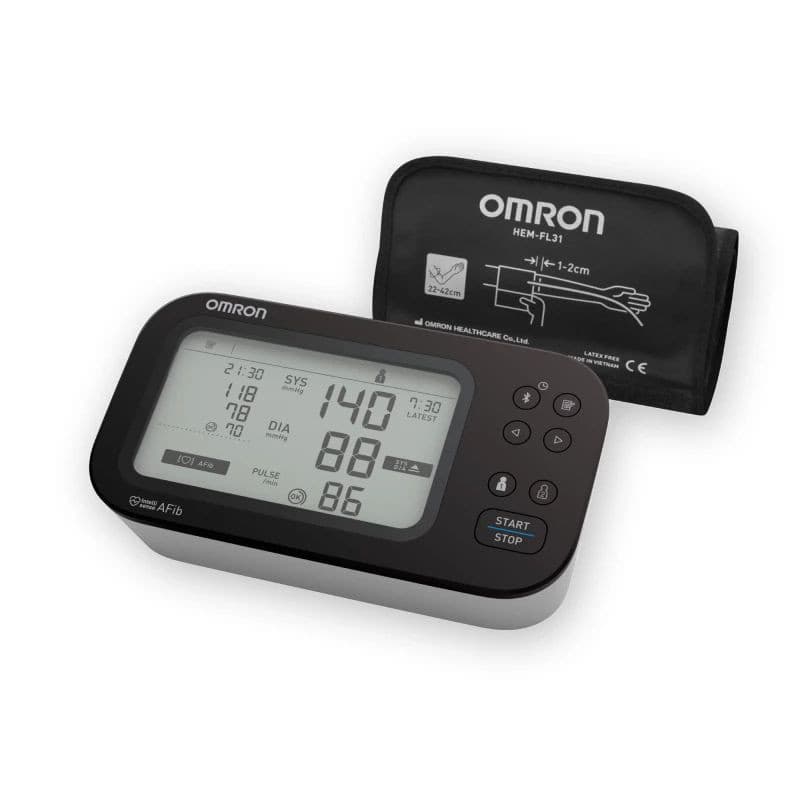
Omron M7 Intelli IT (HEM-7322T-E)
The Omron M7 Intelli IT is a dependable mid‑range device that pairs Omron’s long‑standing BP algorithm with larger memory and multi‑user features, offering strong value for ambulatory monitoring across the day. Compared with the Evolv and Withings BPM Connect it is generally more affordable and offers solid battery life and cuff options, though it lacks Evolv’s fully integrated wireless form factor and Complete’s additional cardiac features, making it a practical, cost-effective choice for routine ambulatory monitoring in the UK.
Withings BPM Connect
Withings BPM Connect combines a compact, rechargeable design with best‑in‑class smartphone app integration and cloud sharing, which makes it a standout for patients and clinicians who prioritise remote data review and telehealth workflows. Technically it competes with Omron on accuracy but leans more consumer‑friendly with polished connectivity and ongoing analytics — it is competitively priced against feature‑rich Omron models but may offer fewer cuff size options for some ambulatory use cases.
£80 – £130
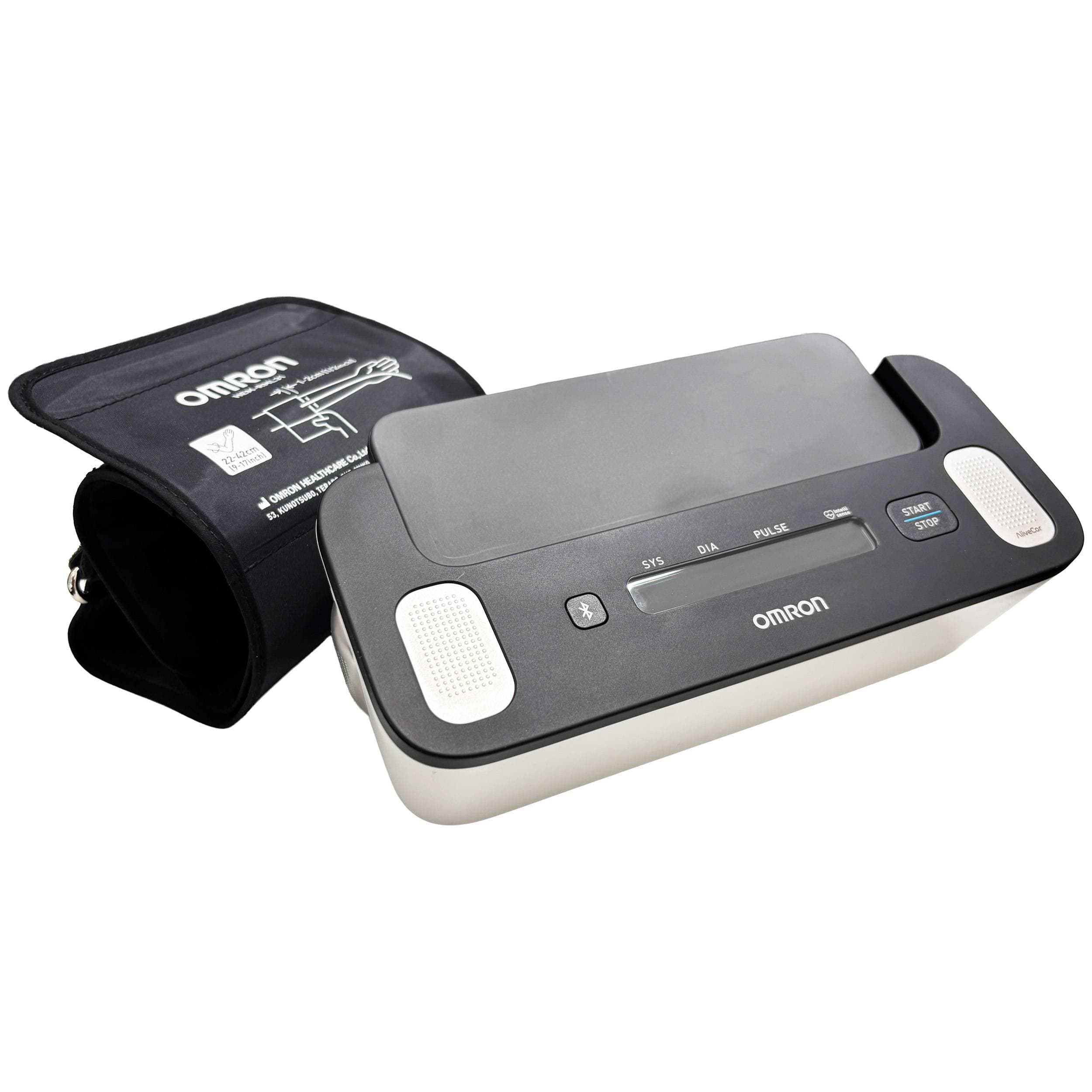
Omron Complete (HEM-7280T-E)
The Omron Complete pairs ambulatory blood pressure measurement with ECG/AF detection, providing a unique combined screening capability for patients at cardiovascular risk and clinicians managing complex cases. Although bulkier and typically more expensive than single‑function monitors such as the Evolv or BPM Connect, its integrated cardiac monitoring adds clinical value that can reduce downstream testing costs, which is particularly relevant for UK practices focusing on early arrhythmia detection in ambulatory settings.
£180 – £250
Beurer BM 95
The Beurer BM 95 is a budget-friendly, robust option offering large cuff compatibility, long battery life and multi-user memory — a cost-effective pick for broad ambulatory deployment or NHS procurement in 2025. While it lacks the seamless cloud ecosystems and some advanced clinical features of the Omron and Withings models, its lower price and reliable core performance make it an attractive option where affordability and straightforward monitoring are the primary requirements.

These five monitors distinguish themselves through clinical-grade accuracy validated by independent testing, user-friendly interfaces suitable for all age groups, extended battery life for continuous monitoring, and seamless data synchronisation with smartphones and healthcare providers. Several models feature innovative designs that integrate discreetly into daily life whilst maintaining professional credibility with UK medical professionals.
Understanding Ambulatory Blood Pressure Monitoring
Ambulatory blood pressure monitoring represents a significant departure from traditional clinical measurements. Rather than capturing a single reading during a surgery visit—often influenced by anxiety or environmental factors—these devices establish patterns across 24 hours. This extended monitoring period reveals how your blood pressure fluctuates throughout daily activities, during sleep, and in response to stress. For UK patients, this data proves invaluable in distinguishing genuine hypertension from white coat syndrome, where readings spike only in clinical settings. The technology typically employs oscillometric measurement (sensing arterial wall vibrations) or auscultatory methods (listening for Korotkoff sounds), both validated according to British and European standards. Most devices store hundreds of readings, which are later downloaded and analysed by healthcare professionals using specialised software.
Captures readings every 15-30 minutes during daytime and hourly during sleep for comprehensive blood pressure profiling
Eliminates white coat hypertension diagnosis errors by measuring readings in natural environments
Provides your GP with detailed reports showing morning surge patterns and nocturnal dipping status
Helps optimise medication timing and dosage by identifying when blood pressure peaks and troughs occur
Reduces need for multiple clinical appointments through remote data transmission capabilities
Meets NICE guidelines and British Hypertension Society standards for clinical accuracy
Enables early detection of cardiovascular complications through consistent monitoring patterns
Suitable for patients with irregular heartbeats or atrial fibrillation when devices include appropriate validation
Frequently Asked Questions
Which wearable blood pressure monitor suits ambulatory use?
Choose the Omron Evolv (HEM-7600T-E) for ambulatory-style use because it’s a single-piece, cuff-integrated wireless monitor with Bluetooth syncing to the Omron Connect app and a 4.4 average rating.
Does the Omron Evolv have cordless, tubing-free design?
Yes—Omron Evolv (HEM-7600T-E) uses a compact single-unit cuff with no tubing for true portable readings, and it includes Omron IntelliSense for comfortable inflation.
Is the Withings BPM Connect good value versus Omron?
Withings BPM Connect focuses on convenient remote review: it auto-syncs via Wi‑Fi and Bluetooth to the Withings Health Mate app for cloud backup and clinician sharing, with a 4.2 average rating.
Which monitor supports two-user home tracking?
The Omron M7 Intelli IT (HEM-7322T-E) supports two-user memory for at-home ambulatory tracking, uses Omron’s IntelliSense inflation algorithm, and has a 4.3 average rating.
Conclusion
The landscape of blood pressure management in the UK has evolved considerably, with ambulatory monitoring now recognised as a gold standard by cardiovascular specialists nationwide. Whether you opt for a wrist-based solution, a portable cuff system, or a smartphone-integrated device, each option featured in this guide represents a genuine advancement in personal health management. The choice ultimately depends on your lifestyle, how frequently you require monitoring, and whether you need NHS compatibility or integration with your existing health applications. We encourage you to discuss ambulatory blood pressure monitoring with your healthcare provider to determine if this approach aligns with your individual needs. Should you require additional information about any specific device or have questions about how these monitors work with your current treatment plan, please explore our detailed product reviews or consult our comprehensive buying guide. Taking control of your cardiovascular health through reliable monitoring is an investment in your long-term wellbeing, and 2025 presents an excellent opportunity to explore these cutting-edge solutions.