

Top 6 Non-Nano Zinc Oxide Sunscreens in the UK for 2026
Published on Thursday, 26 February 2026
This page covers topical non-nano zinc oxide sunscreens — not oral zinc supplements. That is worth stating plainly, because the two get filed together: zinc oxide is a mineral UV filter you put on your skin, and it is not the form used in oral zinc capsules, which rely on zinc citrate, gluconate or picolinate for absorption. Under the GB Cosmetic Regulation zinc oxide is permitted as a UV filter at up to 25%, and “non-nano” has a real definition behind it — particles larger than 100 nm — with nano grades required to be declared as “[nano]” in the ingredient list, so the label itself tells you which one you are holding. In 2025 and moving into 2026 the demand for transparent, skin-friendly sun protection has surged: non-nano zinc oxide stands out as the preferred mineral blocker for those who want broad-spectrum defence without the perceived risks of systemic absorption. Unlike nano formulations, non-nano zinc oxide particles sit on the skin surface to scatter and reflect UVA and UVB rays, which appeals to people with sensitive skin, parents buying for children, and buyers prioritising natural or reef-conscious formulations. UK shoppers are increasingly discerning about ingredients, looking for clear labelling and proven UV performance—qualities that the mineral sunscreens below deliver, whether for daily facial use, sport, or seaside protection.
Top Picks Summary
Badger SPF 30 Unscented Sunscreen Cream
Badger SPF 30 Unscented Sunscreen Cream earns its place for a straightforward, mineral-based unscented formula that prioritizes simple ingredients and sensitive-skin tolerance. Compared with the richer, higher-priced options on this list it delivers strong value and a trustworthy zinc-oxide protection profile for the non-nano zinc oxide sunscreen use case, though its thicker texture can be less cosmetically elegant than some fluid or tinted alternatives.

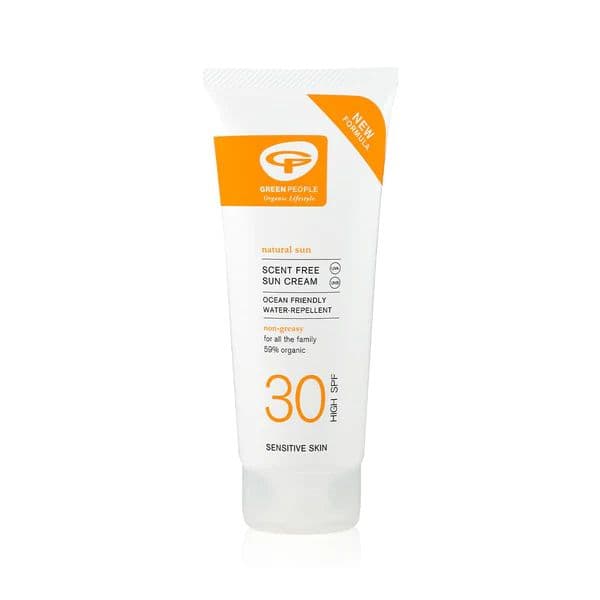
Green People Scent Free Sun Lotion SPF30
Green People Scent Free Sun Lotion SPF30 stands out for its organic skincare credentials and a lotion texture that suits delicate or reactive skin, offering more emollient and skin-care focused ingredients than many competitors. It tends to sit at a mid-to-premium price point versus basic mineral creams like Badger, making it a good choice when the non-nano zinc oxide sunscreen use case favors certified natural formulations and a softer application.
£14 – £22
Shade All-Natural Sunscreen SPF30
Shade All-Natural Sunscreen SPF30 positions itself as an all-natural, easy-to-apply alternative that bridges the gap between budget mineral options and higher-end skincare sunscreens. In comparison to the list, Shade offers a competitive balance of natural ingredient claims and approachable pricing for the non-nano zinc oxide sunscreen use case, though it may not carry the brand certifications or cosmetic finish of premium lines such as Tropic or Suntegrity.

Tropic Skin Shade SPF50
Tropic Skin Shade SPF50 commands the premium slot with a higher SPF and antioxidant-rich skincare positioning, delivering enhanced protection and a refined sensory experience compared with basic SPF30 mineral creams. For the non-nano zinc oxide sunscreen use case where maximum daily or high-exposure protection is desired, Tropic’s technical and formulation advantages justify its premium cost relative to simpler mineral options on the list.

£25 – £35
Suntegrity Natural Mineral Body Sunscreen SPF30
Suntegrity Natural Mineral Body Sunscreen SPF30 is known for its mineral-based formulas paired with cosmetic-friendly finishes and added antioxidants, making it a strong choice when you want both protection and a pleasant look on the skin. Compared with thicker mineral creams like Badger and budget all-natural options like Shade, Suntegrity offers a middle-to-upper-tier option for the non-nano zinc oxide sunscreen use case that prioritizes wearability and modern ingredient blends.

Babo Botanicals Daily Sheer Fluid Mineral Sunscreen SPF50
Babo Botanicals Daily Sheer Fluid Mineral Sunscreen SPF50 delivers a lightweight, sheer mineral fluid with higher SPF that is formulated with families and sensitive skin in mind, offering easier application than many creams. Against the other products listed, Babo combines the higher protection of SPF50 with an accessible price and gentle formulation suitable for the non-nano zinc oxide sunscreen use case, though it may lack some of the luxury skincare additives found in Tropic.

£12 – £20
What the research says about non-nano zinc oxide
A body of scientific literature supports zinc oxide as an effective physical sunscreen ingredient with a long history of safe topical use. Research shows that zinc oxide reliably blocks both UVA and UVB wavelengths, is photostable, and is often well tolerated by sensitive or reactive skin. Studies comparing particle sizes indicate that non-nano zinc oxide remains mostly on the skin surface, reducing the chance of systemic absorption while still providing broad-spectrum protection. Clinical and laboratory work also highlights zinc's role in skin barrier support and wound healing, which helps explain why mineral sunscreens are often recommended for irritated or compromised skin.
Broad-spectrum UV protection: zinc oxide provides coverage across UVA and UVB bands, making it a cornerstone ingredient for mineral sunscreens.
Photostability: zinc oxide does not readily break down in sunlight, helping products keep consistent UV protection during exposure.
Skin safety: non-nano particles are less likely to penetrate intact skin; many studies report good tolerability on sensitive or eczema-prone skin.
Support for skin barrier: zinc has anti-inflammatory and barrier-supporting properties that can aid skin recovery and comfort.
Environmental considerations: mineral filters like non-nano zinc oxide are often recommended as lower-risk alternatives to some chemical filters for aquatic environments, though formula and particle form matter.
Formulation matters: water resistance, texture, and added ingredients determine real-world performance—choose products with independent SPF testing and clear labels.
What the GB label must tell you: zinc oxide is permitted as a UV filter at up to 25%, “non-nano” means particles larger than 100 nm, and nano grades must be declared as “[nano]” in the ingredient list — so you can verify the claim yourself rather than trusting the front of the bottle.
Topical, not oral: zinc oxide is poorly absorbed when swallowed, which is why oral zinc supplements use citrate, gluconate or picolinate instead. The two product types are not interchangeable.
Frequently Asked Questions
Is Badger SPF 30 unscented zinc oxide good for sensitive skin?
Badger SPF 30 Unscented Sunscreen Cream uses broad-spectrum mineral SPF30 with non-nano zinc oxide, is unscented and fragrance-free for sensitive skin, and is marketed as water-resistant up to 40 minutes, with an average rating of 4.6.
What non-nano zinc oxide sunscreen has fast-absorbing lotion?
Green People Scent Free Sun Lotion SPF30 is a fragrance-free SPF30 lotion with a lightweight, fast-absorbing texture designed for sensitive skin, and it’s rated 4.4 on average.
How do these non-nano zinc oxide sunscreens compare on price?
By the listed price ranges, Badger SPF 30 Unscented (about £9-£14) and Shade All-Natural SPF30 (about £10-£18) are the most affordable, Green People Scent Free SPF30 (about £14-£22) and Babo Botanicals Daily Sheer SPF50 (about £12-£20) sit mid-range, and Suntegrity Mineral Body SPF30 (about £22-£32) and Tropic Skin Shade SPF50 (about £25-£35) are the premium picks.
Does Shade SPF30 sunscreen use reef-friendly non-nano zinc?
Shade All-Natural Sunscreen SPF30 is described as reef-friendly and uses mineral filters with non-nano zinc oxide, plus it’s positioned as cruelty-free and free from many synthetic additives; it has an average rating of 4.2.
Conclusion
Overall, non-nano zinc oxide sits at the intersection of scientific reliability and consumer demand in the UK market. The products covered here — Badger SPF 30 Unscented Sunscreen Cream, Green People Scent Free Sun Lotion SPF30, Shade All-Natural Sunscreen SPF30, Tropic Skin Shade SPF50, Suntegrity Natural Mineral Body Sunscreen SPF30, and Babo Botanicals Daily Sheer Fluid Mineral Sunscreen SPF50 — offer different strengths for sensitive skin, everyday wear, water resistance and high-SPF needs. For most UK buyers seeking a balance of sensitivity, natural formulation and availability, Green People Scent Free Sun Lotion SPF30 is a standout all-round choice, while Tropic Skin Shade SPF50 and Babo Botanicals Daily Sheer Fluid Mineral Sunscreen SPF50 are top picks where the highest SPF is a priority. I hope you found what you were looking for; you can refine or expand your search using the site search to compare ingredients, SPF level, or water resistance.