Swallowing Therapy Tools - Top 5 Options in the UK for 2026
Published on Monday, 26 January 2026
Swallowing therapy tools support assessment and rehabilitation for people with dysphagia and related eating and drinking difficulties. In the UK market for 2026, this category covers a range of clinician and home-use products, including resistance trainers, sensory stimulation devices, specialised utensils and cups, portable biofeedback sensors and telehealth-compatible kits. Consumers and clinicians choose these tools for clear reasons: proven clinical benefit when paired with therapist-led programmes, ease of cleaning and infection control, adjustable resistance or settings to match patient ability, portability for home practice, and compatibility with NHS and private therapy pathways. Market trends in the UK reflect an ageing population, greater awareness of swallowing safety after stroke and neurodegenerative conditions, growth in remote rehabilitation and demand for devices that balance clinical quality with cost-effectiveness and usability.
Top Picks Summary
TheraBite Jaw Motion Rehabilitation System
TheraBite is positioned as the go-to device for jaw mobility and trismus management within swallowing therapy, offering a mechanical range-of-motion solution that directly targets oral opening affecting safe intake. Compared with the other tools on this list it carries a higher one-time cost but delivers durable, clinician-friendly mechanical advantage that complements tongue-strength devices like the IOPI and sensory tools such as the Z‑Vibe.

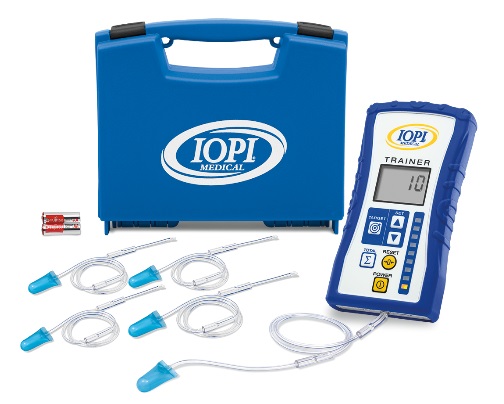
IOPI Medical Iowa Oral Performance Instrument
The IOPI (Iowa Oral Performance Instrument) leads the market for objective tongue-strength measurement and biofeedback training, making it the preferred choice in clinics and research for measurable progress tracking. Technically more precise than low-cost alternatives such as the Sip‑Tip, its data-driven approach can justify higher upfront and reimbursement-friendly pricing because it enables targeted exercise prescriptions and outcome documentation.
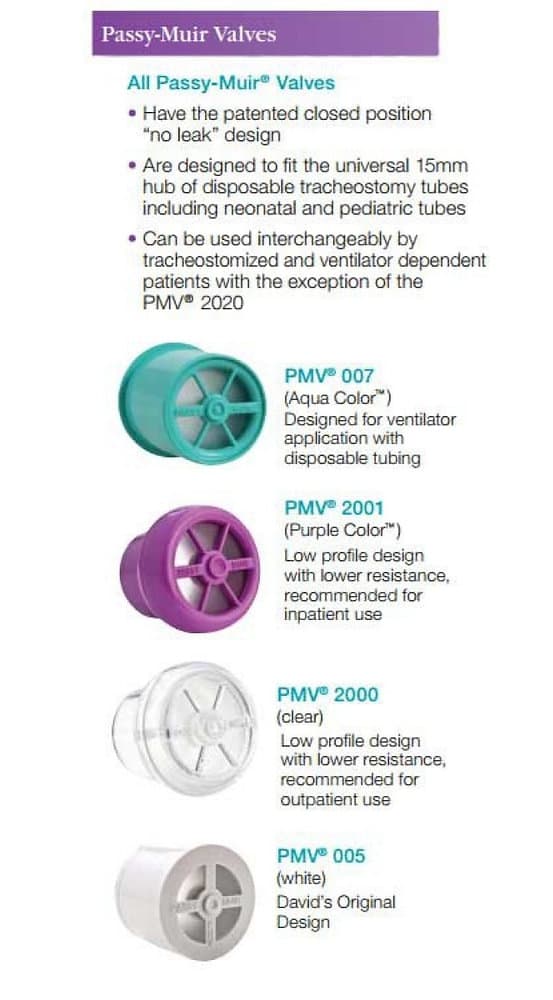
Passy-Muir Swallowing and Speaking Valve
The Passy‑Muir valve is the market leader for tracheostomy-related swallowing and speaking rehabilitation because it restores upper-airway airflow and improves subglottic pressure—critical physiological factors for safer swallowing and voice. Its unique clinical impact for patients with trachs makes it a cost-effective intervention compared with invasive options, and it integrates directly with devices like IOPI or TheraBite to support comprehensive, multidisciplinary therapy.
Sip-Tip Drinking Cup
The Sip‑Tip drinking cup is a low-cost, immediately deployable adaptive tool that supports safer, paced drinking and practice of functional swallow tasks at home. While it lacks the objective measurement of the IOPI or the physiological intervention of the Passy‑Muir valve, its affordability and ease of use deliver high return-on-investment for daily carryover and caregiver training.

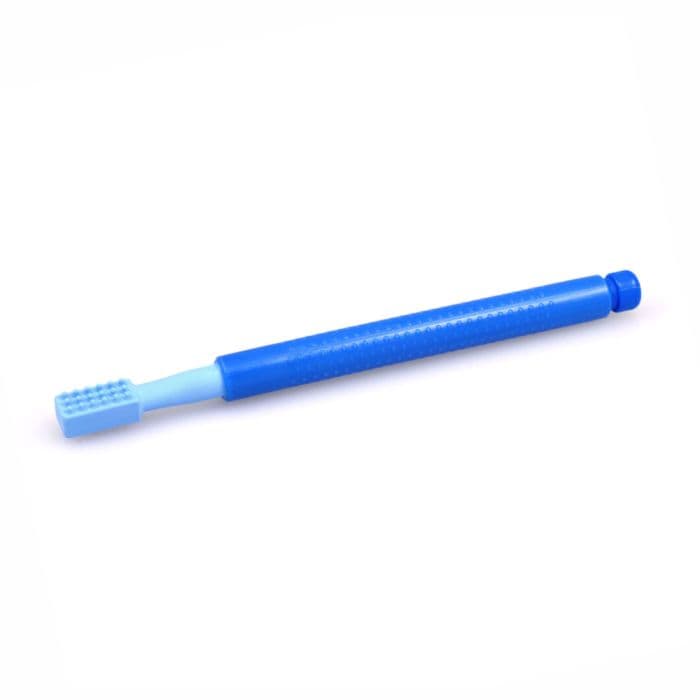
Z-Vibe Oral Motor Vibration Tool
Z‑Vibe is a leading oral-motor vibration tool used to provide targeted sensory input and facilitate oral motor patterns, making it particularly useful for patients with sensory deficits or oral aversion. Technically simpler and less expensive than clinic-grade measurement devices, it pairs well with the TheraBite and IOPI to provide multimodal therapy—sensory priming before strength training or functional practice with the Sip‑Tip.
What research and evidence say about swallowing therapy tools
A body of clinical research supports many approaches used with swallowing therapy devices, while the strength of evidence varies by therapy type and patient group. Randomised controlled trials and systematic reviews show that strengthening exercises, expiratory muscle strength training and targeted clinician-led programmes can improve swallow function and safety for many patients. Device-assisted approaches often work best when combined with professional assessment and exercise plans. Some technologies, such as neuromuscular electrical stimulation, have mixed findings and tend to show benefit in selected populations under therapist supervision. Telehealth-supported home practice and biofeedback can increase adherence and allow clinicians to titrate intensity more precisely. Overall, the evidence highlights the importance of individual assessment, outcome measurement and integration of devices into structured therapy.
Strength and range exercises delivered via simple resistance devices are supported by trials showing improvements in muscle force and functional swallowing in many patient groups.
Expiratory muscle strength training (EMST) has been linked to improved cough force and swallowing safety in several studies, which can reduce aspiration risk when used appropriately.
Neuromuscular electrical stimulation (NMES) has produced varied results; systematic reviews find benefit in some cases but recommend therapist-led protocols and careful patient selection.
Biofeedback and sensor-enabled devices can improve engagement and allow objective progress tracking, which supports better adherence and individualised progression.
Home-based programmes supported by telehealth have demonstrated comparable outcomes to clinic-only practice for selected patients and increase accessibility for those in remote areas.
High-quality outcomes are consistently associated with devices used as part of an evidence-based programme delivered or supervised by speech and language therapists or other trained clinicians.
Frequently Asked Questions
Which swallowing tool should I choose for jaw trismus rehab?
Choose the TheraBite Jaw Motion Rehabilitation System if you’re targeting jaw opening and trismus management, as it’s designed to increase jaw range of motion with adjustable, patient-controlled stretching and range measurement; rating 4.4.
How does the IOPI Medical Iowa measure progress in dysphagia?
The IOPI Medical Iowa Oral Performance Instrument provides objective tongue and lip pressure measurements and real-time biofeedback for targeted strengthening, using replaceable air bulbs and standardised protocols; rating 4.6.
What price do I pay for the Passy-Muir swallowing valve?
The provided information doesn’t include the Passy-Muir Swallowing and Speaking Valve price, but it is a reusable one-way speaking valve that restores airflow through the larynx to improve voicing and subglottic pressure for swallowing safety; rating 4.6.
Is the Passy-Muir valve compatible with my tracheostomy tube?
Compatibility isn’t listed as a tube-by-tube guide, but the Passy-Muir Swallowing and Speaking Valve is stated to be compatible with many tracheostomy tubes; it restores airflow through the larynx and supports speech alongside swallowing therapy; rating 4.6.
Conclusion
This overview summarises the swallowing therapy tools scene in the UK for 2026 and offers guidance where a ranked product list is not presented. We hope you found the information helpful. Use the site search or filters to refine your needs by setting, clinical indication, device type, or compliance standards if you want to narrow or expand your options.