Top 6 Tactile Graphics Paper Solutions in the UK, 2026 | Accessibility & Sensory Learning
Published on Saturday, 18 July 2026
Tactile graphics paper represents a practical innovation in accessible education and professional communication across the United Kingdom. Designed specifically for individuals with sight loss, this specialised material enables the creation of touch-sensitive images that convey complex information without relying on vision. Also known as swell paper, capsule paper or microcapsule paper, it works by heat activation: you print or draw in black ink, then pass the sheet through a swell fuser (such as a Swell Form, PIAF or Zychem machine), and the black areas rise into raised, tactile lines while the rest of the page stays flat. This lets users explore diagrams, maps, charts and mathematical graphs through their fingertips, changing how information is shared in British schools, universities and workplaces. In 2026, the demand for inclusive learning materials continues to grow, with educational institutions and employers recognising the need to provide equal access to visual information. Whether you're an educator enhancing classroom materials, a designer committed to accessibility, or an individual exploring tactile learning methods, understanding the available options is essential. This guide examines six leading tactile graphics paper products currently available in Britain, helping you identify the most suitable choice for your specific requirements. From starter packs ideal for newcomers to professional-grade solutions for high-volume production, the market offers diverse options catering to varying needs and budgets.
Top Picks Summary
Zychem Swell-Touch Capsule Paper
Zychem's Swell-Touch Capsule Paper is a strong choice for Britain in 2026, prized for its consistent microcapsule formulation that delivers fine line resolution and dependable swell every run — ideal for detailed tactile maps used in education and public signage. Within this six-paper selection it stands out for competitive bulk pricing and industrial consistency, giving a lower per-sheet cost and longer run stability compared with many consumer-grade alternatives.
RNIB Microcapsule Swell Paper
RNIB Microcapsule Swell Paper is the practical market leader for UK organisations because it combines proven microcapsule performance with strong local support, guidance and warranty options tailored to accessibility projects in Britain. Compared with the other papers in this list it commands a modest premium but offsets that with integrated training materials, procurement-friendly packaging and guaranteed compatibility with RNIB guidance and tactile-graphic workflows.
MaxiAids Swell Touch Paper
MaxiAids Swell Touch Paper brings wide availability and value to small schools and charities in Britain, with lower-cost multipacks and easy import channels from a major US supplier — a sensible choice for low-to-medium volume needs. It trades a fraction of the ultra-fine resolution of specialist UK microcapsule brands for stronger retail distribution and lower upfront cost, making it attractive where immediate access and price matter more than industrial consistency.
American Thermoform Swell Paper
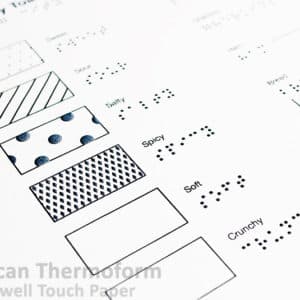
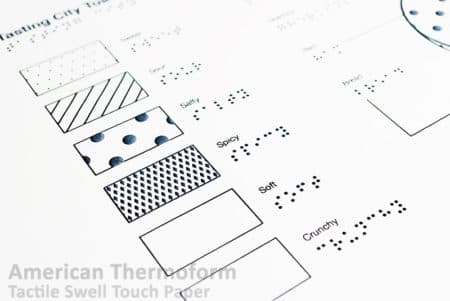
American Thermoform Swell Paper is engineered for heavy-duty tactile production, offering robustness and dimensional stability that benefits production houses doing large-format or high-volume tactile panels. While typically more expensive than standard microcapsule sheets in this six-paper selection, its durability and consistency deliver lower rework rates and lifecycle savings for high-volume users.
Quantum Technology QT Swell Paper
Quantum Technology QT Swell Paper is a capable option in Britain for 2026, with a fast-reacting capsule matrix that shortens processing times and improves throughput on modern swell systems. It sits at a premium among these shortlisted papers, but for busy print rooms the time savings and fine-detail reproduction can add up, though availability in the UK is more limited.
Wheatley Tactile Diagram Paper
Wheatley Tactile Diagram Paper is a specialist UK-made option tailored to schools, local authorities and small producers who need a range of paper grades and custom finishes; its British supply chain and flexible ordering make it convenient for domestic projects. Compared with the other entries in this six-paper list, Wheatley is often the most adaptable for bespoke runs, though it may lack the global distribution reach of larger suppliers.
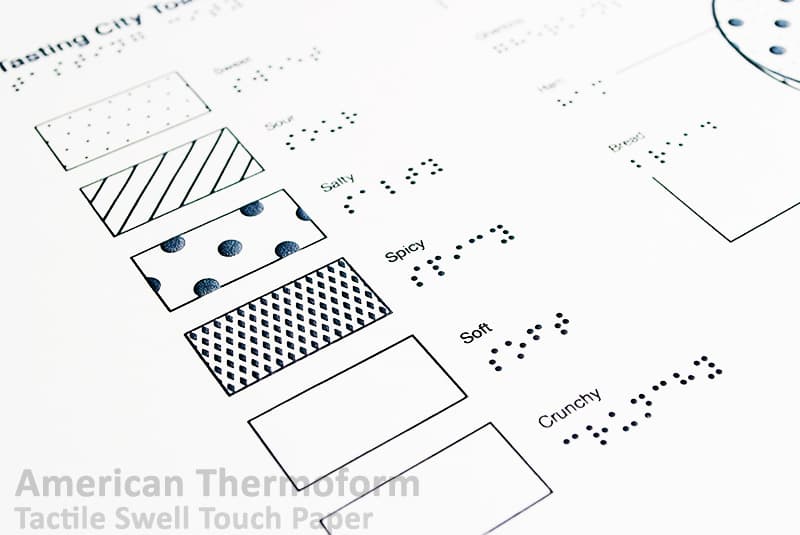
The finest tactile graphics papers available in the UK combine durability, clarity of raised images, compatibility with standard printing equipment, and affordability. Look for materials offering excellent tactile definition, resistance to degradation with repeated handling, and options for both monochrome and colour applications.
Understanding the Benefits of Tactile Graphics Paper
Tactile graphics paper offers a unique approach to learning for those with visual impairments. Its special properties and uses are backed by research, providing vital resources for educators and professionals alike.
1. Studies show that tactile learning significantly enhances information retention, especially for visually impaired learners.
2. Tactile graphics can improve cognitive mapping skills and spatial awareness through touch-based interaction with images.
3. Research indicates that using textured materials fosters creativity and engagement in tactile learners.
4. Tactile graphics paper can facilitate independent learning, empowering users through self-discovery and interaction.
5. Proper formatting of tactile graphics adheres to established standards, ensuring clarity and consistency in education.
6. The integration of tactile graphics into lesson plans supports inclusive education by addressing diverse learning styles.
Frequently Asked Questions
How does tactile graphics (swell) paper work?
Swell paper is coated with heat-sensitive microcapsules. You print or draw your image in black ink using a standard laser printer or photocopier, then pass the sheet through a swell fuser (such as a Swell Form, PIAF or Zychem machine). The heat makes the black-inked areas expand into raised, tactile lines and dots, while coloured areas and the rest of the paper stay flat. It is commonly used for tactile maps, diagrams, charts and mathematical graphs.
Which tactile graphics paper should I buy for detailed maps?
For detailed tactile maps and public signage, Zychem Swell-Touch Capsule Paper is the best pick, thanks to its consistent microcapsule coating for reliable, even swell for lines and tactile shapes, with an average rating of 4.4.
Does RNIB Microcapsule Swell Paper work with swell finishers?
RNIB Microcapsule Swell Paper works reliably with standard swell finishers and produces clear, durable tactile lines and dots, with an average rating of 4.6.
Is MaxiAids Swell Touch Paper good value for classroom use?
MaxiAids Swell Touch Paper is positioned for low-to-medium volume classroom and community-centre needs, offering dependable swell performance and laser printing plus thermal fusing to create robust tactile graphics, with an average rating of 4.1.
Conclusion
Tactile graphics paper has established itself as an indispensable tool within the UK's accessibility landscape, enabling thousands of individuals with visual impairments to engage more fully with educational content and professional materials. Each product reviewed in this guide offers distinct advantages, whether through ease of use, durability, or cost-effectiveness. The choice ultimately depends on your specific circumstances, frequency of use, and the particular applications you have in mind. We recommend considering your budget, the volume of materials you'll produce, and whether you require additional support or training when making your decision. Should you require further guidance on tactile graphics products, accessibility solutions, or inclusive design practices, our comprehensive resource library is available to explore. We're committed to supporting your journey towards greater accessibility and inclusivity. Thank you for engaging with this guide—your commitment to accessible design makes a genuine difference in the lives of visually impaired individuals across Britain.