

Finger Prosthetics in the UK 2026: Top 5 Choices for Natural Movement, Precision Grip and Tactile Feel
Discover innovative finger prosthetics in the UK that combine natural finger movement, precision grip and tactile sensation to restore function and appearance. In 2026 the category covers a range of solutions from single-digit cosmetic silicone prostheses and modular mechanical digits to advanced multi-articulating myoelectric fingers with haptic feedback and hybrid systems that pair 3D-printed sockets with sophisticated sensors. UK users and prescribers prefer options that balance real-world function, comfort and durability with realistic aesthetics and local aftercare. Key consumer drivers are reliable grip for everyday tasks, intuitive control that reduces cognitive load, realistic skin tone and texture, fast custom fitting through digital scanning and 3D printing, plus clinical support through NHS and specialist private centres. Affordability, repairability and evidence of improved daily function are also central to purchase decisions, which is why many UK users choose products backed by local fitting services and documented clinical outcomes.
Inception's AI took the time to understand this market in the UK · · How we pickWe may earn a commission on purchases. It never affects our rankings.
Top Picks Summary
Naked Prosthetics PIPDriver
The PIPDriver from Naked Prosthetics is positioned as the best-in-class solution for proximal interphalangeal (PIP) level finger loss, offering a compact, mechanically driven joint that prioritizes active flexion and durability for everyday tasks. Compared with the MCPDriver and more cosmetic silicone options in this list, it balances function and cost by delivering targeted joint-level mechanics without the premium price or long lead times of fully bespoke silicone digits, making it a strong choice when restoring PIP-level mobility is the clinical priority.

Estimated£3,000 – £7,000
Naked Prosthetics MCPDriver
The MCPDriver is the market-leading modular device for metacarpophalangeal (MCP) level amputations, engineered to provide increased grip strength and joint stability through a robust mechanical interface tailored to MCP biomechanics. Compared with the PIPDriver it addresses a different anatomic need (proximal joint stability vs. mid-phalanx articulation), and versus purely cosmetic silicone fingers or simpler partial modules it delivers superior functional leverage for grasp tasks while remaining comparatively affordable and quick to fit.

Estimated£3,500 – £8,000
Partial M-Fingers by Partial Hand Solutions
Partial M-Fingers are modular partial-finger components designed to offer clinicians a cost-effective, off-the-shelf option for a range of stump lengths and activity levels, making them well suited to clinics seeking fast turnaround and scalable inventory. Technically simpler than the Naked Prosthetics drivers, they trade some active mechanical complexity for lower unit cost and easier fitting, so they are often preferred where budget, rapid deployment, or minimal maintenance are higher priorities than maximal joint function.

Estimated£800 – £2,000
Point Partial by Steeper Group
The Point Partial, designed by Point Designs and provided in the UK through Steeper Group, is a heavy-duty functional partial-finger prosthesis for amputations at or near the proximal interphalangeal (PIP) joint of digits 2-5. Built from titanium and stainless steel, it uses a ratcheting mechanism that locks into seven positions of flexion and can be set one-handed, restoring durable grip and pinch rather than appearance alone. It sits between the modular Naked Prosthetics drivers and passive cosmetic silicone options, pairing robust mechanical function with UK clinical fitting and aftercare.
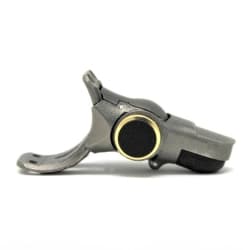
Estimated£1,500 – £4,000
Silicone Finger Prosthesis by Dorset Orthopaedic
Dorset Orthopaedic's silicone finger prostheses deliver realistic appearance and comfortable fit at a competitive price point, offering a practical cosmetic solution that is widely used for fingertip and partial-digit losses. Compared with Steeper's premium Point Partial, Dorset's products are often more affordable and accessible for routine cosmetic restoration, while providing better cosmesis than mechanical drivers like the Naked devices—albeit with less active function—making them a strong value choice when visual restoration is the priority.
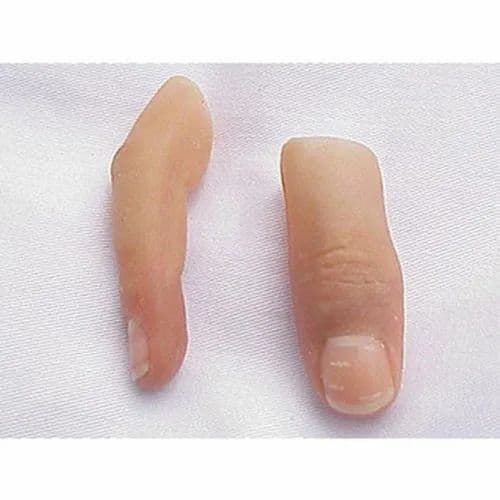
Estimated£500 – £1,200
What the Research and Clinical Evidence Shows
Scientific studies and clinical reports support the benefits of modern finger prosthetics across functional, psychological and social outcomes. Research into multi-articulating myoelectric devices shows better dexterity and task completion than passive devices for specific tasks, while early trials of sensory feedback systems and nerve stimulation show improved object discrimination, sense of embodiment and reduced phantom sensations. Studies on 3D printing and digital scanning demonstrate faster turnaround, lower cost and improved user fit for custom cosmetic and partial-finger prostheses. Surgical approaches such as osseointegration can improve prosthesis attachment and comfort for certain patients, but they require careful selection because of surgical risks and infection considerations. Overall evidence highlights that matching device type to a user’s lifestyle, functional goals and clinical needs produces the best outcomes.
Myoelectric and multi-articulating designs: clinical studies report improved manipulation and task performance versus passive prostheses for targeted activities.
Sensory feedback research: peripheral nerve stimulation and tactile sensors can increase object discrimination and the sense that the prosthesis is part of the body.
3D printing and digital scanning: enable rapid customization, more accurate cosmetic fit and lower production costs for one-off prostheses.
Osseointegration and surgical solutions: can improve prosthesis stability and comfort for some users but come with surgical risk and need specialist care.
Care and rehabilitation: multidisciplinary training and occupational therapy are consistently shown to increase device acceptance and functional gains.
Frequently Asked Questions
Which finger prosthetic is best for PIP joint loss?
For loss at the proximal interphalangeal (PIP) joint, the Naked Prosthetics PIPDriver is the most function-focused option in this guide. It is a body-powered mechanical device that restores active flexion and extension at the PIP joint, helping with grip and pinch for everyday tasks. It is fitted by a specialist prosthetist and is best suited to people who prioritise hand function over a purely cosmetic finish.
What is the difference between the MCPDriver and the PIPDriver?
Both are body-powered devices from Naked Prosthetics, but they address different amputation levels. The MCPDriver is for amputations through or near the metacarpophalangeal (MCP) joint at the base of the finger and provides stronger grip leverage, while the PIPDriver is for more distal loss at the PIP joint in the middle of the finger. Your prosthetist selects the device based on how much of the finger remains.
Do cosmetic silicone finger prostheses restore grip?
No. Custom silicone prostheses, such as those from Dorset Orthopaedic, are passive devices designed primarily for lifelike appearance, skin-tone matching and protecting the residual digit; they offer limited active grip. If functional movement is the priority, a body-powered mechanical device such as the Naked Prosthetics MCPDriver or PIPDriver, or Steeper's titanium Point Partial, is more appropriate.
How much do finger prosthetics cost in the UK?
Prices vary widely by device type and the degree of customisation. Passive cosmetic silicone fingers typically start from several hundred pounds, while custom-fitted functional body-powered devices such as the Naked Prosthetics MCPDriver and PIPDriver generally cost several thousand pounds each because they are individually fabricated and clinically fitted. Always obtain a quote from a registered prosthetist, and check whether NHS or private funding applies.
Conclusion
Finger prosthetics in the UK now offer a wide choice from cosmetic silicone digits to advanced myoelectric options with tactile feedback. We hope this guide helped you understand the top features to look for and pointed you toward the right solutions. If you did not find what you need, you can refine or expand your search using the site search to compare models, pricing, local clinics and funding options.