

Top 7 Prosthetic Gait Training Systems in the UK — 2026 Guide
Published on Wednesday, 25 February 2026
Prosthetic gait training equipment represents a transformative approach to rehabilitation for people using prosthetic limbs across the United Kingdom. Combining biomechanical engineering with advanced control systems, these devices help clinicians deliver structured, measurable therapy that improves balance, strength, proprioception and walking symmetry. UK NHS physiotherapy departments, private rehabilitation centres and specialist clinics increasingly favour solutions that are safe, evidence based and adaptable to individual goals. Consumers and clinical teams choose systems based on repeatable outcomes, ease of integration with prosthetic components, adjustable weight support, objective progress tracking and overall cost-effectiveness. From body-weight support treadmills to overground robotic trainers and supportive transfer aids, modern prosthetic gait training systems meet the needs of diverse patient groups, prosthetic types and rehabilitation stages, helping users regain independence and confidence more quickly.
Top Picks Summary
Biodex Gait Trainer 3
The Biodex Gait Trainer 3 is a widely used electromechanical treadmill-style solution in the UK that delivers controlled, repeatable gait practice with adjustable support speeds and feedback for clinicians. It represents a mid-range financial and technical choice between simple tools (parallel bars, transfer aids) and high-cost robotic systems (Hocoma Andago), offering strong data logging and progressive training modes without the capital outlay of overground robotics. For many NHS and private rehab providers in 2025, its balance of functionality, durability and service network makes it a pragmatic purchase for intensive gait retraining.
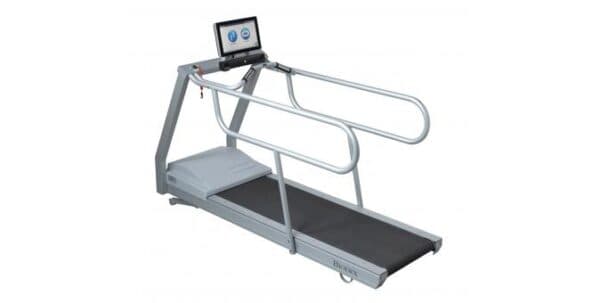
Where to buy Biodex Gait Trainer 3 in UK: the trusted retailers we track in this market, with the best price we have observed at each. Prices are checked regularly and can change, and the retailer confirms the final price at checkout.
We may earn a commission on purchases. It never affects our rankings.
£18,000 – £35,000
LiteGait Partial Weight Bearing System
The LiteGait system excels as a portable partial weight-bearing solution that enables early gait practice and task-specific training at a far lower cost than fixed treadmill or robotic systems, making it especially attractive to community services and domiciliary programmes in the UK. Technically it complements higher-end trainers by allowing therapists to progress patients safely outside dedicated gait labs, and its modularity reduces installation and servicing overheads compared with larger equipment. For providers prioritising flexibility and frequent patient throughput, LiteGait offers a strong return on investment versus immobile alternatives.

Hocoma Andago
Hocoma Andago is the flagship overground robotic gait trainer in the UK, 2025, offering dynamic, therapist-guided overground walking with bodyweight support and rich sensor-based feedback that surpasses treadmill-only systems in ecological validity. Technically superior for goal-directed, real-world gait practice and objective outcome measurement, Andago is a high-capex option best suited to specialist centres willing to invest in advanced data-driven rehabilitation; its price and footprint however remain higher than devices like Biodex or LiteGait. For clinics aiming to be leaders in prosthetic gait retraining, Andago’s capability to accelerate functional gains often offsets its capital cost over time.
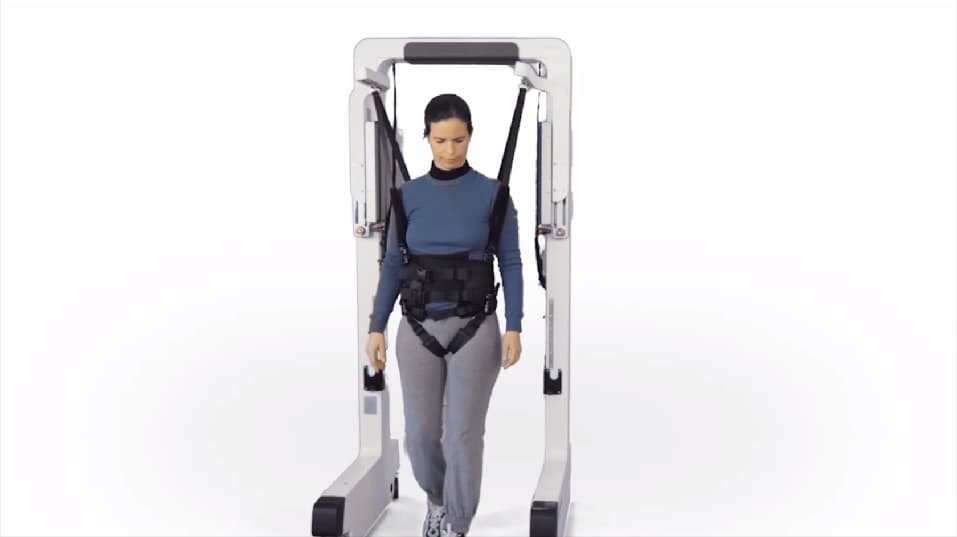
Where to buy Hocoma Andago in UK: the trusted retailers we track in this market, with the best price we have observed at each. Prices are checked regularly and can change, and the retailer confirms the final price at checkout.
We may earn a commission on purchases. It never affects our rankings.
£100,000 – £160,000
Rifton TRAM Transfer and Mobility Aid
The Rifton TRAM is a robust, manually operated transfer and mobility aid that lowers risk during sit-to-stand and short-distance mobility training, making it an economical and practical adjunct to prosthetic gait programmes in UK clinics. While not a gait automation system, its low procurement and maintenance costs and straightforward operation complement higher-tech solutions on the list by simplifying transfers and reducing staff injury risk. For services constrained by budget or space, the TRAM provides essential functional training capacity that supports progression onto devices like Biodex or LiteGait.
TheraTogs Posturing System
TheraTogs is best-in-class for lightweight, garment-based postural support because it delivers flexible, low-profile alignment and proprioceptive input without the complexity or cost of powered devices. Compared with the high-tech Ottobock C-Brace and the clinic-focused h/p/cosmos Robowalk, TheraTogs offers a portable, lower-cost option ideal for daily wear and adjunct home therapy in this listing curated for the undefined use case. Its financial advantage is clear for settings prioritizing affordability and ease-of-use over microprocessor control or large capital equipment.

Ottobock C-Brace
The Ottobock C-Brace is a market-leading microprocessor-controlled orthosis that provides dynamic stance and swing-phase control for users with significant lower-limb weakness, offering technical advantages in real-time hydraulic and sensor-driven gait adaptation. While more expensive upfront than TheraTogs and requiring different clinical workflows than the h/p/cosmos Robowalk, the C-Brace can reduce long-term care costs and fall risk through improved functional mobility, making it the technological centerpiece of this undefined-focused product set. Its position stems from unmatched on-device control and proven outcomes for complex mobility needs.
h/p/cosmos Robowalk Treadmill System
The h/p/cosmos Robowalk is a market-leading rehabilitation treadmill system that combines instrumented surfaces, body-weight support and modular gait-analysis tools to deliver high-intensity, repeatable training in clinical environments. Although it represents a larger capital investment than TheraTogs garments and complements rather than replaces the individualized support of the Ottobock C-Brace, its technical advantage is throughput and objective data capture that lower cost per patient over time for clinics addressing the undefined use case. This system is chosen for facilities that prioritize intensive, measurable gait retraining and scalability.
Research and evidence behind prosthetic gait training
A growing body of clinical research supports the use of specialised gait training devices for people adapting to lower limb prostheses. Trials and systematic reviews in rehabilitation journals show that assisted gait training can speed functional recovery, improve walking speed and symmetry, and reduce the energy cost of walking when compared with unguided therapy alone. Robotic and body-weight support systems also enable higher-intensity, task-specific practice with improved safety, which helps accelerate motor relearning. Evidence is strongest for measurable improvements in gait parameters, reduced therapist burden and enhanced patient confidence when devices are used as part of a personalised rehabilitation plan.
Improved walking speed and symmetry: device-assisted training produces consistent gains in step length and cadence compared with conventional therapy alone.
Better balance and reduced fall risk: supported and guided gait practice helps restore dynamic balance during weight transfer and single-leg stance.
Lower energy cost and reduced fatigue: partial weight-bearing systems and advanced prosthetic control reduce metabolic demands for many users.
Faster progression to independent walking: repetitive, task-specific training and objective feedback shorten time to key functional milestones.
Objective measurement and data-driven care: modern systems record gait metrics that help tailor therapy and demonstrate outcomes to funders and commissioners.
Safety and therapist efficiency: ceiling harnesses, partial support systems and robotic guidance allow higher-intensity practice with reduced manual assistance.
Frequently Asked Questions
Which system should my prosthetic clinic buy?
For a UK clinic wanting overground practice with dynamic bodyweight support, choose Hocoma Andago (rating 4.3); it uses a wearable robotic harness for therapist-guided, patient-led walking and sensor-based feedback, rather than treadmill-only gait training.
What feature does LiteGait Partial Weight Bearing have?
LiteGait Partial Weight Bearing System uses a mobile overhead gait support that enables early ambulation with adjustable partial weight-bearing levels, with a quick attach/detach harness plus easy height adjustments for fast session setup and patient transfers.
Is Biodex Gait Trainer 3 cheaper than robotic systems?
The provided info lists Biodex Gait Trainer 3 as a mid-range financial and technical choice, but it does not give a specific price for any product, so I can’t compare exact costs in £ from the data.
Does Hocoma Andago work for overground training?
Yes—Hocoma Andago is described as an overground robotic gait trainer in the UK, using a wearable robotic harness system for therapist-guided, patient-led walking with dynamic bodyweight support and sensor-based feedback.
Conclusion
In the UK market for 2026, prosthetic gait training equipment offers practical, evidence-informed ways to restore mobility after limb loss. The seven systems profiled here each serve distinct clinical needs: Biodex Gait Trainer 3 provides reliable treadmill-based support; LiteGait Partial Weight Bearing System shines for early partial weight training; Hocoma Andago offers advanced overground robotic support and is the best overall choice for comprehensive prosthetic gait retraining on this list; Rifton TRAM Transfer and Mobility Aid supports safe transfers and mobility practice; TheraTogs Posturing System helps with alignment and neuromuscular support during dynamic tasks; Ottobock C-Brace delivers intelligent microprocessor-controlled orthotic support that complements gait training; and the h/p/cosmos Robowalk Treadmill System provides robust treadmill therapy with integrated safety features. I hope you found what you were looking for; you can refine or expand your search using the site search to compare features, prices and clinical evidence in more detail.