

Racing Wheelchairs UK 2026: Top 5 for Speed, Aerodynamics and Fit
Experience exceptional speed and aerodynamics with specialised racing wheelchairs built for competitive racing events. In the UK market for 2026, racing wheelchairs are defined by lightweight materials, aerodynamic frame geometry, precision camber and custom seating that together maximise propulsion efficiency and stability on track and road. Competitive athletes and serious club racers prioritise a combination of low rolling resistance tyres, responsive steering, and a highly personalised fit that reduces energy loss and helps prevent upper limb strain. Buyers are increasingly choosing frames that balance carbon fibre stiffness with aluminium durability, modular adjustments for handrim and backrest position, and suppliers who offer local fitting, testing and aftermarket tuning. Accessibility to funding, strong club networks, and a growing emphasis on data telemetry and biomechanical coaching in UK para athletics also shape consumer preferences, making performance, support and fit the key decision factors for racers at every level.
Inception's AI took the time to understand this market in the UK · · How we pickWe may earn a commission on purchases. It never affects our rankings.
Top Picks Summary
RGK Elite Racing Wheelchair
The RGK Elite is positioned as a best-in-class, highly bespoke racing wheelchair that emphasizes precision fit, advanced materials and track-proven stiffness for elite competition. It stands out against the other chairs here by offering deeper customization (frame geometry, seating, and composite options) that justifies its premium price for athletes seeking marginal performance gains. For racers focused on podium performance in sanctioned events, RGK’s technical refinement and tailoring deliver a measurable advantage over more off-the-shelf or budget-focused alternatives.

Estimated£3,000 – £5,500
Quickie Shark RS
Important distinction: the Quickie Sopur Shark RS is a competition handbike (handcycle), not a push-rim racing wheelchair. It is a low, long-wheelbase recumbent frame driven by a geared hand crank rather than by hand-rims on cambered rear wheels, and it competes in handcycling classes (H-classes) rather than in the T-class track and road racing that the other chairs on this page are built for. Within handcycling it is a strong option: Sunrise Medical welds the frame to each customer's measurements, the low centre of gravity and wide wheelbase allow high cornering speeds, and the axle tube is available in aluminium or optional carbon fibre. Include it in your shortlist only if you are choosing between disciplines; if you are buying for wheelchair racing specifically, compare the other entries here instead.

We may earn a commission on purchases. It never affects our rankings.
£10,500.00GBP
Bromakin Racing Chair
Bromakin delivers a cost-conscious, robust racing chair that prioritizes durability and straightforward adjustability for club-level and emerging racers. Unlike RGK or Quickie, Bromakin focuses on delivering value through simpler construction and competitive pricing, making it a strong choice for programs and athletes who need reliable performance without the premium fit or aerodynamic trimmings. Its financial advantage lies in lower acquisition and servicing costs, while still offering race-capable geometry that competes well in grassroots racing.
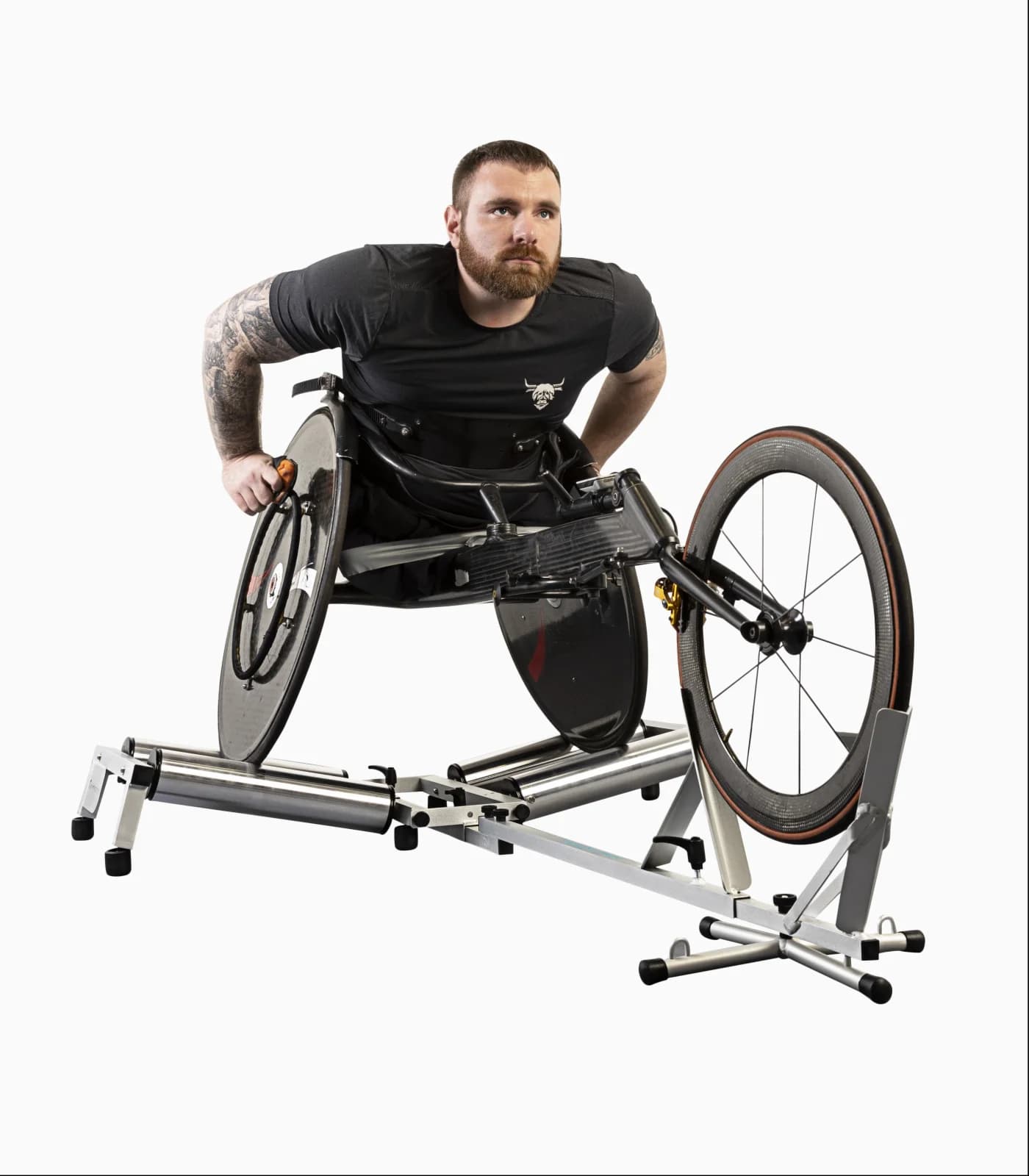
Estimated£1,800 – £3,500
Top End Eliminator OSR
The Top End Eliminator OSR is marketed as a versatile high-performance racer with a focus on modularity and adjustability, giving athletes room to grow without immediately moving to a fully bespoke chair. Technically, it combines a stiff frame and tunable seating positions to bridge the gap between off-the-shelf affordability and elite-level customization, providing a cost-effective upgrade path compared with buying multiple specialized chairs. Compared to the Shark RS and RGK, Top End’s value is in flexible ergonomics and part interchangeability that benefit developing elite athletes and multisport competitors.
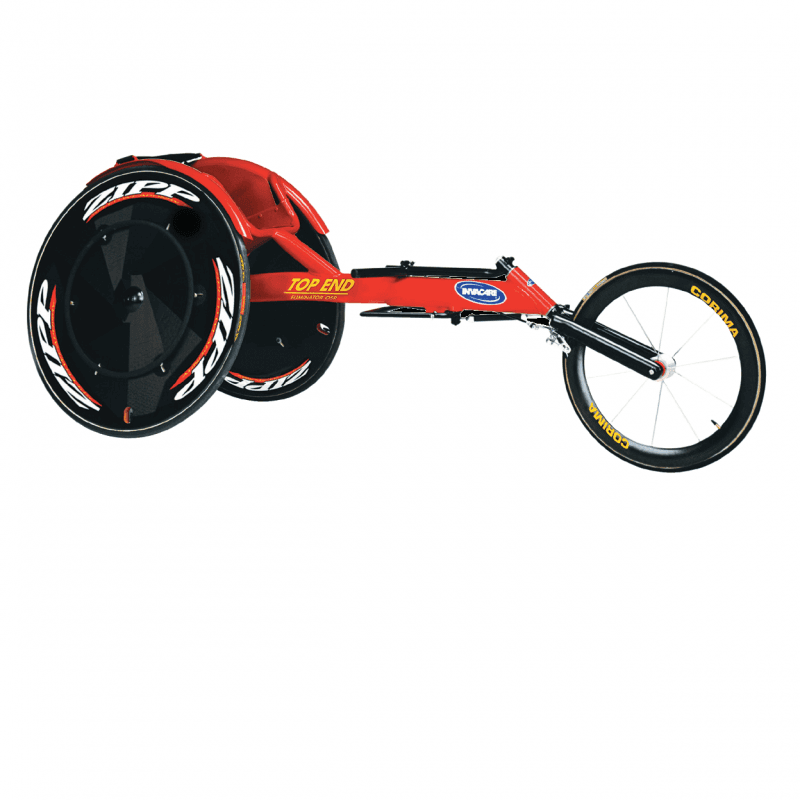
Estimated£3,500 – £6,500
Cyclone Mobility Racing Wheelchair
Cyclone Mobility offers a competitively priced racing wheelchair aimed at newcomers and community-level racers who want a lightweight, easy-to-maintain race rig. It sacrifices some of the bespoke tuning and ultra-light materials of the RGK Elite and the aero polish of the Shark RS in exchange for simpler setup, lower upfront cost, and practical durability—making it one of the most budget-friendly entry points on this list. For clubs, schools, and first-time racers, Cyclone presents a financially sensible way to enter racing without compromising core performance needs.

What research and evidence say about racing wheelchair performance
Scientific research in biomechanics, materials science and sports engineering supports the design priorities used in modern racing wheelchairs. Studies examining propulsion technique, ergonomics and aerodynamics show measurable benefits from optimised frame geometry, lightweight stiff materials, correct camber angles and personalised seating. Evidence also highlights how improved fit and push mechanics reduce the risk of shoulder injuries and increase sustainable speed over race distances. Below are accessible takeaways from peer reviewed research and applied sport science that help explain why the features listed matter for real-world performance.
Aerodynamics: Peer reviewed research shows that reducing frontal area and smoothing airflow around the athlete and chair lowers drag, translating to faster speeds at the same power output.
Materials and stiffness: Studies in materials science indicate that carbon fibre and high grade aluminium frames provide a superior stiffness to weight ratio, improving power transfer from the athlete to the wheels.
Biomechanics and ergonomics: Biomechanical analyses demonstrate that optimal handrim position, push angle and seat height increase propulsion efficiency and reduce repetitive strain on shoulders and wrists.
Wheel and tyre selection: Experimental testing finds that tyre compound, pressure and wheel profile significantly affect rolling resistance and vibration, influencing both speed and comfort over race surfaces.
Training and data: Research into training with power meters and motion analysis confirms that telemetry-driven feedback improves technique and race pacing, leading to better outcomes in competition.
Frequently Asked Questions
What makes a racing wheelchair different from an everyday wheelchair?
A racing wheelchair uses a three-wheel layout: two large, heavily cambered rear wheels driven by hand-rims and a single small steering wheel out front on a long fork. The frame is rigid and aerodynamic, and the athlete sits in a fixed, kneeling-style seat cage. It is built purely for speed on the track or road and is not designed for everyday transfers or manoeuvring indoors.
Which brands make racing wheelchairs in the UK?
The two established British names are Bromakin in Loughborough, Leicestershire, and RGK in Burntwood, Staffordshire. RGK's race chairs are the aluminium Sprint and the carbon-framed Sprint X, and RGK sits within the Sunrise Medical group. The main imported option is Invacare's Top End Eliminator OSR. All of these are sold in the UK through specialist dealers rather than general retailers.
Should a racing wheelchair frame be aluminium or carbon fibre?
Aluminium frames (typically 6061 T6) are durable and more affordable, which suits club and developing racers. Carbon fibre, or titanium on some models, gives a higher stiffness-to-weight ratio and better power transfer for elite competitors chasing marginal gains, at a noticeably higher price.
How much does a racing wheelchair cost in the UK?
Entry-level and club chairs start at roughly £1,200 to £2,800, mid-range models run around £3,000 to £5,000, and fully custom carbon or elite-specification chairs can reach £6,000 or more. Made-to-measure fitting and premium wheels add to the cost. These are indicative new-chair ranges; confirm current pricing with the dealer, as race chairs are quoted per build.
Conclusion
One thing to be clear about before you compare: a competition racing wheelchair is not an off-the-shelf marketplace purchase. Every chair here is built or configured to the individual athlete — seat cage, camber, seat height and hand-rim position are set from your measurements — so buying means booking a fitting with a specialist dealer rather than adding to a basket. In the UK that usually means Bromakin in Loughborough or RGK in Burntwood for a British-built chair, or a specialist dealer for imported models such as the Invacare Top End Eliminator OSR. Prices in this guide are indicative ranges for new chairs; a made-to-measure build with premium wheels sits at the top of the range, and second-hand club chairs can be found well below it. Use the search to refine by budget, fit or competition class, or to compare spec sheets and local fitting services.