

Best Liquid Fuel Stoves for UK Camping 2025 — Complete Buyer's Guide to MSR WhisperLite International, Primus OmniLite Ti, MSR XGK-EX, Optimus Nova+ & Primus MultiFuel III
Published on Sunday, 24 August 2025
Liquid fuel stoves are what you carry when a gas canister will let you down. Butane boils at −0.5°C, so a plain butane canister stops delivering usable pressure right around freezing, and even isobutane/propane mixes fade below about −10°C; a hand-pumped liquid stove is unaffected, because you supply the pressure yourself. That is why they remain the default for winter camps in the Cairngorms, Scottish winter climbing, and shoulder-season trips along the Pennine Way or across the Lakeland fells. The UK complication is fuel. White gas — Coleman Fuel, MSR SuperFuel — is a specialist outdoor-retailer item in Britain, sold in 1-litre bottles rather than stocked by supermarkets or filling stations, so the practical question for a British buyer is whether a stove will also burn unleaded petrol and paraffin. All five stoves below will: the MSR WhisperLite International, Primus OmniLite Ti, MSR XGK-EX, Optimus Nova+ and Primus MultiFuel III are multi-fuel rather than white-gas-only, and the OmniLite Ti and MultiFuel III additionally accept a screw-thread gas canister. This guide compares them on fuel range, weight, boil time and field serviceability.
Top Picks Summary
MSR WhisperLite International
The WhisperLite International is the default UK choice at roughly £80–117: it burns white gas, paraffin and unleaded petrol, weighs 484g packed with pump, windshield and tools, and strips down with the supplied multi-tool. It is simpler and cheaper to keep running than the MSR XGK-EX, and heavier and slower than the 239g Primus OmniLite Ti, but spares are easier to find in Britain than for any other stove here. Note the model name matters: only the International and Universal versions take unleaded petrol — the plain WhisperLite is white-gas-only, which is the wrong stove for the UK.

Primus OmniLite Ti
The Primus OmniLite Ti is a premium, ultra-lightweight titanium liquid-fuel stove designed for fast boils and minimal pack weight, making it ideal for weight-conscious backpackers who still need liquid-fuel reliability. Financially it sits at the higher end compared with the WhisperLite and Optimus Nova, but its technical advantages—integrated windshield, compact design and superior power-to-weight—outperform heavier expedition options like the MSR XGK-EX for frontcountry and lightweight alpine use.
MSR XGK-EX
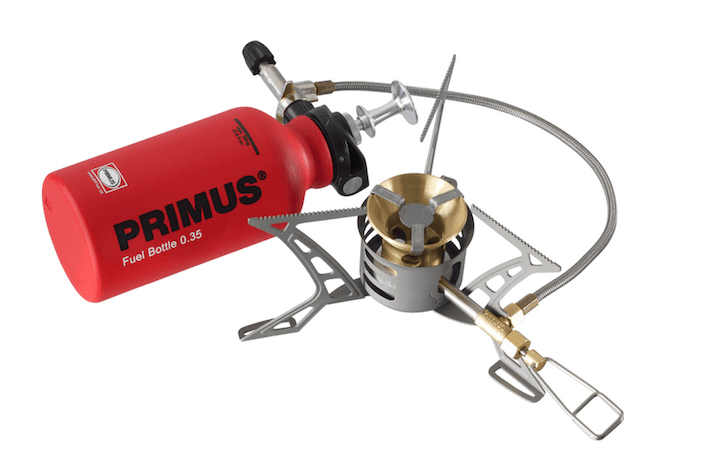
The MSR XGK-EX is a high-output expedition stove built for extreme conditions and heavy fuels, offering superior wind resistance, rapid boil times and the ability to run a wide range of liquid fuels with exceptional reliability. It is more costly and heavier than the WhisperLite and Primus OmniLite Ti, but its technical performance makes it the market leader for large-group or extreme-environment cooking where raw power and fuel versatility trump weight and price.
Optimus Nova+
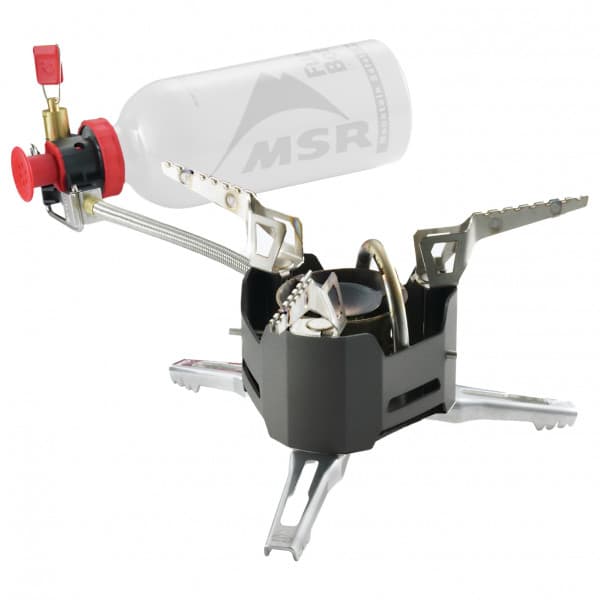
The Optimus Nova+ is the best simmering stove of the five: its needle valve gives genuinely usable low-power control where the MSR XGK-EX is close to on-or-off, and the burner runs white gas, unleaded petrol, paraffin, diesel and jet fuel. At 475g with pump it is not the lightweight option — the Primus OmniLite Ti is 239g stove-only — but it is the one to buy if you cook properly rather than just boiling water, and the pump and jet service in the field without tools.

Primus MultiFuel III
The Primus MultiFuel III is the canister-or-liquid compromise: the same burner takes a screw-thread gas cartridge, unleaded petrol, white gas, paraffin, diesel or aviation fuel, so one stove covers a summer weekend and a February camp. At 340g without the pump it is lighter than both the MSR WhisperLite International and the MSR XGK-EX while giving up little cold-weather output, and it strips down without tools. It costs more than the WhisperLite and simmers less precisely than the Optimus Nova+, and priming is the fiddliest part of owning one.
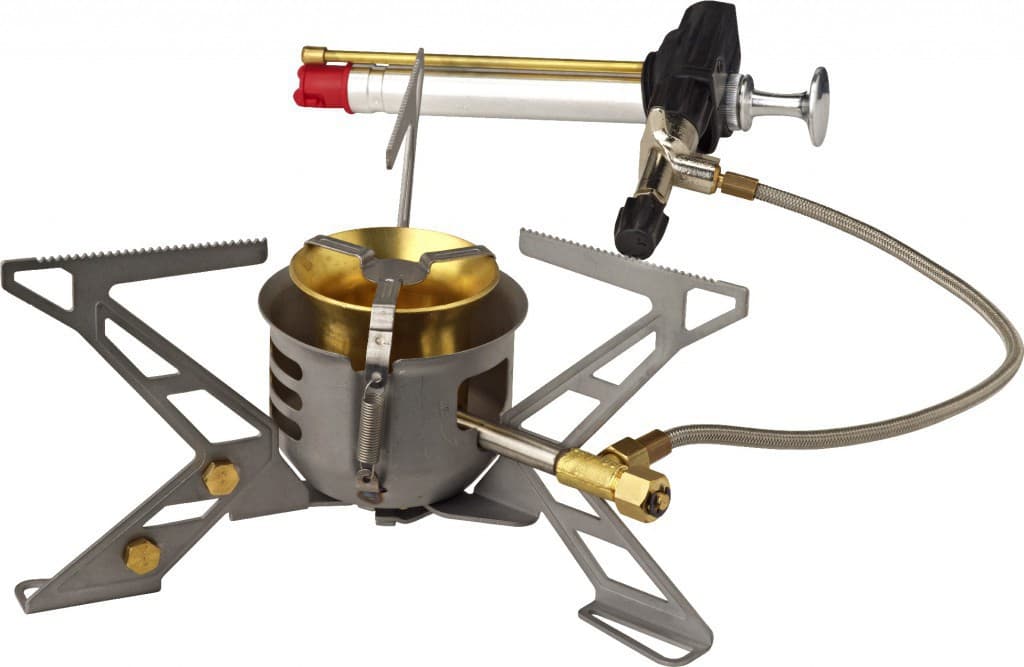
All five are multi-fuel rather than white-gas-only, which is the specification that matters in Britain: each will run unleaded petrol when Coleman Fuel is not to be had. The MSR WhisperLite International is the value all-rounder, the Primus OmniLite Ti the 239g titanium option, the MSR XGK-EX the high-output expedition burner for paraffin and extreme cold, the Optimus Nova+ the best simmering stove of the group, and the Primus MultiFuel III the rugged canister-or-liquid compromise.
Understanding Liquid Fuel Stoves for British Conditions
A liquid fuel stove burns pressurised, vapourised fuel: you pump the bottle by hand, pre-heat (prime) the burner so liquid fuel vapourises before it reaches the jet, then run it. Because the pressure comes from your pump rather than from the fuel's own vapour pressure, cold does not throttle output the way it throttles a canister — the difference shows up from around freezing downwards and widens the colder it gets. Altitude behaves the same way. The trade-offs are priming (30–60 seconds, and soot if you rush it), noise, and the occasional jet clean or O-ring change, all of which are field jobs done with the supplied multi-tool. For UK buyers the fuel question decides the shortlist. White gas burns cleanest and clogs jets least, but is a specialist purchase in Britain; unleaded petrol is available everywhere and runs in all five stoves here, at the cost of more soot and more frequent jet cleaning; paraffin (kerosene) is cheap and far less volatile, which is why expeditions favour it. Anything other than white gas simply means servicing the stove more often.
All five stoves here run unleaded petrol as well as white gas — none is white-gas-only, which matters because Coleman Fuel and MSR SuperFuel are specialist-retailer buys in the UK, not petrol-station stock
White gas burns cleanest; unleaded sooties the jet fastest; paraffin (kerosene) is the cheapest and least volatile for long trips
Priming takes 30–60 seconds — rush it and you get a yellow flare and soot instead of a blue flame
Cold is the real reason to own one: butane quits around 0°C and isobutane/propane mixes fade near −10°C, while a hand-pumped liquid stove does not lose pressure
Flying: fuel can never be carried, and airlines require the stove and bottle to be completely drained and purged — British Airways specifies draining for one hour, then leaving the container uncapped for six
Ferry and tunnel operators restrict loose flammable liquids in vehicles; check the operator's dangerous-goods rules before travelling with a full bottle
Field maintenance needs only the supplied multi-tool — jet, O-rings and pump cup are the wear parts
Weight spans 239g (OmniLite Ti, stove only) to 489g (XGK-EX); pump, bottle and windshield add more than the differences between stoves
Frequently Asked Questions
Which stove should I choose for UK multi-fuel trips?
Choose the MSR WhisperLite International if you want multi-fuel capability (white gas, paraffin, unleaded petrol) plus compact, tool-free maintenance and replaceable parts for field repair, with an average rating of 4.6.
What multi-fuel liquids can the MSR WhisperLite International use?
The MSR WhisperLite International runs on white gas, paraffin (kerosene) and unleaded petrol, with an average rating of 4.6. Only the International and Universal versions take unleaded — the plain WhisperLite is white-gas-only, which makes it the wrong choice in the UK.
How do the MSR WhisperLite International, Primus OmniLite Ti and MSR XGK-EX compare on price?
The MSR WhisperLite International is the value pick at roughly £80–117, the Primus OmniLite Ti sits higher at about £133–186 for its ultralight titanium build, and the MSR XGK-EX is the most expensive at around £212–292 for maximum expedition output. Ratings are 4.7, 4.4 and 4.7 respectively.
Is MSR XGK-EX better than WhisperLite International for cold?
For extreme, high-altitude cold use, the MSR XGK-EX is built for very high output and exceptional stability, and it can run a wide range of liquid fuels with exceptional reliability; it's rated 4.7, vs WhisperLite International's 4.6.
Conclusion
Pick by fuel and temperature, not by brand. The MSR WhisperLite International at roughly £80–117 is the sensible default: cheapest here, 484g packed with pump and windshield, runs white gas, paraffin and unleaded, and the easiest of the five to get spares for in Britain. The Primus OmniLite Ti is the one to carry when weight decides — 239g of titanium for the stove, and it takes a gas canister too, so the same burner runs cartridges in summer and liquid fuel in winter. The MSR XGK-EX is the cold-weather and dirty-fuel specialist: fastest of the group at 2.8 minutes per litre on paraffin, at £212–292 and with little in the way of simmer control. The Optimus Nova+ is the pick if you cook rather than just boil, with the best low-power control here. The Primus MultiFuel III sits between the OmniLite Ti and the XGK-EX: canister or liquid, tool-free strip-down, 340g without the pump. If you only camp at low level between April and September, a canister stove is lighter, quieter and cheaper — buy liquid fuel for the cold, the altitude, or the places where unleaded is the only fuel you can actually find.