

Top 5 Air Exchangers for Indoor Air Quality in the UK - 2026
Quick answer: in the UK, an "air exchanger" is an MVHR unit (mechanical ventilation with heat recovery), and the five whole-house units compared here are the Zehnder ComfoAir Q350 (quietest, highest efficiency, roughly £1,300–£2,200), the Titon HRV Q Plus ECO (best value for small-to-medium retrofits at roughly £700–£1,000), the Vent-Axia Sentinel Kinetic Advance (now discontinued by Vent-Axia, but still widely installed and supported for filters and spares) and the Nuaire heat-recovery range. All of them need sizing and commissioning by an accredited installer to meet Approved Document Part F. As homes and workplaces across the UK become better insulated, proper ventilation is rising to the top of homeowners' and facilities managers' priorities. Air exchangers — commonly known here as MVHR (mechanical ventilation with heat recovery) or HRV units — exchange stale indoor air for filtered outdoor air while recovering heat to cut energy waste. That makes them especially valuable in the British climate, where long, damp winters and short heating seasons mean retaining warmth efficiently is essential. For compact terraces, flats above shops and modern new-builds, a quiet, energy‑efficient unit can reduce condensation, limit mould growth and improve comfort without driving up bills. In older properties a well-chosen HRV can also support retrofits by balancing airflow and reducing draughts caused by ad hoc extract fans. This guide profiles five models that suit common UK needs in 2026: whole-house heat recovery for new builds, compact units for tight loft spaces, variable-speed fans for low noise and lower running costs, and robust filtration for pollen and urban particulates. We focus on practical factors British buyers care about: energy performance (seasonal efficiency and low standby consumption), installation flexibility, local service and spare-part availability, simple filter access and quiet operation. Where relevant, we flag which models are a better fit for retrofit versus new-build projects and offer a quick note on compatibility with heat-pump-led heating systems. Whether you’re replacing an old extractor system or specifying ventilation for a renovation, understanding capacity, control options and long-term running costs will guide you to the right choice for your home or building. One thing to be clear about before you shop: MVHR is not a plug-in appliance. Every unit on this page is ducted plant that has to be designed, installed and commissioned, so treat the prices here as unit-only guides and budget separately for ductwork, terminals and commissioning.
Inception's AI took the time to understand this market in the UK · · How we pickWe may earn a commission on purchases. It never affects our rankings.
Top Picks Summary
The Zehnder ComfoAir Q350 is the premium choice for projects prioritising acoustic performance, long-term energy savings and integration with home automation — its Swiss engineering delivers class-leading build quality and very low run-time energy loss. While its upfront cost is higher than the other units listed, the technical advantages in efficiency, noise levels and longevity can produce superior lifecycle economics for energy-conscious homeowners and passive-house applications in the UK.
Show More Heat Recovery Ventilators
The Titon HRV Q Plus ECO is a value-oriented heat recovery unit notable for straightforward installation and low maintenance needs, appealing to cost-sensitive buyers. For the "undefined" search, it typically represents better value than the highest-end Zehnder models and offers more comprehensive whole-house ventilation than the simpler DMEV approach of Xpelair, making it a strong budget-conscious HRV option.
Show More Energy Recovery Ventilators
PAUL's Novus 300 represents the premium end of the MVHR spectrum with German-engineered heat exchangers, high recovery efficiency, and refined acoustic performance that reduce running costs over time. For the "undefined" search use case it stands out technically—offering superior efficiency and control—but typically carries a higher upfront price and may be less economical to source or service in some regions compared with Nuaire, Blauberg, or Greenwood.
Show More Balanced Ventilation Systems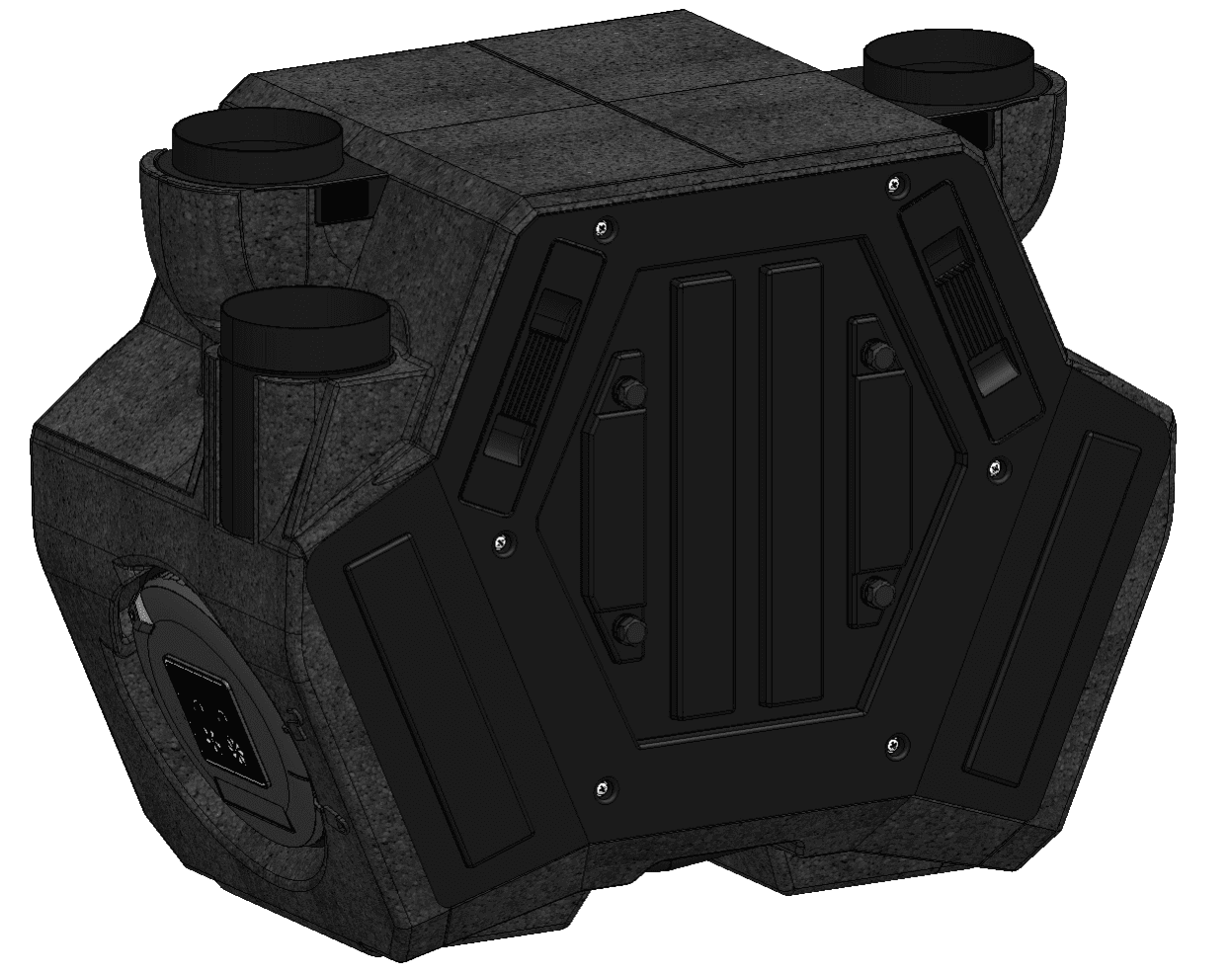
We may earn a commission on purchases. It never affects our rankings.
Estimated£1,200 – £2,000
Vent-Axia's Sentinel Kinetic Advance is a market-leading, energy-efficient MVHR unit with smart demand-control and low running costs, designed specifically to meet stringent UK building regulations and whole-house ventilation needs in 2025. It sits above many value models on the list for its superior electrical efficiency and control sophistication, offering better lifecycle energy savings than budget alternatives such as Nuaire or Blauberg while remaining more affordable than the high-end Zehnder range.
Show More Whole House Ventilation Units
The Nuaire MVHR-150-ECO earns its place for delivering proven whole-building heat recovery performance at a competitive capital cost, making it a strong best-value option for UK commercial projects in 2025. Its straightforward installation, low maintenance demands and balanced focus on operational energy savings mean it undercuts higher-priced rivals like the Zehnder while offering superior efficiency and better service availability across the UK than some smaller manufacturers. For landlords and developers prioritising predictable lifecycle costs over premium features, the MVHR-150-ECO represents a pragmatic, cost-effective choice.
Show More Commercial Air Exchange Systems
Estimated£450 – £650
These five air exchangers offer high heat-recovery efficiency, ECM variable-speed motors for lower running costs, compact housings suited to UK roof/loft spaces, user-friendly controls and straightforward filter access for simple maintenance. Several models include robust particle filtration and low-noise operation tailored for bedrooms and living rooms.
Understanding Air Exchangers
Air exchangers are designed to enhance indoor air quality by ensuring that stale air is efficiently replaced with fresh air from outside. Here’s how they work and why they are beneficial:
Improved Indoor Air Quality: Air exchangers help filter out pollutants and allergens, providing cleaner air for occupants.
Energy Efficiency: Many modern air exchangers are equipped with heat exchange technologies that conserve energy by transferring heat between incoming and outgoing air.
Humidity Control: These systems help manage indoor humidity levels, preventing issues related to excess moisture, such as mold growth.
Ventilation Standards: Complying with ventilation standards, air exchangers ensure that homes meet safety and health regulations.
Comfort Enhancement: By maintaining a consistent flow of fresh air, air exchangers contribute positively to indoor comfort and overall well-being.
Adaptability: Many models are adjustable to cater to different building sizes and specific ventilation needs, making them versatile solutions.
Frequently Asked Questions
Which air exchanger should I buy for a UK retrofit?
For most UK retrofit projects the Titon HRV Q Plus ECO is the pick in this list: a compact heat-recovery unit with a low-power EC motor, built-in frost protection and accessible filters at roughly £700–£1,000, the lowest unit cost here. It suits terraces, flats and loft or cupboard installs where budget and space are tight, and is rated 4.4/5 here. Step up to the Zehnder ComfoAir Q350 if bedroom noise levels or maximum heat-recovery efficiency matter more than upfront price.
What heat recovery feature does the Vent-Axia Sentinel Kinetic Advance use?
The Vent-Axia Sentinel Kinetic Advance uses a high-efficiency counter-flow heat exchanger rated to around 93% together with demand-controlled ventilation, so humidity and occupancy sensors automatically adjust airflow. Combined with low-energy EC motors this recovers heat from outgoing air while keeping running costs and noise low. It is rated 4.4/5 here. Note that Vent-Axia now lists the Sentinel Kinetic Advance as obsolete, so new installs should specify a current Sentinel Kinetic model — filters and spares for existing units remain widely available.
Which unit here is the quietest and most efficient?
The Zehnder ComfoAir Q350 is the premium choice for the lowest noise and highest efficiency, handling up to 350 m3/h through a diamond-shaped counter-flow exchanger rated to around 96% heat recovery. It is rated 4.7/5 here, though at roughly £1,300-£2,200 it is the most expensive unit in this list.
Do these air exchangers meet UK Building Regulations for ventilation?
All five are whole-house MVHR units suitable for meeting Approved Document Part F ventilation requirements, but a compliant install must be sized and commissioned by an MCS- or BPEC-accredited installer to your floor area and wet-room count. The unit prices quoted here exclude ductwork, terminals and commissioning, which typically add a substantial amount to a whole-house MVHR project.
Conclusion
Choosing the right air exchanger in the UK is a balance between performance, space and practicality. The five models covered here represent a range of approaches — from compact, low-noise units for flats to larger systems for whole-house ventilation — each engineered to reduce condensation, cut energy loss and improve indoor air quality. Before you buy, get measured by a qualified ventilation installer, check compliance with local Building Regulations (Part F) and factor in ongoing filter and service costs. Consider also whether you need integrated humidity or CO2 controls for optimal operation in busy family homes or commercial settings.
If you’d like tailored recommendations, request quotes from at least two MCS- or BPEC-accredited installers and ask about local warranty support and spare-part availability. For quick next steps: identify the approximate airflow needed for your floor area, prioritise low sound levels for bedrooms, and choose units with easy-to-change filters. These practical checks will help ensure your chosen air exchanger delivers healthier, more comfortable indoor air for years to come.