

Rigid Foam Boards — 2026 UK Guide (Top 5 Options)
Rigid foam boards are lightweight, high-performance insulation panels used across walls, roofs, floors and foundations. In the UK market they are valued for strong thermal performance per millimetre, moisture resistance, and easy installation in both new builds and retrofit projects. Popular board types include polyisocyanurate (PIR), extruded polystyrene (XPS) and expanded polystyrene (EPS); each appeals to different buyer priorities such as lowest lambda value, compressive strength or cost. By 2026 UK consumers increasingly choose boards that balance thermal efficiency with lower global warming potential blowing agents, recognised product certifications, and compatibility with Building Regulations and retrofit standards. For builders, renovators and specifiers the key considerations are U-value targets, board thickness, fire classification, vapour control compatibility and on-site handling. Rising trends in the UK market include higher performance PIR formulations, improved recycling routes for polystyrenes, and wider adoption of off-site insulated panels for faster construction.
Inception's AI took the time to understand this market in the UK · · How we pickWe may earn a commission on purchases. It never affects our rankings.
Top Picks Summary
Celotex GA4000 Insulation Board
The Celotex GA4000 is positioned as a high-performance PIR rigid foam board that balances strong thermal efficiency with competitive pricing, making it a go-to choice for many Rigid Foam Boards applications such as walls, roofs and floors. Compared with the premium Kooltherm and polyiso options on this list it is generally more cost-effective per square metre, while offering thinner build-ups than EPS alternatives like Jablite for the same U-value.

We may earn a commission on purchases. It never affects our rankings.
Estimated£80 – £150
Kingspan Kooltherm K5 External Wall Board
Kingspan Kooltherm K5 is a market-leading phenolic rigid board known for very low thermal conductivity and excellent thin-profile performance, which is why it ranks as a leader for external-wall applications where space is limited. It typically commands a premium over PIR and EPS products on this list but delivers superior space-saving insulation compared with Celotex, Recticel and Jablite and offers a different technical profile than Kay-Metzeler polyiso.

Jablite Jabfloor 70 EPS Insulation Board
Jablite Jabfloor 70 is an EPS rigid foam board optimized for floor insulation that offers a cost-efficient solution with good compressive strength for screeded floor systems. While it requires greater thickness than the PIR, phenolic or polyiso boards listed here to achieve the same thermal resistance, it is often the most attractive financial choice for large-area or budget-sensitive Rigid Foam Boards projects.

We may earn a commission on purchases. It never affects our rankings.
Estimated£50 – £120
Recticel Eurothane GP Rigid Insulation Board
Recticel Eurothane GP is a PIR-based rigid board that combines reliable thermal performance with robust manufacturing controls, making it a strong contender where consistent product quality and a versatile thickness range matter. It competes closely with Celotex on performance and price positioning but can offer different supply or specification advantages for contractors compared with Kingspan’s phenolic and Kay-Metzeler’s polyiso offerings.

We may earn a commission on purchases. It never affects our rankings.
Estimated£90 – £170
Kay-Metzeler Polyiso Insulation Board
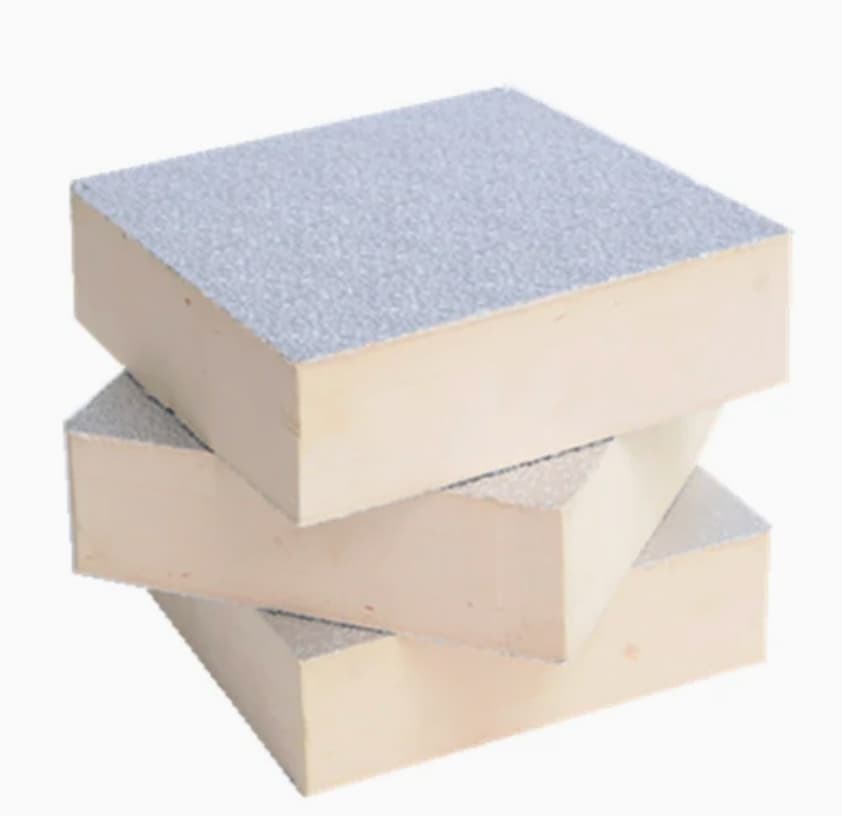
Kay-Metzeler Polyiso boards deliver some of the highest R-value per millimetre among common rigid foam products, and their thermal and temperature stability make them ideal when minimizing assembly thickness is a priority in Rigid Foam Boards applications. Although often priced above EPS and sometimes above standard PIRs, the polyiso option outperforms Jablite and frequently bests PIR boards like Celotex or Recticel on a thickness-sensitive basis, while differing from Kooltherm in chemical and fire-performance characteristics.
We may earn a commission on purchases. It never affects our rankings.
Estimated£100 – £200
Why rigid foam works: evidence and practical findings
Laboratory and field research shows rigid foam boards deliver stable, high insulation performance when correctly specified and installed. Scientific testing covers thermal conductivity, moisture uptake, compressive strength and reaction to fire, while lifecycle assessments evaluate environmental impact across production and use. UK guidance and standards emphasise correct detailing, certification and installation to preserve long-term performance and meet energy targets.
Thermal performance: PIR boards commonly offer the lowest lambda values, typically around 0.022 to 0.026 W/mK, which helps meet space-constrained U-value targets in UK buildings.
Moisture and durability: XPS tends to maintain insulating values better in damp conditions compared with EPS; long-term tests show that moisture control and correct detailing are essential to avoid performance loss.
Structural capacity: Compressive strength ratings vary by product and determine suitability for floor or external ground-contact applications; test certificates and BBA approvals help verify claims.
Fire and safety: Reaction to fire depends on core chemistry and facings; regulations require appropriate fire-stopping, boards often need protective finishes or cladding to meet Building Regulations.
Environmental impact: Lifecycle analyses indicate the blowing agent and recycled content significantly affect global warming potential. Newer low-GWP formulations and take-back schemes are increasingly available in the UK.
Practical guidance: PAS 2035 for retrofit, Building Regulations Approved Document L and BRE research emphasise correct installation, continuity of insulation, and control of thermal bridges to achieve predicted savings.
Frequently Asked Questions
Which rigid foam board is best for general wall and roof insulation?
The Celotex GA4000 is the ideal choice for walls, roofs, and lofts because it balances high thermal efficiency with competitive pricing. It holds a 4.6 average rating and provides a slim profile that is effective for both new builds and retrofit projects.
What makes the Kingspan Kooltherm K5 suitable for external walls?
The Kingspan Kooltherm K5 features phenolic insulation with very low thermal conductivity, allowing for ultra-thin build-ups where space is limited. It is specifically engineered for external wall applications and maintains a 4.5 average rating for its performance.
Is the Jablite Jabfloor 70 a cost-effective option for floor insulation?
The Jablite Jabfloor 70 is a cost-efficient EPS board designed for suspended and solid floors, offering high compressive strength for screeded systems. While it requires greater thickness than PIR or phenolic boards, it provides a budget-friendly solution with a 4.2 average rating.
Can I use Jablite Jabfloor 70 for my floor screed project?
Yes, the Jablite Jabfloor 70 is specifically designed for floor screeds and offers high compressive strength for solid floor systems. It is a lightweight, vapour-permeable board that is easy to cut and fit, making it a practical choice for floor-specific insulation needs.
Conclusion
Rigid foam boards remain a practical choice for meeting insulation targets in the UK, offering a range of performance, cost and environmental trade-offs. We hope this guide helped you understand the category and what to look for. Use the site search or filters to refine by board type, lambda value, thickness, fire rating or certification to find products that match your project needs.