

Essential Guide to Structural Timber Selections Across the UK in 2026 — Choosing C16, C24, Treated and Planed Carcassing for Construction Projects
Published on Tuesday, 3 February 2026
Structural timber forms the essential foundation of modern building work throughout the United Kingdom, where carcassing is specified in metric sections such as 47x100mm, 47x150mm and 47x225mm, alongside CLS stock at 38x89mm — sizes the trade still refers to by imperial shorthand like 4x2 and 9x2. These regularised softwood sections deliver the primary structural support required for walls, floor joists, roof trusses and load-bearing elements in both domestic and commercial construction. British builders and renovation specialists increasingly evaluate timber selection based on local sourcing capabilities, weather resilience in maritime climates, total project expenditure, and environmental sustainability. Contemporary UK construction professionals prioritise consistent grain quality, reliable strength grading to BS EN 338, Building Regulations compliance, and proven performance against rot, fungal decay and woodworm infestation. Moreover, modern specifiers give considerable weight to embodied carbon footprints, FSC certification credentials, supply chain transparency and domestic timber sourcing when procuring carcassing stock for 2026 projects. Understanding these selection criteria enables informed decision-making whether you're undertaking a domestic extension, commercial build-out, or specialist renovation work.
Top Picks Summary
Jewson Regularised C16 Graded Kiln Dried Timber
Jewson's Regularised C16 kiln-dried timber is the go-to budget-friendly choice for general carcassing in common metric sections, offering reliable dimensional stability and fewer surface defects thanks to regularising. It holds its spot by delivering consistent, economical material for domestic framing within normal spans where the higher C24 strength class isn’t required, making it a cost-effective alternative to Travis Perkins' higher-spec structural grades while outperforming untreated whitewoods on moisture stability and machining ease.
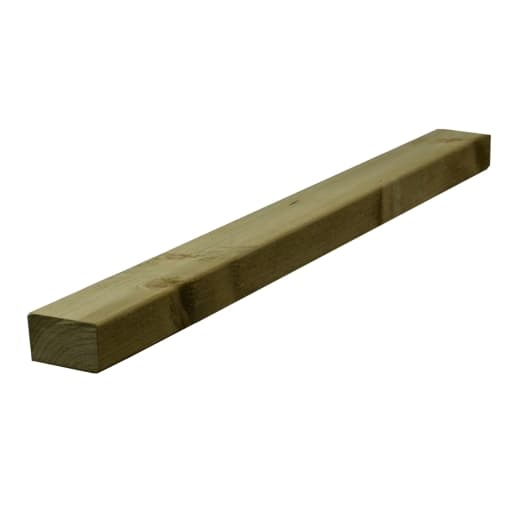
£200 – £300
Travis Perkins Structural Graded C24 Timber
Travis Perkins' C24 structural graded timber is the market leader for heavier load-bearing applications, providing superior strength and tighter grading for joists, rafters and deeper sections where span or loading pushes past what C16 will carry. Though priced above C16 and many planed softwoods, its technical advantage for safety-critical structural work and clearer span capabilities makes it the preferred choice over budget options like Jewson C16 and Wickes PSE when long-term performance and building regs conformity are priorities.

£260 – £380
Wickes Whitewood PSE Timber
Wickes Whitewood PSE timber is a widely available, planed and squared softwood ideal for internal studwork and finish carpentry, offering a smooth face for painting and joinery at a competitive price. It stands out for cost-effective, easy-to-finish profiles compared with the rougher treated options from Selco and the richer aesthetic of Buildbase redwood, making it a strong choice where appearance and budget are both key considerations. It carries no structural strength class, so keep it out of load-bearing work.

£180 – £260
Selco Trade Centre Treated Tanalised Timber
Selco's tanalised treated timber is specified for outdoor and ground-contact applications, delivering long-lasting preservative protection for posts, sleepers and external structural elements that would otherwise rot or fail. Its premium treatment cost is offset by lifecycle savings and reduced maintenance compared with untreated redwood or whitewood, positioning it above competitors for external structural durability and compliance with treatment standards.
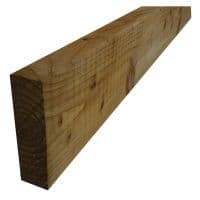
Buildbase Redwood Planed Softwood Timber
Buildbase redwood planed softwood offers a premium, attractive grain and a naturally more durable profile for external cladding, joinery and visible timberwork, with a smoother finish that reduces preparation time for staining or painting. It occupies a middle ground between inexpensive whitewood and pressure-treated timbers: more resilient and aesthetically pleasing than Wickes PSE but generally less costly than Selco's tanalised product when chemical treatment is required for prolonged ground contact.
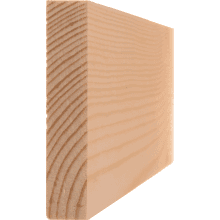
£230 – £340
These five timber options encompass the complete practical range required by British construction professionals, spanning economical carcassing through higher-strength structural applications and naturally durable exterior specifications. Each selection balances performance requirements with cost efficiency and regulatory compliance specific to UK building standards.
Understanding British Timber Grading and Selection Criteria
Choosing appropriate structural timber requires familiarity with grading systems, moisture content specifications, treatment options and performance characteristics established within UK building practices and standards.
Strength classes follow BS EN 338: C16 has 16 N/mm² bending strength, C24 has 24 N/mm² — both are load-bearing structural grades
Moisture content typically ranges from 18-20% for building-grade timber, affecting dimensional stability and performance
Preservative treatments protect against decay, woodworm and fungal attack common in British damp conditions
FSC and PEFC certifications verify responsible forest management and sustainable sourcing practices
Local supplier networks provide consistent availability and reduced carbon logistics impact
UK carcassing is sold in metric sections (47x100mm, 47x150mm, 47x225mm) and CLS (38x89mm), though trade shorthand like 4x2 and 9x2 persists
Species selection balances cost considerations against durability requirements for specific applications
Frequently Asked Questions
Which timber should I choose for load-bearing joists?
Travis Perkins Structural Graded C24 Timber for longer or more heavily loaded spans — C24 carries 24 N/mm² bending strength and a mean stiffness of 11,000 N/mm² under BS EN 338, against 16 N/mm² and 8,000 N/mm² for C16. Jewson's C16 is also a load-bearing structural grade and is fine for standard domestic joists within normal spans. Always work to a span table, and never substitute C16 where a design specifies C24.
Does Jewson Regularised C16 timber have kiln-dried moisture content?
Yes—Jewson Regularised C16 Graded Kiln Dried Timber is kiln-dried and regularised for consistent dimensions and low moisture content, typically 18-20%, with an average rating of 4.4.
Is Wickes Whitewood PSE better value than C24 timber?
It is cheaper — roughly £180-260 against £260-380 for Travis Perkins C24 — but it is not a substitute. PSE whitewood is planed stock for internal joinery, shelving and non-structural framing; it carries no structural strength class, so it cannot replace C24 on load-bearing work at any price.
Can Wickes Whitewood PSE timber be used for structural work?
No. Wickes Whitewood PSE Timber is suited to internal joinery, shelving and non-structural framing where finish is important, with an average rating of 4.1. Structural framing needs a strength-graded section such as C16 or C24 to BS EN 338.
Conclusion
Structural timber continues to represent the primary framing material for the vast majority of building projects across England, Scotland, Wales and Northern Ireland. The five specifications examined throughout this guide—Jewson Regularised C16 Graded Kiln Dried Timber, Travis Perkins Structural Graded C24 Timber, Wickes Whitewood PSE Timber, Selco Trade Centre Treated Tanalised Timber, and Buildbase Redwood Planed Softwood Timber—address the spectrum of requirements from cost-effective carcassing through heavier structural spans, exterior ground-contact work and visible joinery. For standard domestic framing within normal spans, Jewson's regularised C16 delivers strong value through wide availability and competitive pricing; step up to Travis Perkins C24 where span tables or Building Control call for the higher strength class, choose Selco's tanalised stock for anything exposed or in ground contact, and use Wickes PSE or Buildbase redwood where the timber will be seen. Explore further using our comparative tools to investigate alternative grades, preservation treatments, or regional merchant availability that aligns with your specific project requirements and local sustainability objectives.