

Top 7 Low Voltage Cables in the UK — 2026 Buyer Guide
"Low voltage cable" means two different things in the UK, and getting them mixed up is the single most common buying mistake. Under BS 7671 (the IET Wiring Regulations) and IEC terminology, low voltage (LV) means 50–1000 V AC — so ordinary UK 230 V mains wiring, including twin-and-earth and steel wire armoured cable, IS low voltage. What most shoppers actually mean when they search for "low voltage cable" is extra-low voltage (ELV/SELV): 50 V AC or 120 V DC and below. That is the 12 V and 24 V world of garden and deck lighting, LED strip, doorbells, alarm and sensor wiring, speaker cable and CCTV. This guide covers both, and says clearly which band each product belongs to. UK cable is sized in conductor cross-sectional area in mm² (1.0, 1.5, 2.5 mm² and so on), not in American AWG gauges — treat any "14/2" or "12/2" listing as a US-market product and convert before comparing (14 AWG is roughly 2.1 mm², 12 AWG roughly 3.3 mm²). For outdoor 12 V garden lighting look for a UV-stable, direct-burial-suitable 2-core cable and size it generously, because volt drop over long runs, not current rating, is usually what limits performance. And note the legal boundary: genuine ELV lighting and alarm wiring is generally free of building-control formalities, but new fixed 230 V mains circuits in a dwelling are notifiable work under Building Regulations Part P in England and Wales (with equivalents in Scotland and Northern Ireland) and should be done or certified by a competent person.
Inception's AI took the time to understand this market in the UK · · How we pickWe may earn a commission on purchases. It never affects our rankings.
Top Picks Summary
Belden 5502FE Multi-Conductor Security Cable
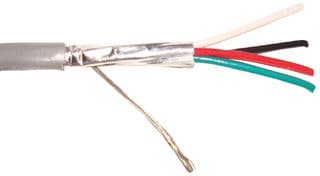
Belden's 5502FE is a well-specified extra-low-voltage security and sound cable: four 22 AWG (about 0.35 mm²) stranded bare copper conductors with polypropylene insulation, a Beldfoil aluminium/polyester foil shield with drain wire, and a grey PVC jacket with ripcord, rated 300 V and 75 °C. The foil shield is what preserves signal integrity on long alarm, intercom and access-control runs, and it is genuinely a step up from unscreened general-purpose control cable. The UK caveat is standards, not quality: it is built and approved to the US NEC CMR riser rating, which is not equivalent to a CPR Euroclass reaction-to-fire declaration, so for permanent UK installation confirm the supplier's CPR documentation or specify a BASEC-approved UK alarm cable.
Van Damme Blue Series Studio Grade Speaker Cable
Van Damme's Blue Series Studio Grade is a long-standing UK favourite for extra-low-voltage loudspeaker wiring: stranded oxygen-free copper conductors, low capacitance and a flexible jacket that suits studio, stage and permanent installation work. It is sold by the metre or on drums in several conductor sizes, so specify the CSA in mm² to suit your run length rather than buying by brand alone. Note that this is amplifier-output cable — it is not rated for 230 V mains circuits and should not be substituted for fixed wiring cable.

SWA Steel Wire Armoured Cable 2.5mm 3 Core
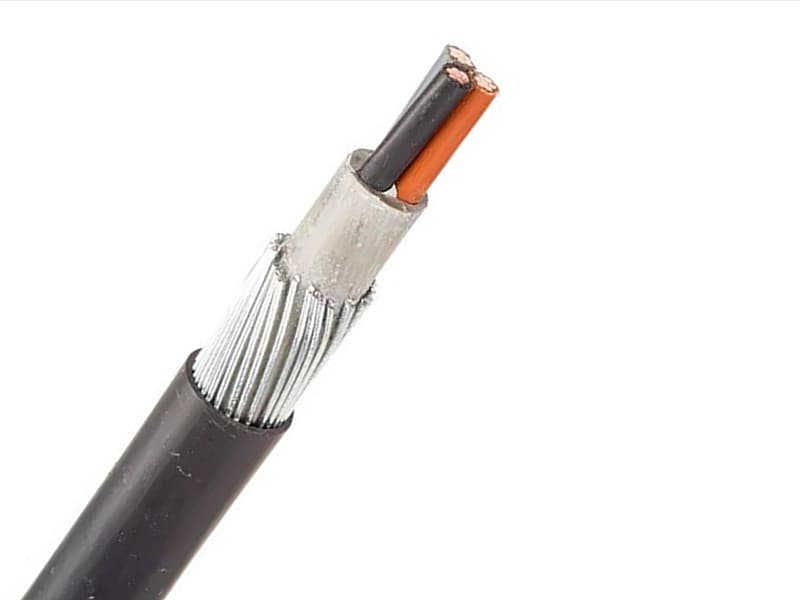
This 3-core 2.5 mm² steel wire armoured cable is the standard UK answer for a buried or exposed mains supply to a shed, garage, outbuilding or garden feed. Galvanised steel wire armour gives mechanical protection and an earth path, and the UV-resistant PVC or LSZH sheath handles outdoor exposure, all to BS 5467 / BS 6724. Be clear about the voltage band before buying: at 600/1000 V it is a low-voltage (LV) mains cable under BS 7671, not a 12 V extra-low-voltage garden lighting cable, and it is overkill and hard to terminate for ELV lighting runs. It is heavier and stiffer than unarmoured alternatives, and a new fixed 230 V circuit in a dwelling is notifiable work under Building Regulations Part P in defined locations.
Prysmian FP200 Gold Fire Resistant Cable
Prysmian's FP200 Gold is the default specification on UK fire alarm and emergency lighting circuits. It combines a fire-resistant construction designed to maintain circuit integrity during a fire with a low smoke zero halogen sheath, and it carries LPCB and BASEC certification — the approvals that specifiers and building control actually look for. Cores are supplied with an integral circuit protective conductor in the usual 1.0–2.5 mm² sizes at 300/500 V. It costs more than general-purpose alarm cable, which is the point: it is chosen for life-safety routes where a standard PVC control cable would fail early.

We may earn a commission on purchases. It never affects our rankings.
£151.01GBP
CQR Control Cable 4 Core
CQR's 4-core control cable is the everyday UK workhorse for extra-low-voltage alarm and control wiring: typically 0.22 mm² (7/0.2) stranded copper cores in a flexible PVC sheath, colour-coded and easy to pull through conduit and trunking. It is unscreened, so for long runs alongside mains cable or in electrically noisy environments a foil-shielded cable is the better choice. It is not mains rated and must not be used for 230 V circuits.

We may earn a commission on purchases. It never affects our rankings.
£28.83GBP
Defender E85111 14/2 Low Voltage Landscape Wire
This is a US-market 12 V landscape lighting wire: two 14 AWG conductors — roughly 2.1 mm² in UK terms — in a UV-stable jacket intended for direct burial, with stranded conductors that suit push-on landscape connectors. As extra-low-voltage garden lighting cable the concept is right, but UK buyers should treat the specification with care: 14/2 is an American gauge designation, and US direct-burial ratings are not the same as a CPR Euroclass declaration or BASEC approval. For a UK installation the like-for-like choice is a BS-rated 1.5–2.5 mm² 2-core UV-stable garden lighting cable, sized up for volt drop on long runs.

Ventcroft VFP-215ERH Enhanced Fire Cable
The Ventcroft VFP-215ERH is UK-made NoBurn fire performance cable: 2-core plus CPC, 1.5 mm² copper, 8.1 mm overall diameter, in a red low smoke zero halogen sheath on a 100 m reel, rated 500 V between cores and 300 V core to CPC, with LPCB and BASEC accreditation. One point buyers get wrong: this is the STANDARD grade, tested to BS 8434 / BS 5839-1 clause 26.2d at PH30 (30 minutes) — the enhanced 120-minute cable is the separate VNP-215ERH No-Burn Plus. Installers rate it for fast termination, since there is no foil or multi-layer sheath to strip.

We may earn a commission on purchases. It never affects our rankings.
LV, ELV and what the standards actually require
The distinction that matters is voltage band, not marketing language. BS 7671 puts low voltage at 50–1000 V AC and extra-low voltage at 50 V AC / 120 V DC and below, with SELV and PELV as the safety-separated forms of ELV used for garden lighting and similar. Cable selection then follows the application: conductor size in mm² set by current demand and volt drop, sheath and armour set by the environment, and fire performance set by where the cable runs. UK-installed cable should carry a CPR Euroclass reaction-to-fire declaration and, ideally, BASEC or LPCB approval; US ratings such as NEC "CMR riser" are not equivalent and do not by themselves satisfy UK requirements.
Know your band: 230 V mains is low voltage (LV) under BS 7671; 12 V and 24 V garden lighting, doorbell, alarm and speaker circuits are extra-low voltage (ELV/SELV).
Size in mm², not AWG: UK conductors are specified by cross-sectional area. On long 12 V runs volt drop usually forces a larger conductor than the current rating alone would suggest.
Match the environment: use UV-stable, direct-burial-suitable cable for garden lighting, and steel wire armoured cable where mechanical protection or underground mains routing is needed.
Fire performance preserves circuits: fire-resistant cables such as PH30 or PH120 types are tested to keep alarm, emergency lighting and evacuation circuits working during a fire.
Check the paperwork: look for CPR Euroclass, BASEC or LPCB marking. New fixed 230 V circuits in a UK dwelling are notifiable under Building Regulations Part P in defined locations.
Frequently Asked Questions
Is 230V mains low voltage, or does "low voltage cable" mean 12V?
Both, depending on who is speaking. Under BS 7671 and IEC terminology, low voltage (LV) means 50–1000 V AC, so UK 230 V mains wiring is technically low voltage. Most shoppers searching for "low voltage cable" actually want extra-low voltage (ELV/SELV) cable — 50 V AC / 120 V DC and below — for 12 V or 24 V garden lighting, LED strip, doorbells, alarms, CCTV or speakers. Check which band a product is rated for before you buy: a 600/1000 V armoured cable and a 12 V landscape cable are not interchangeable.
Which cable should I buy for security alarm runs?
For alarm, access-control and ELV signalling, the Belden 5502FE Multi-Conductor Security Cable is a solid technical choice: 4 × 22 AWG (about 0.35 mm²) stranded bare copper, a Beldfoil aluminium/polyester foil shield, PVC jacket with ripcord and a 300 V rating. One UK caveat: it is built to the US NEC CMR riser standard, which is not a CPR Euroclass declaration, so for permanent UK installation check the supplier's CPR paperwork or use a BASEC-approved UK alarm cable such as a 4-core CQR type instead.
What spec makes Belden 5502FE good for signal integrity?
Its Beldfoil aluminium/polyester foil shield with drain wire rejects electromagnetic interference, and the 4 × 22 AWG stranded bare copper conductors with polypropylene insulation give low, predictable capacitance for clean extra-low-voltage signalling over long runs. Conductors are colour-coded under a grey PVC jacket with a ripcord for fast termination, and the cable is rated 300 V and up to 75 °C. It is a shielded multiconductor cable, not an impedance-controlled data cable.
What size cable do I need for 12V garden lighting?
Size it in mm² for volt drop, not just current. Short 12 V runs of a few metres are usually fine on a 1.5 mm² 2-core cable, while longer runs across a garden typically need 2.5 mm² or larger to stop the far lights dimming. Choose a UV-stable outer sheath suitable for direct burial or ducting, keep 12 V ELV cable clearly separated from any 230 V mains cable, and remember that US-specified "14/2" landscape wire is roughly 2.1 mm² — convert before comparing.
Conclusion
In the UK context, choosing cable starts with deciding whether you are wiring a 230 V low-voltage circuit or a 12/24 V extra-low-voltage one. This guide covers both bands: Belden 5502FE Multi-Conductor Security Cable (4 × 22 AWG foil-shielded ELV signalling cable, a US-specification product) for alarm and access-control runs; Van Damme Blue Series Studio Grade Speaker Cable for ELV loudspeaker work; SWA Steel Wire Armoured Cable 2.5mm 3 Core, which is a 600/1000 V mains-rated LV cable for buried and outdoor power circuits rather than a 12 V garden-lighting cable; Prysmian FP200 Gold Fire Resistant Cable for fire-alarm and emergency-lighting circuits; CQR Control Cable 4 Core for ELV alarm and control wiring; Defender E85111 14/2 Low Voltage Landscape Wire, a US-market 14 AWG landscape wire best substituted in the UK by a BS-rated 1.5–2.5 mm² 2-core garden lighting cable; and Ventcroft VFP-215ERH, the standard-grade PH30 NoBurn fire cable (the enhanced 120-minute grade is the separate VNP-215ERH). Where fire performance and UK compliance matter most, the LPCB- and BASEC-approved Prysmian FP200 Gold remains the safest specification. You can refine this search by application, voltage band, conductor size in mm² or cable standard.