

Top 7 Window Shades in the UK for 2026 — Best Insulating, Blackout and Smart Options
Published on Thursday, 26 February 2026
Window shades have become an essential element in modern British homes, serving as both functional light-control solutions and stylish interior features. Whether coping with the long, bright summer evenings in Scotland or reducing heat loss through single-glazed windows in winter, the right shade can improve comfort and reduce energy bills. In the UK market, demand for quality window coverings is shaped by seasonal variation, rising energy costs and a stronger preference for sustainable living. British homeowners prioritise thermal insulation for winter, effective light filtering for summer and reliable blackout performance for bedrooms and media rooms. Practical considerations that guide purchases include child-safe cordless mechanisms, compatibility with smart home ecosystems, low-emission materials that protect indoor air quality, and easy cleaning and maintenance. Contemporary buyers often favour cellular honeycomb structures for their insulating air pockets, blackout fabrics for complete darkness, motorised systems for convenience and accessibility, and manufacturers with transparent environmental credentials. Regional differences across England, Wales, Scotland and Northern Ireland affect availability, installation expertise and the climate performance homeowners expect. Whether upgrading a period bay window or fitting shades to a new build flat, UK consumers look for window shades that balance measurable performance with attractive design.
Top Picks Summary
Luxaflex Duette Energy Saving Blinds
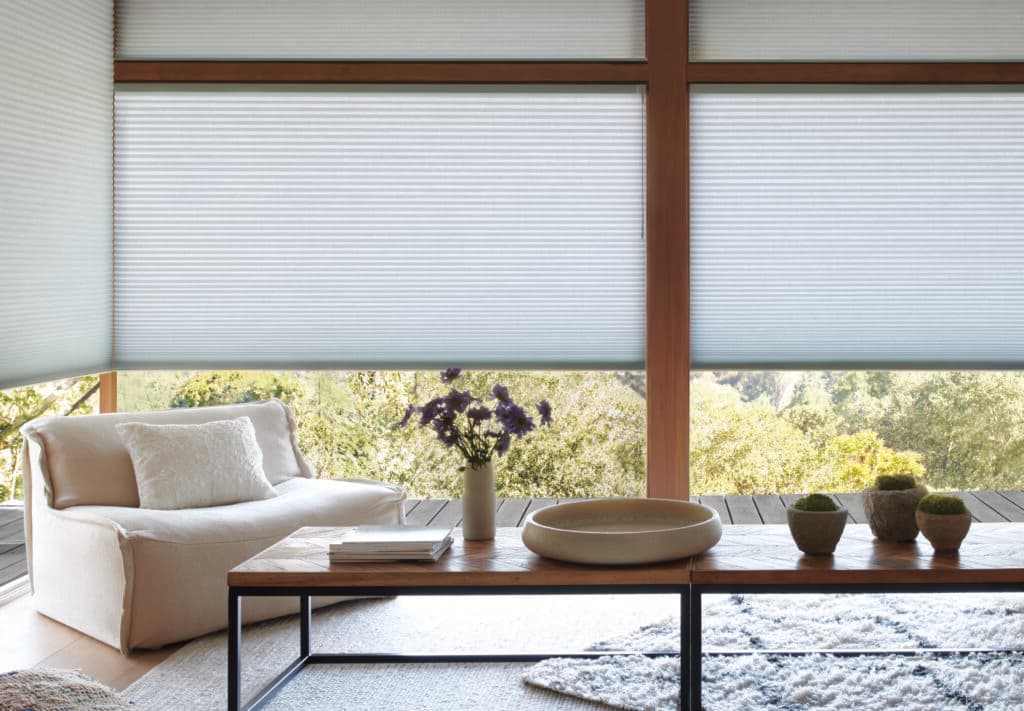
Luxaflex Duette cellular blinds are the market leader for energy savings thanks to their honeycomb construction that traps air for insulation, which can noticeably reduce heat loss in UK homes. They are pricier than basic roller or day/night solutions but are justified by measurable thermal benefit and acoustic dampening, outclassing single-layer rollers such as Bloc and English Blinds on efficiency. Compared with decorative or motorised alternatives on this list, Duette is the technical choice for households prioritising long-term energy bills and comfort rather than lowest purchase price.

IKEA FYRTUR Smart Blackout Roller Blind
IKEA's FYRTUR Smart Blackout Roller Blind holds its place as the best value motorized blackout option because it pairs reliable battery-powered automation and simple smart-home integration with one of the lowest price points on the list. Compared with the higher-end Luxaflex Duette Architella and the bespoke Hillarys fit, FYRTUR trades some premium finish and thermal performance for affordability and ease of installation, making it a practical choice for the undefined use case where budget-conscious smart blackout control matters. All units are widely available and appeal to users who want automation without a high specialty cost.

Bloc Blinds Blackout Roller Blind
Bloc Blinds' Blackout Roller Blind ranks as a market leader for economical made-to-measure roller solutions, offering fast turnaround, broad fabric choices and very competitive pricing compared with bespoke retailers. Technically simpler than motorized models like IKEA FYRTUR and the VELUX solar blind, Bloc excels where manual reliability and low-cost replacement are priorities for the undefined use case, though it lacks the advanced insulation of cellular systems such as Luxaflex. For shoppers wanting cost-effective custom blackout coverage without automation, Bloc is a strong, pragmatic option.

Hillarys Perfect Fit Pleated Blinds
Hillarys Perfect Fit Pleated Blinds are positioned as the premium bespoke interior option, delivering a tailored, gap-free installation that improves both aesthetics and light control compared with standard roller blinds. While pricier than Bloc Blinds and Ikea's FYRTUR, Hillarys provides professional measuring and fitting which can justify the extra cost for the undefined use case where a polished, fitted look and reliable performance are important. They sit between mass-market rollers and top-tier insulated systems, offering a balance of finish and value for discerning customers.

English Blinds Day and Night Roller Blinds
English Blinds' Day and Night rollers combine alternating sheer and opaque fabric bands to offer flexible daytime privacy and variable light control, providing a versatile alternative to single-function blackout or sheer systems. They are generally more affordable than bespoke Duette or plantation shutters and deliver better graduated light modulation than basic blackout rollers, though they do not achieve the total darkness of Bloc or FYRTUR blackout options. This makes them a strong cost-effective pick for rooms where adjustable natural light and privacy are the priority rather than full blackout or maximum insulation.

Duette Architella Honeycomb Blinds by Luxaflex
Luxaflex Duette Architella Honeycomb Blinds lead for thermal performance and acoustic reduction thanks to their patented multi-cell construction, making them the technical choice when insulation and energy savings are priorities. Although they are the most expensive option on the list compared with Ikea, Bloc and Hillarys, their superior R-value and refined finishes provide measurable heating-and-cooling cost advantages for the undefined use case where long-term efficiency and premium aesthetics justify the investment. They are less focused on smart home motorization than IKEA or VELUX but outperform others on passive performance.
Velux Solar Powered Blackout Blind
VELUX Solar Powered Blackout Blind is the specialist leader for roof windows, offering integrated solar charging and motorized blackout performance that other brands on the list can't match for skylight applications. Compared to the general-purpose rollers and honeycomb systems, VELUX delivers convenience and fit-for-purpose engineering for skylights at a premium, making it the logical pick for the undefined scenario where overhead glazing requires dedicated, battery-free automation. Its technical niche and seamless window integration distinguish it despite a higher cost relative to standard blackout blinds.

What research says about window shades and their benefits
A body of applied research and technical guidance shows that window coverings can deliver measurable benefits for thermal performance, daylight management, acoustic reduction and occupant wellbeing. Government and industry advisory bodies in the UK have documented how targeted measures at windows reduce heat loss and improve comfort; academic and laboratory studies explain the mechanisms by which cellular designs and layered fabrics trap air, block light and moderate sound. Below is a beginner-friendly summary of the key findings and practical takeaways.
Thermal performance: Reports from UK advisory organisations and building research bodies highlight that insulated window coverings, especially cellular honeycomb designs, reduce heat loss by improving the effective thermal resistance of the window assembly. In practice this lowers heating demand and can help cut energy bills in colder months.
Light control and sleep: Research into light exposure and circadian rhythms shows that effective blackout solutions reduce overnight light intrusion and support better sleep quality. Blackout fabrics are recommended for bedrooms and home cinema spaces to create consistent darkness.
Daylight management and glare: Studies on daylighting demonstrate that adjustable shades help balance natural light and reduce glare without entirely sacrificing daylight, which supports visual comfort and energy savings by reducing daytime lighting use.
Indoor air quality: Choosing low-VOC fabrics and certified materials reduces indoor emissions. Industry standards and product declarations (for example material safety data and eco labels) help consumers identify shades with lower indoor air quality impact.
Accessibility and control: Independent evaluations of motorised and smart shading note benefits for accessibility, precision of control and integration with energy management systems. Motorised options can be programmed to reduce solar heat gain in summer and to retain warmth in winter.
Acoustic benefits: Laboratory acoustic tests and field studies indicate that thicker or layered window coverings can reduce high-frequency noise and improve perceived acoustic privacy, though the degree of improvement varies with fabric, lining and installation.
Frequently Asked Questions
Which shade should I choose for energy saving homes?
Choose Luxaflex Duette Energy Saving Blinds: its honeycomb (Duette) cellular design traps air to boost thermal insulation, and it’s custom-made with top-down/bottom-up operation for flexible privacy and light control; rating 4.6.
Does IKEA FYRTUR Smart Blackout Roller Blind block daylight?
Yes—IKEA FYRTUR Smart Blackout Roller Blind uses thick blackout fabric designed to effectively block daylight, and it’s motorised with IKEA Trådfri compatibility plus remote/app scheduling; rating 4.1.
How does Bloc Blinds Blackout Roller Blind compare on price?
The data given doesn’t include exact pricing for Bloc Blinds Blackout Roller Blind, but it’s described as “very competitive pricing” versus bespoke retailers, offering made-to-measure blackout roller blinds with simple manual operation; rating 4.6.
Will IKEA FYRTUR work with IKEA Trådfri smart home?
Yes: IKEA FYRTUR Smart Blackout Roller Blind is motorised with IKEA Trådfri compatibility, and it includes a rechargeable battery pack for easy wall or window frame mounting; rating 4.1.
Conclusion
This selection highlights seven leading window shade options widely available in the UK for 2026: Luxaflex Duette Energy Saving Blinds, IKEA FYRTUR Smart Blackout Roller Blind, Bloc Blinds Blackout Roller Blind, Hillarys Perfect Fit Pleated Blinds, English Blinds Day and Night Roller Blinds, Duette Architella Honeycomb Blinds by Luxaflex and the Velux Solar Powered Blackout Blind. Each product meets different priorities — from maximum thermal efficiency and classic blackout performance to motorised smart control and easy retrofit fitting. For most UK homes seeking the best balance of insulation, build quality and year-round performance, the Luxaflex Duette Energy Saving Blinds stand out as the top choice. We hope you found the information you were looking for. You can refine or expand your search using the site search to compare specifications, read installation guides and check local availability.