

Premium Wall Fixings & Anchors for UK Homes 2025: Complete Installation Guide for Every Surface Type
Whether you're hanging a cherished painting, installing floating shelves, or securing kitchen cabinets, choosing the right wall fixing is fundamental to a successful installation. The market in the United Kingdom offers an impressive range of mounting solutions, each engineered to perform optimally on specific surfaces—from plasterboard and brick to concrete and tile. With DIY projects becoming increasingly popular across British households, understanding which anchor suits your particular wall type has never been more important. This comprehensive guide examines five standout products that have earned recognition for their reliability, ease of installation, and exceptional holding capacity. Whether you're tackling a modest shelf project in your sitting room or undertaking more substantial commercial work, these fixings deliver the security and peace of mind that comes with knowing your installations won't fail. We've carefully selected each product based on real-world performance, material quality, and suitability for typical British construction materials. From traditional masonry to modern stud walls, there's a solution here that will meet your requirements.
Inception's AI took the time to understand this market in the UK · We may earn a commission on purchases. It never affects our rankings.
Top Picks Summary
Fischer DuoPower Wall Plugs
Fischer DuoPower holds its best-in-class spot for UK 2025 because its dual-component polymer design adapts to different substrates (cracked masonry, concrete and drywall), delivering consistently high pull-out and shear performance across varied on-site conditions. Compared with lower-cost universal plugs and hollow-wall options on this list, DuoPower gives installers a technically versatile, lower-failure-rate solution that reduces rework and lifetime maintenance costs while remaining cheaper per-fix than heavy-duty mechanical anchors like the Hilti HUS3-H.
Rawlplug UNO Universal Plug
Rawlplug UNO earns a market-leader position as a practical, economical universal plug widely specified across the UK for general-purpose fixing in 2025: its simple ribbed profile and cost-effective materials make it ideal for high-volume installs and retrofit jobs. While it lacks the substrate-adaptive sophistication of Fischer DuoPower and the heavy-duty capacity of Hilti screw anchors, UNO offers the best upfront material cost and still outperforms many generic plugs, making it the preferred value choice for contractors managing tight budgets.

Toggler SnapSkru Self-Drilling Drywall Anchors
Toggler SnapSkru stands out for rapid, tool-minimal installation in plasterboard and hollow-panel work in the UK marketplace in 2025 — its self-drilling, high-expansion design gives excellent holding power in drywall without the need for pre-drilling or large toggles. Technically it outperforms basic hollow wall plugs on speed and ease-of-use and is often more cost-effective than metal toggles for medium loads, though it isn’t intended to replace structural anchors like the Hilti HUS3-H for concrete fixtures.
Red Devil Hollow Wall Anchors
Red Devil hollow wall anchors are positioned as the go-to for heavy fixtures in cavity walls and stud spaces across the UK in 2025, thanks to their metal toggle designs that provide robust load-bearing capacity once deployed. Compared with plastic drywall anchors and self-drilling models, these metal toggles deliver higher sustained loads and greater long-term reliability for heavier fittings, though they require slightly more installation time and can be pricier per unit than simple plugs.
Hilti HUS3-H Screw Anchors
Hilti HUS3-H screw anchors top the list for structural and safety-critical applications in the UK for 2025 because their undercut expansion and hardened steel construction deliver the highest certified load ratings and exceptional fatigue resistance. Though significantly more expensive per fix than the other products listed, Hilti’s technical performance and reduced risk of failure make the HUS3-H the preferred choice for commercial and demanding installations where the extra upfront cost is justified by long-term safety and liability considerations.
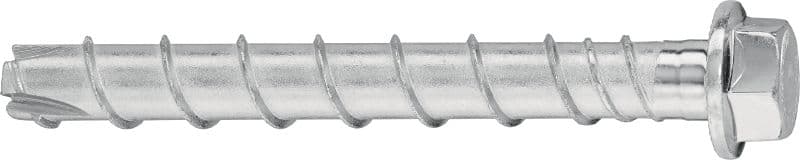
Where to buy Hilti HUS3-H Screw Anchors in UK: we track one retailer, Hilti, and show the price we last observed there; the price you see at checkout may differ.
We may earn a commission on purchases. It never affects our rankings.
£30 – £90
These five anchors represent the cream of the crop in wall fixing technology, selected for their superior load ratings, durability in British climates, ease of installation, and compatibility with common UK wall types. Each product has been evaluated for consistent performance and customer reliability.
Understanding Wall Anchors: Key Considerations for UK Installers
Effective wall installations begin with understanding the fundamental differences between anchor types and their appropriate applications. British homes feature diverse wall constructions, requiring different fixing strategies.
Plasterboard walls require expansion anchors or toggle systems that grip from behind the board surface
Solid masonry and brick demand wedge or sleeve anchors that expand within the material itself
Hollow walls benefit from butterfly toggles or self-drilling anchors that create their own fixing points
Load rating must exceed the weight of mounted items by a comfortable margin for safety
Material compatibility ensures longevity—stainless steel fixings resist corrosion better in damp environments
Installation depth and wall thickness directly impact anchor performance and holding capacity
Professional-grade fixings typically offer superior performance compared to budget alternatives
Correct sizing prevents damage to walls and ensures optimal anchor engagement
Frequently Asked Questions
Which wall plug should I buy for mixed UK surfaces?
Fischer DuoPower Wall Plugs are a good pick for mixed substrates because their dual-component polymer design with a plastic body and serrated sleeve adapts to cracked masonry, concrete, and drywall, delivering consistently high pull-out and shear performance; rating 4.6.
Does Toggler SnapSkru need pre-drilling for plasterboard?
Toggler SnapSkru Self-Drilling Drywall Anchors don’t require a pilot hole in gypsum board because the self-drilling thread eliminates pre-drilling, with quick push-and-turn installation; rating 4.5.
Is Rawlplug UNO cheaper than Fischer DuoPower options?
No prices are provided for Rawlplug UNO Universal Plugs or Fischer DuoPower Wall Plugs, but Rawlplug UNO is described as cost-effective for light to medium domestic installations; rating 4.6.
When should I choose Rawlplug UNO over SnapSkru?
Choose Rawlplug UNO Universal Plugs for general-purpose fixing with a universal ribbed design and anti-rotation ribs that suit most common screws and building materials, while Toggler SnapSkru is for plasterboard and hollow-panel work; ratings 4.3 vs 4.5.
Conclusion
Selecting appropriate wall anchors transforms your installation experience from potentially frustrating to straightforward and successful. The five products featured in this guide represent the pinnacle of British and international fixing technology, each excelling in its designated application. Whether you require the robust holding power of masonry-grade fixings for solid walls, the ingenious design of self-drilling anchors for plasterboard, or the versatile performance of all-purpose solutions, you'll find a suitable option here. Take time to assess your wall composition—plasterboard walls demand different fixings than brick or concrete—and consider the weight of what you're mounting. By matching the right anchor to your specific circumstances, you'll achieve installations that remain secure for years to come. We're confident that this selection will help you complete your projects with confidence and professional results. Should you require additional guidance or wish to explore complementary products, our platform offers extensive resources to support your installation journey.