

Top Bird Nesting Materials UK 2026 — Coconut to Hemp
Quick answer: coconut fibre (coir) is the best all-round nesting fill for British conditions — it drains well, stays breathable through damp weather and sheds very little dust. Hemp and jute are the sturdier structural options, kapok is the softest low-dust lining, and loose cotton "nesting fluff" is the one material to treat with caution: bird charities and avian vets warn that fine cotton and nylon threads wrap around chicks' toes and legs, causing constriction injuries and strangulation. Whatever you choose, offer it short-cut, unscented and dye-free. Choosing the right loose nesting fill makes a real difference to breeding success and bird welfare. UK gardeners, urban wildlife enthusiasts and aviary keepers usually prioritise materials that cope with damp weather, insulate against chilly nights, and minimise dust or loose fibres that can harm chicks. This guide looks at five widely available natural options — coconut fibre, kapok, cotton, jute and hemp — and the specific branded products many UK buyers find easiest to source. Each option balances safety, sustainability and practicality for common British species such as tits, robins, wrens, finches and sparrows, and for indoor aviaries where air quality matters. In Britain, moisture management and biodegradability are important: coconut fibre offers good drainage and structure for nest boxes, while kapok gives soft lining without adding bulk. Jute and hemp bring structural support and durability, with hemp standing out for its low chemical footprint and strength. Cotton wadding is the exception — keep it for supervised indoor or hand-rearing use, never loose in a garden. Wherever you place nesting material, keep it unscented, dye-free and free of long threads that could tangle. Buy from trusted UK pet retailers, garden centres or specialist online suppliers and replace fills before each breeding season. Below we compare five practical product choices — Petface Natural Coconut Fibre, Happy Beaks Premium Kapok, Johnson's Veterinary Pure Cotton, Natures Grub Natural Jute Fibres and Verm-X Natural Hemp Bedding — and explain which suits your setup and local weather conditions best.
Inception's AI took the time to understand this market in the UK · · How we pickWe may earn a commission on purchases. It never affects our rankings.
Top Picks Summary
Petface Natural Coconut Fibre Nesting Material
Petface's coconut fibre ranks as the best-in-class coir choice for British birdkeepers in this 2026 guide thanks to its durability, natural water-shedding properties and very low decomposition dust compared with cheaper plant wools. Financially it delivers excellent cost-per-use because fibres retain loft and shape longer than cotton or kapok, while technically it gives more structure to nests than loose jute and is less prone to compacting than hemp. For safer, low-dust nests in Britain, Petface is the practical, budget-friendly option where longevity matters.

Estimated£3 – £8
Happy Beaks Premium Kapok Nesting Material
Happy Beaks' premium kapok is chosen here for its exceptional lightness and insulating loft, making it the top pick for small passerines and lined nests in Britain (2026), and outperforming coir on warmth-per-gram. Though typically a premium buy, kapok's near dust-free, low-lint nature offers a technical advantage over some jute and lower-grade cottons, and its superior thermal properties make it a worthwhile splurge compared with coir's structural benefits and hemp's durability. The product stands out for urban and cold-climate use where low dust and insulation are priorities.

We may earn a commission on purchases. It never affects our rankings.
Estimated£6 – £15
Johnson s Veterinary Pure Cotton Nesting Material
Johnson's Veterinary pure cotton holds its place as a leading choice for soft, veterinary-grade nesting liners in Britain's 2026 roundup because of its exceptionally clean, low-dust presentation and familiar brand reputation. Financially it can cost more per volume than jute or coir, but owners pay for predictable hygiene and ease of use — cotton compacts less than kapok but can retain moisture more than coir or hemp, so it's best for indoor or well-ventilated nests. Compared to others on this list, it is the most familiar option for handlers prioritising cleanliness and consistency.

Estimated£5 – £12
Natures Grub Natural Jute Nesting Fibres
Natures Grub's jute fibres are the value leader in this 2026 guide, offering an economical, fully biodegradable option for nest-building that excels when structure and affordability are key priorities for British keepers. Technically the fibres are coarser and can be bulkier than kapok or cotton, but Natures Grub's processing minimises breakaway dust compared with generic jute products, giving a good compromise between cost and nest hygiene. It's a practical pick for large aviaries or wild-nesting projects where budget and biodegradability outweigh maximal softness.

Estimated£4 – £10
Verm-X Natural Hemp Bedding for Birds
Verm-X natural hemp bedding is positioned as a durable, sustainable nest material for Britain's 2026 guide because well-processed hemp combines strong tensile fibres, good moisture-wicking and low dust. While price-per-bag is higher than jute or coir, hemp's longevity and lower replacement frequency deliver strong lifetime value, and it performs technically better than cotton in damp conditions and better than kapok where structure and hygiene are needed. For keepers prioritising sustainability and durable, low-maintenance nests, it is a premium option.
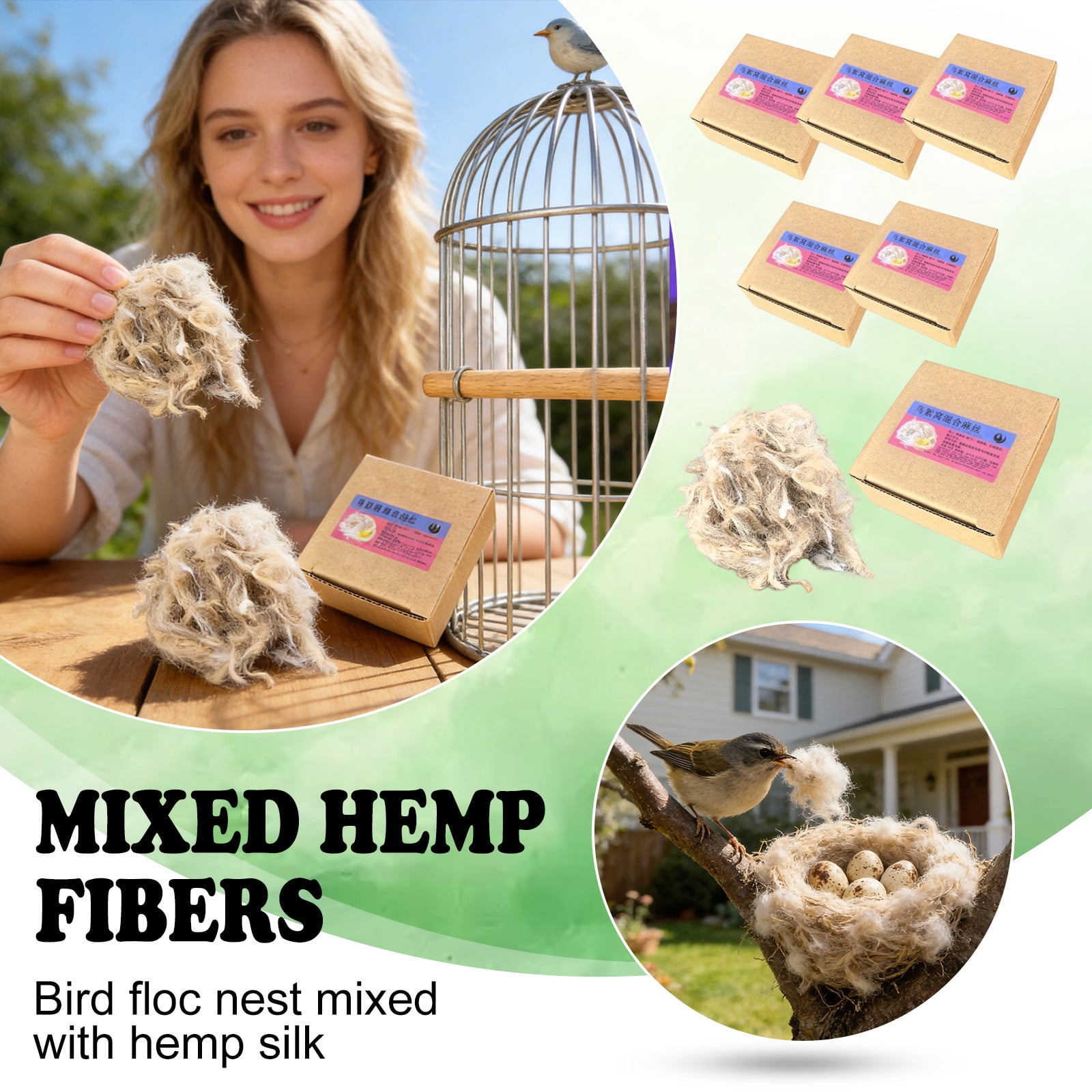
Estimated£7 – £18
Petface Natural Coconut Fibre — excellent moisture control, low dust, well suited to British conditions. Happy Beaks Premium Kapok — silky, lightweight lining with minimal dust. Johnson's Veterinary Pure Cotton — soft, clean lining for supervised indoor and hand-rearing use only; do not offer loose to wild birds, as fine cotton threads constrict toes and legs. Natures Grub Natural Jute — sturdy, provides nest structure and insulation. Verm-X Natural Hemp — durable, biodegradable and a sustainable low-chemical option.
What the Research Says About Nesting Materials
Scientific and applied studies show that nesting material choice matters for bird comfort, breeding outcomes, and respiratory health. Research in avian biology and applied animal behaviour highlights the benefits of breathable, low-dust natural fibres for insulation and nest-building cues, while cautioning against long synthetic strands, loose cotton wadding and chemically treated materials that increase entanglement or toxin exposure. Below are beginner-friendly points drawn from the scientific consensus and best-practice husbandry recommendations.
Low-dust natural fibres reduce airborne particulates in indoor aviaries and lower the risk of respiratory irritation for birds and handlers, according to controlled studies and veterinary guidance.
Insulating materials like coconut fibre and kapok help maintain stable microclimates within nests, which can support incubation and chick development in temperate climates.
Materials that wick moisture and resist rot (for example coconut coir) reduce fungal and bacterial growth compared with damp, compacted nesting matter; this matters in the UK's variable humidity and cooler seasons.
Avoiding long, continuous fibres is strongly recommended for synthetics and for loose cotton wool alike: wildlife rehabilitators and bird charities document limb constriction, toe loss and chick strangulation from fine threads that tighten as birds move.
Kapok's short, hollow fibres are attractive to many species for lining and shed very little lint, but any soft fill should be clean, unbleached, offered sparingly and replaced regularly to limit bacterial buildup.
Cotton wadding also absorbs and holds water, so it loses insulating value and encourages mould once wet — another reason it suits sheltered indoor use rather than garden nest boxes.
Sustainable fibres like hemp and jute offer durable, renewable options; some studies note hemp's natural resistance to microbial growth, though coarseness and species preference should be considered.
Best-practice recommendations include using unscented, dye-free materials, inspecting nests regularly during breeding, and rotating or replacing nesting fills if soiled or wet.
Frequently Asked Questions
What is the safest nesting material for birds in the UK?
Unscented, dye-free natural fibres such as coconut coir, kapok, jute and hemp are the safest choices, offered short-cut. Avoid long synthetic strands, wool yarn and loose cotton wool, which can tangle around chicks' legs, wings and toes. For garden birds, offer material in an enclosed tray or mesh ball to reduce entanglement risk.
Is cotton wool nesting material safe for birds?
Not for wild or unsupervised birds. Fine cotton and nylon 'nesting fluff' is widely criticised by bird charities and avian vets because the thin threads wrap around toes and legs, tighten as the bird moves, and cause constriction injuries, lost digits and chick strangulation. Wet cotton also loses its insulation and grows mould. Keep cotton wadding for supervised indoor or hand-rearing use, cut short and checked daily, and use coir, kapok, jute or hemp everywhere else.
Which nesting material is best for damp British weather?
Coconut fibre (coir) is the best all-round option for damp UK springs because it drains well, resists rot and stays breathable when wet, while producing very little dust. Hemp is a good second choice for moisture-wicking and durability. Soft linings like kapok should be kept for drier, sheltered or indoor nests, and cotton avoided outdoors entirely.
Is coconut fibre or kapok better for nesting?
They serve different roles. Coconut fibre gives structure, drainage and durability, making it ideal for the body of a nest and for damp conditions. Kapok is a soft, lightweight, low-dust lining that adds warmth for small passerines. Many keepers combine a coconut-fibre base with a thin kapok lining.
Conclusion
In a UK context the five materials here cover most nesting needs: Petface coconut fibre for moisture control and drainage; Happy Beaks kapok for soft, low-bulk lining; Natures Grub jute for structural support; and Verm-X hemp for sustainability and toughness. Johnson's Veterinary cotton has its place in supervised indoor and hand-rearing setups, but it is the one product here that should not be offered loose to wild birds. For most garden nest boxes and mixed-species aviaries, coconut fibre is the best all-round choice because it remains breathable in damp weather, drains well and doesn't generate much dust. If you keep finches or budgerigars indoors, add a soft lining like kapok, used sparingly and checked daily for loose fibres wrapped around toes or legs.
Before you buy, check product descriptions for 'unscented', 'no dyes' and short-cut fibres, and buy from reputable UK outlets — local garden centres, pet chains, independent bird suppliers or established online retailers. If you're supporting wild birds, offer nesting material in an enclosed tray or mesh ball to reduce entanglement risk, and cut any fibre longer than about 10cm. For region-specific advice, consult the RSPB or your local wildlife trust. Try a small pack first to see which your local birds prefer and replace nesting fills annually to keep nests clean and safe.