

Best Dental Care Dry Cat Food in the UK for 2026 | In-Depth Oral Health & Tartar Prevention Guide
Maintaining your cat's dental health goes beyond the occasional tooth brush. Specialist dry cat foods designed for oral care utilise innovative kibble structures and scientifically-backed ingredients to naturally combat plaque accumulation and reduce tartar formation. These purpose-formulated diets work through mechanical action—the friction created as your cat chews helps scrub away surface buildup—combined with targeted additives like polyphosphates that inhibit mineralisation on the tooth surface. For British cat owners, a dental-focused kibble is a useful addition on the days daily brushing doesn't happen, and it complements rather than replaces professional veterinary cleaning. UK pet parents increasingly seek products backed by clinical research, transparent ingredient sourcing, and genuine availability through familiar high street retailers and trusted online platforms. Beyond efficacy, considerations such as suitability for different life stages, value for money, palatability for finicky eaters, and environmental responsibility influence purchasing decisions across the country. This guide explores five leading formulations that balance proven dental benefits with the accessibility and reliability British cat owners have come to expect — including two that are veterinary-exclusive and are meant to be prescribed rather than picked off a shelf.
Inception's AI took the time to understand this market in the UK · We may earn a commission on purchases. It never affects our rankings.
Top Picks Summary
Hill's Science Plan Oral Care Adult Dry Cat Food
Hill's Science Plan Oral Care earns its spot for delivering clinically-backed tartar control in an accessible, over-the-counter formula that balances nutrition and dental benefit for everyday UK cat owners. Compared with the veterinary-exclusive options on this list, it offers the same VOHC-reviewed plaque and tartar claim at a lower out-of-pocket cost and without a vet visit, making it a practical first-line choice. It has held the Veterinary Oral Health Council seal for both plaque and tartar since 2001, and UK stockists include Jollyes, VioVet, Zooplus and Hill's own UK shop. (Note: this is the same formula sold as Hill's Science Diet in North America; UK and European packaging carries the Science Plan name.)
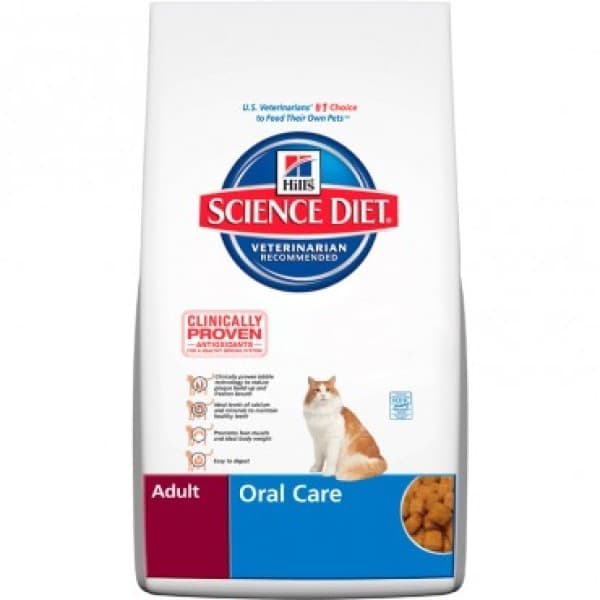
Where to buy Hill's Science Plan Oral Care Adult Dry Cat Food in UK: the trusted retailers we track in this market, with the best price we have observed at each. Prices are checked regularly and can change, and the retailer confirms the final price at checkout.
We may earn a commission on purchases. It never affects our rankings.
£15.21GBP£17.89
Royal Canin Feline Dental Care Dry Cat Food
Royal Canin Feline Dental Care stands out for its proprietary kibble shape and texture engineered to promote chewing and mechanically reduce plaque, a technical advantage over more conventional kibble designs. Its Veterinary Oral Health Council acceptance (2014) is for plaque control rather than tartar, so the independently reviewed claim is narrower than the Hill's and Purina diets here, though the recipe also includes a calcium-binding polyphosphate that Royal Canin says slows tartar formation. While typically priced slightly higher than mass-market oral care formulas, it needs no veterinary prescription and is widely stocked in the UK, striking a middle ground between specialised engineering and consumer accessibility.

Where to buy Royal Canin Feline Dental Care Dry Cat Food in UK: the trusted retailers we track in this market, with the best price we have observed at each. Prices are checked regularly and can change, and the retailer confirms the final price at checkout.
We may earn a commission on purchases. It never affects our rankings.
£27.99GBP£43.99
Purina Pro Plan Veterinary Diets DH Dental Health Feline Formula
Purina Pro Plan Veterinary Diets DH is a veterinary-exclusive formulation that combines mechanical kibble action with nutritional measures to control plaque and support oral health, making it a strong choice when a vet recommends a focused intervention. It has held the Veterinary Oral Health Council seal for both plaque and tartar since 2006, which is as good as the independent evidence gets for a feline dental diet, and its veterinary-exclusive status usually commands a premium price. It is obtained through a veterinary practice or veterinary pharmacy rather than off a shelf, and it should be started on your vet's advice after your cat's mouth has been examined — not added to a basket alongside ordinary kibble.

IAMS for Vitality Dental Care Adult Dry Cat Food
IAMS for Vitality Dental Care is the value pick here. Sold in 2 kg, 3 kg and 10 kg bags through UK supermarkets, pet shops and Amazon UK, it works out the cheapest per kilogram of the five, and the large bag makes it easy to keep a multi-cat household on it. It relies on crunchy kibble texture and tailored mineral levels rather than a prescription-level protocol, and IAMS states it helps reduce tartar build-up — but unlike the other four it does not appear on the Veterinary Oral Health Council's accepted-products list for cats, so that claim rests on the manufacturer's own testing rather than independent review. A reasonable everyday choice for a cat with a healthy mouth; not the one to reach for once dental disease has been diagnosed. Note that it is formulated for adult and senior cats.

Hill's Prescription Diet t/d Dental Care Cat Food
Hill's Prescription Diet t/d is the clinical benchmark for feline dental care: its interlocking fibre matrix has held the Veterinary Oral Health Council seal for both plaque and tartar since 2001, the longest record of anything on this list, and the large abrasive kibble is the most aggressive mechanical cleaner here. It is a veterinary-exclusive therapeutic diet, so it requires your vet's authorisation in the UK and is dispensed through veterinary practices and veterinary pharmacies rather than bought off a shelf. For a cat with diagnosed periodontal disease, fed as the vet directs, it is the strongest option in this comparison; for a healthy mouth, one of the over-the-counter foods above is the sensible starting point.

These kibbles work mainly through texture — larger, fibre-reinforced pieces that shear against the tooth as the cat bites instead of crumbling on contact — usually paired with a polyphosphate that binds calcium in saliva so plaque is slower to harden into tartar. Four of the five carry the Veterinary Oral Health Council seal: Hill's Science Plan Oral Care, Purina Pro Plan Veterinary Diets DH and Hill's Prescription Diet t/d for plaque and tartar, Royal Canin Feline Dental for plaque alone. IAMS for Vitality Dental Care is the value option and is not on the VOHC list.
Understanding Dental Health Kibble: How These Foods Support Your Cat's Oral Hygiene
Dental-specific cat foods work through two mechanisms. The main one is mechanical: the kibble is larger and reinforced with fibre so it shears against the tooth as the cat bites rather than crumbling on contact, wiping plaque off the surfaces it touches. The second is chemical — polyphosphates such as sodium hexametaphosphate or sodium tripolyphosphate bind calcium in saliva, which slows the mineralisation of plaque into tartar. Kibble size is calibrated to discourage whole-swallowing and extend that contact time. The limits matter too: the benefit is concentrated on the cheek teeth the cat actually chews with, so the canines and the gum line still need brushing, and a cat with established gingivitis or periodontal disease needs a veterinary examination before any diet change. Two of the diets compared here — Purina Pro Plan Veterinary Diets DH and Hill's Prescription Diet t/d — are veterinary-exclusive and are meant to be prescribed, not self-selected.
Mechanical cleaning action: Specially textured kibble reduces plaque through natural chewing friction
Chemical tartar inhibitors: Polyphosphates and similar agents prevent mineralisation and buildup accumulation
Independent validation: The Veterinary Oral Health Council seal states which claim was reviewed — plaque, tartar or both — and not every dental kibble carries one
Appropriate kibble sizing: Larger pieces encourage sustained chewing rather than quick consumption
Complementary to professional care: Works alongside annual vet examinations and professional cleaning when required
Adult and senior formulations: Dental kibbles are made for cats aged one year and over; there is no kitten dental diet
Ingredient transparency: Leading brands clearly communicate active dental ingredients on packaging
Palatability balance: Maintains taste appeal whilst delivering therapeutic dental benefits
Frequently Asked Questions
Which dry cat food is best for everyday dental care?
For most everyday UK cat owners, choose Hill's Science Plan Oral Care Adult Dry Cat Food. It is the only over-the-counter option here that holds the Veterinary Oral Health Council seal for both plaque and tartar, it uses specially textured kibble for mechanical plaque reduction, and it has an average rating of 4.3.
Does Royal Canin Feline Dental Care use special kibble design?
Yes—Royal Canin Feline Dental Care uses a unique kibble shape and size designed to encourage chewing and help scrape plaque, and it has an average rating of 4.2. Its Veterinary Oral Health Council acceptance, awarded in 2014, covers plaque control specifically; the reduction in tartar build-up is Royal Canin's own claim, based on the calcium-binding polyphosphate in the recipe.
Is Hill's Science Plan Oral Care better value than Royal Canin?
Hill's Science Plan Oral Care (around £12-28 in the UK) is typically cheaper than Royal Canin Feline Dental Care (around £15-40), though exact pricing varies by pack size and retailer. Both have similar ratings, 4.3 versus 4.2, so the choice often comes down to your cat's preference and budget.
Is Purina Pro Plan DH Dental Health prescription-only?
Yes—Purina Pro Plan Veterinary Diets DH Dental Health Feline Formula is a veterinary-exclusive diet, dispensed through vets and veterinary pharmacies rather than ordinary retail. It has held the Veterinary Oral Health Council seal for plaque and tartar since 2006 and has an average rating of 4.1. Ask your vet before switching your cat onto it.
Conclusion
Selecting the right dental care kibble for your feline companion needn't be complicated. The five formulations we've examined—Hill's Science Plan Oral Care, Royal Canin Dental Care, Purina Pro Plan Veterinary Diets DH Dental Health, IAMS for Vitality Dental Care, and Hill's Prescription Diet t/d—each bring distinct advantages whether your priority is clinical validation, ingredient transparency, or budget consciousness. Two of them are not ordinary shopping choices: Purina Pro Plan Veterinary Diets DH and Hill's Prescription Diet t/d are veterinary-exclusive therapeutic diets, dispensed through veterinary practices and veterinary pharmacies, and should only be started on your vet's recommendation for a cat whose mouth has actually been examined. What matters most is consistency; incorporating a dental-specific dry food into your cat's daily feeding routine, paired with regular veterinary check-ups, creates a solid foundation for long-term oral health. Hill's Science Plan Oral Care is the practical everyday starting point: it holds the Veterinary Oral Health Council seal for both plaque and tartar, and UK stockists include Jollyes, VioVet, Zooplus and Hill's own UK shop. Remember that no kibble replaces professional dental assessment—annual check-ups remain essential, and a cat that is drooling, pawing at its mouth or eating less needs examining rather than a change of food. Use the product comparisons above to filter by your cat's specific requirements, whether that's age-appropriate nutrition, sensitivity considerations, or particular health concerns.