

Prescription Anti-Inflammatory Eye Drops for Dogs in the UK: What Vets Prescribe and Why
Every product on this page is a prescription-only medicine, and none of them can lawfully be bought over the counter in the UK. Isathal is authorised as POM-V (veterinary prescription only); Maxidex, Pred Forte, Acular, diclofenac 0.1% and Maxitrol are human POM ophthalmic medicines that a veterinary surgeon may prescribe off-label for a dog under the prescribing cascade when no suitable veterinary product exists. A vet must examine the eye first, because a fluorescein stain to rule out a corneal ulcer changes which of these is safe to use at all. Treat this page as a reference to what your vet may reach for and why, not as a shopping list. Steroid drops such as prednisolone acetate and dexamethasone are used for moderate to severe anterior inflammation, including uveitis and post-operative inflammation. Topical NSAIDs such as ketorolac and diclofenac are preferred where a steroid carries higher risk, for example when corneal integrity is uncertain. Isathal is an antibiotic rather than an anti-inflammatory and is included because bacterial conjunctivitis is a common differential; it does not treat inflammation on its own. UK veterinary practice puts weight on antibiotic stewardship, diagnosis before treatment, and follow-up to check the eye is responding.
Inception's AI took the time to understand this market in the UK · We may earn a commission on purchases. It never affects our rankings.
Top Picks Summary
Maxidex (Dexamethasone 0.1%) Ophthalmic Suspension
Maxidex is a topical corticosteroid used for rapid control of ocular inflammation, and it is a common steroid-only choice when there is no suspected bacterial involvement. It is a human POM that a vet may prescribe for a dog off-label under the cascade. Compared with Maxitrol it avoids exposing the eye to neomycin and polymyxin B, which matters for antibiotic stewardship when only inflammation needs treating; compared with prednisolone acetate 1% it is the less potent of the two steroids on this list.

Where to buy Maxidex (Dexamethasone 0.1%) Ophthalmic Suspension in UK: we track one retailer, Pharmacyplanet, and show the price we last observed there; the price you see at checkout may differ.
We may earn a commission on purchases. It never affects our rankings.
£25.00GBP
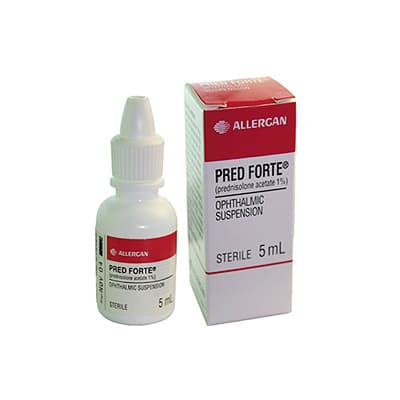
Pred Forte (Prednisolone Acetate 1%) Eye Drops
Pred Forte is a high-potency prednisolone acetate suspension with strong anterior segment penetration and sustained anti-inflammatory effect, which is why it is used for severe inflammation where dexamethasone may be insufficient. It is a human POM prescribed for dogs off-label under the cascade. Against the non-steroidal options on this list it gives markedly stronger suppression, at the cost of the usual steroid trade-offs: raised intraocular pressure and delayed corneal healing.
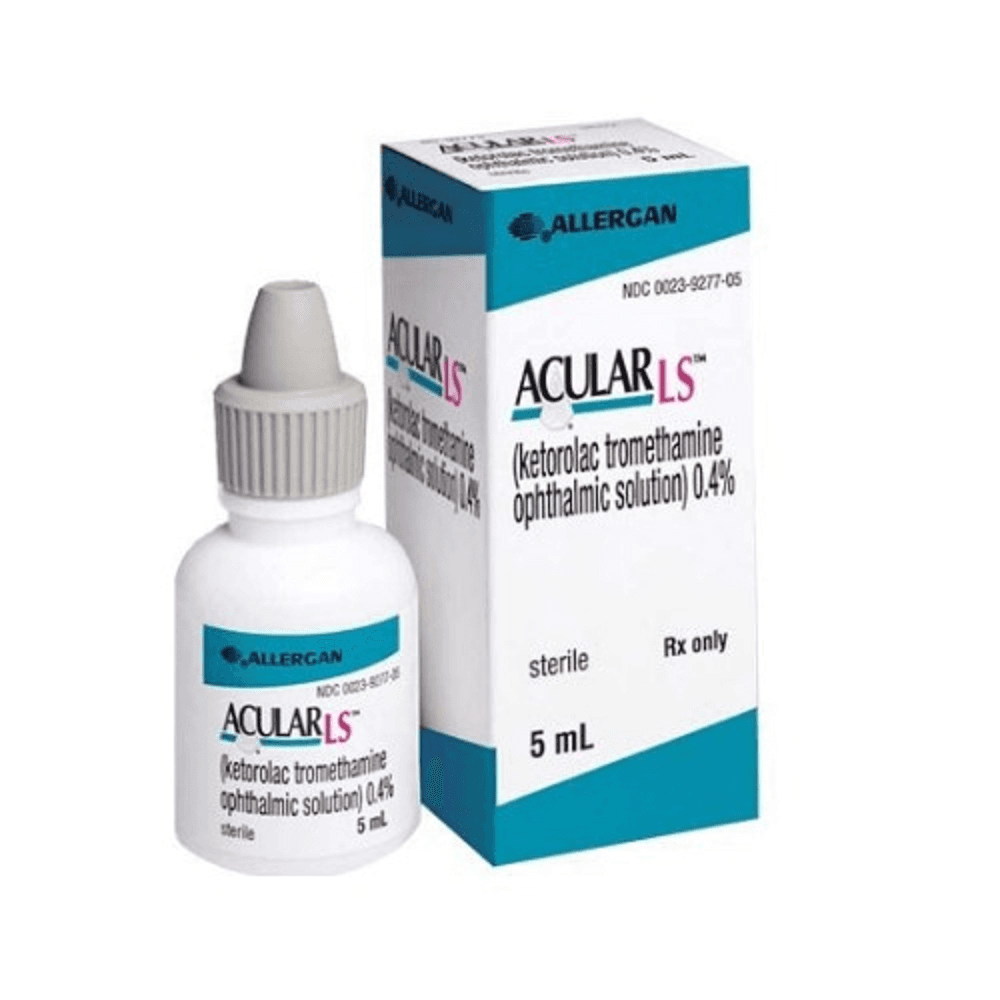
Acular (Ketorolac Tromethamine 0.5%) Eye Drops
Acular is a topical NSAID that gives analgesic and anti-inflammatory cover without steroid effects on intraocular pressure or corneal healing, which makes it a steroid-sparing option when corneal integrity is uncertain. It is a human POM prescribed for dogs off-label under the cascade. It competes directly with diclofenac 0.1% for the same indications; the important caveat is that it must not be paired with Maxitrol, as corneal melts have been reported with that combination.
Where to buy Acular (Ketorolac Tromethamine 0.5%) Eye Drops in UK: we track one retailer, Hyperdrug, and show the price we last observed there; the price you see at checkout may differ.
We may earn a commission on purchases. It never affects our rankings.
£5.15GBP
Isathal (Fusidic Acid 1%) Veterinary Eye Drops
Isathal is the only product here authorised in the UK as a veterinary medicine (POM-V, 10 mg/g fusidic acid, formerly sold as Fucithalmic Vet). It is indicated for conjunctivitis associated with staphylococci, in particular Staphylococcus intermedius, in dogs, cats and rabbits. It belongs on this page as the antibiotic differential rather than as an anti-inflammatory: it treats the bacterial cause of a red eye but does nothing for uveitis or non-infectious inflammation, and it is used on its own precisely to avoid unnecessary broad-spectrum exposure.

Where to buy Isathal (Fusidic Acid 1%) Veterinary Eye Drops in UK: we track one retailer, Vetalia, and show the price we last observed there; the price you see at checkout may differ.
We may earn a commission on purchases. It never affects our rankings.
£6 – £18
Diclofenac Sodium 0.1% Ophthalmic Solution
Diclofenac sodium 0.1% is a topical ophthalmic NSAID with a long track record for post-surgical pain and inflammation, and it is the generic alternative to ketorolac for the same steroid-sparing indications. It is a human POM prescribed for dogs off-label under the cascade. Repeated or prolonged use is the main concern, as topical NSAIDs can delay corneal healing, so it is normally given as a short course under veterinary supervision.

Where to buy Diclofenac Sodium 0.1% Ophthalmic Solution in UK: we track one retailer, Bausch, and show the price we last observed there; the price you see at checkout may differ.
We may earn a commission on purchases. It never affects our rankings.
£5 – £15
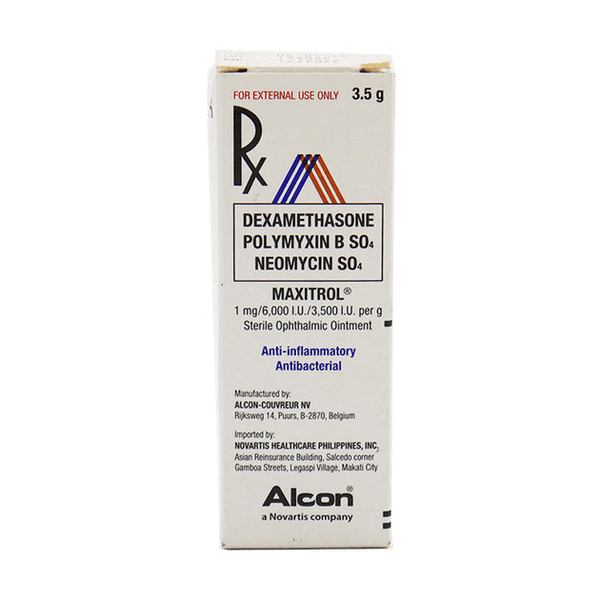
Maxitrol (Dexamethasone, Neomycin, Polymyxin B) Eye Drops
Maxitrol pairs dexamethasone with neomycin and polymyxin B, so it covers inflammation and bacterial infection in a single bottle when both are in play. It is a human POM prescribed for dogs off-label under the cascade. The trade-offs are real: neomycin sensitivity, steroid-related pressure rises, and antibiotic exposure that is unnecessary if the eye is inflamed but not infected. It must not be used alongside ketorolac 0.5% (Acular), and it is contraindicated in viral or fungal infection and where a corneal ulcer has not been excluded.
Where to buy Maxitrol (Dexamethasone, Neomycin, Polymyxin B) Eye Drops in UK: we track one retailer, Bnf, and show the price we last observed there; the price you see at checkout may differ.
We may earn a commission on purchases. It never affects our rankings.
£10 – £25
What the science says about topical ocular anti-inflammatory treatments
Several bodies of clinical and veterinary research support the targeted use of topical anti-inflammatory eye drops in dogs. Steroidal and non-steroidal agents work by different mechanisms to reduce inflammation and pain. Clinical studies and veterinary guidelines emphasize choosing the right class for the diagnosis, monitoring for side effects, and avoiding steroids when corneal ulcers are present without veterinary supervision. Topical delivery achieves high ocular concentrations with minimal systemic absorption, which is why these drugs are often preferred for localized eye disease.
Topical corticosteroids such as prednisolone acetate and dexamethasone effectively control anterior uveitis and post-operative inflammation by inhibiting multiple inflammatory pathways and cellular mediators.
Topical non-steroidal anti-inflammatory drugs (NSAIDs) like ketorolac and diclofenac reduce prostaglandin-driven pain and inflammation and are often selected where steroid use is contraindicated.
Combination steroid-antibiotic products provide both anti-inflammatory and antibacterial coverage and can be appropriate when inflammation coexists with a suspected or confirmed bacterial infection.
Fusidic acid based topical antibiotics are widely used in veterinary ophthalmology for bacterial conjunctivitis and show good activity against common canine ocular pathogens.
Research and guidance stress the importance of diagnosis before treatment: steroids can worsen infectious or non-healing corneal ulcers, so veterinary assessment and, where needed, corneal cytology or culture are recommended.
Topical administration yields high local drug levels and limited systemic exposure, reducing the risk of systemic side effects compared with oral anti-inflammatory medications.
UK veterinary practice trends favor antibiotic stewardship, tailored therapy based on clinical signs, and careful follow-up to adjust treatment where necessary.
Frequently Asked Questions
Can I buy prescription anti-inflammatory eye drops for my dog without seeing a vet?
No. The drops on this list are prescription-only medicines, and a veterinary surgeon must examine the eye first. Steroid drops such as Maxidex, Pred Forte and Maxitrol can worsen an undiagnosed corneal ulcer or infection, so they are dispensed only against a valid prescription from a registered pharmacy or veterinary practice.
Can I order these eye drops from Amazon or a general online shop?
No. Isathal is a POM-V veterinary medicine and the other five are human POM ophthalmic medicines, so none of them can be sold to the public by a general online retailer. They are supplied only by a veterinary practice or a registered pharmacy against a written prescription. Anything sold as a dog eye drop without a prescription is a lubricant or eye wash, not one of these medicines, and will not treat ocular inflammation.
What is the difference between steroid and NSAID eye drops for dogs?
Steroid drops (dexamethasone in Maxidex and Maxitrol, prednisolone acetate in Pred Forte) suppress inflammation strongly but can raise eye pressure and slow corneal healing. NSAID drops (ketorolac in Acular, diclofenac) reduce prostaglandin-driven pain and inflammation without those steroid risks, so vets often choose an NSAID when corneal integrity is uncertain or steroids are contraindicated.
Are any of these eye drops licensed specifically for dogs?
Of the six, only Isathal (fusidic acid 1%, supplied as 10 mg/g) is a UK veterinary-licensed eye preparation for dogs, cats and rabbits, and it is an antibiotic rather than an anti-inflammatory. Maxidex, Pred Forte, Acular, diclofenac and Maxitrol are human ophthalmic medicines a vet may prescribe off-label for a dog under the prescribing cascade when no suitable veterinary product exists.
Conclusion
This UK reference covers six preparations a vet may reach for in canine ocular inflammation: Maxidex (dexamethasone 0.1%), Pred Forte (prednisolone acetate 1%), Acular (ketorolac tromethamine 0.5%), Isathal (fusidic acid 1%), diclofenac sodium 0.1% and Maxitrol (dexamethasone with neomycin and polymyxin B). Each has a distinct role: Pred Forte and Maxidex are steroids for inflammatory control, Acular and diclofenac are non-steroidal, Isathal is an antibiotic for bacterial conjunctivitis, and Maxitrol pairs a steroid with two antibiotics. Which one is appropriate depends entirely on the diagnosis, and that choice belongs to your veterinary surgeon rather than to a comparison list. One combination worth flagging: UK NHS formulary guidance advises against using ketorolac 0.5% (Acular) alongside Maxitrol, because corneal melts have been reported when the two are used together. Ask your vet about dosing, tapering and monitoring — steroid drops in particular need the eye pressure and cornea rechecked — and go back promptly if the eye worsens on treatment rather than adjusting the drops yourself.