

Dog Protective Goggles and Post-Surgery Eye Care in Britain: What Vets Actually Recommend
If your dog has just had eye surgery, the short answer is that goggles are not the right tool: veterinary ophthalmologists recommend a rigid Elizabethan collar as the standard protection after ocular surgery, corneal ulcers and eye injuries. Goggles sit close to the eye and shift easily on the face, which is exactly why specialist eye practices advise against them on fragile or freshly-operated eyes — Doggles' own use guidance is not recommended for fragile eyes or following eye surgery. Soft and inflatable collars are not a substitute either, as they do not protect the ocular area after ophthalmic procedures. Where dog goggles genuinely earn their place is everything around the surgery rather than the surgical site itself: blocking UV, wind, dust and pollen once your vet confirms the eye has healed, and managing long-term UV-sensitive conditions such as pannus (chronic superficial keratitis), where ophthalmologists do recommend UV protection. If your dog will not tolerate a cone at all, ask your vet about a visor-style guard such as the Optivizor rather than reaching for goggles on your own. This guide compares five goggle options sold across British retailers, and is clear about what each one can and cannot do during recovery. Always follow your own vet's instructions over any product page, including this one.
Inception's AI took the time to understand this market in the UK · We may earn a commission on purchases. It never affects our rankings.
Top Picks Summary
Doggles ILS Protective Eyewear for Dogs
Doggles ILS are the long-standing all-rounder in dog eyewear: a soft foam seal, adjustable straps with side buckles, and clear shatterproof lenses, backed by wide UK availability and easy replacement. Note what they are not for — specialist veterinary eye practices list Doggles as not recommended for fragile eyes or following eye surgery, because the close seal contacts eyelid skin and the goggles shift on the face. Use the Elizabethan collar your vet provides for a healing surgical site, and bring Doggles in afterwards for UV, wind and debris protection. Against budget models like QUMY or Enjoying they offer a better seal and more consistent sizing; against Rex Specs they are cheaper and easier to fit, but less rugged.
QUMY Dog Goggles UV Protection Sunglasses
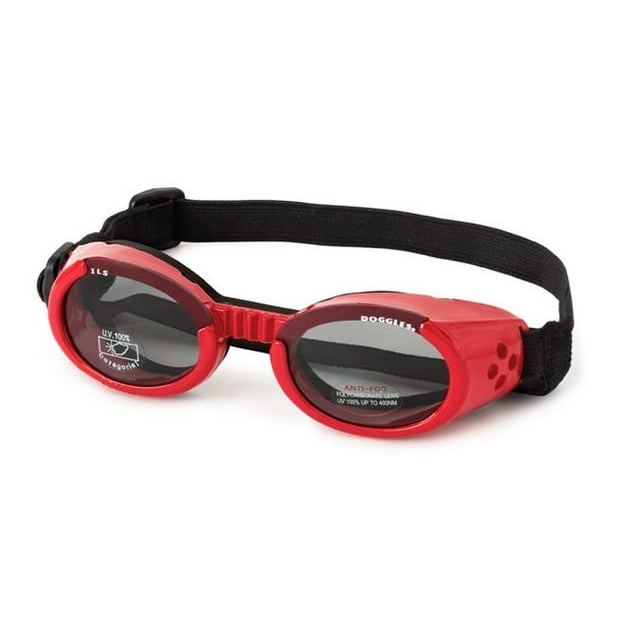
QUMY Dog Goggles are a budget-friendly choice offering adjustable straps and UV-protective lenses, practical for short outdoor trips when cost is the primary concern. They lack the reinforced seals and impact-rated polycarbonate of Doggles or Rex Specs, but their low price and wide UK availability make them a sensible occasional or travel option. They are not suitable for protecting a healing surgical site — that requires the Elizabethan collar your vet provides.

Enjoying Dog Goggles UV Protective Sunglasses
Enjoying Dog Goggles balance affordability with comfort features such as padding and anti-fog coatings, making them a solid mid-low cost option for dogs that need gentle protection from sun and wind. They are generally better ventilated than the cheapest models like QUMY, but fall short of the sealing and lens toughness of Doggles ILS or Rex Specs. Like all goggles here, they are not a post-surgical device.

Namsan Pet Dog Goggles UV Sunglasses
Namsan Pet Dog Goggles are a mid-range option with adjustable straps and tinted lenses offering glare reduction and UV protection, sitting between low-cost imports and premium protective brands. They are lighter than Doggles ILS or Rex Specs, which suits small dogs and everyday outdoor wear, but they do not match the seal quality or lens toughness of either. They are not a substitute for an Elizabethan collar after eye surgery.
Rex Specs Dog Goggles V2
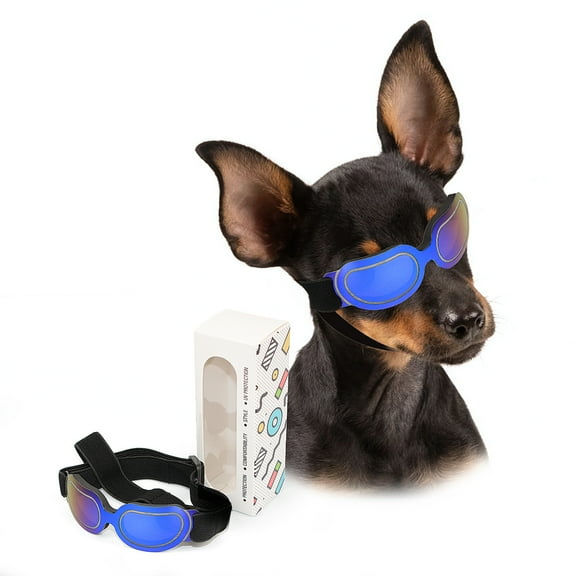
Rex Specs V2 are the most robust goggles here, built around a single spherical shatter-resistant polycarbonate lens, replaceable foam seals, a vented frame that limits fogging and drains after water use, and a dynamic strap system that stays put on active dogs. Rex Specs state that every lens, clear ones included, blocks 99.9% of UVA and UVB, which is the UV protection veterinary ophthalmologists recommend for dogs with pannus (chronic superficial keratitis) — the condition that prompted the brand's founders to develop them. They command a premium over mass-market models, and that buys impact resistance and long-term serviceability rather than any post-surgical capability: a healing surgical site still needs the Elizabethan collar your vet provides.

The goggles compared here are distinguished by polycarbonate lenses that block roughly 99.9% of UVA and UVB, anti-fog coatings suited to British weather, secure adjustable straps that resist slippage on active dogs, soft interior seals that reduce irritation during extended wear, and sizing ranges covering both toy breeds and large working dogs. None of them are post-surgical devices — that job belongs to the Elizabethan collar your vet provides.
Understanding Canine Eye Protection During Medical Recovery
Protection after eye surgery and protection during everyday life are two different jobs, and the same product rarely does both. For the surgical site itself, the rigid Elizabethan collar remains the classic device used after ocular surgery, corneal ulceration and eye injury, because it keeps paws and furniture away from the eye without touching it. Goggles do the opposite — they rest against eyelid skin and can be nudged out of place, so specialist eye practices advise against them following eye or eyelid surgery. Once your vet confirms healing is complete, goggles become useful for their real strengths: shielding eyes from UV, wind, dust and debris, and providing the ongoing UV protection ophthalmologists recommend for dogs with pannus or other UV-sensitive conditions.
An Elizabethan collar, not goggles, is the device vets recommend to protect a healing surgical site or corneal ulcer
Goggles sit against eyelid skin and shift on the face, which is why eye specialists advise against them on fragile or post-surgical eyes
Soft and inflatable recovery collars do not protect the ocular area after ophthalmic procedures either
A visor-style guard such as the Optivizor is the alternative to ask your vet about if your dog will not tolerate a cone
Polycarbonate lenses block roughly 99.9% of UVA and UVB, which is the protection ophthalmologists recommend for dogs with pannus
Adjustable strap systems accommodate different head shapes and sizes across diverse British dog breeds
Anti-fog lens coatings help maintain clear vision in Britain's damp climate during outdoor wear
Easy-clean surfaces simplify hygiene maintenance, and lightweight construction encourages acceptance rather than anxiety
Frequently Asked Questions
Can dog goggles replace the cone after my dog's eye surgery?
No. Veterinary ophthalmologists recommend a rigid Elizabethan collar as the standard protection following ocular surgery, corneal ulcers and eye injuries. Goggles sit against eyelid skin and shift easily on the face, so eye specialists advise against them following eye or eyelid surgery, and Doggles' own guidance is not recommended for fragile eyes or following eye surgery. Soft and inflatable collars do not protect the ocular area after ophthalmic procedures either. A further practical advantage of the collar is that it does not have to be removed to give eye medication. If your dog will not tolerate a cone, ask your vet about a visor-style guard such as the Optivizor.
Should I choose Doggles ILS for post-surgery recovery?
Not for the surgical site itself — specialist eye practices list Doggles as not recommended for fragile eyes or following eye surgery, so use the Elizabethan collar your vet provides instead. Doggles ILS are a reasonable all-round choice for UV, wind and debris protection once your vet confirms the eye has healed, with a soft foam seal, adjustable straps and wide UK availability at around £30-50. They are rated 4.5 by owners.
What lens and seal features does Doggles ILS include?
Doggles ILS use a soft foam seal that cushions the eye area, adjustable elastic straps with side buckles for a customisable fit, and clear shatterproof lenses. They are rated 4.5 by owners. Note that the close-fitting seal is the reason eye specialists advise against goggles on post-surgical eyes — it contacts eyelid skin.
Are QUMY dog goggles good value compared with Doggles ILS?
QUMY Dog Goggles are budget-friendly at around £8-15, with UV400 lenses, a lightweight frame and foam trim, and are rated 4.1. They suit short or occasional outdoor wear. Doggles ILS cost more at around £30-50 but offer a better seal and wider sizing support. Neither is suitable for protecting a healing surgical site.
Conclusion
The honest summary: none of the goggles below should replace the Elizabethan collar your vet sends home after eye surgery, and none of them are a treatment for any eye condition. Their value is UV, wind and debris protection once the eye has healed, and long-term UV management for conditions such as pannus. Of the five, Rex Specs V2 are the most robust, with shatter-resistant polycarbonate lenses, replaceable foam seals and a vented frame with a dynamic strap system that stays put on active dogs. Doggles ILS are the long-standing all-rounder with wide UK availability and easier sizing at a lower price. QUMY, Enjoying and Namsan are inexpensive UV goggles suited to short or occasional outdoor wear rather than sustained protection. Cross-reference any choice against your vet's specific instructions, particularly on when your dog's eye is healed enough to wear anything at all. If you need to filter by breed size or lens type, our search functionality allows you to narrow results accordingly.