

Complete 2025 UK Aquascaper's Handbook: Five Essential Ground-Cover Plants for Thriving Freshwater Setups — Professional Recommendations for Compact and Nano Aquariums
Published on Thursday, 21 August 2025
Creating a verdant, naturalistic substrate in your freshwater aquarium requires thoughtful plant selection and understanding how different species establish themselves. Ground-covering aquatic plants and mosses have become fundamental to modern British aquascaping, particularly for those working with limited space or seeking to establish biologically enriched environments for invertebrates and juvenile fish. This comprehensive guide explores five outstanding options that excel under typical UK tap water conditions and moderate lighting setups commonly found in British homes. Each plant offers distinct aesthetic qualities—from delicate, feathery textures to dense, carpet-like formations—whilst remaining forgiving for both newcomers and seasoned hobbyists. British aquarists appreciate plants that combine visual impact with minimal maintenance demands, reliable sourcing from established retailers, and proven compatibility with standard equipment. Whether you're establishing your first nano tank or refining an existing aquascape, understanding these plants' individual characteristics, growth patterns, and environmental preferences will help you make informed decisions that result in thriving underwater gardens. We've selected each specimen based on performance data, availability through UK suppliers, and genuine user feedback from the British aquascaping community.
Top Picks Summary
Tropica Taxiphyllum barbieri (Java Moss)
Tropica Taxiphyllum barbieri (Java Moss) earns its place as the go-to starter moss for the 2025 British nano-tank scene thanks to unmatched hardiness and budget-friendly availability—ideal for shrimp tanks, driftwood wrapping and low-tech setups. Compared with fussy carpets like HC Cuba or Monte Carlo, Java Moss demands far less light and no CO2, making it the financially sensible and technically simple option for hobbyists converting a small tank into a lush micro-ecosystem. Its forgiving nature complements the more demanding species on this list, offering fast visual payoff while you learn trimming and attachment techniques.

Tropica Hemianthus callitrichoides 'Cuba' (HC Cuba)
Tropica Hemianthus callitrichoides 'Cuba' (HC Cuba) remains the premier choice when the goal is a pristine, lawn-like carpet in a 2025 British nano aquarium, prized for its tiny leaves and dense, low-growing habit that creates that coveted carpet aesthetic. It is technically demanding—requiring strong light, stable CO2 and careful maintenance—so while it outperforms others visually, it carries higher running costs and a steeper learning curve than hardier options like Java Moss or Monte Carlo. For aquascapers seeking showpiece results, HC Cuba is the investment choice; for everyday low-tech tanks, one of the other species will usually be more practical.
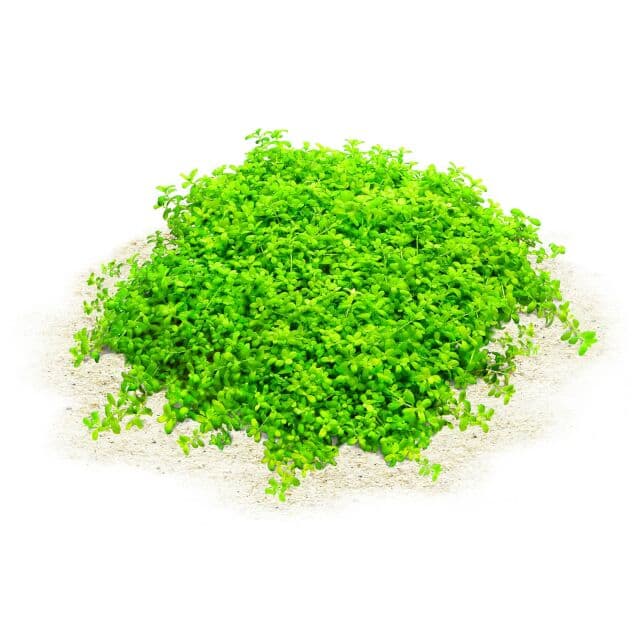
Tropica Eleocharis acicularis 'Mini'
Tropica Eleocharis acicularis 'Mini' is the top pick for creating a fine, grassy foreground in nano tanks, offering a striking vertical carpet that blends the toughness of traditional hairgrass with finer leaves suited to small aquaria. It sits between HC Cuba and Java Moss technically—needing moderate to strong light and benefit from CO2 for fast spread, yet generally establishing more reliably than HC Cuba and producing a different vertical texture that photographers and shrimp keepers appreciate. Financially it’s middle-of-the-road: slightly more demanding than Java Moss but often faster to fill in than HC Cuba, giving good aesthetic return for the care invested.

Dennerle Riccardia chamedryfolia (Coral Moss)
Dennerle Riccardia chamedryfolia (Coral Moss) is a specialist choice in this 2025 British guide for aquarists who want delicate, fern-like fronds that create a textured, mossy overlay on rock and wood—an elegant alternative to classic Java Moss. It combines the visual intricacy of HC Cuba with lower light and CO2 needs, making it technically friendlier than true carpets while still commanding a niche price for its distinctive look and somewhat slower growth. Use Riccardia where you want fine detail without the intense maintenance of the most demanding carpets, or to complement bolder foregrounds like Monte Carlo or Eleocharis 'Mini'.

Tropica Micranthemum 'Monte Carlo'
Tropica Micranthemum 'Monte Carlo' is the market-leader carpet alternative for 2025 British nano tanks that balances attractive carpeting with practical care requirements—tolerant of lower light and able to carpet without mandatory CO2 supplementation in many setups. Compared with high-maintenance HC Cuba it is more forgiving and quicker to establish, while offering a much more carpet-like look than Java Moss; financially it represents strong value for aquarists wanting lush coverage without premium running costs. Monte Carlo’s adaptability makes it the sensible first-choice carpet for new and intermediate hobbyists aiming for a cohesive nano scape.

These five plants represent the most reliable performers currently stocked by UK suppliers. Each combines visual distinction with practical hardiness, thrives under standard British household conditions, and delivers excellent value. They're proven favorites among hobbyists managing everything from starter 20-litre tanks to sophisticated planted displays.
Essential Knowledge for UK Aquarists
Understanding the fundamentals of substrate planting and moss establishment ensures your ground cover achieves its visual and biological potential.
Substrate preparation directly influences carpet plant establishment—use nutrient-enriched substrates or root tabs beneath standard gravel for optimal results
Lighting intensity matters: most ground-cover plants require 8-10 hours daily under quality LED fixtures; standard shop lights often prove insufficient
Water column fertilisation complements substrate nutrients, particularly in established tanks with established fish bioload
Moss attachment requires patience—allow 3-4 weeks for rhizoids to secure before repositioning; use fishing line or plant weights initially
Carpet plants spread through runners and fragmentation; pruning encourages lateral growth and denser coverage
CO2 supplementation accelerates growth significantly but remains optional for hardy species under moderate lighting
British tap water typically contains beneficial minerals; most ground-cover plants adapt well without extensive parameter adjustment
Avoid sudden changes to lighting or nutrient levels; gradual adjustments minimise algae blooms and plant stress
Regular maintenance—removing dead matter, thinning dense sections—prevents anaerobic conditions and maintains aesthetic appeal
Compatibility with aquatic life: mosses and carpet plants provide excellent refuge for shrimp, fry, and beneficial microorganisms
Frequently Asked Questions
Which plant should I choose for a shrimp nano tank?
Choose Tropica Taxiphyllum barbieri (Java Moss) with its 4.7 rating; it’s described as very tough and adaptable, clings to wood/rock/ornaments, and provides shrimp shelter for low-tech setups.
How does HC Cuba achieve a dense carpet effect?
Tropica Hemianthus callitrichoides 'Cuba' (HC Cuba) forms an ultra-dense, compact carpet when given high light and CO2, with an average rating of 4.3; its small leaves need regular trimming to stay uniform.
Is Java Moss better value than HC Cuba for beginners?
The data only lists ratings (Java Moss 4.7; HC Cuba 4.3) and features, not prices; Java Moss is positioned as low maintenance for beginners, while HC Cuba needs high light/CO2 and consistent fertilisation.
Which plant tolerates low light and wide water parameters best?
Tropica Taxiphyllum barbieri (Java Moss) is the standout for low to high light and tolerance of a wide range of water parameters, with an average rating of 4.7; it also naturally attaches to wood, rock and ornaments.
Conclusion
The five plants featured here represent the pinnacle of what's currently available to UK aquarists seeking sustainable, attractive ground cover solutions. Each brings something distinctive to the table—whether that's bulletproof reliability, striking visual contrast, or specialist capabilities for particular aquascaping styles. Java Moss stands as the reliable workhorse, thriving in conditions that would challenge lesser plants and offering flexibility for beginners experimenting with their first layouts. Christmas Moss introduces elegant texture and height variation, perfect for creating layered visual interest. The carpet-forming specialists deliver the lush, manicured appearance that contemporary aquascapers pursue, transforming bare substrate into living green expanses. Whichever you select, success depends on matching plant requirements to your actual setup—water parameters, lighting intensity, substrate composition, and maintenance commitment all play crucial roles. We recommend consulting plant-specific care sheets, connecting with local British aquascaping groups for region-specific advice, and sourcing from reputable UK distributors who guarantee plant health upon arrival. Your aquarium's aesthetic journey begins with these foundational choices.