

Concentrate and Grain Feeds for Horses — Top 7 in the UK for 2026
Concentrate and grain feeds remain the backbone of many British feeding programmes for ridden, competing and breeding horses. In the UK climate, where haylage, variable pasture quality and long winter stables are part of the calendar, owners balance the need for reliable, digestible calories with a rising interest in low-starch, gut-friendly blends. Buyers increasingly choose feeds that deliver steady energy through fibre and oil rather than large sugar and starch spikes, together with targeted supplements for hindgut resilience and metabolic health. Practical priorities include matching starch and sugar levels to metabolically sensitive animals, ensuring high-quality protein for muscle repair, and using added functional ingredients such as live yeasts, MOS and protected fats to support digestion. Regional realities matter: Scottish winter grazing and Welsh haylage densities can change concentrate rations, while northern turnout and southern sandy soils affect pasture energy. Trainers and event riders often prefer textured mixes or energy-dense pellets to maintain condition during heavy work, while pleasure riders and broodmare managers favour lower-starch or gut-focused formulations. Wherever your yard is located, begin with a forage analysis, calculate target daily DE, and feed to condition score rather than simply volume. This guide looks beyond brand names to practical considerations, covering mixing tips, safe transitions between rations, recommended daily feeding rates for working versus leisure horses, and when to call a nutritionist or vet. It also profiles the feeds compared on this page — Baileys No.19 Performance Balancer, Dengie Alfa-A Oil, TopSpec Comprehensive Feed Balancer, Dodson & Horrell Safe & Sound, Saracen Re-Leve Mix, Spillers Ulca Fibre and Blue Chip Super Concentrated Balancer — to help you match a product to workload, age and metabolic status.
Inception's AI took the time to understand this market in the UK · We may earn a commission on purchases. It never affects our rankings.
Top Picks Summary
Baileys No.19 Performance Balancer
Baileys No.19 Performance Balancer is a low-starch, high-protein balancer for competition and performance horses, fed in a small daily serving to supply quality amino acids, vitamins and minerals without unwanted calories. Compared with the bulkier feeds in this list it lets you build topline and support recovery on a forage-based ration, and because a little goes a long way it can be more cost-effective than adding several separate supplements. Its low starch and sugar also make it a sensible choice for excitable or ulcer-prone horses in work.

Where to buy Baileys No.19 Performance Balancer in UK: the trusted retailers we track in this market, with the best price we have observed at each. Prices are checked regularly and can change, and the retailer confirms the final price at checkout.
We may earn a commission on purchases. It never affects our rankings.
£34.99GBP
Dengie Alfa-A Oil
Dengie Alfa-A Oil is a low-starch, high-oil fibre feed designed to provide calm, sustained energy and support gut resilience — ideal for horses needing a non-starch calorie boost for performance or weight maintenance. Technically it stands out from cereal-based feeds by converting calories to easily digestible fat, which can be more economical per megajoule than feeding large volumes of hard feed and is gentler on insulin- and laminitis-prone horses compared with higher-starch cubes.
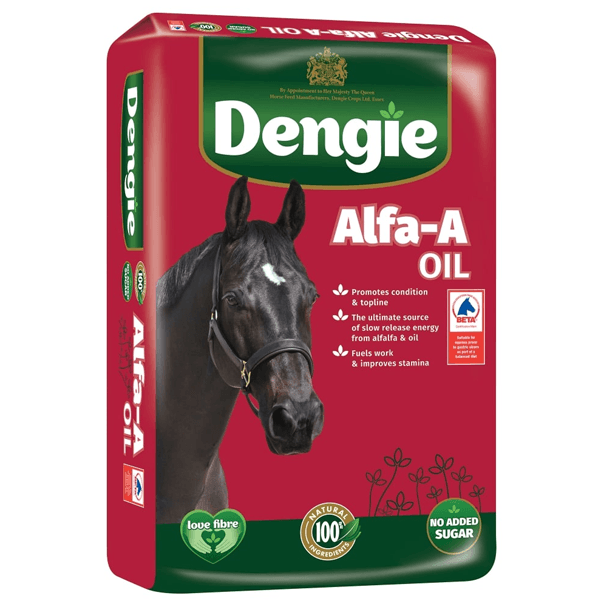
Where to buy Dengie Alfa-A Oil in UK: we track one retailer, Brilliantsave, and show the price we last observed there; the price you see at checkout may differ.
We may earn a commission on purchases. It never affects our rankings.
£30 – £40
TopSpec Comprehensive Feed Balancer
TopSpec Comprehensive Feed Balancer supplies concentrated vitamins, minerals and essential amino acids so owners can feed forage as the base and top up with a minimal dry feed, making it a budget-smart solution for maintaining condition and performance. Compared to full-strength performance feeds on this list it is technically and financially efficient because smaller daily volumes deliver a complete nutrient package, reducing overall feed costs and starch load while still supporting competition demands when paired with suitable energy sources.

Where to buy TopSpec Comprehensive Feed Balancer in UK: we track one retailer, eBay, and show the price we last observed there; the price you see at checkout may differ.
We may earn a commission on purchases. It never affects our rankings.
£40 – £55
Dodson & Horrell Safe & Sound
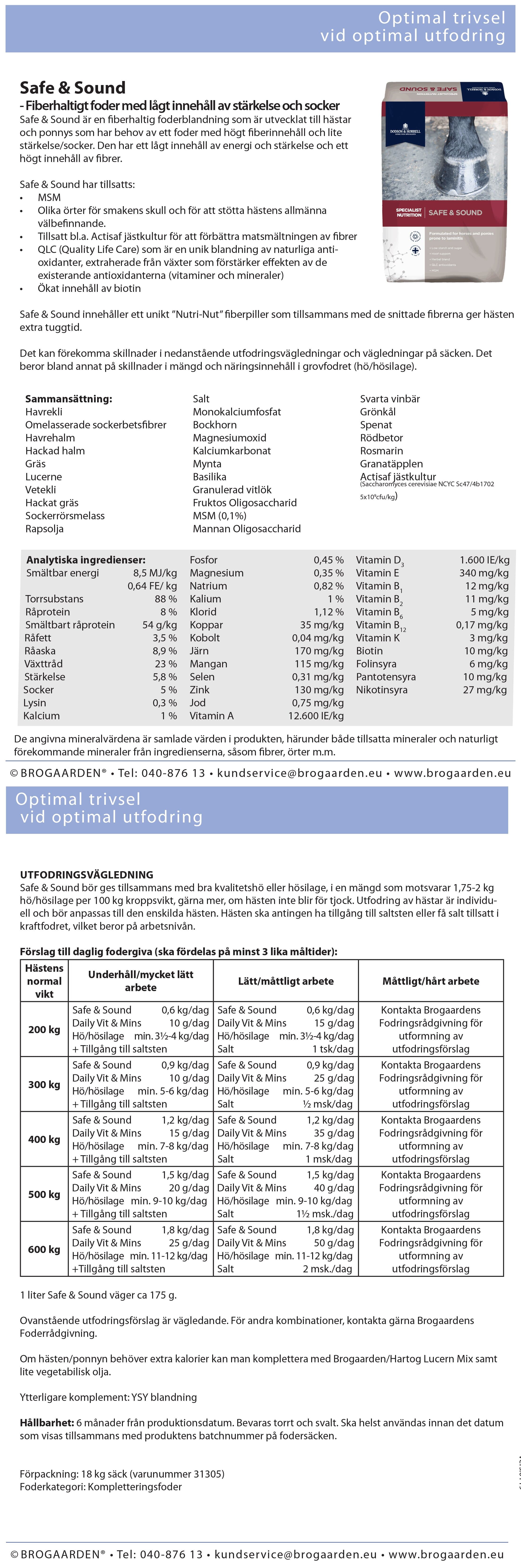
Dodson & Horrell Safe & Sound is a low-starch, high-fibre feed formulated specifically for nervous, metabolic- or laminitis-prone horses to support calm behaviour and gut health. In contrast to high-energy cubes, its technical advantage lies in gut-friendly fibres and controlled sugar/starch that can lower vet and management costs associated with metabolic issues while still supplying essential nutrients for light performance or rehabilitation.
Saracen Re-Leve Mix
Saracen Re-Leve Mix is a cereal-free, controlled-starch performance mix developed with Kentucky Equine Research for horses that react badly to cereals — particularly those prone to tying-up (PSSM/RER) or gastric ulcers. Instead of grain, it draws energy from super-fibres and oil, so working horses can hold condition and work without the excitability and muscle problems linked to high-starch diets. It commands a premium over general-purpose mixes, but for horses with these specific needs it targets a role the other feeds here do not.
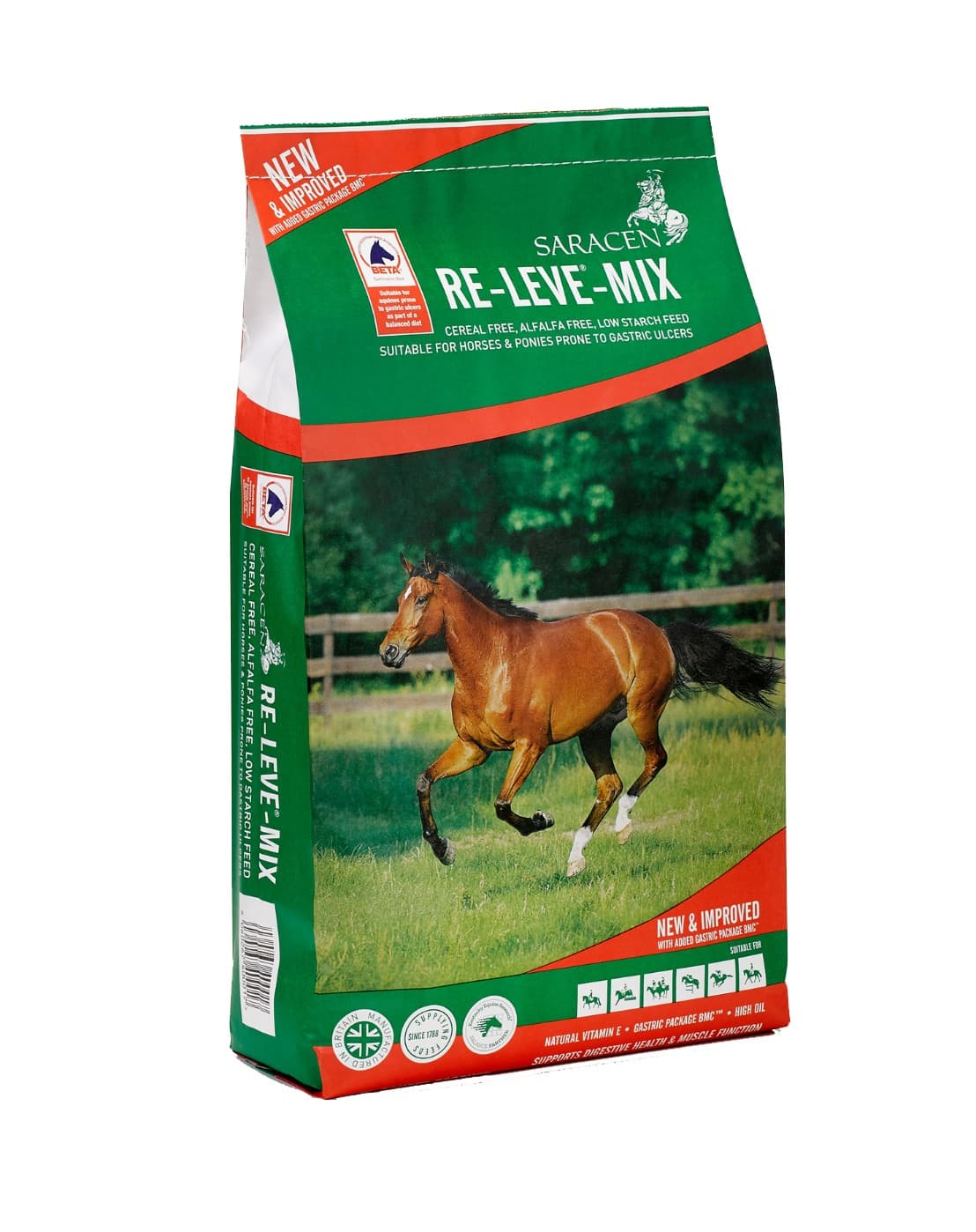
Where to buy Saracen Re-Leve Mix in UK: we track one retailer, eBay, and show the price we last observed there; the price you see at checkout may differ.
We may earn a commission on purchases. It never affects our rankings.
£25 – £45
Spillers Ulca Fibre
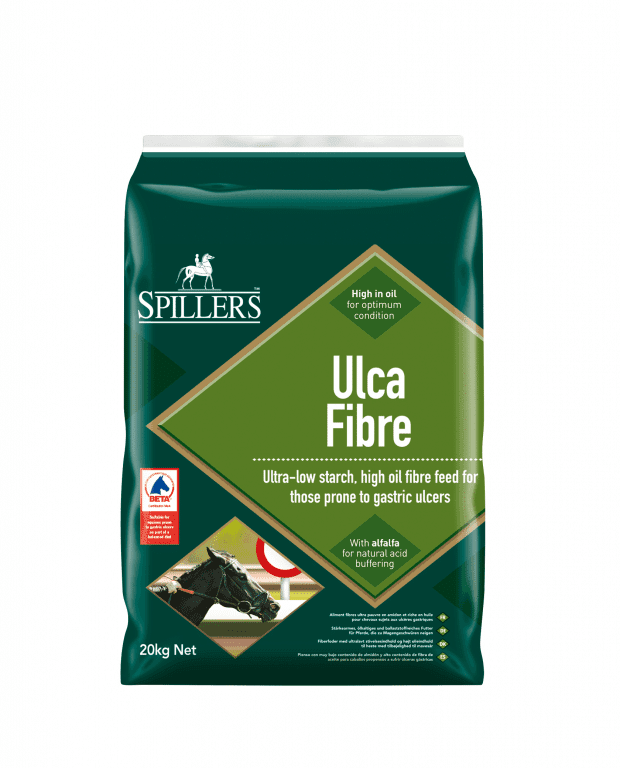
Spillers Ulca Fibre is a dependable, widely stocked high-fibre feed prized for gentle digestion and value for money. Low in starch and sugar, it provides bulk and gut-friendly fibre while delivering essential micronutrients, making it a practical, economical choice for good-doers and metabolic horses when specialist precision is not required. Against the more targeted mixes here it trades bespoke formulation for broad availability and lower cost.
Blue Chip Super Concentrated Balancer
Blue Chip Super Concentrated Balancer is a very low-volume, nutrient-dense balancer that delivers vitamins, minerals and amino acids in small feed rates — ideal for easy keepers or horses on restricted starch diets. Financially it is attractive because the small daily feed rate stretches each bag further than bulk concentrates, and technically it reduces starch exposure better than standard cubes while still covering micronutrient requirements for performance and gut health.
Where to buy Blue Chip Super Concentrated Balancer in UK: we track one retailer, eBay, and show the price we last observed there; the price you see at checkout may differ.
We may earn a commission on purchases. It never affects our rankings.
£35 – £50
What research and practice say about feed supplements and gut health
A growing body of research and field trials supports the move toward lower-starch, higher-fibre and targeted functional supplements for many UK horses. Studies and industry research show that reducing non-structural carbohydrates can lower the risk of insulin dysregulation and laminitis in susceptible animals, while additional oil and soluble fibre provide steady calories for performance without excess glycaemic response. Prebiotics, protected fats and specific yeast strains have been associated with improved hindgut fermentation, more stable manure consistency and quicker recovery after dietary change. Balanced balancer feeds that supply vitamins and minerals without excess calories help maintain condition and bone health, especially when forage alone does not meet micronutrient targets.
Low-starch approaches: Reducing dietary starch and sugar lowers post-prandial glycaemic and insulinaemic peaks, which is important for managing insulin-dysregulated horses.
Fibre and fat for steady energy: Oils and fermentable fibre provide slow-release energy suited to sustained work and help avoid energy crashes.
Functional ingredients: Live yeasts, MOS and protected fats support stable hindgut fermentation, nutrient absorption and appetite in stressed or travelling horses.
Balancers and micronutrients: Concentrated balancer feeds provide essential vitamins and minerals without excess calories and are useful when feeding high-forage, low-concentrate rations.
Practical feeding: Forage analysis, gradual transitions over 7 to 14 days, and feeding to condition score are consistently recommended by veterinarians and nutritionists.
Frequently Asked Questions
Which feed suits competing horses without adding starch?
Baileys No.19 Performance Balancer is a low-starch (around 6%), high-protein (26%) balancer fed in a small daily scoop, so it tops up protein, vitamins and minerals for ridden and competing horses without unwanted calories. It's rated 4.4 and is well suited to excitable or ulcer-prone types.
What does Dengie Alfa-A Oil claim about starch levels?
Dengie Alfa-A Oil is a chopped alfalfa fibre feed with added oil, low in sugar and starch, giving slow-release, non-heating calories for condition and coat. It's rated 4.3 and is marketed as suitable for laminitis- and ulcer-prone horses.
How is TopSpec Comprehensive Feed Balancer priced for value?
A 15kg bag commonly sells for somewhere between roughly £35 and £50 in the UK depending on the retailer, so it pays to compare before ordering. Rated 4.4, it's a low-calorie balancer that tops up forage with vitamins, minerals and amino acids, so small daily amounts can replace bulkier hard feed and reduce overall cost.
Is TopSpec Comprehensive Feed Balancer meant for all life stages?
Yes — TopSpec Comprehensive Feed Balancer is designed to balance forage-based diets for most horses and ponies from maintenance to moderate work. Rated 4.4, it's fed as a small daily top-up rather than a bulk feed for condition and performance.
Conclusion
We hope this guide helped you understand practical priorities for horse feed supplements in the UK and pointed you toward products that match different needs. The market-leading options covered here include Baileys No.19 Performance Balancer, Dengie Alfa-A Oil, TopSpec Comprehensive Feed Balancer, Dodson & Horrell Safe & Sound, Saracen Re-Leve Mix, Spillers Ulca Fibre and Blue Chip Super Concentrated Balancer. For most yards seeking an all-round solution to balance forage and concentrate calories while covering micronutrients, the TopSpec Comprehensive Feed Balancer is a strong choice as the best overall option on this page because it simplifies rationing without adding excess energy. If you need a performance cube, condition aid, gut-specific mix or high-fibre support, the other named products each serve a clear role. If you did not find exactly what you wanted, you can refine or expand your search using the search function. Good luck selecting the right feed for your horse.