

Best Hyaluronic Acid Joint Supplements for Horses in the UK 2025 — Oral HA for Synovial Fluid and Mobility Support
Hyaluronic acid (HA) is one of the most widely sold feed-supplement ingredients for equine joint support in the UK, though the evidence base for oral HA is thinner than for injectable sodium hyaluronate given by a vet. Fed daily in powder, liquid or paste form, oral HA is marketed to support the viscosity and cushioning properties of synovial fluid; how much of a fed dose actually reaches the joint is still debated. British horse owners—whether managing competition animals, leisure mounts, or veteran horses approaching their later years—commonly use these formulations as one part of a wider joint care plan. The market offers considerable variety in terms of delivery method (powder, paste, pelleted form), potency levels, supporting ingredients (such as omega-3 fatty acids, MSM, and chondroitin), and price point. Selection often depends on individual horse circumstances: breeding lines predisposed to joint challenges, seasonal competition schedules, and whether the animal requires preventative maintenance or active therapeutic support. UK-based owners value transparency in sourcing, clear administration instructions, feed-assurance accreditation such as BETA NOPS or UFAS, and ready availability through established distributors. This guide compares five formulations sold to UK owners, each distinguished by potency, ingredient mix, format, or price per day.
Inception's AI took the time to understand this market in the UK · We may earn a commission on purchases. It never affects our rankings.
Top Picks Summary
TRM Synnovate Joint Supplement
This entry pairs a hyaluronic acid base with co-nutrients aimed at synovial lubrication and long-term joint maintenance, with dosing set out clearly on the label. Against the other entries it sits in the lower half of the price range while still offering a multi-ingredient formula, which makes it a practical pick for owners who want daily maintenance support without a premium price.

Science Supplements FlexAbility Premium
Science Supplements builds its joint range around a broad multi-nutrient formula rather than a single active, combining hyaluronic acid with other joint nutrients and antioxidants. It sits at a mid-to-premium price point with smaller measured servings, which can work out more economical per milligram of active ingredient than bulk liquid or paste formats.
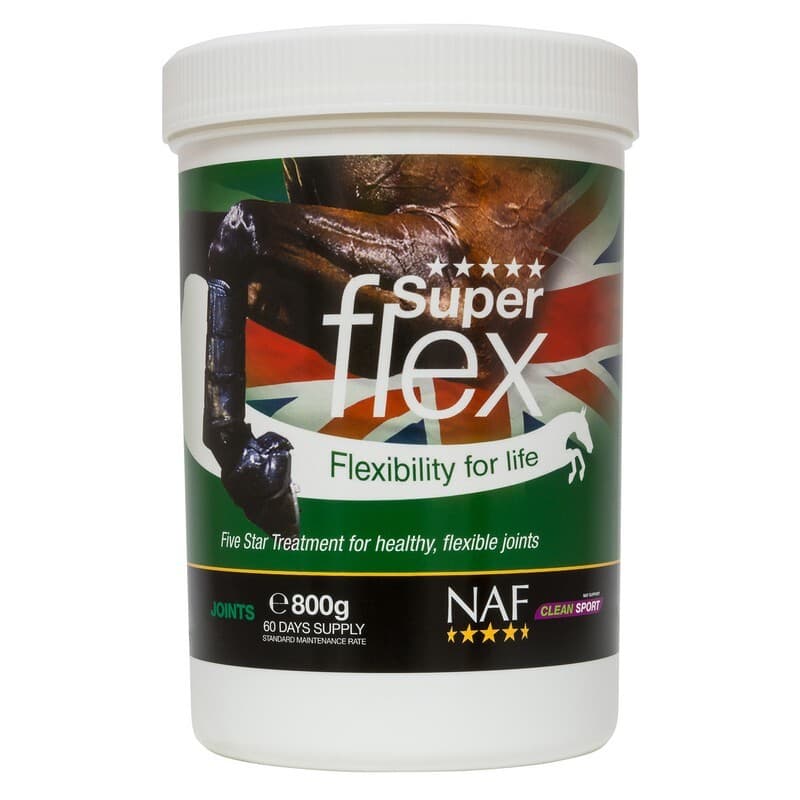
NAF Superflex 5 Star
NAF's Five Star Superflex is one of the longest-established joint supplements on the UK market, using a multi-ingredient approach rather than a single active, and it is stocked by most UK equestrian retailers. It is priced above simpler HA-only supplements, but the breadth of the formula and its wide availability make it an easy all-in-one option for owners who do not want to build a stack from several products.
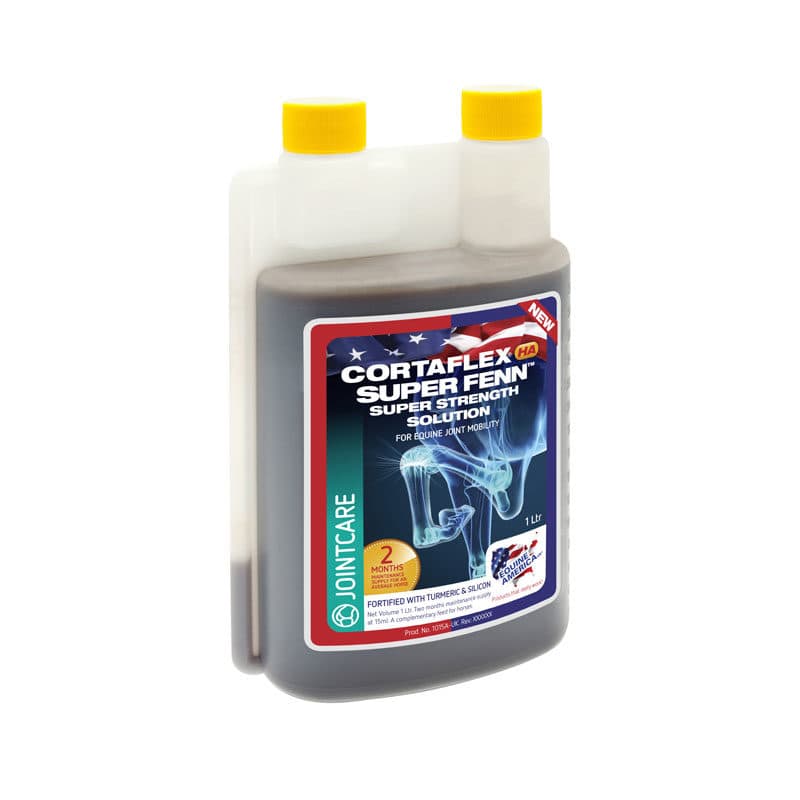
Equine America Cortaflex HA Super Fenn Paste
The Cortaflex HA Super Fenn range delivers hyaluronic acid alongside collagen, amino acids and trace elements, and this format is aimed at owners who want a measured individual dose rather than a scoop in the feed. Compared with the powders and liquids here it costs more per day, but the fixed dose is useful for horses that pick around their feed or are away from home.
Global Herbs SuperFlex Liquid
Global Herbs SuperFlex Liquid is rated highly for its practical liquid format that makes daily administration straightforward, especially for multiple horses, and for offering a cost-effective maintenance option with consistent HA delivery. It typically represents the best value-per-serving for long-term synovial support compared with paste and premium powder competitors, though owners should weigh convenience and price against concentration differences when choosing between formats.

These supplements cover distinct owner priorities: high-potency formulations for horses in hard work, economical powders for budget-conscious yards, multi-ingredient blends addressing several joint pathways at once, and measured liquid or paste doses for horses that are fussy about feed. Each product is assessed on format, ingredient transparency, daily cost, and availability from UK retailers.
Understanding Oral Hyaluronic Acid for Equine Joint Support
Hyaluronic acid is a natural structural component of synovial fluid, the lubricating substance surrounding equine joints. Oral HA supplements aim to support that fluid's viscosity so it cushions and lubricates joint surfaces during movement. The science underpinning oral HA supplementation is still developing: absorption efficiency varies with molecular weight, processing method, and individual digestive factors, and manufacturers do not agree on which molecular weight performs best. HA is commonly fed as one element of a wider joint care plan for performance horses, breeding stock, or animals showing early signs of stiffness — a plan that should be agreed with your own vet. Complementary ingredients such as glucosamine, chondroitin, MSM, and omega-3 fatty acids often feature in the same formulations. Dosage consistency matters; most manufacturers advise 4-12 weeks of uninterrupted daily feeding before judging the result. Horses in hard work may be fed higher-potency formulas, whilst maintenance-focused owners often find standard-strength powders adequate.
Synovial fluid viscosity: HA is a natural component of joint fluid and contributes to its thickness and shock absorption
Molecular weight: products range from low- to high-molecular-weight sodium hyaluronate and manufacturers disagree on which absorbs best
Complementary ingredients: glucosamine, chondroitin, and MSM commonly appear alongside HA in UK joint supplements
Administration timing: consistent daily dosing yields better results than irregular or sporadic supplementation
Bioavailability factors: individual horse digestion, feeding routine, and gastrointestinal health influence absorption rates
Performance context: competition horses, breeding animals, and seniors are the groups most often supplemented
Veterinary collaboration: professional guidance ensures HA supplements integrate appropriately with existing joint care strategies
Timeline expectations: manufacturers typically advise 4-12 weeks of daily feeding before assessing any change
Regulatory status: oral HA products are complementary feeds, not licensed medicines — injectable hyaluronic acid is a prescription-only veterinary medicine given by a vet
Cost-effectiveness: powder formulations generally offer better value per day than paste alternatives with equivalent potency
Frequently Asked Questions
Does oral hyaluronic acid actually work for horses?
The evidence is limited and mixed. Hyaluronic acid is unquestionably a component of healthy synovial fluid, but published work on feeding it by mouth to horses is small-scale and inconsistent, and absorption varies with the molecular weight and processing used. Treat oral HA as a supportive measure alongside correct workload, farriery, and veterinary care rather than a treatment for a diagnosed joint problem.
Is an oral hyaluronic acid supplement the same as a hyaluronic acid injection?
No. Injectable sodium hyaluronate — given into a joint or intravenously — is a prescription-only veterinary medicine (POM-V) that must be prescribed and administered by a vet. The products on this page are complementary feeds fed daily in the ration. They are not interchangeable, and a feed supplement cannot replace a prescribed injection.
How much hyaluronic acid should I feed my horse each day?
There is no agreed UK feeding standard, so follow the manufacturer's stated daily serving for your horse's bodyweight. Daily HA content differs substantially between products, so compare the amount per serving rather than the size of the tub. Many products use a higher loading rate for the first two to four weeks before dropping to a maintenance rate.
How long before a hyaluronic acid supplement makes a difference?
Most manufacturers ask for 4-12 weeks of uninterrupted daily feeding before you judge the result. Missing days undermines the trial. If there is no change after the full recommended period at the correct rate, have the horse reassessed by your vet rather than simply increasing the dose.
Conclusion
Choosing an oral hyaluronic acid supplement is mostly a question of format, daily cost, and what else is in the tub. Powders are usually the cheapest per day and suit a horse that eats a hard feed reliably; liquids are easy to measure across several horses; pastes cost more per dose but let you give an exact amount to a horse that leaves its feed or is away competing. Compare products on the amount of HA per stated daily serving rather than on tub size or headline price, and check whether the extra ingredients (glucosamine, chondroitin, MSM, omega-3s) are ones you actually want. If your horse competes under FEI or British Equestrian rules, look for BETA NOPS or UFAS accreditation on the label. Feed any new supplement for the full 4-12 weeks the manufacturer specifies before deciding whether it helped, and speak to your veterinary surgeon first — particularly if the horse is already receiving joint injections, is lame, or is on other medication. Oral supplements are complementary feeds; they are not a substitute for veterinary diagnosis or treatment.